
Austin New Construction Guide
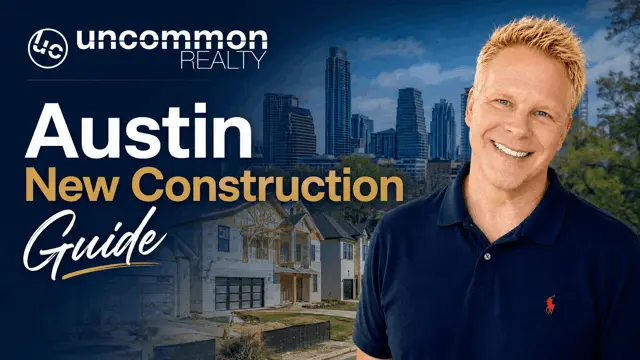
Buying a newly built home can feel a little like standing at the edge of an empty Texas field and imagining everything that could be there. You may see fresh streets, sparkling model homes, neighborhood amenities, and floor plans that seem designed around the way folks live today. It is exciting, but there are more decisions involved than simply choosing the prettiest kitchen backsplash.
New construction has its own contracts, timelines, expenses, inspection considerations, financing choices, builder incentives, and negotiation strategies. The builder’s sales representative can answer questions about the community and available homes, but that representative works for the builder. A buyer needs independent guidance focused on the buyer’s interests from the first model-home visit through the final walkthrough and closing.
Again, I am Robbie English, Broker, REALTOR with Uncommon Realty. I have more than 40 years of real estate experience, and I am also a national real estate instructor. I have watched building trends, financing programs, contract forms, buyer expectations, and construction practices change more times than I can count. One lesson has remained steady: an educated buyer makes stronger decisions.
This Austin New Construction Guide will walk you through the process without sales pressure or builder hype. We are going to talk about communities, home styles, pricing structures, schools, commuting, inspections, contracts, incentives, appreciation potential, and the mistakes that can cost buyers time or money. Pull up a chair, and let’s talk through it like neighbors on the front porch.

Too Long; Didn’t Read: Five Things to Know
- Builder representatives work for the builder. Buyers should obtain independent representation before registering, touring model homes, or signing paperwork.
- The advertised price may not be the final price. Lot premiums, structural options, design-center selections, financing charges, taxes, and closing costs can raise the total substantially.
- New homes still need inspections. Independent inspections can identify construction issues before they become the homeowner’s responsibility.
- Builder incentives require careful comparison. A financing credit may be valuable, but buyers should compare the builder’s lender with outside loan options.
- Location still matters. Community amenities and a beautiful home cannot fully offset a difficult commute, unfavorable lot, limited resale demand, or future development concerns.
What Counts as New Construction in Austin?
New construction is not limited to a home that has not yet been started. Buyers may encounter several types of newly built properties throughout the Austin area.
| Type of New Home | What It Means | Primary Advantage | Primary Consideration |
|---|---|---|---|
| To-be-built home | The buyer selects a plan and the builder constructs it after contract execution. | Greater opportunity for structural and design choices. | Longer timeline and greater potential for upgrade expenses. |
| Speculative home | The builder has selected the plan and finishes before finding a buyer. | Faster move-in and clearer final pricing. | Limited ability to change finishes or structural features. |
| Quick-move-in home | The home is under construction or completed and offered for near-term purchase. | Potential incentives and shorter closing period. | The lot, plan, and selections are usually fixed. |
| Custom home | A home is designed for a particular owner, often on an individually purchased lot. | High level of personalization. | More complex budgeting, planning, permitting, and construction oversight. |
| Recently completed resale | An owner purchased or built the home and is now reselling it. | Newer systems with a traditional resale transaction. | Builder incentives and some warranties may not transfer. |
Each category creates a different buying experience. A quick-move-in home may close within a traditional timeframe, while a custom home can require extensive architectural planning, permitting, site work, and construction coordination. Buyers should understand which category they are considering before comparing prices or timelines.
Why Buyers Consider New Construction
There is plenty to like about a newly built home. Many buyers appreciate modern layouts, larger kitchen islands, energy-efficient components, improved insulation, current electrical systems, flexible workspaces, and fewer immediate renovation projects.
New communities may also include pools, trails, fitness centers, playgrounds, dog parks, gathering spaces, and organized neighborhood activities. For buyers who want a sense of community without maintaining every amenity personally, those shared features can be appealing.
Another advantage is predictability. A new roof, air-conditioning system, water heater, and major appliances may reduce the likelihood of immediate replacement expenses. That does not mean maintenance disappears, but it may help buyers plan their first few years of ownership more confidently.
On the other side of the ledger, new construction may involve smaller lots, ongoing construction traffic, developing commercial services, additional homeowner association fees, special taxing districts, and longer drives to established employment or entertainment centers. A smart decision requires looking beyond the model home.
Neighborhood Atmosphere in New Construction Communities
New communities around Austin can feel very different from established neighborhoods. Some are large master-planned developments with schools, recreation centers, community events, trails, and retail areas. Others are smaller subdivisions with a quieter atmosphere and fewer shared amenities.
During the early construction years, buyers should expect contractors, delivery trucks, vacant lots, temporary signage, dust, and changing traffic patterns. The peaceful cul-de-sac shown on a site plan may look different when several nearby homes are being built at the same time.
Buyers should visit a community at several times of day. A weekday morning visit can reveal commuter traffic. An afternoon visit may show school pickup patterns. An evening or weekend visit can help buyers understand noise, parking, amenity use, and the general rhythm of the neighborhood.
It is also wise to ask how many phases are planned, when major amenities are expected to open, and whether the developer controls the homeowner association. An impressive future amenity should not be treated as guaranteed unless the commitment appears in binding documents.
Home Styles and Floor Plans
Austin-area builders offer a broad range of housing styles, including traditional brick homes, Hill Country-inspired designs, modern farmhouse elevations, contemporary homes, townhomes, condominiums, duplex-style properties, and luxury custom residences.
Inside the home, open kitchens and family rooms remain common, but buyers should consider how they actually live. A wide-open layout may look wonderful in a model, yet some owners prefer a separate dining room, enclosed office, second living space, or quieter kitchen arrangement.
Common plan features include:
- One-story and two-story configurations
- Primary bedrooms on the first floor
- Dedicated home offices
- Game rooms and media rooms
- Multigenerational suites
- Three-car garages or tandem garages
- Covered patios and outdoor kitchens
- Mudrooms and expanded utility rooms
- Flexible rooms that can serve as bedrooms, studies, or exercise spaces
Pay attention to the difference between the model home and the base floor plan. Model homes are designed to create an emotional response. They may include expensive structural alterations, upgraded windows, custom wall treatments, premium flooring, built-in cabinetry, designer lighting, and professionally landscaped outdoor spaces.
Ask for a written list of included features. Do not assume that something displayed in the model comes standard in the advertised price.
Understanding New Construction Pricing
Builder pricing can be confusing because the number shown online or on a neighborhood sign may represent only the base price. That base price generally includes a particular floor plan, standard elevation, basic interior package, and a lot without a premium.
The final price may include several additional categories:
- Lot premiums: Extra charges for cul-de-sac lots, greenbelt locations, views, larger yards, corner positions, or other desirable characteristics.
- Structural options: Additional bedrooms, extended patios, upgraded ceiling heights, garage expansions, bay windows, or alternate room configurations.
- Design selections: Flooring, countertops, cabinets, tile, fixtures, appliances, lighting, and interior finishes.
- Exterior upgrades: Stone accents, upgraded brick, landscaping packages, additional flatwork, fencing, or outdoor living features.
- Financing and closing expenses: Loan charges, prepaid items, title-related expenses, insurance, taxes, and other settlement costs.
A buyer who begins with an attractive base price can end up with a substantially higher total after selecting the lot and upgrades. Establish a complete budget before visiting the design center. That budget should include the home, selections, financing, closing expenses, moving costs, window treatments, appliances that are not included, landscaping, and an emergency reserve.
Buyers can use a mortgage calculator for an initial estimate, but a lender should provide a complete payment analysis that includes principal, interest, taxes, insurance, homeowner association expenses, and any applicable district assessments.
Property Taxes, Special Districts, and Monthly Costs
Many new communities use special districts or other public financing arrangements to fund infrastructure and services. The terminology and structure can vary by location. Buyers should review the tax rate, district obligations, homeowner association dues, utility arrangements, and estimated monthly ownership costs before signing a contract.
A common mistake is comparing only mortgage principal and interest. The true monthly cost may also include:
- Property taxes
- Homeowner insurance
- Mortgage insurance, when applicable
- Homeowner association dues
- Special district assessments or taxes
- Utility expenses
- Maintenance and landscaping
Tax estimates for an unfinished or recently completed property may not reflect the eventual taxable value of the completed home. Buyers should ask their lender and tax professionals how to prepare for the likely future assessment rather than relying on a bill associated primarily with the vacant lot.
Walkability, Restaurants, and Everyday Conveniences
Walkability varies considerably among new developments. Some communities are designed with connected trails, neighborhood parks, schools, retail areas, and sidewalks. Others require a vehicle for nearly every errand.
When evaluating walkability, look beyond whether sidewalks exist. Consider whether they connect to useful destinations. A trail around a pond can be a valuable amenity, but it does not necessarily provide practical access to groceries, restaurants, schools, or workplaces.
Restaurants and retail services often follow rooftops. A developing community may eventually attract coffee shops, grocery stores, medical offices, and dining options, but those additions can take time. Ask what is open now, what is under active construction, and what is only proposed.
Drive from the community to the nearest grocery store, pharmacy, urgent-care facility, and restaurant area. That simple exercise can reveal whether the neighborhood fits your everyday routine.
Parks and Community Amenities
Amenity centers can be major selling points in new developments. Depending on the community, buyers may find swimming pools, splash pads, sports courts, playgrounds, clubhouses, fitness facilities, event lawns, lakes, trails, and open green space.
Review who owns and maintains each amenity. Ask whether access is included in regular association dues or requires a separate membership. Buyers should also investigate guest restrictions, operating hours, reservation requirements, and rules governing private events.
Families with young children may value playgrounds and splash pads. Active adults may prefer trails and fitness facilities. Buyers who travel frequently may place less value on amenities they rarely use. The best community is not automatically the one with the longest amenity list. It is the one where the benefits justify the ongoing cost for that particular household.
Schools and Attendance Boundaries
Schools are an important consideration for many buyers, but attendance boundaries can change as fast-growing areas add campuses and rebalance enrollment. A community’s marketing materials may identify nearby schools without guaranteeing that every property is assigned to those campuses.
Buyers should confirm attendance information directly with the applicable school district. Do not rely solely on a builder’s brochure, a listing portal, or an informal statement made during a model-home tour.
Buyers without school-age children should still consider school assignments because they can influence future buyer demand. However, school performance should never be reduced to a single online score. Families may consider academic programs, transportation, extracurricular activities, campus culture, class offerings, and their child’s individual needs.
Fair housing considerations also matter. I can help buyers locate objective resources and verify property-specific information, but each buyer should evaluate schools based on personal priorities and reliable third-party information.
Commuting and Transportation
New construction often expands outward from established employment centers. A community may offer more house for the money, but the tradeoff can be a longer or less predictable commute.
Test the drive during the hours you expect to travel. A route that takes 25 minutes on a quiet weekend can look very different on a Tuesday morning. Consider alternate routes, toll-road costs, school traffic, planned road construction, and whether future development may add congestion.
Remote workers should evaluate internet providers and service reliability. Do not assume every new subdivision has multiple high-speed options. Ask which providers currently serve the exact address and whether installation has been completed.
Buyers should also consider changing employment needs. A home selected solely because it is close to one office may become less convenient after a job change. Access to several major roads or employment corridors can provide greater flexibility.
Who Is New Construction Best Suited For?
| Buyer Type | Why New Construction May Fit | What to Watch |
|---|---|---|
| First-time buyer | Newer systems, possible financing incentives, and fewer immediate renovations. | Total monthly cost, taxes, upgrades, and limited emergency savings. |
| Move-up buyer | More bedrooms, home office space, upgraded amenities, and modern layouts. | Timing the sale of the current home with construction completion. |
| Relocation buyer | Predictable home condition and communities near growing employment areas. | Buying before understanding commute patterns and local geography. |
| Multigenerational household | Plans with secondary suites, first-floor bedrooms, and flexible living areas. | Privacy, accessibility, parking, and long-term floor-plan usefulness. |
| Luxury buyer | Customization, premium materials, advanced technology, and distinctive lots. | Allowances, change orders, construction oversight, and resale over-improvement. |
| Investor | Lower immediate maintenance and potential demand in growing communities. | Leasing restrictions, investor caps, taxes, supply competition, and rental economics. |
New construction may not be ideal for buyers who need mature trees, established retail, a large central-city lot, immediate move-in certainty, or complete control over the closing date. The right choice depends on lifestyle, finances, location, and tolerance for a developing environment.
Why Buyer Representation Matters
Walking into a model home without representation can create problems before a buyer realizes it. Builders may require buyers to identify or register their representative during the first visit. Rules vary among builders, so buyers should contact me before touring.
The builder’s representative is there to sell the builder’s homes and protect the builder’s interests. That is not criticism. It is simply the nature of the relationship.
My role is to help a buyer evaluate the property, compare communities, understand the transaction, review the builder’s process, coordinate inspections, track deadlines, communicate concerns, and maintain a broader view of future resale considerations.
Buyer representation should begin before the exciting part, not after the paperwork arrives. Buyers can review information about buying a home in the Austin area before scheduling builder visits.
Builder Contracts Are Not Standard Resale Contracts
Many builders use their own contracts rather than the commonly used resale forms buyers may recognize. Builder contracts are generally written to protect the builder and address construction-specific issues.
Terms may cover completion delays, material substitutions, change orders, financing deadlines, earnest money, option deposits, inspections, dispute procedures, warranties, appraisal issues, and the builder’s ability to modify plans or community features.
Buyers should read the entire agreement and obtain legal advice from a qualified attorney when they have legal questions. A real estate broker can explain the transaction and help buyers identify practical concerns, but a broker does not replace legal counsel.
Pay close attention to which deposits are refundable, what happens if financing fails, how delays are handled, and whether the contract provides meaningful remedies if the home is not completed as expected.
Financing and Builder Incentives
Builders may offer closing-cost credits, interest-rate incentives, design allowances, appliance packages, or price reductions. Many incentives require the buyer to use an affiliated lender or title provider.
An incentive can be worthwhile, but the size of the credit does not tell the entire story. Compare the interest rate, annual percentage rate, discount points, lender fees, mortgage insurance, lock period, extension costs, and total cash required.
A lower rate may be temporary or may require upfront points. A large closing credit may accompany a higher sales price. Buyers should compare complete written loan estimates rather than making a decision based on a promotional headline.
Obtaining a mortgage pre-approval before shopping helps establish a realistic budget and provides a benchmark for comparing builder financing.
Why New Homes Still Need Inspections
A newly built home is assembled by many people, including foundation crews, framers, plumbers, electricians, roofers, heating and cooling contractors, drywall installers, painters, and finish carpenters. Municipal inspections serve an important purpose, but they are not a substitute for a detailed inspection performed for the buyer.
Depending on the construction stage, buyers may consider:
- Pre-pour inspection: Conducted before concrete is placed, when foundation preparation and components remain visible.
- Pre-drywall inspection: Conducted before walls are closed, allowing review of framing, wiring, plumbing, ductwork, and other concealed systems.
- Final inspection: Conducted near completion to evaluate major systems and visible workmanship.
- Warranty inspection: Conducted before an important builder-warranty deadline so concerns can be documented and submitted.
The builder may limit access or require advance scheduling, so inspection rights and procedures should be reviewed early. The goal is not to demand cosmetic perfection. The goal is to identify safety concerns, functional problems, incomplete work, and items that should be addressed before closing or before the applicable warranty expires.
Construction Timeline and Delays
Construction schedules are estimates, not guarantees. Weather, permitting, inspections, labor availability, utility connections, material delivery, and change orders can affect completion.
Buyers should be cautious about making irreversible moving arrangements based on an early projected date. Selling a current home, ending a lease, scheduling movers, and arranging travel may require flexibility.
A typical construction process may include:
- Contract and deposit
- Design and structural selections
- Permitting and site preparation
- Foundation work
- Framing
- Mechanical, electrical, and plumbing installation
- Insulation and drywall
- Interior and exterior finishes
- Inspections and correction work
- Buyer orientation and final walkthrough
- Closing
Buyers should maintain adequate housing flexibility and avoid assuming the builder will reimburse expenses caused by a delay. The contract determines the parties’ rights and responsibilities.
Choosing the Right Lot
The lot can be as important as the floor plan. Two identical homes may have different resale appeal because of orientation, traffic, drainage, privacy, slope, nearby land uses, or afternoon sun exposure.
Evaluate:
- Street position and traffic
- Proximity to entrances, schools, pools, mailboxes, and playgrounds
- Future phases and undeveloped land
- Utility boxes, drainage structures, and easements
- Rear-yard privacy
- Sun orientation
- Topography and retaining walls
- Nearby commercial sites or major roads
- Potential construction around the property
A greenbelt lot may carry a premium, but buyers should verify who owns the land and whether it is permanently protected. Vacant land is not automatically preserved open space.
Design Center Decisions and Upgrade Strategy
The design center is where budgets can wander off faster than a jackrabbit. Every individual upgrade may seem manageable, but the total can grow quickly.
Prioritize improvements that are difficult or expensive to add later. Structural changes, ceiling heights, additional windows, extended garages, plumbing locations, and major electrical work often deserve consideration during construction.
Cosmetic items may be easier to change after closing. Paint, cabinet hardware, decorative lighting, mirrors, and some flooring choices can often be updated later, depending on the buyer’s budget and tolerance for projects.
Think about resale, but do not build entirely for an unknown future owner. Choose features that support your lifestyle while avoiding excessive customization that may appeal to only a narrow group of buyers.
Long-Term Appreciation Potential
No one can guarantee appreciation. Real estate values respond to supply, demand, employment, interest rates, location, infrastructure, taxes, property condition, and the broader economy.
New construction buyers should pay particular attention to future supply. If a builder has hundreds of lots remaining, a future seller may compete with new homes offering incentives, fresh finishes, and builder financing.
Long-term desirability may be supported by access to employment, transportation, schools, recreation, shopping, healthcare, and limited future housing supply. Lot quality, functional floor plans, neighborhood maintenance, and manageable ownership costs can also influence resale demand.
Buy the home because it works financially and practically, not because someone promises rapid appreciation. A sound purchase should still make sense if values grow slowly or remain level for a period.
Common New Construction Buyer Mistakes
- Visiting the model home before contacting an agent: This may interfere with the buyer’s ability to obtain independent representation through the builder’s process.
- Focusing only on the base price: The lot, options, taxes, financing, and closing expenses may materially change affordability.
- Skipping independent inspections: New does not mean flawless.
- Assuming every model-home feature is included: Models often contain extensive upgrades.
- Choosing upgrades without a firm budget: Small selections can create a large price increase.
- Ignoring the lot: Traffic, sun exposure, drainage, privacy, and nearby development affect daily enjoyment and resale.
- Failing to compare financing: An incentive should be evaluated alongside total loan costs.
- Depending on an estimated completion date: Construction delays can create temporary housing and moving complications.
- Overlooking tax rates and association costs: The monthly payment involves more than principal and interest.
- Buying too far from daily needs: More square footage may not compensate for an exhausting commute.
- Trusting proposed amenities as guaranteed: Future features should be verified through reliable documents.
- Ignoring future resale competition: Remaining builder inventory may compete with an owner’s resale listing.
A Practical New Construction Buying Process
- Establish a realistic purchase and monthly-payment budget.
- Obtain mortgage pre-approval and compare financing options.
- Choose independent buyer representation before visiting builders.
- Identify suitable locations based on commute, lifestyle, schools, taxes, and services.
- Compare builders, communities, warranties, and homeowner association documents.
- Evaluate available lots and future development plans.
- Review the full price, including premiums and upgrades.
- Read the builder contract and seek legal advice when needed.
- Schedule appropriate independent inspections.
- Track construction, financing, insurance, and closing deadlines.
- Complete the buyer orientation and final walkthrough.
- Document warranty concerns and maintain the home after closing.
Buyers can also begin by reviewing available Austin-area homes for sale and comparing new communities with established neighborhoods.
Frequently Asked Questions About Austin New Construction
Do I need a real estate agent when buying from a builder?
You are not required to navigate the process alone. An independently selected buyer representative can help evaluate communities, compare homes, review transaction details, coordinate inspections, track deadlines, and advocate for the buyer. Contact your representative before visiting a model home because builder registration requirements may apply from the first visit.
Does the builder pay for buyer representation?
Compensation arrangements vary and should be discussed before representation begins. Buyers should review their written representation agreement and understand how compensation will be handled in the specific transaction. Never assume a builder’s policy without verification.
Can I negotiate the price of a new construction home?
Sometimes. Negotiability depends on the builder, community, inventory, construction stage, demand, and business goals. Builders may prefer offering financing credits, closing assistance, or upgrade packages instead of reducing the recorded sales price.
Are builder incentives always a good deal?
No incentive should be evaluated in isolation. Buyers should compare the final sales price, loan terms, lender charges, title expenses, required providers, and total cash needed. A smaller incentive with better financing may outperform a larger promotional credit.
How long does it take to build a home?
The timeline depends on the builder, plan, permitting process, construction stage, weather, labor, utilities, and material availability. A builder may provide an estimate, but buyers should maintain flexibility because the contract may not guarantee a precise completion date.
Should I inspect a brand-new home?
Yes, independent inspections are generally a prudent part of the process. Depending on timing and access, buyers may consider pre-pour, pre-drywall, final, and warranty inspections.
What is a lot premium?
A lot premium is an additional charge for a site the builder considers more desirable. Larger lots, greenbelt positions, cul-de-sacs, views, privacy, or favorable orientations may carry premiums.
Can a builder change materials or features?
Builder contracts often address substitutions caused by availability, product changes, or construction requirements. Buyers should read the contract carefully to understand the builder’s substitution rights and whether the buyer receives notice or approval rights.
When should I lock my mortgage rate?
Rate-lock timing should be discussed with the lender because construction completion can move. Buyers should understand the initial lock period, extension fees, expiration terms, and what happens if the home is delayed.
Are new construction warranties comprehensive?
Warranty coverage varies. Buyers should review what is covered, the length of each coverage period, exclusions, required maintenance, claim procedures, and dispute provisions. A warranty does not eliminate the need for inspections or routine maintenance.
Can I sell a new construction home after buying it?
Generally, an owner can sell, but the contract, deed restrictions, financing terms, or community rules may contain relevant provisions. Resale timing also matters because the seller may compete with the builder’s remaining inventory and incentives.
Is New Construction Right for You?
A new home can provide modern design, greater energy efficiency, new systems, community amenities, and the pleasure of being the first person to call the property home. It can also bring construction delays, upgrade decisions, unfamiliar contracts, developing infrastructure, and expenses that are not obvious in the advertised price.
The best decision begins with a clear understanding of your budget, commute, priorities, preferred location, and long-term plans. From there, we can compare new construction with resale homes and determine which path offers the strongest overall fit.
Again, I am Robbie English, Broker, REALTOR with Uncommon Realty. My job is not to push you toward a particular builder or neighborhood. My job is to help you understand the choices, identify potential risks, and move forward with your eyes open.
Before you register with a builder or tour a model home, contact me. We can talk through your goals, establish a sensible plan, and make sure you have independent guidance from the beginning.
Categories
- All Blogs (973)
- !!! (59)
- !x (621)
- Austin Real Estate (113)
- Bee Cave Real Estate (1)
- Building A Home (14)
- Buying A Home (143)
- Buying Land (1)
- Cedar Park Real Estate (58)
- Central Austin Real Estate (75)
- Down Payment Assistance Programs (1)
- Downsizing (4)
- Downtown Austin Real Estate (5)
- Dripping Springs Real Estate (62)
- East Austin Real Estate (3)
- Financing and Mortgage (24)
- first-time homebuying (109)
- Georgetown Real Estate (9)
- Hill Country Real Estate (1)
- HOA (2)
- Home Appraisals (13)
- Home For Rent (1)
- Home Inspections (6)
- Home Pricing (6)
- Home Staging (1)
- Home Values (12)
- Homeownership (1)
- Homes For Rent (1)
- Homes For Sale (147)
- Hutto Real Estate (5)
- Insurance (1)
- Investing (6)
- Investment Properties (4)
- Lakeway Real Estate (33)
- Leander Real Estate (59)
- LGBT+ Real Estate (8)
- Luxury Homes For Sale (5)
- Luxury Real Estate (19)
- Market Conditions (17)
- Moving to Austin (2)
- Moving to Texas (4)
- Negotiations (3)
- Neighborhoods (8)
- Northwest Austin Real Estate (94)
- Off Market Listings (7)
- Pflugerville Real Estate (10)
- Private Listings (2)
- Property Management (42)
- Property Tax (5)
- Real Estate (18)
- Reddit Question Answered (80)
- redwrite (63)
- Relocation (2)
- Renting (6)
- Representation (34)
- Round Rock Real Estate (59)
- Selling Your Home (62)
- South Austin Real Estate (1)
- Westlake Real Estate (3)
Recent Posts