Best Suburbs Of Austin For Home Buyers in 2026

The best suburbs of Austin for home buyers come down to three real factors: price positioning, commute reality, and available inventory, not general reputation, hype, or a list someone published without checking current numbers. This guide covers four specific Austin-area suburbs, Round Rock, Cedar Park, Leander, and Georgetown, with real, verified numbers for each rather than vague praise or a ranked list with no actual data behind it.
I am Robbie English, Broker, REALTOR at Uncommon Realty, and I've helped buyers compare these exact suburbs against each other and against Austin proper for years. My goal here is to give you the real numbers behind each option.

Round Rock: Affordability And Employment
Round Rock's median home price runs in the low-$400s, meaningfully below Austin's own citywide median, while offering Round Rock ISD (A-rated), direct access to I-35 plus the SH-45/SH-130 toll bypass, and a strong local employment base anchored by Dell's headquarters and Samsung's nearby Taylor facility. The city is also home to Dell Diamond (AAA Round Rock Express), the Kalahari Resort, and a large Premium Outlets complex, giving it a real identity beyond just being a bedroom community. For a deeper look at specific Round Rock neighborhoods by commute route and price tier, see my guides on Round Rock neighborhoods for first-time buyers and the real cost of living in Round Rock.
Cedar Park: Balance Of Growth And Access
Cedar Park's median home price runs roughly $496K-$532K depending on the specific month and data source, positioning it above Round Rock but still below much of Central Austin. The city is zoned to Leander ISD (A-rated), and the 183A toll road, extended in 2025, gives residents a faster route into Northwest Austin's employment corridors. Cedar Park is also home to the HEB Center, which hosts the Texas Stars AHL hockey team, plus the 1890 Ranch shopping center and the newer Bell District mixed-use development. I compare Cedar Park directly against Round Rock, including the toll-versus-free commute tradeoff, in my Cedar Park vs. Round Rock comparison.
Leander: Growth And Rail Access
Leander has been one of the fastest-growing cities in the Austin region in recent years, with population growth of roughly 60% since the 2020 census in some measurement periods. The city's biggest practical differentiator is CapMetro's Red Line commuter rail, which terminates at Leander Station and offers a roughly one-hour ride to downtown Austin as an alternative to driving, alongside 183A as a less-congested driving route than I-35. I go deeper on Leander's real growth numbers and transit options in my guide on why buyers are choosing Leander instead of Austin.
Georgetown: Sustained Growth And A Historic Core
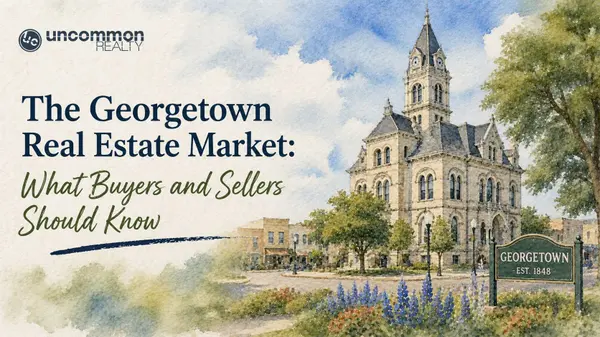
Georgetown has topped the U.S. Census Bureau's list of fastest-growing large U.S. cities multiple times over the past decade, including in 2016 and again in 2022, a sustained pattern rather than a single-year spike. As of early-to-mid 2026, Georgetown's citywide median home price runs roughly $405K-$430K depending on the specific source and month, while Sun City, the city's large active-adult (55+) community, shows its own separate median generally in the $350K-$411K range. Georgetown is the Williamson County seat and is known for its well-preserved historic downtown square, a genuinely distinct amenity among these four suburbs, along with its own Georgetown ISD.
What "Fastest-Growing" Actually Means For A Buyer
A city's rapid growth, like Georgetown's or Leander's, cuts both ways for buyers. On one hand, sustained growth tends to support long-term home values and brings genuine investment in roads, schools, and retail. On the other, rapid growth means more new construction competing for buyer attention, longer waits for infrastructure to catch up in the newest sections, and, in Georgetown's case specifically, a downtown core that can feel genuinely different in character from its newer, fast-growing outer subdivisions. Ask directly which specific part of a fast-growing suburb a listing sits in, established core versus newer edge development, since the experience can differ meaningfully within the same city limits.
Property Tax Considerations Across All Four
All four suburbs sit in Williamson County (with small portions of some extending into Travis County), and combined property tax rates vary by specific city, school district, and any MUD or PID assessments tied to a newer subdivision. Newer master-planned sections in any of these four suburbs, particularly in Leander and parts of Georgetown, can carry additional MUD (Municipal Utility District) taxes on top of standard city, county, and school district rates, sometimes adding a meaningful amount to your effective annual tax bill. Always ask for the full, itemized tax rate on a specific address, well beyond the city's general rate alone, before comparing suburbs on affordability.
Comparing All Four On Price
Ranked roughly by 2026 median price, Round Rock (low-$400s) and Georgetown (roughly $405K-$430K) sit closest together and both undercut Austin's own citywide median, while Cedar Park (roughly $496K-$532K) runs meaningfully higher. Leander's pricing tends to fall between Round Rock and Cedar Park, though its rapid recent growth means inventory and pricing can shift faster here than in the more established suburbs. None of these numbers are static; work from genuinely current, source-dated figures rather than a number that might already be a year or more old by the time you're reading it.
Comparing All Four On Commute
Round Rock and Cedar Park both offer direct highway access into Austin's core employment areas, I-35 and SH-45/130 for Round Rock, 183A for Cedar Park, without relying on transit at all. Leander is the only one of the four with a genuine rail alternative to driving via the Red Line, a real differentiator for buyers who want to minimize daily highway time. Georgetown sits furthest from Austin's core among the four and generally means the longest realistic daily commute if you're working in Austin proper, though its own local Williamson County employment base has grown alongside its population.
Comparing All Four On Schools
All four suburbs are served by their own independent, generally well-regarded school districts: Round Rock ISD, Leander ISD (serving Cedar Park), Leander ISD directly for Leander itself, and Georgetown ISD. Since district-wide ratings don't tell you everything about a specific campus, confirm the exact elementary, middle, and high school attendance zone for any specific address you're seriously considering, in any of these four suburbs, rather than relying on the district's overall reputation alone.
Who Each Suburb Actually Fits
Round Rock tends to fit buyers prioritizing affordability and a strong local job market without sacrificing highway access. Cedar Park fits buyers who want a strong balance of growth, amenities, and Northwest Austin access, and are comfortable with a higher price point than Round Rock. Leander fits buyers who genuinely want a rail-transit option and are comfortable with a still-maturing suburb experiencing rapid growth. Georgetown fits buyers drawn to a distinct historic-town character, sustained long-term growth, or the Sun City active-adult community specifically, and who are comfortable with the longest commute into Austin among these four options.
New Construction Versus Resale In Each Suburb
Leander and the newer sections of Georgetown carry the highest share of genuinely new construction among these four suburbs, given their more recent, ongoing growth. Round Rock and Cedar Park, being more established, offer a real mix of resale and infill new construction, with resale inventory generally concentrated in neighborhoods built over the past two to three decades. If you specifically want new construction with builder warranties and modern efficiency standards, Leander and outer Georgetown currently offer the most options; if you want an established neighborhood with mature trees and a settled feel, Round Rock and the core sections of Cedar Park and Georgetown tend to offer more of that.
HOA Considerations Across These Suburbs
Newer master-planned communities in all four suburbs, but especially in Leander and Cedar Park's newer sections, typically carry mandatory HOA dues and deed restrictions that older, more established neighborhoods in Round Rock or Georgetown's historic core may not. HOA dues and rules vary significantly even within the same city, covering everything from amenity centers and landscaping to exterior paint colors and parking restrictions, so review a specific community's HOA documents directly rather than assuming based on the city's general reputation.
Insurance And Weather Considerations
All four suburbs sit within Central Texas's broader hail and wind risk zone, and homeowners insurance costs have risen across the region in recent years regardless of which specific suburb you choose. Newer homes with updated roofing materials sometimes qualify for modest insurance discounts compared to older homes with original roofs, worth asking about directly when comparing a newer Leander or Georgetown property against an older Round Rock resale.
Putting Together A Realistic Shortlist
Rather than picking one suburb outright, it's often more effective to shortlist two, typically one more affordable option and one higher-amenity option, and actively tour both over several weekends before committing. Comparing Round Rock against Cedar Park, or Leander against Georgetown, in person and at the same time of day you'd realistically be commuting, tends to surface real preferences that a spreadsheet of median prices alone won't reveal.
A Practical Way To Narrow Your Search
Rather than trying to rank these four suburbs against each other in the abstract, map your actual daily commute from a specific address in each one at the time of day you'd realistically be driving it, and compare genuinely recent comparable sales for the specific home type and size you need in each. A suburb that looks best on paper can lose its advantage once you factor in your specific commute, school zone, or the real inventory available in your price range at the moment you're actually searching.
Bringing It All Together
Round Rock, Cedar Park, Leander, and Georgetown each offer a genuinely different combination of price, commute, and amenities rather than one being objectively "best" for every single buyer regardless of priorities. Round Rock and Georgetown currently offer the most affordable entry points, Cedar Park offers the strongest balance of growth and Northwest Austin access, and Leander offers the only genuine rail-transit alternative among the four. Working from real, current, source-dated numbers for each, rather than general reputation or last year's headlines, is what actually determines the right fit for your specific priorities and budget.
Whether you're comparing these four suburbs against each other, against Austin proper, or against another Central Texas city entirely, I'm genuinely glad to walk you through current listings and how they actually compare on price, commute, schools, and everything else that matters to your specific search. You can browse current listings on my website or through my app.
Written for buyers and sellers in the Greater Austin, Texas area by Robbie English, REALTOR, Broker at Uncommon Realty.
Categories
- All Blogs (906)
- !!! (51)
- !x (612)
- Austin Real Estate (93)
- Bee Cave Real Estate (1)
- Building A Home (14)
- Buying A Home (134)
- Buying Land (1)
- Cedar Park Real Estate (56)
- Central Austin Real Estate (75)
- Down Payment Assistance Programs (1)
- Downsizing (3)
- Downtown Austin Real Estate (5)
- Dripping Springs Real Estate (61)
- East Austin Real Estate (3)
- Financing and Mortgage (19)
- first-time homebuying (103)
- Georgetown Real Estate (9)
- Hill Country Real Estate (1)
- HOA (2)
- Home Appraisals (12)
- Home For Rent (1)
- Home Inspections (6)
- Home Pricing (4)
- Home Values (11)
- Homeownership (1)
- Homes For Rent (1)
- Homes For Sale (147)
- Hutto Real Estate (5)
- Investing (2)
- Lakeway Real Estate (33)
- Leander Real Estate (58)
- LGBT+ Real Estate (8)
- Luxury Homes For Sale (4)
- Luxury Real Estate (19)
- Market Conditions (15)
- Moving to Austin (2)
- Moving to Texas (4)
- Negotiations (2)
- Neighborhoods (8)
- Northwest Austin Real Estate (94)
- Off Market Listings (7)
- Pflugerville Real Estate (10)
- Private Listings (2)
- Property Management (42)
- Property Tax (1)
- Real Estate (18)
- Reddit Question Answered (80)
- redwrite (63)
- Relocation (2)
- Renting (6)
- Representation (34)
- Round Rock Real Estate (56)
- Selling Your Home (53)
- Westlake Real Estate (3)
Recent Posts