
What Is An ADU vs A Tiny Home
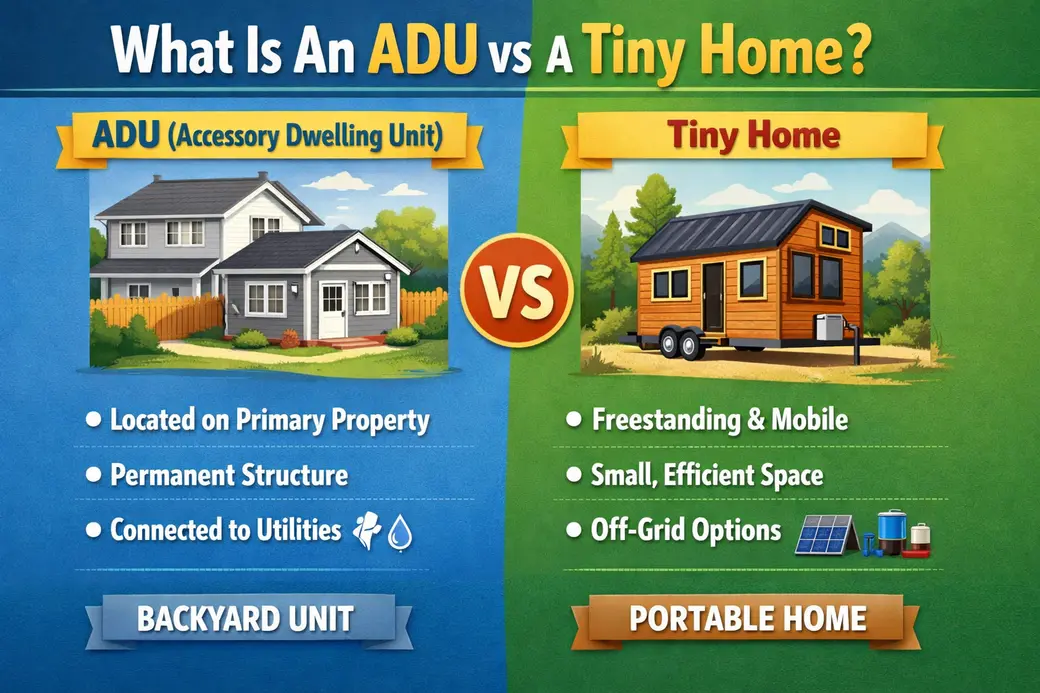
If you have been researching housing options in Central Texas, you have probably asked yourself a very practical question: what is an ADU vs a tiny home? Buyers, homeowners, and investors across Austin ask me this question all the time. Depending on the area of town, you may see quite a few of these. The answer matters more than most folks realize, because these two options can look similar at first glance but function very differently when it comes to zoning, property value, long term usability, and daily living.
Here in Austin, where land values continue to push people to think creatively about housing, the conversation around accessory living spaces has grown louder. Backyard cottages, guest houses, small footprint living, and multi structure properties have become common topics among homeowners who want flexibility. Some want space for aging parents. Others want rental income. Some simply want a quieter lifestyle with less house to maintain. Whatever the reason, understanding what is an ADU vs a tiny home can help you make a decision that supports your goals for years to come.
I spend a lot of time helping clients evaluate these options across Austin and the surrounding Central Texas communities. From Northwest Austin or Hyde Park neighborhoods like Canyon Creek and River Place to areas like Cedar Park, Leander, Round Rock, Georgetown, and Dripping Springs, property owners often want to understand how small housing structures can work on their land. The answer depends on local regulations, lot size, infrastructure, and your long term plans for the property.
My name is Robbie English, Broker, REALTOR at Uncommon Realty. Over the years I have guided buyers, sellers, and property owners through countless situations involving secondary structures, land use decisions, and creative housing solutions. I have also spent decades studying the complexities of real estate so my clients do not have to figure it out alone. When people begin exploring what is an ADU vs a tiny home, they quickly realize the decision is not just about square footage. It is about lifestyle, compliance, property value, and future opportunity.
I have another perspective that helps my clients tremendously. In addition to working directly with buyers and sellers, I am also a national real estate speaker and instructor who teaches agents across the country the ins and outs of our industry. That experience forces me to stay sharp. I study zoning rules, land use strategy, housing design trends, and investment strategy so my clients benefit from the most current knowledge available. That expertise becomes especially valuable when navigating questions about what is an ADU vs a tiny home in Austin, where local regulations and neighborhood characteristics can vary significantly.
When you work with me, Robbie English, Broker, REALTOR and the team at Uncommon Realty, you gain more than someone who can open doors. You gain a guide who understands how different housing strategies fit into the bigger picture of real estate ownership. That understanding can help you avoid expensive mistakes while positioning your property for long term success.
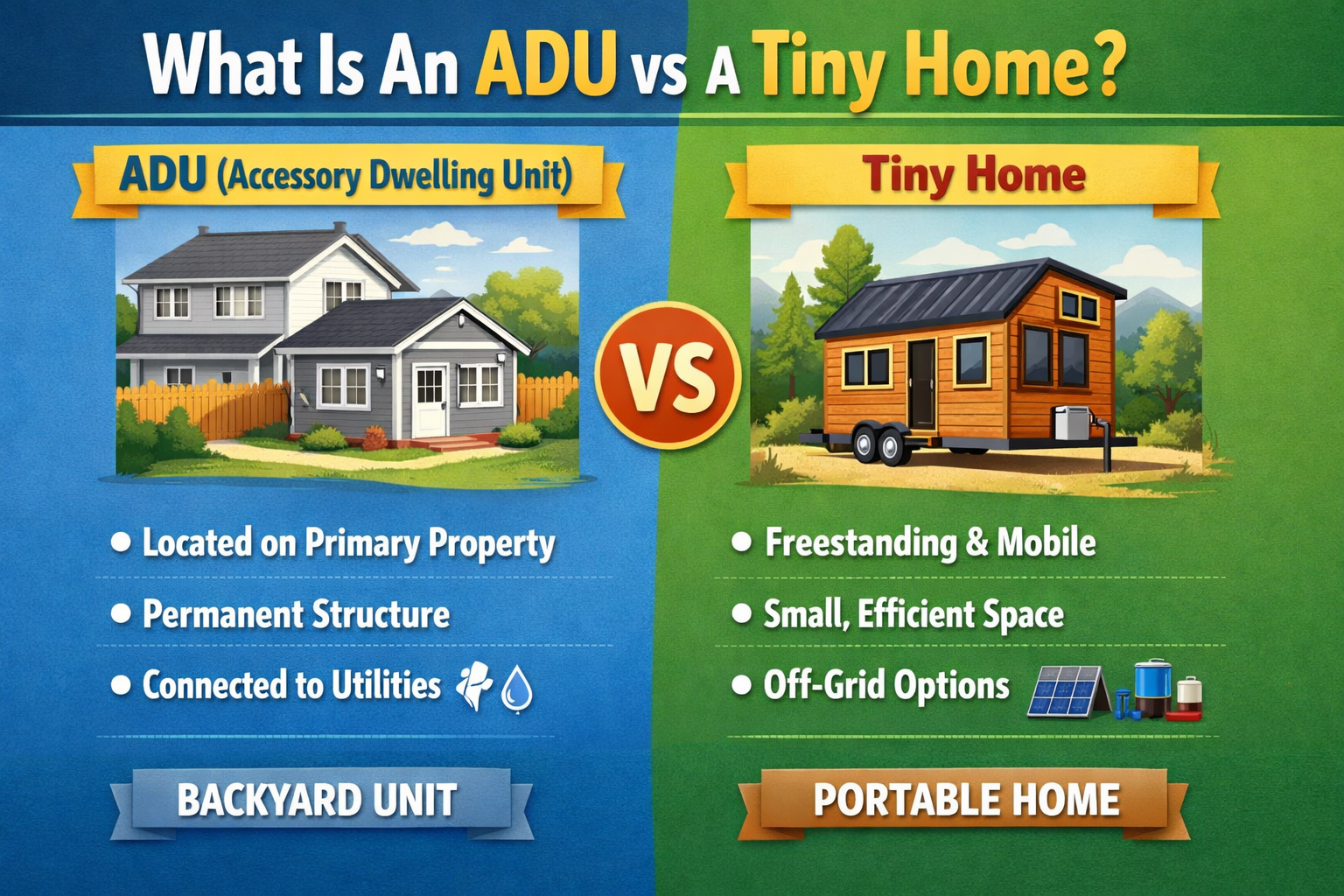
Before we dive deeper into the topic, let me give you the quick version.
TLDR: What Is An ADU Vs A Tiny Home
- An ADU is a permanent secondary residence built on the same property as a main home.
- A tiny home is a very small standalone dwelling that may or may not be permanently installed.
- Austin regulations treat ADUs differently from movable tiny homes.
- ADUs often add long term property value and flexible housing options.
- Choosing the right path requires understanding zoning rules, property goals, and lifestyle priorities.
What Is An ADU In Austin
Let's start with the concept that often generates the most interest among property owners.
An ADU, or auxiliary dwelling unit, is a secondary residence built on the same property as a primary home. Some people use the phrase accessory dwelling unit, but I personally prefer the term auxiliary dwelling unit because it better reflects the independence of the structure. These spaces are not simply add ons. They are fully functional residences that stand on their own.
An ADU typically includes a kitchen, bathroom, sleeping area, and living space. It connects to utilities such as water, sewer, and electricity just like the primary home on the property. It also sits on a proper foundation and must comply with building codes and zoning regulations established by the city.
In Austin, ADUs can appear in several forms. Some homeowners convert an existing garage into living space. Others transform part of their main structure into a private suite. Many build detached backyard cottages that function as small homes behind the primary residence.
These structures have grown in popularity throughout Austin neighborhoods where people want flexibility without leaving the area they love. A homeowner in Northwest Hills may build an ADU to host extended visitors. Someone in Allandale might create a backyard residence to provide housing for an aging parent. In parts of South Austin and East Austin, property owners sometimes design ADUs that generate rental income while still maintaining the main home.
What makes an ADU especially attractive is its permanence. Because the structure is built according to code and connected to utilities, it becomes a recognized part of the property. That permanence often increases property usability and can contribute to long term value.
I have helped many clients explore this path. When people ask what is an ADU vs a tiny home, they usually begin to see that ADUs integrate into traditional real estate ownership much more easily than tiny homes do.
Austin has gradually adjusted zoning policies to encourage additional housing options like ADUs, although each neighborhood still comes with its own nuances. That is where working with someone who understands local real estate can make a major difference.
What Is A Tiny Home
Now let's shift to the other side of the conversation.
A tiny home refers to a very small dwelling that typically ranges from about 100 to 400 square feet. The design focuses on efficient use of space and simplified living. Many people pursue tiny homes because they want a minimalist lifestyle, lower construction costs, or greater mobility.
Tiny homes often attract people who want flexibility and creativity in how they live. Some are built on trailers so they can move from location to location. Others sit on small foundations but still remain extremely compact.
The tiny home movement gained popularity as people began questioning whether large homes were necessary for a comfortable lifestyle. Designers responded by creating clever layouts that pack sleeping areas, kitchens, storage, and living space into remarkably small footprints.
While tiny homes can be charming and functional, they do not always integrate easily into traditional residential zoning in Austin. Local regulations sometimes treat movable tiny homes similarly to recreational vehicles rather than permanent housing structures.
That distinction becomes extremely important when evaluating what is an ADU vs a tiny home. If a structure is not recognized as a permanent dwelling under local rules, it may face limitations regarding where it can be placed or how it connects to utilities.
In some cases, a tiny home might work well in rural areas outside the city. In other situations it may function best within a tiny home community designed specifically for that lifestyle. Inside many established Austin neighborhoods, however, property owners often find that ADUs offer greater compatibility with zoning requirements.
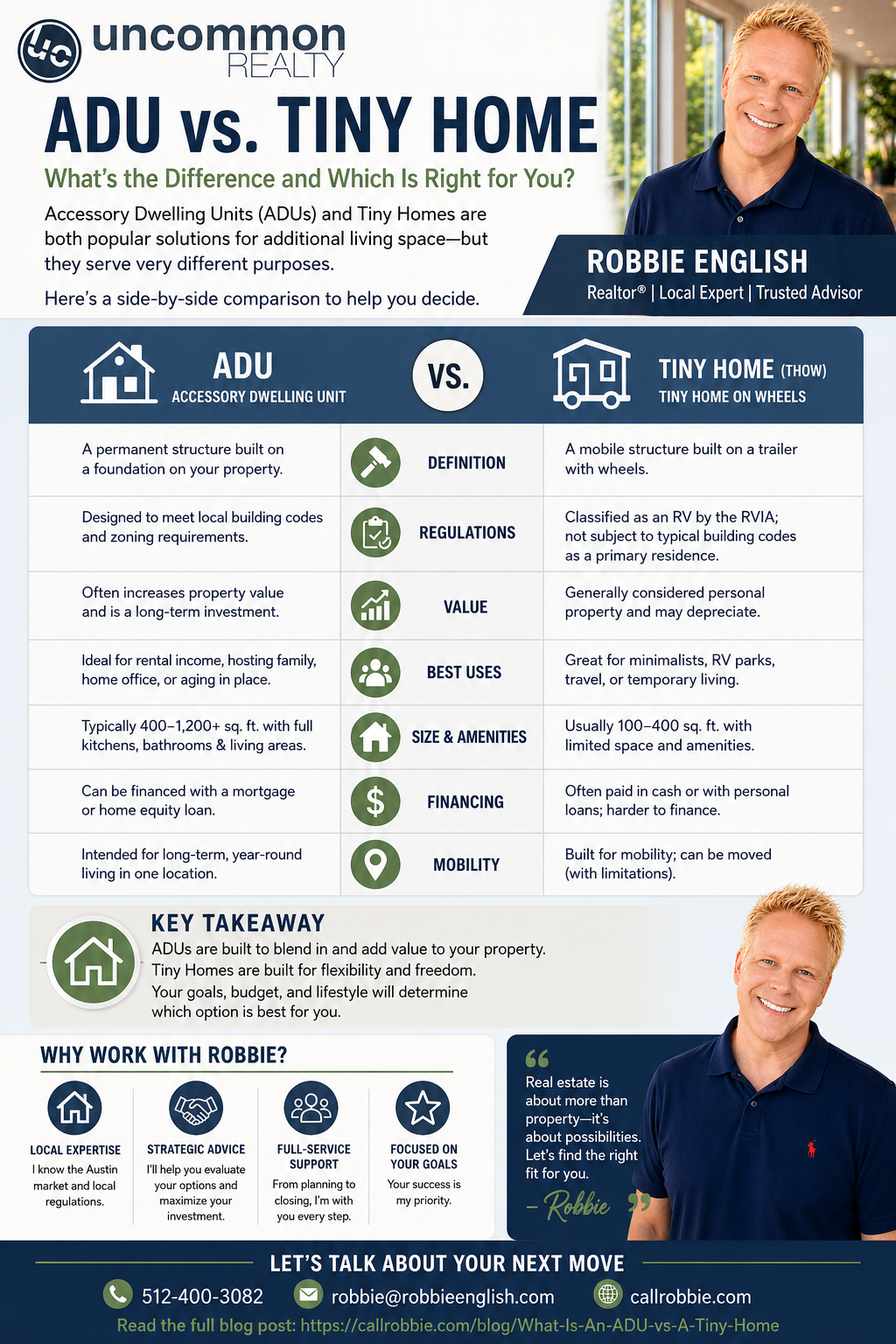
Key Differences Between ADUs And Tiny Homes
Once people start comparing these two options side by side, the differences become easier to understand.
An ADU functions as a permanent residential structure that becomes part of the property itself. It sits on a foundation, connects to city utilities, and meets building code requirements. Local governments generally recognize it as housing.
Tiny homes operate differently. Many of them are designed for portability or temporary placement. Some connect to utilities in creative ways. Others rely on off grid systems such as composting toilets or water tanks. Those characteristics can create regulatory challenges depending on where the structure sits.
The intended purpose also differs. ADUs often support multi generational living, long term guest housing, or rental opportunities. They blend into traditional residential environments because they follow the same structural standards as other homes.
Tiny homes usually focus on lifestyle experimentation. People who pursue tiny living often embrace simplicity, mobility, and creative design rather than long term property expansion.
This distinction becomes clear when discussing what is an ADU vs a tiny home with homeowners across Austin. Most people who want to expand the usefulness of their property lean toward ADUs because they integrate more naturally into the real estate framework.
Pros And Cons Of ADUs
ADUs offer several compelling advantages for homeowners.
First, they create flexibility. A backyard cottage can house visitors, extended relatives, or tenants depending on your needs. That adaptability makes properties more versatile over time.
Second, ADUs can contribute to property value. Buyers often appreciate properties that provide additional living space with independent functionality.
Third, they open the door for supplemental income in some situations. Renting an ADU can offset housing costs while allowing the owner to remain on site.
However, ADUs require planning and investment. Construction costs, permitting processes, and design considerations must all align with local regulations. The project also takes time to complete properly.
That is why many homeowners seek guidance before starting. Understanding what is an ADU vs a tiny home early in the process helps people choose the path that fits both their budget and their property.
Pros And Cons Of Tiny Homes
Tiny homes bring their own appeal.
The most obvious advantage involves simplicity. Smaller spaces require fewer materials and less maintenance. Many people appreciate the freedom that comes from living with fewer possessions.
Mobility can also be a benefit. Some tiny homes can move between locations, giving owners the flexibility to relocate when circumstances change.
On the other hand, regulatory uncertainty can create complications. Zoning restrictions, utility access, and placement rules sometimes limit where tiny homes can legally operate as primary housing.
This is why the conversation around what is an ADU vs a tiny home often shifts toward long term practicality. Tiny homes inspire imagination, while ADUs often provide stability within the traditional housing system.
How To Decide Between An ADU And A Tiny Home
Choosing between these options requires clarity about your goals.
If you want a permanent addition that integrates with your property and supports long term living arrangements, an ADU usually provides the strongest path. These structures align with residential standards and can enhance the overall usefulness of your property.
If your priority involves mobility, minimalism, or experimental living, a tiny home may offer an exciting alternative. Some individuals enjoy the independence and creativity that tiny living provides.
The key lies in understanding your property, your lifestyle, and local regulations before making decisions. Austin contains a wide variety of neighborhoods, each with different lot sizes, zoning overlays, and development patterns.
In areas like Northwest Austin, established neighborhoods often favor ADUs because they complement existing residential structures. In more rural areas outside the city, tiny homes sometimes find greater acceptance due to larger land parcels and fewer restrictions.
Working through these considerations can feel overwhelming without experienced guidance. That is where professional insight becomes invaluable.
Why Working With Robbie English Makes The Difference
Real estate decisions rarely happen in isolation. Every choice interacts with zoning regulations, neighborhood characteristics, resale considerations, and long term financial goals.
I am Robbie English, Broker, REALTOR at Uncommon Realty and I have spent decades helping clients navigate these layers of complexity. I believe clients deserve more than surface level advice. They deserve a strategic partner who studies real estate deeply and applies that knowledge in practical ways.
My career includes not only working with buyers and sellers throughout Central Texas but also teaching agents across the country as a national real estate speaker and instructor. That teaching experience pushes me to continually refine my understanding of the industry. The goal is simple. When my clients ask questions about what is an ADU vs a tiny home, they receive thoughtful guidance grounded in experience.
I have strategically worked to master the details of real estate so my clients gain a competitive advantage. When someone calls me about a property in Austin, Cedar Park, Leander, Georgetown, Round Rock, or surrounding communities, I bring decades of insight into the conversation. We evaluate the land, the zoning, the housing strategy, and the long term vision for the property.
That level of care creates trust. Many of my clients tell me they appreciate having someone who looks beyond the immediate transaction and considers how today's decisions shape tomorrow's opportunities.
The team at Uncommon Realty shares that mindset. We approach every client relationship with a focus on education, strategy, and clear communication. Our goal is not simply to close a deal. Our goal is to guide people toward real estate decisions that support their lives and investments over the long run.
So when you find yourself wondering what is an ADU vs a tiny home, remember that the answer does not live in a quick online search. The answer lives in understanding your property, your goals, and the regulations that shape how housing works in Austin.
And that is exactly where I can help.
If you are exploring housing possibilities, considering building on your property, or simply trying to understand how small dwellings fit into the Austin landscape, I would be honored to walk through those ideas with you. Again, I am Robbie English, Broker, REALTOR and my team at Uncommon Realty provide expert guidance for clients who want clarity, confidence, and a partner who truly understands the world of real estate.
After all, navigating real estate should never feel confusing. With the right guidance, it becomes an opportunity. And around here in Central Texas, opportunities are worth exploring. Y'all deserve nothing less.
Categories
- All Blogs (836)
- !!! (1)
- !x (562)
- Austin Real Estate (88)
- Bee Cave Real Estate (1)
- Building A Home (5)
- Buying A Home (112)
- Cedar Park Real Estate (56)
- Central Austin Real Estate (75)
- Downsizing (3)
- Downtown Austin Real Estate (5)
- Dripping Springs Real Estate (60)
- East Austin Real Estate (3)
- Financing and Mortgage (12)
- first-time homebuying (89)
- Georgetown Real Estate (5)
- Hill Country Real Estate (1)
- HOA (1)
- Home Appraisals (3)
- Home For Rent (1)
- Home Inspections (3)
- Home Pricing (1)
- Home Values (6)
- Homeownership (1)
- Homes For Rent (1)
- Homes For Sale (146)
- Hutto Real Estate (1)
- Lakeway Real Estate (32)
- Leander Real Estate (58)
- LGBT+ Real Estate (8)
- Luxury Homes For Sale (4)
- Luxury Real Estate (18)
- Market Conditions (9)
- Negotiations (1)
- Neighborhoods (8)
- Northwest Austin Real Estate (93)
- Off Market Listings (6)
- Pflugerville Real Estate (6)
- Private Listings (2)
- Property Management (42)
- Real Estate (11)
- Reddit Question Answered (73)
- redwrite (63)
- Renting (3)
- Representation (32)
- Round Rock Real Estate (55)
- Selling Your Home (38)
- Westlake Real Estate (2)
Recent Posts