Best Walkable Neighborhoods in Central Austin for Buyers Who Want Culture, Nightlife & Community

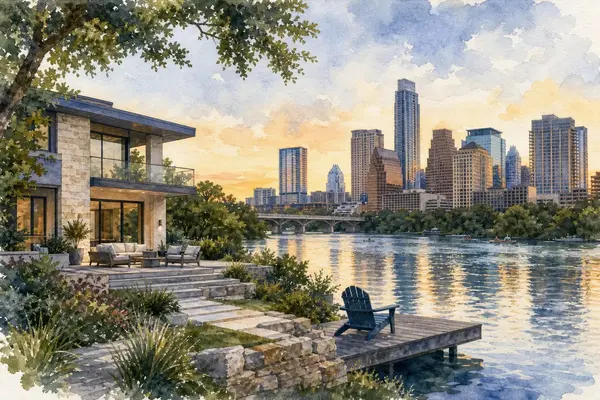
When buyers tell me they want a walkable neighborhood in Central Austin, they're usually chasing something more specific than "close to stuff." They want to step outside and actually use the neighborhood, coffee on foot, dinner without moving the car, a run that doesn't require driving to a trail first. That's a real, definable thing in Austin, but it's concentrated in specific pockets, not spread evenly across the city, and I want to walk through where it actually shows up and what you trade for it.

TL;DR
- Walkability in Austin isn't the dense, uniform grid you'd find in an older East Coast city. It shows up in specific pockets, not the whole urban core evenly.
- Neighborhoods like Hyde Park, the Bouldin Creek/Zilker area, Travis Heights, and the South Congress corridor are among the most genuinely walkable in Central Austin.
- Housing in these areas skews toward condos, townhomes, and smaller single-family lots, not large houses on big lots.
- Walkability commands a real price premium, and parking can be genuinely limited, both worth planning around.
- The right walkable neighborhood depends on which kind of walkable you want: a quiet coffee-and-dog-walk lifestyle, or a restaurant-and-nightlife one.
What "walkable" actually means here
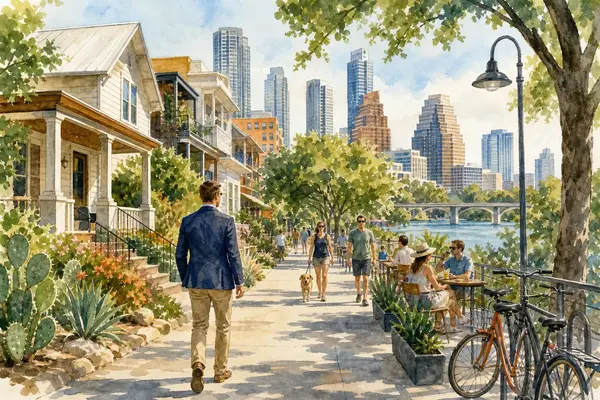
Austin didn't grow up as a dense, pre-car city the way Boston or Philadelphia did, so walkability here doesn't look like an endless grid of shops under apartments. It shows up in pockets: a neighborhood built around a specific commercial strip, a handful of blocks near a park, a corridor of restaurants and bars you can hit without driving between them. That distinction matters, because it means the "walkable Central Austin" search isn't really one search. It's several distinct pockets, each with its own character, and finding the right one depends on which version of walkable you're actually picturing.
Where it actually shows up
Hyde Park, just north of the University of Texas campus, is one of Austin's oldest and most walkable neighborhoods, with tree-lined streets, a genuine small-business commercial strip along Duval, and a slower, more residential feel than the bar-heavy areas closer to downtown. The Bouldin Creek and Zilker area, just south of Lady Bird Lake, gives you walkable access to South Lamar's restaurant and shopping corridor along with proximity to Zilker Park itself. Travis Heights and the South Congress corridor lean more into the restaurant and boutique scene that Austin is known for nationally, with genuine nightlife and foot traffic well into the evening. Each of these areas delivers walkability, but the day-to-day feel is genuinely different between a quiet Hyde Park morning and a Friday night on South Congress.
What you're actually buying: condos, townhomes, and smaller lots
Housing in Austin's walkable pockets skews heavily toward condos, townhomes, and smaller single-family homes on tighter lots, not sprawling houses with big yards. That's simply how these areas developed, prioritizing density and proximity over square footage. Single-family homes do exist in these neighborhoods, particularly in Hyde Park and Travis Heights, but they typically cost more for less space than you'd get the same distance out from downtown in a less walkable area. Understanding that tradeoff upfront saves you from comparing a walkable-area condo against a suburban single-family home and feeling like you're getting less for more.
The price premium is real
Walkability in Central Austin commands a genuine premium. You're paying for proximity, for the ability to leave your car parked for a weekend, and for a lifestyle a lot of buyers specifically want. That doesn't mean there's no value to be found, but it does mean you need to be strategic about where in these pockets you look and what specific tradeoffs you're willing to make on size or age of the home to get the location.
Parking and commuting: the parts people forget to ask about
Parking is genuinely tighter in walkable neighborhoods than in a standard suburban subdivision, and that's worth factoring into your decision, especially if you have more than one vehicle or frequently have guests. Walkability also reduces but doesn't eliminate your need to drive. You'll still commute to work, run errands that aren't in walking distance, and navigate the rest of the city by car sometimes. I'd encourage you to think through your actual weekly pattern, not an idealized car-free fantasy, before assuming a walkable neighborhood solves all your transportation needs.
Who actually thrives in these neighborhoods
Buyers who genuinely use their surroundings, walking to dinner, grabbing coffee on foot, being part of a visible, active street life, tend to be happiest in these pockets. If you value quiet and privacy over activity and proximity, a highly walkable neighborhood can feel more exposed and busier than you want, and that's worth being honest with yourself about before you commit. Neither preference is wrong. They're just different, and matching your actual daily habits to the neighborhood matters more here than almost anywhere else in the city.
Resale and long-term value
Walkable neighborhoods in Central Austin have generally held their value well over time, since the underlying appeal, proximity, walkability, established character, isn't something that can be replicated by new construction farther out. That said, resale strength varies by specific pocket and by how well a given home has been maintained or updated. A dated home in a strong walkable location can still be a smart long-term buy if you're realistic about renovation costs, but I'd encourage you to think of the location as the durable asset and the home itself as something you may need to invest in over time.
Noise, activity, and what daily life actually sounds like
One thing buyers new to walkable neighborhoods sometimes underestimate is how much more audible daily life is. Restaurant patios, foot traffic, live music spilling out of a bar on South Congress or near the Hyde Park commercial strip, these are part of the appeal for some buyers and a genuine annoyance for others. I'd encourage you to visit a home you're seriously considering in the evening, not just during a daytime showing, so you have an honest sense of what a Friday or Saturday night actually sounds and feels like from that specific address. A block or two of distance from the busiest commercial strip can make a real difference here, even within the same generally walkable neighborhood.
Common misconceptions
The biggest one is assuming all of Central Austin is equally walkable. It isn't. Walkability is concentrated in specific pockets, and a home ten minutes away by car can be in a completely different, much less walkable environment. The second misconception is assuming a walkable neighborhood is automatically the "best" choice. It's the best choice for buyers who will actually use it that way. For buyers who mostly drive anyway, the price premium may not be worth paying. A third misconception is assuming these neighborhoods are all equally loud or equally quiet. Noise and activity level vary meaningfully by specific block, not just by neighborhood name.
How this compares to buying farther out
If walkability isn't your top priority, it's worth genuinely comparing what the same budget gets you in a less central, less walkable part of the metro. You'll typically find more space, a newer home, and a lower price per square foot the farther you move from these walkable pockets, in exchange for needing to drive more for daily errands and entertainment. Neither approach is objectively right. I'd rather you make that comparison directly, with real numbers on both sides, than assume walkability is worth any price simply because it's desirable in the abstract.
Practical steps if you're prioritizing walkability
Get specific about which kind of walkable you want, quiet and residential like Hyde Park, or active and restaurant-driven like South Congress, since they're genuinely different experiences. Walk the actual blocks around any home you're considering, at different times of day, rather than trusting a general neighborhood reputation. Ask directly about parking, both for your own vehicles and for guests. And compare condo, townhome, and single-family options directly, since the tradeoffs between them vary block by block in these areas.
Summary
Walkable Central Austin isn't one neighborhood, it's several distinct pockets, each with a different character and a real price premium attached. Get clear on which kind of walkable actually fits your daily habits, understand that you're likely buying a condo, townhome, or smaller lot rather than a big house, and walk the specific blocks yourself before deciding which pocket is right for you.
Frequently Asked Questions
What are the most walkable neighborhoods in Central Austin?
Hyde Park, the Bouldin Creek and Zilker area, Travis Heights, and the South Congress corridor are among the most genuinely walkable, each with a different character ranging from quiet and residential to active and restaurant-driven.
Do walkable neighborhoods cost more in Austin?
Yes, generally. You're paying a premium for proximity and lifestyle, so being strategic about the specific pocket and home type matters more here than in less walkable areas.
Will I still need a car if I live in a walkable neighborhood?
Almost certainly, for at least some of your routine. Walkability reduces driving but doesn't eliminate it. Think through your actual weekly pattern rather than assuming a fully car-free lifestyle.
Should I expect a single-family home with a yard in these areas?
Not typically. Housing skews toward condos, townhomes, and smaller lots. Single-family homes exist but usually cost more for less space than the same distance out in a less walkable area.
If walkability is a real priority in your search, I'm happy to walk you through the specific pockets that actually match how you want to live.
Written for buyers and sellers in the Greater Austin, Texas area by Robbie English, REALTOR, Broker at Uncommon Realty.
Categories
- All Blogs (970)
- !!! (59)
- !x (621)
- Austin Real Estate (113)
- Bee Cave Real Estate (1)
- Building A Home (14)
- Buying A Home (143)
- Buying Land (1)
- Cedar Park Real Estate (58)
- Central Austin Real Estate (75)
- Down Payment Assistance Programs (1)
- Downsizing (4)
- Downtown Austin Real Estate (5)
- Dripping Springs Real Estate (62)
- East Austin Real Estate (3)
- Financing and Mortgage (24)
- first-time homebuying (109)
- Georgetown Real Estate (9)
- Hill Country Real Estate (1)
- HOA (2)
- Home Appraisals (13)
- Home For Rent (1)
- Home Inspections (6)
- Home Pricing (6)
- Home Staging (1)
- Home Values (12)
- Homeownership (1)
- Homes For Rent (1)
- Homes For Sale (147)
- Hutto Real Estate (5)
- Investing (6)
- Investment Properties (4)
- Lakeway Real Estate (33)
- Leander Real Estate (59)
- LGBT+ Real Estate (8)
- Luxury Homes For Sale (5)
- Luxury Real Estate (19)
- Market Conditions (17)
- Moving to Austin (2)
- Moving to Texas (4)
- Negotiations (3)
- Neighborhoods (8)
- Northwest Austin Real Estate (94)
- Off Market Listings (7)
- Pflugerville Real Estate (10)
- Private Listings (2)
- Property Management (42)
- Property Tax (3)
- Real Estate (18)
- Reddit Question Answered (80)
- redwrite (63)
- Relocation (2)
- Renting (6)
- Representation (34)
- Round Rock Real Estate (59)
- Selling Your Home (62)
- South Austin Real Estate (1)
- Westlake Real Estate (3)
Recent Posts