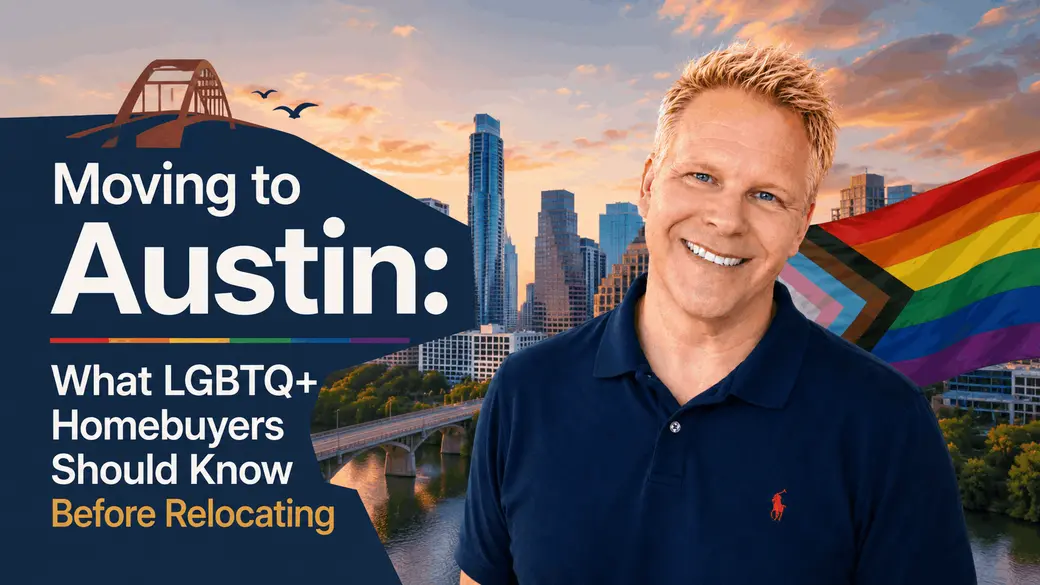
Moving to Austin: What LGBTQ+ Homebuyers Should Know Before Relocating
Moving to Austin as an LGBTQ+ buyer raises real, practical questions beyond the usual relocation checklist: what legal protections actually apply here, where the established community actually is, and how neighborhood choice works without it turning into a fair-housing gray area. I've helped relocation clients navigate this move, and this covers the specifics rather than general reassurance.
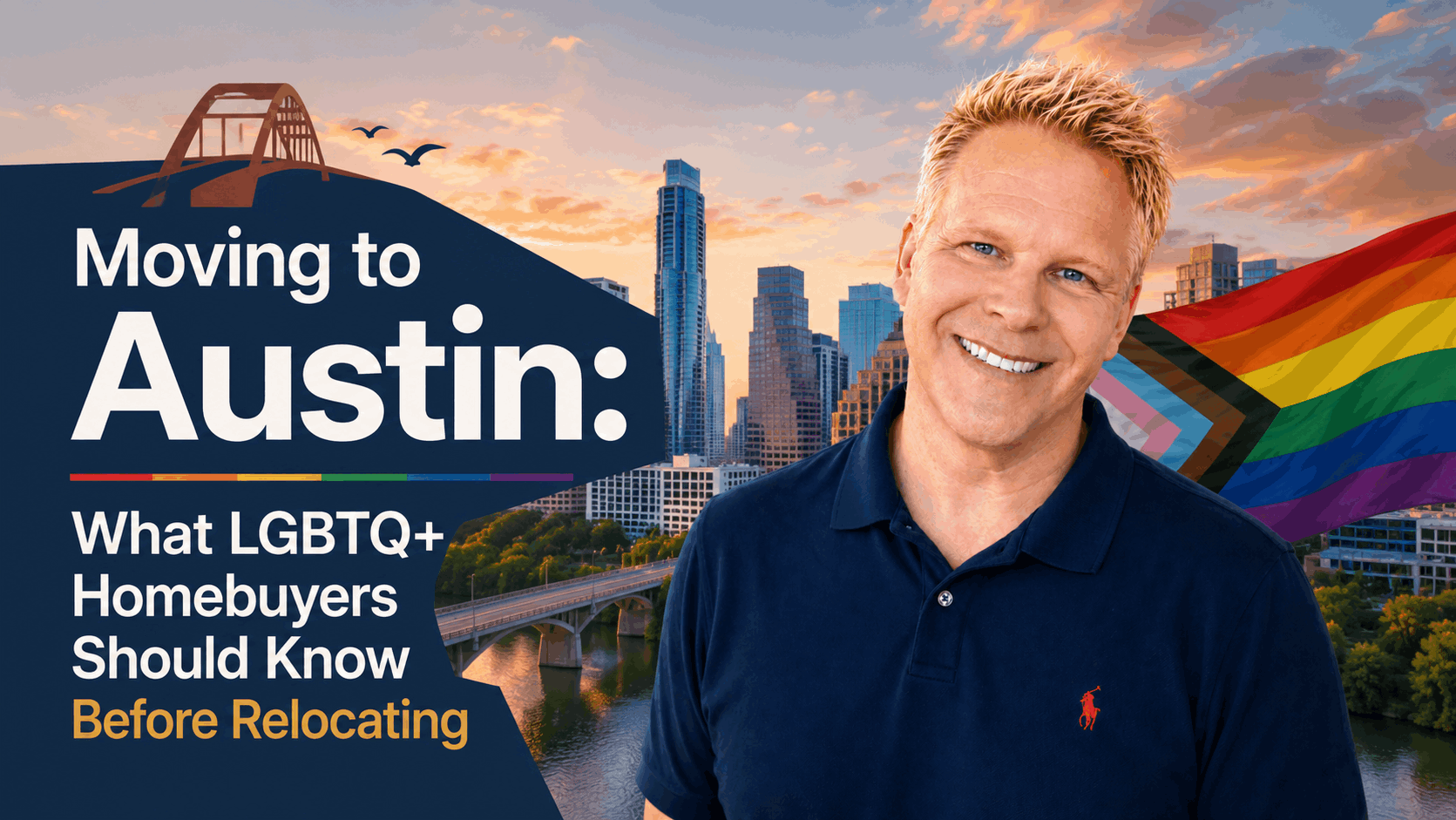
TLDR: Moving to Austin as an LGBTQ+ Homebuyer
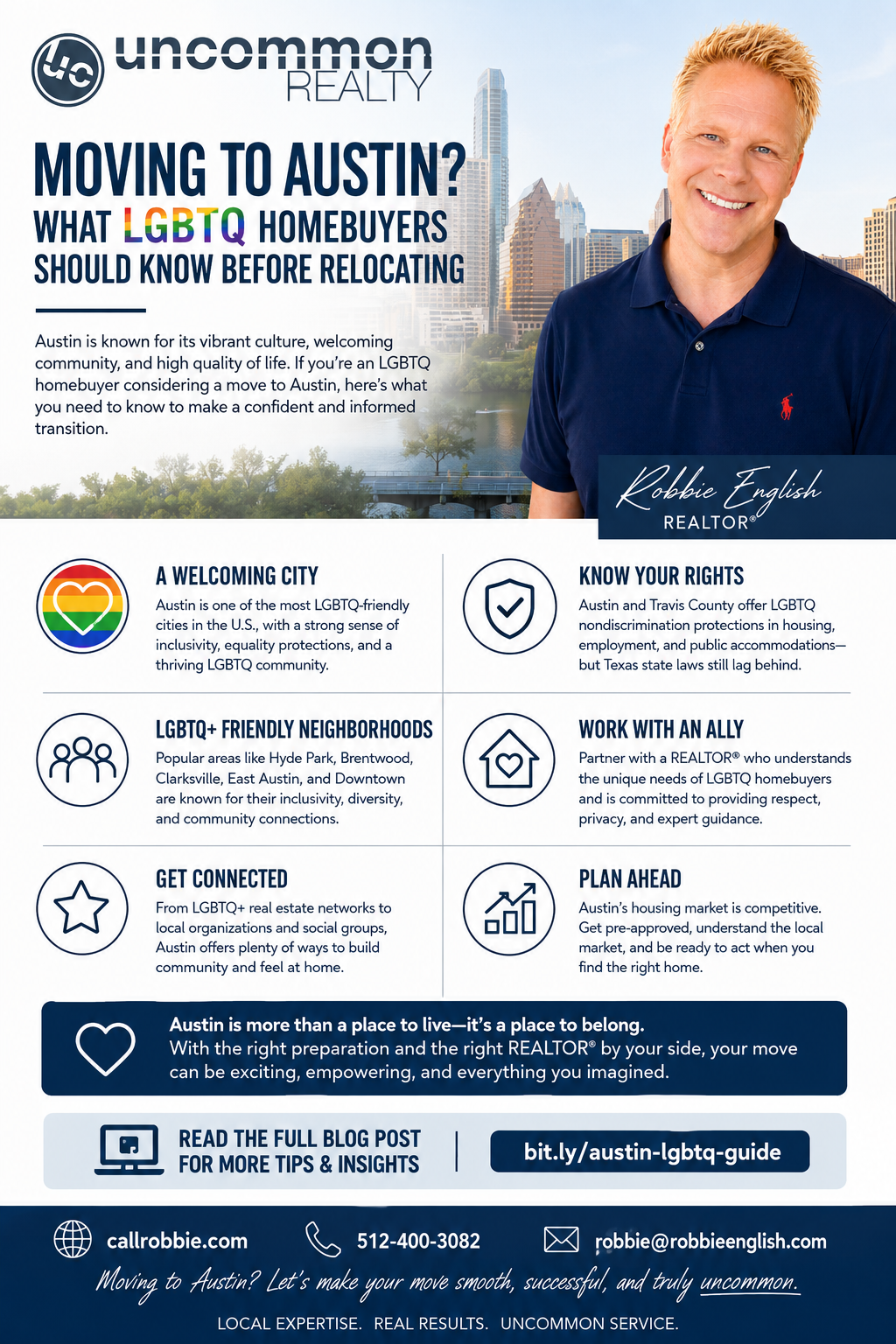
- Austin has a city-level nondiscrimination ordinance, but Texas does not have statewide LGBTQ+ protections — that distinction matters if you might live outside city limits.
- Austin Pride draws more than 400,000 people annually, and community isn't confined to one district anymore.
- Neighborhood choice comes down to density, commute, and lifestyle preferences that apply to any buyer — I'll walk you through the real tradeoffs, not steer you toward or away from any area.
- Central Austin, Northwest Austin, and the surrounding suburbs each offer a genuinely different day-to-day experience.
- Healthcare access and specific legal questions are best answered by a healthcare provider or organization like Equality Texas or Out Youth, not a real estate agent.
The Legal Landscape: City Ordinance vs. State Law
Austin has a city-level nondiscrimination ordinance covering housing, employment, and public accommodations based on sexual orientation and gender identity. That protection is solid inside city limits, but it stops applying the moment you're outside them — Texas does not have statewide LGBTQ+ nondiscrimination protections. This matters concretely if your search might extend into a surrounding suburb or unincorporated area, since the legal protections you have in Austin proper don't automatically follow you outside the city boundary. It's worth factoring into how far outside Austin you're willing to look, not just commute time and price.
Community Is Real, and It's Not Confined to One Neighborhood
Austin doesn't have a single historic "gayborhood" the way some older cities do — the community here is genuinely spread across the city rather than concentrated in one district. Austin Pride draws more than 400,000 attendees annually according to organizers, making it one of the larger Pride events in the country, and there's a steady calendar of smaller events and LGBTQ+-owned businesses scattered across multiple parts of town rather than one strip. If you're used to a city with one defined district, this can initially read as less visible, but it reflects how the community is actually organized here, not a smaller or less active one.
Neighborhoods: Real Tradeoffs, Not Steering
I want to be direct about this: I don't recommend neighborhoods based on protected characteristics, and I'd flag it if any agent did. What I can do is walk you through the same lifestyle tradeoffs I'd cover with any relocation buyer. Central Austin puts you closest to downtown density, walkability, restaurants, and nightlife. Northwest Austin trades some of that density for more space and a shorter commute to the tech corridor. Suburbs like Cedar Park, Round Rock, and Leander offer more room and newer construction, generally at a lower price per square foot, while sitting outside Austin's city ordinance boundary. Where you land should come down to budget, commute, and how you want to spend your daily life — the same factors that apply to any buyer.
Healthcare Access: A Question for the Right Professional
This comes up often enough that I want to address it directly rather than skip it, and be honest about where my expertise ends. Colorado and some other states currently have more protective state-level laws around LGBTQ+ healthcare access, including gender-affirming care, than Texas does right now, and Texas has passed restrictions in recent years that specifically affect minors. Laws in this area change quickly, and I'm not the right source for current legal detail — if healthcare access is a deciding factor for you or your family, talk to a healthcare provider or an organization like Equality Texas or Out Youth before finalizing a decision. What I can tell you is that Austin itself has LGBTQ+-affirming providers and clinics, even where state law is less favorable than some other states.
Working With a Lender and Title Company Who Get Relocation
Out-of-state buyers deal with logistics a local buyer doesn't: coordinating closing remotely, timing a lease-end or home sale in another state, and sometimes closing without being physically present. A lender and title company experienced with relocation buyers specifically — not just any lender — makes a real difference in how smoothly that coordination goes. I work with professionals who handle this regularly and can walk you through what remote closing actually looks like before you're in the middle of it.
The Job Market Behind Most Moves
Most of the LGBTQ+ clients I work with aren't choosing Austin in a vacuum — they're following a job, a partner's job, or leaving a state where they no longer feel represented. Austin's economy leans heavily on tech (Apple, Tesla, Oracle, a dense startup scene) along with state government and university jobs tied to UT. If your move is job-driven, start with where the actual offer is rather than assuming one part of the metro is inherently more welcoming than another — the city-level protections apply uniformly inside Austin regardless of which neighborhood you choose.
Building a Network After You Arrive
Relocating without an existing social circle is one of the harder parts of any move, regardless of who's moving. Austin has active communities built around shared interests — fitness, music, food, volunteering — and getting involved in those spaces tends to build genuine connections faster than waiting for a network to appear on its own. Beyond that, organizations focused specifically on LGBTQ+ community and advocacy, like Out Youth and Equality Texas, can be a good starting point if you're looking for community resources specifically, separate from the general social scene.
Common Mistakes Relocation Buyers Make
The mistakes I see aren't specific to any one group of buyers: underestimating how competitive well-priced listings are and losing homes to buyers who moved faster, focusing on price per square foot without weighing lifestyle fit, and skipping the step of actually driving a neighborhood at different times of day before committing. Preparation before you start touring — financing lined up, a clear sense of your must-haves, and realistic expectations about how fast good listings move — solves most of these before they become a problem.
Renting First vs. Buying Right Away
My advice here doesn't differ based on who's asking: if you've never spent real time in Austin outside a visit, I'll often suggest a six-to-twelve-month lease first, especially in a neighborhood you're not fully sold on. If you already know the city well through repeated visits or friends here, buying directly on a relocation trip is completely reasonable. What I'd avoid is buying sight unseen based only on photos — Austin summers, HOA rules, and how a neighborhood feels at different times of day are things you want to experience in person before committing.
Moving Quickly When the Right Home Comes Up
If you're relocating from out of state, real-time access to listings matters more than usual — homes in Austin's more competitive price bands can move in days. My mobile app gives you live MLS data so you can track new listings and price changes without waiting on a re-sent email, which is especially useful if you're still out of state and want to see what's coming on the market before booking a flight. I also work with lenders and title companies who are used to out-of-state and relocation buyers.
Working With Someone Who'll Be Straight With You
I'm Robbie English, Broker, REALTOR at Uncommon Realty, and if you're relocating to Austin, I'll give you honest information about the legal landscape, real neighborhood tradeoffs without steering, and point you to the right specialist when a question is outside my lane, like healthcare access or specific legal protections, so you can make this decision with complete information rather than guesswork.
Written for buyers and sellers in the Greater Austin, Texas area by Robbie English, REALTOR, Broker at Uncommon Realty.
Categories
- All Blogs (970)
- !!! (59)
- !x (621)
- Austin Real Estate (113)
- Bee Cave Real Estate (1)
- Building A Home (14)
- Buying A Home (143)
- Buying Land (1)
- Cedar Park Real Estate (58)
- Central Austin Real Estate (75)
- Down Payment Assistance Programs (1)
- Downsizing (4)
- Downtown Austin Real Estate (5)
- Dripping Springs Real Estate (62)
- East Austin Real Estate (3)
- Financing and Mortgage (24)
- first-time homebuying (109)
- Georgetown Real Estate (9)
- Hill Country Real Estate (1)
- HOA (2)
- Home Appraisals (13)
- Home For Rent (1)
- Home Inspections (6)
- Home Pricing (6)
- Home Staging (1)
- Home Values (12)
- Homeownership (1)
- Homes For Rent (1)
- Homes For Sale (147)
- Hutto Real Estate (5)
- Investing (6)
- Investment Properties (4)
- Lakeway Real Estate (33)
- Leander Real Estate (59)
- LGBT+ Real Estate (8)
- Luxury Homes For Sale (5)
- Luxury Real Estate (19)
- Market Conditions (17)
- Moving to Austin (2)
- Moving to Texas (4)
- Negotiations (3)
- Neighborhoods (8)
- Northwest Austin Real Estate (94)
- Off Market Listings (7)
- Pflugerville Real Estate (10)
- Private Listings (2)
- Property Management (42)
- Property Tax (3)
- Real Estate (18)
- Reddit Question Answered (80)
- redwrite (63)
- Relocation (2)
- Renting (6)
- Representation (34)
- Round Rock Real Estate (59)
- Selling Your Home (62)
- South Austin Real Estate (1)
- Westlake Real Estate (3)
Recent Posts