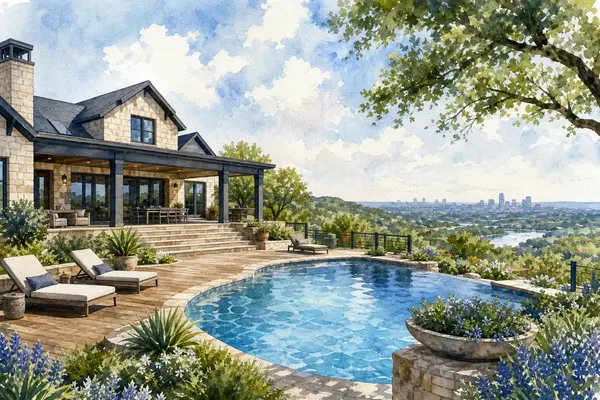
Older Homes vs New Construction in Northwest Austin: Which Is Better?

If you have been researching new construction vs older homes Austin, you have probably noticed that opinions are everywhere. Some buyers insist that new construction is the only logical choice. Others believe older homes offer more character, better locations, and stronger long-term value. After helping buyers throughout Northwest Austin for decades, I can confidently tell you that neither option is automatically better. The right choice depends entirely on your goals, lifestyle preferences, budget, and long-term plans. Understanding the strengths and weaknesses of both options is the key to making a confident decision.
I'm Robbie English, Broker, REALTOR at Uncommon Realty, I have spent years helping buyers compare established Northwest Austin neighborhoods with newer suburban communities. I have worked with first-time buyers, executives relocating to Austin, move-up buyers, downsizers, and people searching for the perfect balance between convenience and lifestyle. During those conversations, the topic of new construction vs older homes Austin comes up constantly because buyers want to understand which option provides the greatest overall value.
One of the reasons buyers trust me is because I have dedicated my career to mastering real estate for the benefit of my clients. In addition to helping buyers and sellers throughout Central Texas, I am also a national real estate speaker and real estate instructor who teaches agents across the country. My clients benefit from decades of practical experience, extensive local knowledge, advanced negotiation skills, and an educational approach designed to help them make informed decisions rather than emotional mistakes.
The answer to understanding new construction vs older homes Austin is not found in a generic online article or a quick social media post. It requires evaluating the location, neighborhood, construction quality, maintenance expectations, future flexibility, and lifestyle advantages associated with each property. My goal is to help buyers understand these factors so they can make decisions that align with their long-term goals.
I also provide buyers with access to my intuitive real estate mobile app. My app connects users directly to up-to-date MLS listings and advanced search functionality. Buyers can create highly customized searches, organize favorite properties, compare homes, and receive alerts when new opportunities hit the market. The app allows you to search by neighborhood, age of home, lot size, architectural style, property type, and numerous other criteria. If you have questions regarding properties related to new construction vs older homes Austin, you can contact me directly through the app and receive guidance throughout the search process.

TLDR: Older Homes Vs New Construction In Northwest Austin: Which Is Better?
- Older homes offer character and established locations.
- New homes provide modern features and efficiency.
- Larger lots often favor older neighborhoods.
- Maintenance expectations vary significantly.
- The best choice depends on your personal goals.
Why This Debate Continues To Dominate Buyer Conversations
I understand why this topic generates so much discussion. Buyers face meaningful trade-offs when comparing older homes and new construction. Each option offers distinct advantages that appeal to different priorities.
Many relocating buyers arrive in Austin expecting to purchase new construction because that is what they purchased in previous cities. Once they begin touring Northwest Austin neighborhoods such as Great Hills, Northwest Hills, Jester Estates, Canyon Creek, and River Place, they often discover a completely different perspective. Mature trees, established streets, unique architecture, and larger lots create an appeal that many newer developments struggle to replicate.
At the same time, buyers touring new construction communities frequently appreciate the modern floor plans, energy efficiency, updated technology, and reduced maintenance concerns associated with newer homes. These advantages can be extremely compelling depending on individual circumstances.
Throughout my career, I have helped buyers evaluate both options objectively. My role is not to steer someone toward one type of property. Instead, I help clients identify the housing characteristics that matter most to them and then determine which option aligns best with those priorities.
Whenever I discuss neighborhoods in this post, I want to emphasize an important point. My comments should not be interpreted as steering. Federal Fair Housing laws exist to protect consumers. Every buyer should independently evaluate all neighborhoods that appeal to them and determine which area best aligns with their goals. The communities mentioned here are simply areas worth exploring during your research process.
Character And Architecture: Where Older Homes Shine
One of the biggest differences between older homes and new construction involves character. Buyers often notice this immediately.
Established Northwest Austin neighborhoods frequently feature architectural diversity that developed over many years. Driving through communities such as Northwest Hills, Great Hills, or Jester Estates reveals a variety of home styles, elevations, rooflines, and design elements. No two streets feel exactly alike.
Many older homes were built during periods when builders experimented with different architectural concepts. Buyers often find unique floor plans, custom details, mature landscaping, and distinctive curb appeal. This individuality can create a strong emotional connection.
I frequently work with buyers who initially focus on square footage and amenities. After touring established neighborhoods, they begin noticing qualities they had not previously considered. The charm of mature trees, the personality of custom architecture, and the overall atmosphere of established communities often leave a lasting impression.
New construction communities generally prioritize consistency. Buyers may appreciate this because it creates a cohesive appearance throughout the neighborhood. Modern homes often feature open floor plans, larger kitchen islands, contemporary finishes, and design elements aligned with current buyer preferences.
Neither approach is inherently superior. Some buyers love individuality while others prefer uniformity. Understanding your personal preferences is essential.
Lot Sizes And Outdoor Space
Another major difference between older homes and new construction involves lot size. This factor often surprises buyers relocating from other parts of the country.
Many established Northwest Austin neighborhoods were developed during a period when larger lots were more common. Buyers frequently discover expansive yards, mature trees, and greater separation between homes. These characteristics can create a sense of privacy and space that many people appreciate.
I often hear buyers comment on the amount of usable outdoor space available in older communities. Large backyards create opportunities for gardening, outdoor entertaining, recreational activities, and future property improvements.
New construction neighborhoods typically prioritize efficiency. Builders seek to maximize available land while creating attractive communities. As a result, lot sizes in many newer developments may be smaller than what buyers find in older Northwest Austin neighborhoods.
This does not mean smaller lots are undesirable. Many buyers prefer reduced yard maintenance and appreciate spending less time caring for outdoor spaces. The right choice depends on your lifestyle preferences.
When helping buyers compare properties, I encourage them to think realistically about how they plan to use outdoor space. A large lot sounds appealing, but not everyone wants the responsibility that accompanies it.
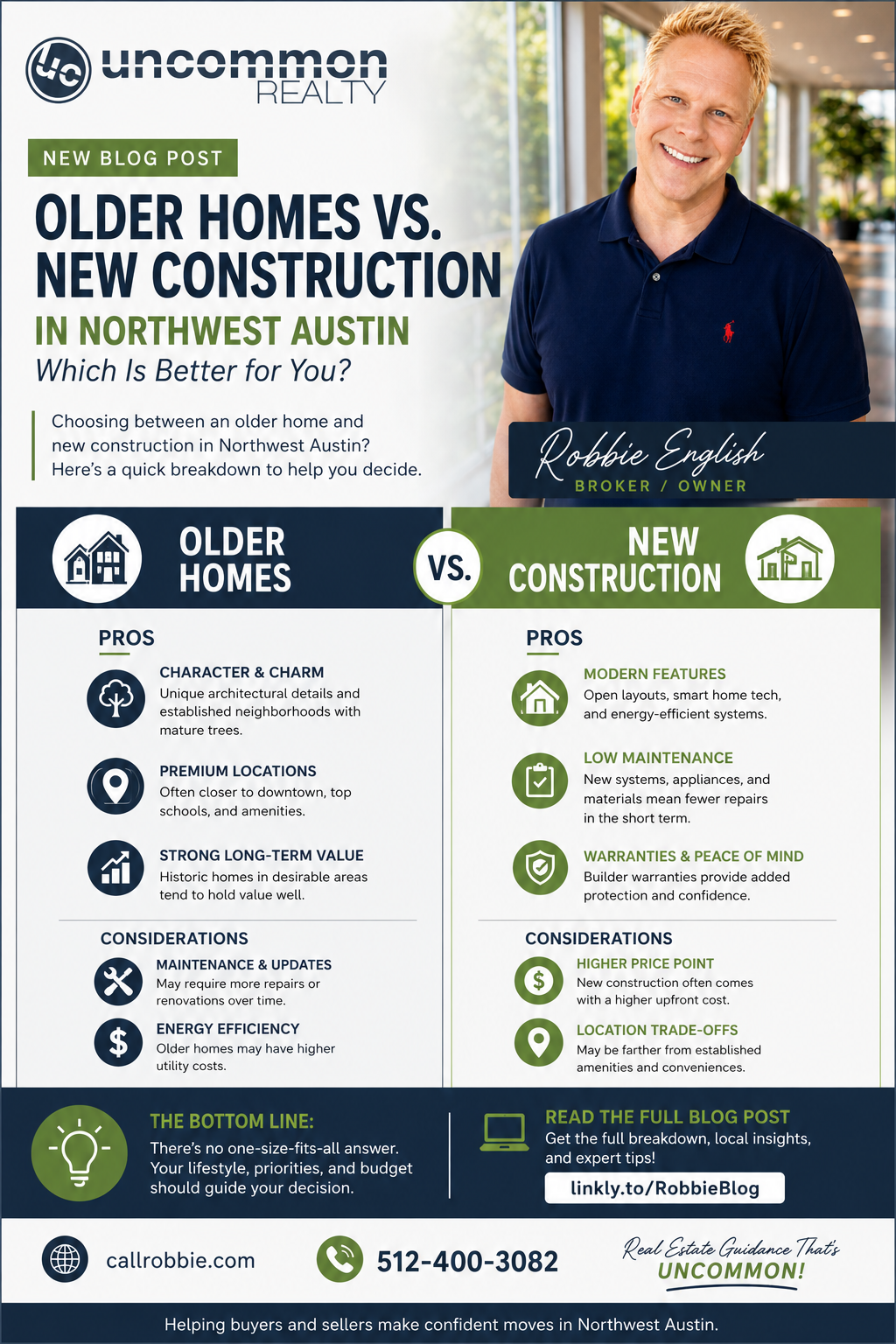
Energy Efficiency And Modern Building Standards
New construction often enjoys a significant advantage when it comes to energy efficiency. Advances in building materials, insulation, windows, HVAC systems, and construction techniques have improved dramatically over time.
Many newer homes feature energy-efficient windows, enhanced insulation packages, modern appliances, and advanced climate control systems. These features can contribute to improved comfort and potentially lower utility costs.
Builders also incorporate technologies that did not exist when many older homes were originally constructed. Smart home features, advanced security systems, modern wiring, and integrated technology solutions often appeal to today's buyers.
Older homes can certainly achieve similar performance levels through upgrades and renovations. However, buyers should understand that these improvements may require additional investment.
I frequently remind clients that efficiency should be evaluated carefully. Some older homes have undergone extensive upgrades and perform exceptionally well. Conversely, not every new home automatically delivers identical performance. The specifics matter.
Evaluating energy efficiency requires looking beyond age alone and understanding the actual features present within the property.
Why Many Buyers Fall In Love With Established Northwest Austin
One of the most rewarding experiences I have as a REALTOR involves watching buyers discover Northwest Austin for the first time. Many arrive focused exclusively on new construction. After touring established neighborhoods, their perspective often changes.
They notice the mature canopy of trees. They appreciate the winding streets and varied architecture. They enjoy the proximity to parks, shopping, dining, and employment centers. The neighborhoods feel established because they are established.
I remember working with a relocating buyer who was convinced they wanted a newly built home. After touring Northwest Hills, they completely changed direction. The buyer told me the neighborhood simply felt right. The mature landscaping, custom homes, and overall atmosphere created an emotional connection they never experienced in the new construction communities they visited.
Stories like that occur regularly because housing decisions involve more than features and specifications. The feeling of a neighborhood matters.
Why New Construction Continues To Attract Buyers
Despite the appeal of older neighborhoods, new construction remains extremely popular for good reason. Many buyers appreciate moving into a home where everything is new.
There is comfort in knowing that major systems have not experienced years of wear and tear. New roofs, HVAC systems, plumbing components, electrical systems, and appliances can reduce maintenance concerns during the early years of ownership.
Buyers also appreciate contemporary design. Open layouts, large kitchens, flexible spaces, home offices, and modern finishes often align closely with current lifestyle preferences.
For some people, customization represents another major advantage. Depending on the stage of construction, buyers may have opportunities to select finishes, colors, fixtures, and upgrades that personalize the home before completion.
These benefits create compelling reasons for many buyers to pursue new construction rather than established properties.
Renovation Costs And Hidden Opportunities
One of the most important considerations when comparing older homes and new construction involves renovation costs. Buyers often assume that older homes automatically require major investments, but the reality is much more nuanced.
Some older homes need extensive updating. Others have already undergone significant renovations. Many properties fall somewhere in the middle. A home may have an updated kitchen but original bathrooms. Another property may feature modern systems while retaining older cosmetic finishes. Understanding these differences is critical.
I frequently encourage buyers to separate cosmetic improvements from major infrastructure concerns. Cosmetic updates often provide opportunities to personalize a home while building equity over time. Major structural or system-related issues require a different level of consideration.
One advantage older homes can provide is flexibility. Buyers may choose to complete improvements gradually rather than paying for every upgrade upfront. This approach allows homeowners to prioritize projects based on budget, preferences, and long-term goals.
I have worked with many buyers who purchased older homes and transformed them over time into properties perfectly aligned with their vision. They appreciated the opportunity to make thoughtful improvements while enjoying the benefits of an established location.
At the same time, buyers should approach renovations with realistic expectations. Costs can add up quickly. Careful planning and professional guidance help ensure that renovation decisions support long-term value rather than creating unnecessary financial strain.
Understanding HOA Differences
Homeowners associations often represent another significant distinction between older neighborhoods and newer communities. Buyers frequently underestimate how much HOA structures can influence their ownership experience.
Many established Northwest Austin neighborhoods either have modest homeowners associations or no HOA at all. Buyers who value flexibility often appreciate this characteristic. They may enjoy fewer restrictions regarding property modifications, landscaping decisions, and exterior improvements.
New construction communities frequently include more active HOA involvement. These associations often maintain common areas, manage amenities, enforce community standards, and support neighborhood appearance. Many buyers appreciate these services because they contribute to a cohesive community environment.
Neither approach is inherently better. The right choice depends on individual preferences. Some buyers enjoy the structure and consistency associated with active homeowners associations. Others prefer greater autonomy.
Whenever evaluating a property, I encourage buyers to review HOA documents carefully. Understanding rules, fees, responsibilities, and expectations helps avoid surprises after closing.
The goal is finding a community structure that aligns with your lifestyle rather than discovering conflicts later.
Maintenance Expectations Over Time
Maintenance is one of the most practical considerations buyers should evaluate when comparing older homes and new construction. Every home requires maintenance, but the timing and nature of that maintenance often differ.
New construction generally provides a period during which major systems are relatively new. Buyers may experience fewer immediate maintenance concerns because roofs, HVAC systems, appliances, plumbing components, and electrical systems have recently been installed.
However, newer homes are not maintenance-free. Routine upkeep remains important. Exterior surfaces, landscaping, mechanical systems, and other components still require attention. Homeownership always involves responsibility regardless of the property's age.
Older homes often require a more detailed evaluation. Buyers should understand the age and condition of major systems. A home with updated mechanical components may provide years of reliable performance. Conversely, deferred maintenance can create future expenses.
I spend considerable time helping buyers understand these distinctions. The goal is not to avoid older homes. Rather, it is to make informed decisions based on actual conditions rather than assumptions.
Many older homes have been exceptionally maintained by previous owners. Some newer homes may still require adjustments or warranty work. Every property deserves individual evaluation.
Long-Term Appreciation And Desirability
One of the questions buyers ask most frequently involves long-term appreciation potential. While no one can predict future performance with certainty, several factors influence long-term desirability.
Location remains one of the most important considerations. Established Northwest Austin neighborhoods often benefit from proximity to employment centers, shopping destinations, dining options, recreational amenities, and transportation corridors. These characteristics contribute to ongoing buyer interest.
Many older neighborhoods also enjoy limited opportunities for additional development. This scarcity can enhance desirability because buyers cannot easily replicate the location.
New construction communities offer different advantages. Modern design, updated infrastructure, and contemporary amenities often attract strong buyer interest. As communities mature, they can develop their own distinct identity and appeal.
Rather than focusing exclusively on appreciation, I encourage buyers to think about future flexibility. Properties that appeal to a broad range of future buyers often provide greater options if circumstances change.
The most successful buyers typically balance immediate lifestyle goals with long-term considerations. This perspective helps create decisions that support both present enjoyment and future opportunities.
Which Buyers Often Prefer Older Homes
Throughout my career, I have observed patterns among buyers who gravitate toward older homes. While every buyer is unique, certain preferences frequently emerge.
Many people who choose older homes value character and individuality. They appreciate unique architecture, mature trees, larger lots, and established neighborhood atmospheres. These buyers often enjoy the sense of permanence found throughout Northwest Austin's older communities.
Some buyers prioritize location above all else. They want convenient access to employment centers, shopping destinations, restaurants, and recreational opportunities. Older neighborhoods often provide these advantages because of their established positions within the city.
Others enjoy the idea of personalizing a property over time. They see opportunity in homes that may benefit from thoughtful updates and improvements.
One thing I consistently notice is that buyers attracted to older homes often develop a strong emotional connection to the neighborhoods themselves. The character of the community becomes just as important as the house.
Which Buyers Often Prefer New Construction
Buyers who prefer new construction frequently prioritize convenience and predictability. They appreciate moving into a home where everything is new and designed around contemporary lifestyles.
Modern floor plans often appeal to buyers seeking open living spaces, large kitchens, flexible rooms, and integrated technology features. These homes frequently align closely with current design preferences.
Some buyers value the reduced maintenance expectations associated with newer construction. Knowing that major systems have recently been installed can provide peace of mind during the early years of ownership.
Customization also attracts many buyers. Depending on the stage of construction, buyers may have opportunities to select finishes, colors, fixtures, and upgrades before moving in.
I frequently work with relocating buyers who appreciate the simplicity associated with new construction. The ability to move into a turnkey property without immediate renovation projects can be highly attractive.
Why There Is No Universal Answer
One of the most important lessons I share with buyers is that there is no universal answer to the new construction versus older home debate. The right decision depends entirely on your priorities.
I have worked with buyers who initially wanted new construction but ultimately purchased older homes. I have also helped buyers who began their search focused on established neighborhoods and later chose newly built communities. Both outcomes can be successful.
The key is understanding what matters most to you. Do you prioritize character or convenience? Do you value larger lots or modern features? Do you prefer established neighborhoods or emerging communities?
Once buyers identify their true priorities, the decision-making process often becomes much clearer.
This is why I spend significant time asking questions rather than simply showing properties. Understanding a buyer's goals allows me to provide guidance tailored to their specific needs rather than generic advice.
Fair Housing Considerations And Neighborhood Research
Whenever discussing neighborhoods, I believe it is important to address fair housing considerations directly. Federal Fair Housing laws protect certain classes, and housing decisions should always be approached thoughtfully.
If I mention communities such as Great Hills, Northwest Hills, Jester Estates, Canyon Creek, River Place, Avery Ranch, or other neighborhoods throughout this article, those references should be viewed as areas worth exploring rather than recommendations directing you toward a specific location. Every buyer should independently evaluate all communities that align with their goals and determine which neighborhoods best fit their preferences.
Many buyers use the word family when discussing housing decisions. While I understand the intent, protected class considerations require us to move carefully. The best neighborhood is the one that works for you and the people important in your life after conducting thorough research and due diligence.
Similarly, when it comes to topics such as crime statistics, buyers should rely on independent sources they trust. My role is to help you understand housing opportunities, neighborhood characteristics, and market considerations while encouraging appropriate research on factors important to your decision-making process.
How My Mobile App Helps Buyers Compare Both Options
One challenge buyers face when evaluating older homes and new construction is staying organized. Comparing different neighborhoods, property types, builders, and architectural styles can quickly become overwhelming.
My intuitive real estate mobile app was designed to solve that problem. The app provides direct access to up-to-date MLS listings and advanced search tools that allow highly customized property searches.
Buyers can search by age of home, neighborhood, lot size, architectural style, price range, property type, and many other criteria. The app makes it easy to compare older homes and newer properties side by side.
Users can save favorites, organize searches, compare opportunities, and receive alerts when new listings become available. These features help buyers stay informed while avoiding information overload.
Most importantly, the app keeps buyers connected directly to me. If questions arise about a property, neighborhood, renovation potential, HOA structure, or market conditions, expert guidance is readily available.
For buyers researching new construction vs older homes Austin, this combination of technology and professional support creates a powerful advantage.
Why Working With Robbie English Gives You An Edge
Real estate decisions involve more than selecting a property. They involve understanding trade-offs, evaluating opportunities, managing risk, and making informed choices.
Again, I'm Robbie English, Broker, REALTOR, I have spent decades helping buyers navigate these decisions. My experience includes working with people purchasing older homes, new construction, condominiums, townhomes, luxury properties, and everything in between.
I have strategically worked to master real estate for the benefit of my clients. As a national real estate speaker and instructor, I teach agents throughout the country while continually refining my expertise. That knowledge directly benefits the buyers I serve.
When clients work with me, they gain access to local knowledge, advanced search tools, negotiation expertise, market insight, and a commitment to helping them achieve their goals. I believe buyers deserve more than transaction management. They deserve guidance from someone genuinely invested in their success.
Final Thoughts On Older Homes Vs New Construction In Northwest Austin
The new construction vs older homes Austin debate will continue because both options offer meaningful advantages. Older homes provide character, established locations, mature landscaping, larger lots, and unique architectural appeal. New construction offers modern design, energy efficiency, updated systems, and contemporary conveniences.
The right choice depends on your goals, priorities, lifestyle preferences, and long-term plans. Neither option is automatically superior. Success comes from understanding the trade-offs and selecting the property that aligns best with your objectives.
The neighborhoods discussed throughout this article should be considered areas worth exploring rather than recommendations directing you toward a specific housing choice. Every buyer should conduct independent research and evaluate all communities that appeal to them before making a decision.
If you are trying to determine whether an older home or new construction makes the most sense for your situation, I would love the opportunity to help. My team and I provide expert guidance, advanced MLS search tools, local expertise, and decades of experience that can help simplify the decision-making process.
Be sure to use my intuitive real estate mobile app to access up-to-date listings, create customized searches, compare properties, organize opportunities, and receive alerts the moment new homes hit the market. Together, we can evaluate your options and find the property that best supports your next chapter in Northwest Austin.
Categories
- All Blogs (970)
- !!! (59)
- !x (621)
- Austin Real Estate (113)
- Bee Cave Real Estate (1)
- Building A Home (14)
- Buying A Home (143)
- Buying Land (1)
- Cedar Park Real Estate (58)
- Central Austin Real Estate (75)
- Down Payment Assistance Programs (1)
- Downsizing (4)
- Downtown Austin Real Estate (5)
- Dripping Springs Real Estate (62)
- East Austin Real Estate (3)
- Financing and Mortgage (24)
- first-time homebuying (109)
- Georgetown Real Estate (9)
- Hill Country Real Estate (1)
- HOA (2)
- Home Appraisals (13)
- Home For Rent (1)
- Home Inspections (6)
- Home Pricing (6)
- Home Staging (1)
- Home Values (12)
- Homeownership (1)
- Homes For Rent (1)
- Homes For Sale (147)
- Hutto Real Estate (5)
- Investing (6)
- Investment Properties (4)
- Lakeway Real Estate (33)
- Leander Real Estate (59)
- LGBT+ Real Estate (8)
- Luxury Homes For Sale (5)
- Luxury Real Estate (19)
- Market Conditions (17)
- Moving to Austin (2)
- Moving to Texas (4)
- Negotiations (3)
- Neighborhoods (8)
- Northwest Austin Real Estate (94)
- Off Market Listings (7)
- Pflugerville Real Estate (10)
- Private Listings (2)
- Property Management (42)
- Property Tax (3)
- Real Estate (18)
- Reddit Question Answered (80)
- redwrite (63)
- Relocation (2)
- Renting (6)
- Representation (34)
- Round Rock Real Estate (59)
- Selling Your Home (62)
- South Austin Real Estate (1)
- Westlake Real Estate (3)
Recent Posts