
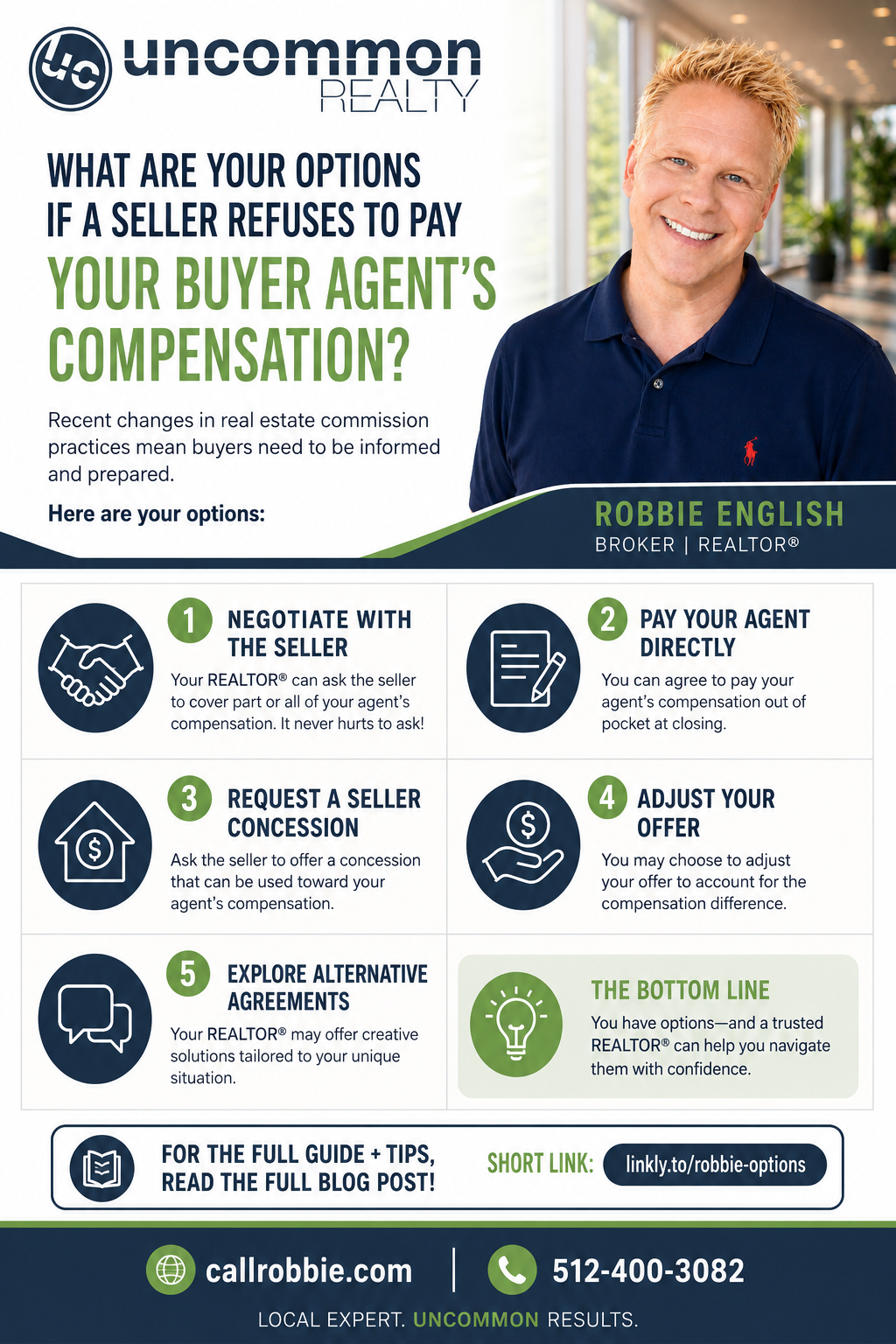
What Are Your Options If a Seller Refuses to Pay Your Buyer Agent's Compensation?

If you've recently started searching for a home and discovered that a seller won't pay buyer agent commission, you're not alone. This has become one of the most common questions I receive from buyers throughout Central Texas and the Austin Metropolitan Area. The rules surrounding buyer representation and compensation changed significantly in recent years, creating confusion for many buyers who are trying to understand their options.
The good news is that a seller won't pay buyer agent commission situation does not mean you have to abandon your home search, proceed without professional representation, or make decisions that could put your financial future at risk. In fact, there are several strategies that can help buyers navigate these situations successfully.
I am Robbie English, Broker, REALTOR, ABR, AHWD, BBA, C2EX, CRB, E-PRO, GRI, MRP, PSA, RENE, RPR, SFR, SRS, TAHS, TBS, TLS at Uncommon Realty, I spend a tremendous amount of time helping buyers understand their options before they write an offer. And yes, I know those are a lot of initials there after my name; click here to find out what they mean. My goal is not simply to unlock doors and show houses. My responsibility is to help buyers understand contracts, negotiations, inspections, title issues, property taxes, financing implications, and the dozens of decisions that occur throughout a transaction. Because I am also a national real estate speaker and real estate instructor who teaches agents across the country, I approach buyer representation differently than many agents. I believe educated buyers make better decisions.
When buyers ask me about a seller won't pay buyer agent commission scenario, I don't immediately jump to one solution. Instead, I evaluate every available option and help my clients choose the strategy that creates the strongest overall outcome. That approach has helped countless buyers successfully navigate changing market conditions while protecting their interests throughout the transaction.
Before we discuss the specific options available to buyers, it is important to understand why these conversations are happening more frequently and what has changed within the industry.

TLDR: What Are Your Options If a Seller Refuses to Pay Your Buyer's Agent's Compensation?
- Compensation can still be negotiated during an offer.
- Seller concessions may help offset buyer expenses.
- Buyers can pay compensation directly when necessary.
- Representation agreements should be reviewed carefully before touring homes.
- Professional representation often saves more money than it costs.
Why Seller-Paid Buyer Agent Compensation Changed
For many years, buyers rarely thought about how their agent was compensated. Compensation structures existed largely behind the scenes, and many consumers never had a detailed conversation about how representation worked.
Industry changes following the 2024 NAR settlement created a different environment. Compensation can no longer be communicated through MLS systems in the same manner it once was. As a result, buyers and agents must discuss compensation more directly and more transparently before touring homes and entering into negotiations.
Many buyers initially worried these changes would eliminate professional representation or make homeownership more difficult. That has not been my experience. Instead, the changes have created more conversations about how compensation is structured and who ultimately pays it.
The reality is that compensation remains negotiable. That single fact is often the most important thing buyers need to understand. Every transaction stands on its own. Every seller has different motivations. Every property presents different opportunities. Because of that, compensation discussions often become part of the overall negotiation process.
Does The Seller Have To Pay Your Buyer's Agent?
No.
A seller is not obligated to pay compensation to a buyer's agent. That fact surprises some buyers because they became accustomed to a system where compensation was often offered without extensive discussion. Today, sellers have choices.
- Some sellers continue offering compensation because they want to attract the broadest pool of buyers possible.
- Some sellers choose not to offer compensation initially but remain willing to negotiate.
- Others decide they do not want to contribute toward buyer representation under any circumstances.
- The important point is that compensation remains negotiable.
A seller refusing compensation at the beginning of a transaction does not necessarily mean that position remains unchanged throughout negotiations. This is where professional representation becomes especially valuable. Understanding how to structure negotiations can often create opportunities that buyers might otherwise overlook.
Option #1: Ask The Seller To Pay During Negotiations
One of the most effective strategies involves requesting compensation as part of the overall offer package. Many buyers assume that if a seller initially declines compensation, the conversation is over. That is not always true.
An offer contains numerous moving parts.
- Purchase price matters.
- Closing date matters.
- Financing matters.
- Repairs matter.
- Possession terms matter.
- Seller concessions matter.
- Compensation requests can also become part of that larger discussion.
I frequently help buyers evaluate whether requesting compensation strengthens or weakens their overall negotiating position. Sometimes asking directly makes perfect sense. Other times a different strategy may create a better outcome. The key is understanding that negotiations involve more than a single variable. Successful negotiations often consider the entire transaction rather than focusing on only one issue.
A seller may reject compensation under one set of circumstances yet accept it under another. That is why I encourage buyers not to assume the answer is automatically no. Instead, evaluate the entire transaction strategically.
Why Negotiation Experience Matters
One of the biggest mistakes buyers make is treating negotiations like a simple price discussion. Real estate negotiations involve psychology, timing, leverage, market conditions, and risk management.
An experienced buyer's agent understands how these factors interact.
When I represent buyers, I analyze the seller's likely motivations, competing inventory, market conditions, financing implications, inspection considerations, and contract terms before recommending a negotiation strategy. Sometimes compensation becomes the central issue. Other times it becomes one piece of a much larger puzzle.
Because I have spent decades studying negotiations, teaching contracts, and helping buyers navigate complex situations, I often identify opportunities that buyers may not recognize on their own. That experience can create tremendous value during negotiations.
Understanding Representation Before Touring Homes
One lesson buyers should take away from these industry changes is the importance of understanding representation before beginning their search. Too many buyers start touring homes without fully understanding how representation agreements work. That can create surprises later.
Before touring properties, buyers should understand who represents them, what services they will receive, how compensation works, and what obligations exist under the agreement. I spend significant time discussing these topics with my clients because informed buyers make better decisions. I want every client to understand exactly what they are signing and exactly how representation benefits them throughout the transaction. Those conversations help eliminate confusion and create confidence before negotiations ever begin.
Why I Believe Representation Still Matters
Some buyers have wondered whether they should simply proceed without representation if a seller won't pay buyer agent commission. I understand why that question comes up.
However, I believe buyers should carefully consider everything that occurs during a transaction before making that decision. Purchasing a home involves far more than locating a property online.
- Contracts matter.
- Inspection negotiations matter.
- Title review matters.
- Survey issues matter.
- Property tax considerations matter.
- Financing deadlines matter.
- Contingency management matters.
- Repair negotiations matter.
- Due diligence matters.
- Every one of these areas carries financial consequences.
An experienced buyer's agent helps protect buyers throughout the process and helps them avoid costly mistakes that can easily exceed the cost of representation itself. That is one reason why I continue seeing buyers place tremendous value on professional representation despite industry changes. The stakes are simply too high to navigate blindly.
Using My Real Estate App To Stay Ahead Of The Market
One advantage I provide my clients is access to my intuitive real estate mobile app called Closely.
My app contains up-to-date real estate listings and powerful MLS search functionality that helps buyers stay organized throughout their search.
You can create customized search criteria, monitor specific neighborhoods, track favorite properties, receive alerts when new listings hit the market, and review detailed property information directly from your mobile device. The app helps buyers identify opportunities quickly and remain informed about changing inventory. When questions arise, you can contact me directly through the app to discuss specific properties, compensation questions, negotiation strategies, or anything else related to your home search.
In today's market, speed matters. Having access to accurate MLS data and advanced search tools can help buyers stay competitive and make informed decisions more efficiently.
What Buyers Should Focus On First
Before worrying about compensation, I encourage buyers to focus on the larger picture.
- What are your goals?
- What is your budget?
- What type of property are you seeking?
- How strong is your financing?
- What neighborhoods appeal to you?
- How flexible are your timelines?
- Once those questions are answered, compensation strategies become much easier to evaluate within the context of the overall transaction.
- The best decisions rarely happen in isolation.
- They happen when every part of the transaction works together toward a common goal.
- That is exactly how I approach buyer representation.
I help buyers evaluate every available option so they can move forward confidently and strategically rather than emotionally or reactively.
Option #2: Request Seller Concessions Instead
When buyers encounter a seller won't pay buyer agent commission situation, one strategy I often evaluate involves seller concessions. Seller concessions and buyer agent compensation are not the same thing. However, concessions can sometimes help preserve a buyer's cash position and create additional flexibility within the transaction.
For example, a buyer may be facing substantial closing costs, prepaid expenses, loan fees, escrow deposits, and moving expenses. If seller concessions reduce some of those expenses, the buyer may have more available funds to satisfy obligations under a buyer representation agreement.
The exact strategy depends on financing guidelines, contract terms, lender requirements, and the specific transaction. Every situation is unique. This is one reason why buyers should avoid viewing compensation as an isolated issue. A successful negotiation often looks at the entire financial picture rather than focusing on one line item. I frequently help buyers compare multiple approaches before deciding which strategy creates the strongest overall outcome. Sometimes requesting compensation directly makes sense. Other times concessions provide a better solution.
The goal is not simply winning one negotiation point. The goal is helping buyers achieve homeownership while protecting their financial position.
Understanding The Difference Between Compensation And Concessions
Many buyers confuse these terms.
Compensation refers to payment for professional representation services.
Seller concessions typically involve funds the seller contributes toward certain buyer expenses.
Although they serve different purposes, both can influence a buyer's cash requirements at closing. That distinction matters. A strategy that appears less favorable on the surface may actually create a stronger overall financial outcome when viewed in its entirety. This is why I spend time reviewing transaction economics with my clients rather than focusing exclusively on headline numbers.
Sometimes the best deal is not the one that initially appears most attractive.
Option #3: Pay Your Agent Yourself
In some situations, buyers may choose to pay all or part of their agent's compensation directly.
For some buyers, this approach creates the greatest flexibility.
For others, it may not make financial sense.
The answer depends on available cash reserves, financing structure, overall affordability goals, and the specific property being considered. Before agreeing to pay compensation directly, buyers should fully understand their representation agreement and all associated obligations. I believe transparency is critical. My clients deserve to understand how representation works before they make decisions.
When compensation becomes part of the discussion, I walk buyers through available options so they can evaluate the advantages and disadvantages of each approach. No buyer should feel surprised by these conversations. The best outcomes occur when expectations are clearly established from the beginning.
Why Direct Compensation Is Not Always A Negative
Some buyers initially view direct compensation as a disadvantage. That reaction is understandable. However, it is important to evaluate the entire transaction before reaching conclusions.
A property may offer tremendous value despite the absence of seller-paid compensation.
- The home may fit the buyer's goals perfectly.
- The negotiation terms may still be favorable.
- The long-term financial benefits may outweigh the short-term expense.
- Every transaction should be evaluated on its own merits.
I encourage buyers to focus on the complete financial picture rather than becoming fixated on a single component. Sometimes the right property remains the right property even when compensation requires a different approach.
Option #4: Renegotiate Your Buyer Representation Agreement
Another possibility involves discussing compensation arrangements directly with your agent.
- Not every situation is identical.
- Not every representation agreement looks the same.
- Depending on the circumstances, some agents may be willing to discuss modifications to compensation structures.
- This should never be assumed.
- It should always be discussed openly and professionally.
- The key is communication.
Buyers should understand their agreements before touring homes. Agents should clearly explain expectations and obligations. Both parties should feel comfortable discussing concerns before writing offers. I believe strong communication creates stronger relationships. At the same time, please understand that agents cannot work for free. When buyers understand their options, they can make decisions with confidence rather than uncertainty.
Why Representation Agreements Matter
Recent industry changes have made buyer representation agreements more important than ever. These agreements establish expectations, define responsibilities, and clarify compensation arrangements. Unfortunately, some buyers sign agreements without fully understanding them.
That creates unnecessary problems later.
- I take a different approach.
- I want my clients to understand every document they sign.
- I explain how representation works.
- I discuss compensation.
- I answer questions.
- I make sure buyers understand their options before moving forward.
That educational approach reflects my background as a national real estate instructor and broker. Knowledge creates confidence. Confidence creates better decisions.
Option #5: Adjust The Terms Of Your Offer
Sometimes the most effective solution involves adjusting other aspects of the offer rather than focusing exclusively on compensation.
Real estate negotiations involve many variables.
- Purchase price represents only one component.
- Closing timelines matter.
- Repair requests matter.
- Possession terms matter.
- Financing considerations matter.
- Contingencies matter.
- Risk allocation matters.
A well-structured offer often creates opportunities that a narrow negotiation approach may miss. When I represent buyers, I evaluate the transaction holistically. I look for opportunities to improve the overall outcome rather than concentrating solely on one issue. That broader perspective frequently helps buyers achieve their goals more effectively.
Why Going Without A Buyer's Agent Can Be Expensive
One of the most common questions I hear is whether buyers should simply proceed without representation if compensation becomes a concern.
My answer is simple.
Buyers should carefully understand the risks before making that decision. A home purchase is often one of the largest financial transactions a person will ever undertake. Mistakes can become expensive very quickly.
- Contract issues can create liability.
- Inspection concerns can lead to unexpected repairs.
- Title problems can create delays.
- Survey discrepancies can affect property rights.
- Financing issues can jeopardize closing timelines.
- Property tax considerations can influence affordability.
- Negotiation mistakes can cost thousands of dollars.
- These risks exist whether compensation is offered or not.
The difference is that an experienced buyer's agent helps identify and manage those risks before they become costly problems. Representation is about much more than showing houses. Representation is about protecting the buyer throughout the entire transaction.
Contract Knowledge Matters More Than Ever
Because I teach real estate agents across the country, I spend significant time analyzing contracts.
- Contracts contain rights.
- Contracts contain obligations.
- Contracts contain deadlines.
- Contracts contain remedies.
- Missing important details can create significant consequences.
Many buyers underestimate how much complexity exists within a residential transaction. That complexity becomes especially important when negotiations become challenging. Having experienced representation can help buyers avoid mistakes that may not become apparent until much later. I believe contract expertise represents one of the most valuable services a buyer's agent can provide.
How An Experienced Buyer's Agent Helps Navigate Compensation Issues
When compensation questions arise, my goal is not to push buyers toward a predetermined solution. My goal is to evaluate all available options and recommend the strategy that best fits their situation.
- Sometimes compensation can be negotiated.
- Sometimes concessions make sense.
- Sometimes offer structure creates leverage.
- Sometimes direct payment becomes the most practical solution.
- Every transaction differs.
Because I have spent decades helping buyers navigate complex situations, I understand that successful outcomes rarely come from one-size-fits-all advice.
- They come from thoughtful analysis.
- They come from experience.
- They come from understanding the entire transaction.
- That is exactly how I approach buyer representation.
Why My Experience Benefits Buyers
Again, I am Robbie English, Broker, REALTOR, I have spent decades mastering real estate. I have taught agents nationwide. I have instructed classes on contracts, negotiations, buyer representation, listing strategies, and transaction management. I have helped countless buyers successfully navigate changing markets. That experience benefits my clients every day.
When compensation questions arise, I do not rely on assumptions. I rely on education, experience, and strategic analysis. My clients receive guidance grounded in practical knowledge rather than guesswork. That level of expertise can make a tremendous difference during important financial decisions.
What Central Texas Buyers Should Do Before Touring Homes
Before touring properties, I strongly encourage buyers to have detailed conversations about representation.
- Understand your agreement.
- Understand compensation expectations.
- Understand your responsibilities.
- Understand your options.
These discussions create clarity from the beginning and help eliminate surprises later. The buyers who navigate today's market most successfully are often the buyers who prepare early.
- They understand financing.
- They understand representation.
- They understand negotiations.
- They understand their goals.
Preparation creates confidence. Confidence creates stronger decisions.
Final Thoughts
If you find yourself in a seller won't pay buyer agent commission situation, remember that you still have options.
- Compensation remains negotiable.
- Concessions may help.
- Offer structure may help.
- Direct payment may be appropriate in certain circumstances.
- Representation agreements may warrant discussion.
Most importantly, professional guidance can help you evaluate every available strategy before making decisions.
Remember me, Robbie English, Broker, REALTOR at Uncommon Realty. My team and I help buyers understand their options, navigate compensation discussions, negotiate effectively, and avoid costly mistakes throughout the home buying process.
My goal is simple: I want my clients to make informed decisions and achieve the best possible outcome.
Whether you are buying your first home, relocating to Central Texas, or searching for your next property in the Austin Metropolitan Area, I would welcome the opportunity to put my decades of experience, contract expertise, and negotiation skills to work for you. The rules may have changed. The value of strong representation has not.
Categories
- All Blogs (993)
- !!! (59)
- !x (621)
- Austin Real Estate (113)
- Bee Cave Real Estate (1)
- Building A Home (15)
- Buying A Home (153)
- Buying Land (1)
- Cedar Park Real Estate (58)
- Central Austin Real Estate (75)
- Down Payment Assistance Programs (1)
- Downsizing (4)
- Downtown Austin Real Estate (5)
- Dripping Springs Real Estate (62)
- East Austin Real Estate (3)
- Financing and Mortgage (24)
- first-time homebuying (110)
- Georgetown Real Estate (9)
- Hill Country Real Estate (1)
- HOA (3)
- Home Appraisals (13)
- Home For Rent (1)
- Home Inspections (10)
- Home Pricing (6)
- Home Staging (1)
- Home Values (12)
- Home Warranties (1)
- Homeownership (1)
- Homes For Rent (1)
- Homes For Sale (147)
- Hutto Real Estate (5)
- Insurance (1)
- Investing (6)
- Investment Properties (4)
- Lakeway Real Estate (33)
- Leander Real Estate (59)
- LGBT+ Real Estate (8)
- Luxury Homes For Sale (5)
- Luxury Real Estate (19)
- Market Conditions (17)
- Moving to Austin (2)
- Moving to Texas (4)
- Negotiations (3)
- Neighborhoods (8)
- Northwest Austin Real Estate (94)
- Off Market Listings (7)
- Pflugerville Real Estate (11)
- Private Listings (2)
- Property Management (42)
- Property Tax (5)
- Real Estate (18)
- Reddit Question Answered (80)
- redwrite (63)
- Relocation (2)
- Renting (6)
- Representation (34)
- Round Rock Real Estate (59)
- Selling Your Home (64)
- South Austin Real Estate (1)
- Westlake Real Estate (3)
Recent Posts