
Why Do Appraisals Come in Below Contract Price?
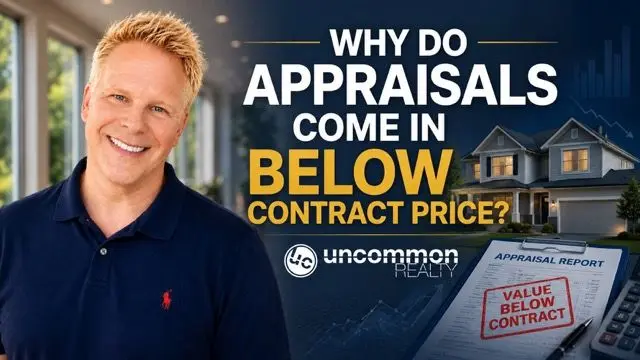
A buyer and seller can agree on a price, sign a contract, and still receive an appraisal that comes in lower. That can feel like somebody must have made a mistake. Sometimes there is a factual or analytical issue worth reviewing. Other times, the appraisal is simply answering a different question than the contract answered.
I am Robbie English, Broker, REALTOR with Uncommon Realty. After more than 40 years in real estate, I can tell you that a low appraisal is stressful, but it is not automatically the end of the transaction. The first job is to understand why the value and contract price are different. Only then can the buyer and seller make an informed decision about what happens next.
The contract price represents the amount one particular buyer and seller agreed upon under the circumstances of that transaction. The appraisal develops an opinion of market value for the lender using property information, comparable sales, market conditions, and the requirements of the assignment. Those two numbers can match, but they are not required to.

Too Long; Didn’t Read
- A contract price is the amount one buyer and seller agreed to, while an appraisal is an independent opinion of market value prepared for the lender.
- An appraisal may come in low when bidding pressure, concessions, rapid market changes, property condition, location influences, or limited comparable sales are not fully supported by closed market evidence.
- Expensive improvements do not necessarily add value dollar for dollar because the appraiser must consider how buyers in the market respond to them.
- A low appraisal should be reviewed for factual errors, overlooked relevant sales, unsupported assumptions, and lender-required conditions before anyone reacts.
- Depending on the contract and loan, possible outcomes may include a price change, additional buyer funds, a reconsideration of value, another negotiated solution, or termination under an available contractual right.
Contract Price and Market Value Are Different
The contract price is created by negotiation. It may reflect competition, urgency, emotion, special financing terms, seller-paid expenses, personal attachment, or a buyer’s willingness to pay more for a feature that matters greatly to that particular buyer.
Market value is generally defined as the most probable price a property should bring in a competitive and open market when the buyer and seller are acting prudently and knowledgeably and the price is not affected by undue stimulus. The appraiser is not asked to prove that the contract price is correct. The appraiser is asked to develop and support an independent opinion of value.
A contract is important market evidence. The appraiser reviews it and considers the transaction terms. However, the existence of a signed contract does not require the appraiser to conclude at the same number. The appraiser must also consider what the broader market evidence supports.
Take a Breath
A low appraisal does not automatically mean the buyer overpaid, the seller was unreasonable, the real estate agents failed, or the appraiser is wrong. It means the lender has received a value opinion below the agreed price, and the parties need to understand the report, their contract, and their available choices.
The Offer Was Driven by Competition
One of the most common reasons an appraisal falls below the contract price is that buyers competed aggressively for the property. A multiple-offer situation can cause a buyer to offer more than recent closed sales appear to support.
The challenge is timing. Closed comparable sales describe transactions that have already occurred. The contract may reflect what buyers are willing to pay today, especially when inventory is tight or a particular type of home is difficult to find. The appraiser can consider current listings and pending sales as supporting evidence when appropriate, but closed sales usually carry significant weight because they show completed market behavior.
Competition does not guarantee that every amount above the list price is market-supported. A buyer may intentionally pay a premium to secure a particular home, street, floor plan, school assignment, lot, view, or location. That personal decision can be perfectly rational for the buyer while still exceeding the appraiser’s supported opinion of market value.
The List Price Was Higher Than the Closed Sales Supported
A listing price is a marketing decision, not a certified value. Sellers can choose any asking price. Some homes are listed close to expected market value. Others are priced low to encourage competition. Some are priced optimistically based on renovation cost, owner expectations, an automated estimate, or a neighboring property that is not truly comparable.
A buyer’s willingness to meet the asking price does not automatically establish that the price is supported. The appraiser must study relevant sales and explain how the subject compares with those properties.
This is why I prefer to discuss appraisal risk before an offer is submitted. The question is not simply, “Can we offer this amount?” The better question is, “What evidence supports this amount, and what happens if the appraisal does not?”
The Market Changed Faster Than the Comparable Sales
Rapidly changing markets create appraisal challenges. In an appreciating market, closed sales may lag behind current buyer behavior. In a softening market, older sales may reflect stronger conditions than buyers face on the appraisal’s effective date.
The appraiser should analyze market conditions rather than treating every older sale as though time had no effect. Still, a market adjustment must be supported. An appraiser cannot simply increase a value because everyone believes prices are rising or decrease it because headlines say the market is cooling.
Local conditions matter. A price pattern across the entire Austin metropolitan area may not describe a specific neighborhood, price range, property type, or school assignment. A condominium near downtown can behave differently from a newer single-family home in Leander. A luxury home in Lakeway may have a much thinner pool of comparable sales than a typical home in Round Rock.
The Property Is Difficult to Compare
Appraisals become more difficult when the home is unusual. The property may have acreage, multiple dwellings, an accessory unit, extensive outbuildings, a highly customized design, an uncommon view, mixed-quality renovations, or a location where similar homes rarely sell.
There may not be three recent sales that match the subject neatly. The appraiser may need to use older, farther away, or less similar sales and then explain the differences. The more adjustments and judgment required, the more likely reasonable professionals may disagree about the precise value.
A unique property is not necessarily worth less. It is simply harder to support with market evidence. Buyers may love a distinctive feature, but the appraiser still needs evidence showing how the market recognizes that feature.
The Home’s Condition or Quality Was Overestimated
Condition and quality are not the same as decorating style. Fresh paint, attractive furniture, and professional photography can make a home feel impressive, but an appraiser also considers construction quality, workmanship, updates, deferred maintenance, physical condition, and how the home compares with the selected sales.
A renovated home may still contain older major components. A visually appealing remodel may use modest materials or leave parts of the home unchanged. Two homes described with the same general condition rating can still require an adjustment because one is meaningfully superior in a way buyers recognize.
Sellers sometimes compare their remodeled home with a higher-priced sale without accounting for lot, location, living area, garage, pool, view, functional layout, or the overall quality of renovation. The appraiser must evaluate the whole property, not one attractive room.
The Market Does Not Pay Dollar for Dollar for Improvements
A seller may spend $100,000 on improvements and understandably hope the home is now worth $100,000 more. Real estate rarely works that neatly.
Cost and value are different. Some improvements have strong buyer appeal but do not return their full cost. Others may be highly personal. A luxury outdoor kitchen, elaborate landscaping, specialty room, solar installation, pool, workshop, or accessory building may add value, but the amount depends on the market.
The appraiser looks for market reaction. What did buyers pay for similar homes with and without the feature? Is the improvement typical for the area? Does it increase utility? Is it well maintained? Is it legally and physically usable? Does it fit the expectations of buyers in that price range?
The seller’s receipts can document what was completed, but they do not require the appraisal to add the same amount to market value.
Robbie’s Reminder
A home can be worth more because of an improvement without being worth the full cost of that improvement. Value is measured by market response, not the amount shown on a contractor’s invoice.
Seller Concessions Affected the Transaction
A contract price may include seller-paid closing costs, rate buydowns, repair credits, personal property, or other concessions. Those terms can make the offer more attractive to the buyer while increasing the stated price.
The appraiser reviews the subject contract and considers whether concessions are typical and whether they affected the transaction. Comparable sales with concessions may also require analysis to determine whether their sale prices were influenced.
This does not mean every dollar of seller assistance is automatically subtracted from the value. The appraiser must consider market reaction. In some markets, ordinary concessions are common and may not produce a dollar-for-dollar effect. In others, unusually large concessions may suggest that the price needs closer analysis.
The Comparable Sales Were Not as Similar as Expected
Buyers and sellers often identify nearby sales and assume they should control the value. Location is important, but proximity alone does not make a property comparable.
A sale across the street may have a different lot, view, condition, quality, floor plan, garage, pool, renovation level, or location influence. A sale farther away may compete more directly with the subject because it offers a similar home and buyer experience.
Fannie Mae’s guidance requires at least three closed comparable sales in the sales comparison approach, with additional sales used when needed to support the opinion of value. The appraiser should select sales that help explain how the market responds to the subject property rather than simply choosing the three nearest transactions.
| Possible Difference | Why It Can Matter |
|---|---|
| Busy road versus interior street | Noise, access, privacy, and buyer demand can differ. |
| Greenbelt or water view | Not all views carry the same market response. |
| Updated versus original condition | Buyers may pay more for lower immediate renovation needs. |
| Different living area or layout | Utility can matter as much as the recorded square footage. |
| Pool, accessory unit, or detached building | The feature may add value, create maintenance concerns, or appeal to a narrower buyer group. |
| Different school assignment or subdivision | Buyer competition can change across nearby boundaries. |
The Appraiser Did Not Know About an Important Feature
Sometimes a low appraisal results from incomplete or inaccurate property information. The report may use an incorrect living area, miss a permitted addition, misunderstand a solar arrangement, overlook an accessory unit, misstate the number of bathrooms, or rely on an outdated property description.
This is why sellers should prepare a concise improvement list and reliable documentation. The goal is not to pressure the appraiser. The goal is to make accurate information available.
Buyers should read the appraisal when they receive it. For many first-lien mortgage applications, the lender must provide the borrower with a copy of the appraisal or other written valuation. Review the subject description, photographs, comparable sales, adjustments, conditions, and final reconciliation.
The Appraisal May Contain an Error or Unsupported Analysis
Appraisers are professionals, but professionals can make mistakes. A factual error, missed sale, inaccurate condition description, unsupported adjustment, or overlooked market influence may affect the result.
That does not mean every low appraisal is defective. A strong reconsideration-of-value request must be specific. It should identify credible information that may affect the analysis, such as:
- a material factual error about the subject property;
- a relevant closed sale that was available as of the appraisal’s effective date;
- incorrect information about a comparable sale;
- a documented feature or improvement that was omitted;
- an inconsistency between the narrative, grid, photographs, and conclusion; or
- a market condition that appears unsupported or unaddressed.
The request should move through the lender’s process. The buyer, seller, and real estate agents should not attempt to pressure the appraiser into reaching a predetermined value.
What Happens After a Low Appraisal?
The answer depends on the contract, financing, appraisal provisions, deadlines, lender requirements, and the willingness of the buyer and seller to negotiate. The Consumer Financial Protection Bureau notes that a lower appraisal can become a basis for requesting a price reduction, but the seller is not automatically required to agree.
Possible paths may include:
- The seller reduces the price. The parties may agree to bring the price closer to the appraised value.
- The buyer brings additional funds. The buyer may choose to cover some or all of the gap, subject to lender approval and available funds.
- The parties split the difference. The seller may reduce part of the gap while the buyer contributes additional cash.
- A reconsideration of value is submitted. The lender may review specific factual or market evidence.
- The loan structure changes. The lender may discuss whether another financing approach is available and appropriate.
- The parties use an available contractual right. Depending on the signed documents and deadlines, a party may have a right to terminate or pursue another remedy.
No one should assume the contract automatically changes to the appraised value. A low appraisal creates a financing and negotiation issue. The contract determines the parties’ legal obligations, and any amendment should be documented properly.
How Buyers Can Reduce Appraisal Risk Before Making an Offer
Buyers cannot guarantee the appraisal result, but they can make informed choices. Before offering significantly above recent comparable sales, discuss the evidence and the possible appraisal gap. Understand how much additional cash would be available if the lender bases the loan on a lower value.
Review the contract and appraisal-related provisions before signing. A competitive offer may limit or modify protections, but those decisions should be intentional. The buyer should understand the financial consequences rather than discovering them after the appraisal arrives.
It also helps to distinguish affordability from appraised value. A lender may approve the buyer for the payment, but the property still must satisfy collateral requirements unless an eligible alternative applies.
Quick Wins Before the Appraisal
- Analyze recent closed sales before setting or offering a price.
- Discuss appraisal-gap risk before the contract is signed.
- Prepare a concise seller improvement list with dates and permits when available.
- Make all relevant areas of the property reasonably accessible.
- Review concessions and personal-property terms carefully.
- Order the appraisal promptly and track it through lender clearance.
How Sellers Can Prepare for Appraisal Risk
Sellers should price with both buyer response and closed-sale support in mind. A strong marketing strategy can create competition, but the appraisal may still need to support the financed portion of the purchase.
Before listing, identify the most relevant closed sales, current competition, and meaningful property differences. Prepare documentation for additions, major improvements, accessory units, solar equipment, pools, repairs, and other features likely to require explanation.
The best seller presentation is organized and factual. An appraiser does not need a long sales pitch. A short improvement summary, accurate property details, and reliable supporting records are more useful than a binder filled with unsupported claims.
Will the New 2026 Appraisal Report Prevent Low Appraisals?
No. UAD 3.6 and the redesigned Uniform Residential Appraisal Report can improve how property information is organized and communicated, but they do not guarantee that the appraised value will equal the contract price.
The new report may make certain property characteristics and analytical steps easier to follow. It may help lenders identify missing or inconsistent information. The appraiser still must interpret market evidence, and buyers and sellers may still negotiate a price that differs from the final opinion of value.
For the complete reporting-change explanation, read New Home Appraisal Report Changes in 2026: What Buyers, Sellers, and Homeowners Need to Know. You can also read What Is UAD 3.6? A Plain-English Explanation and Is AI Replacing Home Appraisers?.
Frequently Asked Questions
Does a low appraisal mean the seller must reduce the price?
No. The seller is not automatically required to reduce the price simply because the appraisal is low. The parties’ rights and obligations depend on the contract, financing provisions, deadlines, and any new agreement they reach.
Does the lender use the purchase price or appraised value?
Loan-to-value calculations commonly depend on the lower applicable figure under the loan program and transaction terms. The lender should explain how the appraisal affects the buyer’s specific loan.
Can a buyer pay more than the appraised value?
A buyer may choose to pay more than the appraised value if the contract, lender, available funds, and transaction circumstances allow it. The lender may limit the loan amount based on its collateral analysis.
Can the appraisal be challenged?
A buyer can ask the lender about its reconsideration-of-value process. The strongest request identifies specific factual errors, relevant overlooked sales, or credible market evidence rather than simply disagreeing with the conclusion.
Can the seller order another appraisal?
A seller may obtain a separate appraisal for the seller’s own purposes, but that does not require the buyer’s lender to accept it. The lender controls the valuation process used for the loan.
Why did the appraiser use an older or farther-away sale?
The appraiser may have concluded that the sale was more similar to the subject than a closer or newer transaction. Property type, condition, quality, site, view, utility, and buyer competition can be more important than distance alone.
Does a low appraisal prove the buyer offered too much?
It is evidence that the appraiser’s supported opinion of market value is below the contract price. It does not automatically prove the buyer’s decision was irrational. A buyer may knowingly pay a premium for a particular property, but the lender may not finance that premium.
Can seller concessions cause a low appraisal?
They can affect the analysis when the concessions appear to influence the transaction price or when comparable sales include concessions that require adjustment. The effect depends on market evidence rather than a universal dollar-for-dollar rule.
My Bottom Line
Appraisals come in below contract price because the contract and appraisal are not the same thing. The contract reflects the agreement of one buyer and seller. The appraisal evaluates what the broader market evidence supports for the lender.
The difference may come from competition, rapid market change, thin comparable data, concessions, property condition, unusual features, location influences, or an improvement that buyers do not value at its full cost. It may also come from a factual or analytical issue that deserves careful review.
The right response is not panic. Read the report. Verify the facts. Understand the contract. Identify the deadlines. Gather credible evidence. Then decide whether the best path is negotiation, additional buyer funds, reconsideration, a financing adjustment, or another option permitted by the transaction documents.
For more practical guidance, read Will the 2026 Appraisal Changes Affect Your Home Purchase or Sale? and Will the New 2026 Appraisal Report Delay Your Closing?.
Buying or Selling in Greater Austin?
Appraisal risk should be discussed before it becomes an emergency. I help buyers and sellers evaluate comparable sales, contract terms, property differences, appraisal concerns, and the practical choices available when value becomes an issue.
Explore my home buying resources, learn more about selling a home, or contact Robbie English to discuss your Greater Austin real estate plans.
Official Sources
Categories
- All Blogs (990)
- !!! (59)
- !x (621)
- Austin Real Estate (113)
- Bee Cave Real Estate (1)
- Building A Home (14)
- Buying A Home (152)
- Buying Land (1)
- Cedar Park Real Estate (58)
- Central Austin Real Estate (75)
- Down Payment Assistance Programs (1)
- Downsizing (4)
- Downtown Austin Real Estate (5)
- Dripping Springs Real Estate (62)
- East Austin Real Estate (3)
- Financing and Mortgage (24)
- first-time homebuying (110)
- Georgetown Real Estate (9)
- Hill Country Real Estate (1)
- HOA (3)
- Home Appraisals (13)
- Home For Rent (1)
- Home Inspections (9)
- Home Pricing (6)
- Home Staging (1)
- Home Values (12)
- Home Warranties (1)
- Homeownership (1)
- Homes For Rent (1)
- Homes For Sale (147)
- Hutto Real Estate (5)
- Insurance (1)
- Investing (6)
- Investment Properties (4)
- Lakeway Real Estate (33)
- Leander Real Estate (59)
- LGBT+ Real Estate (8)
- Luxury Homes For Sale (5)
- Luxury Real Estate (19)
- Market Conditions (17)
- Moving to Austin (2)
- Moving to Texas (4)
- Negotiations (3)
- Neighborhoods (8)
- Northwest Austin Real Estate (94)
- Off Market Listings (7)
- Pflugerville Real Estate (11)
- Private Listings (2)
- Property Management (42)
- Property Tax (5)
- Real Estate (18)
- Reddit Question Answered (80)
- redwrite (63)
- Relocation (2)
- Renting (6)
- Representation (34)
- Round Rock Real Estate (59)
- Selling Your Home (63)
- South Austin Real Estate (1)
- Westlake Real Estate (3)
Recent Posts