Why Central Austin Is One of the Most Desirable Places to Live in Texas

Central Austin is desirable for real, specific reasons: proximity to the University of Texas and downtown employment, a genuinely walkable street grid in many of its historic neighborhoods, and a concentration of parks, trails, and cultural institutions most Austin suburbs simply can't replicate. This guide covers the actual facts behind that reputation rather than generic lifestyle language.
I am Robbie English, Broker, REALTOR at Uncommon Realty, and I've helped buyers evaluate Central Austin against the surrounding suburbs for years. My goal here is to give you the real reasons, not a feeling.

Historic Neighborhoods With Real, Documented Character
Central Austin is home to several genuinely historic neighborhoods rather than manufactured character: Hyde Park, established in 1891 as Austin's first suburb and streetcar community; Enfield, Pemberton Heights, and Bryker Woods, together forming the Old West Austin Historic District added to the National Register of Historic Places in 2003; and Brentwood and Crestview, built primarily as post-war bungalow neighborhoods starting in the early 1950s. Each carries its own documented history, architecture, and neighborhood association, well beyond a marketing label.
Proximity To The University Of Texas And Downtown
Most Central Austin neighborhoods sit within a genuinely short drive, bike ride, or bus ride of both the University of Texas campus and downtown Austin's core employment district, a real advantage over suburbs where either destination means a 20-30+ minute commute. This proximity supports both a large renter population tied to the university and strong long-term owner-occupant demand from buyers who prioritize minimizing drive time over maximizing square footage.
Genuine Walkability In Older Neighborhoods
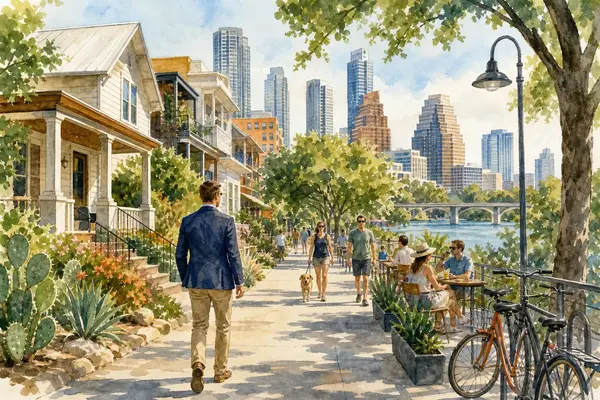
Neighborhoods like Hyde Park and the Old West Austin district were built before automobile-oriented suburban planning became standard, resulting in grid-based, pedestrian-scaled streets with commercial nodes woven directly into the residential fabric. This isn't retrofitted walkability; it's the original design, and it's part of why these neighborhoods command a premium over newer, car-dependent subdivisions built decades later.
Parks And Green Space Access
Central Austin residents have real, walkable access to Pease Park and the Shoal Creek Trail, Shipe Park in Hyde Park, Brentwood Park, and Zilker Park with Barton Springs further south, a concentration of quality green space that outer suburbs generally can't match without a car trip. Shoal Creek in particular runs through several Central Austin neighborhoods, giving residents a continuous greenbelt connection rather than an isolated park.
What Central Austin Actually Costs
Central Austin pricing varies significantly by specific neighborhood: 78704 (Zilker, Travis Heights, South Lamar) runs around $835K, while 78751 (Hyde Park, North Loop) runs closer to $619K, both well above the broader Austin metro median of roughly $440K. Central Austin's more affordable pockets, like Wooten in zip 78757, can run meaningfully below neighboring Brentwood and Crestview, so a specific address matters more than a general "Central Austin" label when evaluating affordability.
Genuine Scarcity Supporting Long-Term Value
Central Austin's historic neighborhoods have a fixed, largely built-out land supply, no new Hyde Park or Old West Austin lots are being created, which has historically supported resilient demand even through broader market slowdowns. This isn't a guarantee of future appreciation, but it is a real structural difference from outer suburbs where land supply can still expand as new subdivisions get platted.
A Real Employment And Innovation Base Nearby
Beyond UT itself, Central Austin sits within a reasonable commute of downtown's finance, government, and tech employment, as well as North Austin's broader tech corridor along Burnet Road and MoPac. This gives Central Austin residents genuine flexibility in job location without necessarily needing to relocate if they change employers within the broader Austin market.
Cultural And Culinary Density
Central Austin's commercial corridors, Burnet Road, Guadalupe Street, North Loop Boulevard, South Congress, and others, have developed genuine, longstanding local business density over decades rather than recent, uniform chain development. This includes music venues with real history (Threadgill's in Brentwood, for instance), independent restaurants, and museums like the Elisabet Ney Museum in Hyde Park, giving residents walkable access to Austin's cultural identity rather than a generic suburban commercial strip.
Transit Options Beyond Just Driving
Central Austin offers real alternatives to driving that most Austin suburbs simply don't have: CapMetro's Red Line commuter rail runs through the Crestview station on the edge of Central Austin, bus routes run along Burnet Road, Guadalupe Street, and Duval Street connecting neighborhoods to downtown and North Austin, and the grid-based street layout in neighborhoods like Hyde Park and Enfield makes biking a genuinely practical option for many daily errands. This matters concretely for buyers relocating from a more transit-oriented city who want to preserve at least some car-free flexibility in Austin.
A Concentration Of Independent, Longstanding Businesses
Central Austin's commercial corridors have developed over decades rather than in a single planned phase, which means a real mix of longstanding independent restaurants, bars, and shops alongside newer additions. This organic development pattern, businesses opening, closing, and evolving over 50-plus years in some cases, produces a genuinely different commercial character than a newly built suburban shopping center leased entirely to national chains at once.
Diverse Housing Stock Within A Small Footprint
Unlike a single-era suburban subdivision, Central Austin neighborhoods often contain a genuine mix of home ages and styles within the same few blocks: original 1900s-1950s homes alongside 1970s-80s infill and recent renovations or new construction. This diversity means buyers can often find meaningfully different price points and home styles within the same walkable neighborhood, rather than needing to choose between entirely different suburbs to find a specific combination of age, size, and price.
Renter Demand Supporting Long-Term Investment Value
Given UT's steady enrollment and Central Austin's walkability to campus, several neighborhoods here carry durable rental demand beyond what you'd typically find in a suburban subdivision built primarily for owner-occupants. This matters for buyers considering an investment property, since renter demand tends to hold up even during periods when broader home-buying demand softens, though specific zoning and any occupancy restrictions should always be confirmed for a given property before assuming a rental strategy will work.
Honest Tradeoffs Worth Knowing
Central Austin's desirability comes with real tradeoffs: smaller, older homes on smaller lots compared to newer suburbs, higher price per square foot, more limited new-construction inventory, and, in many of the historic neighborhoods, additional diligence around historic-district status and older home systems. Buyers who need brand-new construction, a large yard, or the lowest possible price per square foot are generally better served by Round Rock, Cedar Park, Leander, or Georgetown rather than Central Austin specifically.
Who Central Austin Actually Fits
Central Austin tends to fit buyers who prioritize walkability, historic character, and minimal commute time over maximum square footage and lot size, and who are comfortable with the additional diligence an older home requires. It's a genuinely different value proposition than the Austin suburbs, not simply a more expensive version of the same thing.
Evaluating A Specific Central Austin Listing
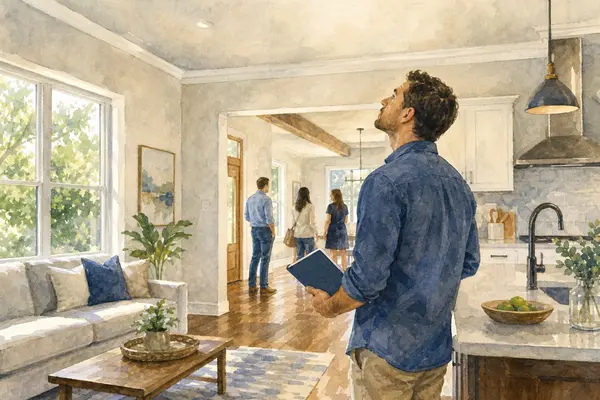
Given the real age range across Central Austin's housing stock, some homes dating to the 1890s, others recently built or renovated, ask directly about the age of major systems on any home you're seriously considering, and confirm whether a property sits within a historic district before assuming you can freely renovate. Never skip a professional inspection during your Texas option period, regardless of how much character a home has.
Comparing Central Austin Directly Against The Suburbs
Round Rock, Cedar Park, Leander, and Georgetown all offer more affordable entry points and, in most cases, more new construction than Central Austin, but none replicate its combination of historic character, walkability, and proximity to UT and downtown. Buyers genuinely torn between the two should map their actual commute from a specific Central Austin listing versus a specific suburban one, at the time of day they'd realistically be driving, rather than relying on general reputation for either side of the comparison.
Timing A Central Austin Purchase
Because Central Austin's inventory is genuinely limited by its fixed land supply, well-priced listings in the most walkable, historic pockets tend to move faster than comparable suburban inventory. Buyers who are flexible on exact timing but disciplined about the specific neighborhood tend to have better outcomes than those trying to force a purchase within a narrow window, since spending extra weeks watching how a specific Central Austin neighborhood prices and sells can sharpen your sense of what a fair offer actually looks like before you're competing on one yourself.
A Practical Way To Start Your Search
Rather than treating "Central Austin" as a single market, pick two or three specific neighborhoods that genuinely fit your priorities, walkability, budget, school zoning, historic character, and tour them directly rather than relying on a broad area's general reputation. A neighborhood that looks appealing on paper can feel very different once you've actually walked it at the time of day you'd realistically be living there.
Bringing It All Together
Central Austin's desirability comes from specific, documented facts: genuinely historic neighborhoods with real architectural character, walkable street grids built before the automobile, proximity to UT and downtown employment, and a concentration of parks and cultural institutions that outer suburbs can't replicate. Understanding the real tradeoffs, and the specific neighborhood within Central Austin that actually fits your priorities, matters more than the general reputation alone.
Whether you're comparing Central Austin against the Austin suburbs or evaluating a specific neighborhood within it, I'm glad to walk you through current listings and how they genuinely compare. You can browse current listings on my website or through my app.
Written for buyers and sellers in the Greater Austin, Texas area by Robbie English, REALTOR, Broker at Uncommon Realty.
Categories
- All Blogs (970)
- !!! (59)
- !x (621)
- Austin Real Estate (113)
- Bee Cave Real Estate (1)
- Building A Home (14)
- Buying A Home (143)
- Buying Land (1)
- Cedar Park Real Estate (58)
- Central Austin Real Estate (75)
- Down Payment Assistance Programs (1)
- Downsizing (4)
- Downtown Austin Real Estate (5)
- Dripping Springs Real Estate (62)
- East Austin Real Estate (3)
- Financing and Mortgage (24)
- first-time homebuying (109)
- Georgetown Real Estate (9)
- Hill Country Real Estate (1)
- HOA (2)
- Home Appraisals (13)
- Home For Rent (1)
- Home Inspections (6)
- Home Pricing (6)
- Home Staging (1)
- Home Values (12)
- Homeownership (1)
- Homes For Rent (1)
- Homes For Sale (147)
- Hutto Real Estate (5)
- Investing (6)
- Investment Properties (4)
- Lakeway Real Estate (33)
- Leander Real Estate (59)
- LGBT+ Real Estate (8)
- Luxury Homes For Sale (5)
- Luxury Real Estate (19)
- Market Conditions (17)
- Moving to Austin (2)
- Moving to Texas (4)
- Negotiations (3)
- Neighborhoods (8)
- Northwest Austin Real Estate (94)
- Off Market Listings (7)
- Pflugerville Real Estate (10)
- Private Listings (2)
- Property Management (42)
- Property Tax (3)
- Real Estate (18)
- Reddit Question Answered (80)
- redwrite (63)
- Relocation (2)
- Renting (6)
- Representation (34)
- Round Rock Real Estate (59)
- Selling Your Home (62)
- South Austin Real Estate (1)
- Westlake Real Estate (3)
Recent Posts