
Home Staging Austin TX Options

Staging can change how quickly an Austin home gets attention, but you don't always need a full house packed with rental furniture. I’m Robbie English, REALTOR, and I’ve put together four clear options so you can match your home, budget, and timeline to the right plan.
1. Robbie English, REALTOR
Robbie English, REALTOR is my first stop for Austin sellers who want staging advice tied to pricing, repairs, photos, and launch timing.

I don’t treat staging as a decorating contest. I look at the home as a buyer will see it, starting with the entry and the rooms visible within the first few seconds. Then I help you decide what to remove, what to repair, what to leave in place, and where professional furniture may add value.
That matters in Austin because homes vary widely. A downtown condo may need a different plan than a house near a greenbelt or a larger property in the suburbs. Austin is the capital of Texas and sits in a fast-growing Central Texas region, with housing styles that range from older bungalows to new construction. Austin’s local geography and housing history help explain why one staging formula won't fit every listing.
My team can help set a plan before the photographer arrives. That may mean clearing a crowded living room, softening a bold paint choice, brightening a kitchen, or making a garage look usable. For sellers who want a broader prep plan, I also recommend reviewing how to prepare your house for sale before setting a listing date.
The tradeoff is simple: I’m a real estate brokerage team, not a furniture rental warehouse. If a vacant home needs a complete furniture install, I may suggest a separate staging provider. My value is helping you decide what the property needs and keeping staging aligned with the sale strategy.
Good fit: Sellers who want one person to connect staging with price, repairs, marketing, and negotiation.
2. Full-Service Austin Home Staging Companies
Full-service Austin home staging companies handle the physical work of preparing a vacant or partly furnished home for market.

A typical process starts with a consultation. The stager walks room by room, notes repairs and clutter, then builds a design plan. After that, a crew brings in furniture and accessories. A final walk-through checks sight lines, room scale, lighting, and the view from the front door.
This option fits a vacant home best. Empty rooms can look larger in some photos, but they can also feel cold and echoing in person. Furniture gives buyers a better sense of scale. It can show whether a living room fits a sectional, or whether a bedroom has space for two nightstands.
Ask for a quote that separates the consultation, install, monthly rental period, pickup, and any extension fees. Pricing varies by home size, room count, furniture level, and time on market. A one-month quote may not be the final cost if the listing remains active longer than expected.
Also ask who owns the furniture and who handles delivery damage. Industry guidance points out that furniture inventory brings storage, cleaning, transport, insurance, and maintenance concerns. Ask the provider what standards it follows and how it handles furniture care.
Prioritize the main living area, kitchen, primary bedroom, and any room that looks confusing when empty. A garage may need less furniture, but it still needs clear floors and visible storage. In a luxury home, quality and scale matter more than filling every corner.
The limitation is cost. Full staging can make sense when the home’s presentation affects buyer confidence, but it may not be wise to stage every room. A good provider should explain what to leave out and why.
Good fit: Vacant listings, high-value homes, unusual layouts, and properties where buyers need help reading room size.
3. DIY Staging for Austin Sellers
DIY staging is the lowest-cost option when your home already has usable furniture and you have time to edit it.

Start with the rooms buyers see first. Clear the entry. Remove extra chairs from the living room. Take nearly everything off kitchen counters except one small focal item, such as a fruit bowl or plant. In the bathroom, put away toiletries and leave the counter open.
Bedrooms need breathing room. Use plain bedding, clear nightstands, and remove storage from under the bed. Thin crowded closets so shelves and hanging space show clearly. In the garage, group what remains and clear a path from the door to the back wall.
Do the work four to six weeks before listing if you can. That gives you time to handle deep cleaning, small repairs, and cosmetic updates before photos. Austin home improvements that may increase value should be judged by cost, condition, and likely buyer response, not by personal taste alone.
Lighting often gives DIY staging a quick lift. Replace dead bulbs. Match bulb color where possible. Open blinds before photos. Clean dusty fixtures and remove anything that blocks natural light. A buzzing fixture or dirty light box can draw attention for the wrong reason.
Don't hide maintenance issues behind decor. Staging should help buyers see the home, not distract them from roof, plumbing, HVAC, or electrical concerns. A clean, honest presentation supports trust better than a room filled with accessories.
DIY staging also has a limit. Your sofa may be comfortable but too large for the room. Family photos may be meaningful but distract from the home's layout. If you can't decide what to keep, ask for an outside opinion before the photographer arrives.
Good fit: Occupied homes with furniture that fits, sellers who can declutter, and listings with a flexible launch date.
4. Virtual Staging and Digital Presentation Services
Virtual staging adds furniture to listing photos without placing anything inside the home. It can help online shoppers understand an empty room before they schedule a showing.
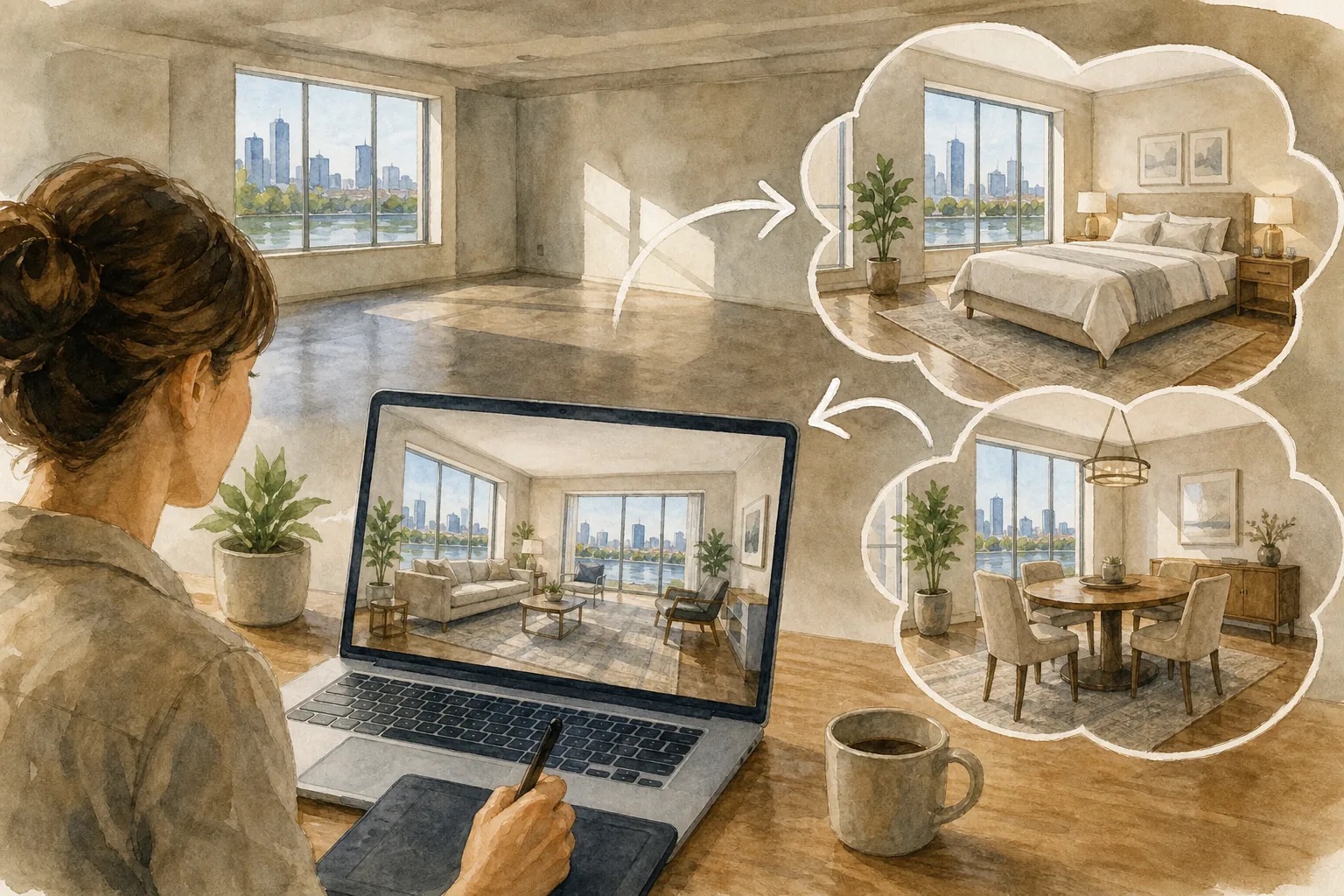
This option is useful for vacant homes, new construction, investment properties, and rooms with awkward proportions. A digital editor can show a living room with a sofa, rug, and table, or make an empty bedroom easier to read. The work often moves faster than physical staging because no delivery crew is needed.
There is a clear catch: the furniture exists only in the image. Buyers will still walk into the actual room. Virtual staging should not change walls, floors, windows, fixtures, or the size of the room. It also should be labeled clearly so the photo does not promise something the property lacks.
Virtual staging shows the difference between digital furniture and physical staging. Poor scale, floating furniture, or mismatched shadows can make an edited image look false.
Ask to see an unstaged version beside the edited image. Check that furniture fits the room and that the style suits the property. A simple, modern look may work well for a clean new build, while a luxury home may need physical staging to give buyers a stronger in-person feel.
Digital presentation can also include strong photography, a video walk-through, and a clear listing plan. Those pieces help buyers move from an online impression to an actual showing. They don't replace cleaning, repairs, or a home that feels good when someone walks through it.
Good fit: Vacant homes with a modest staging budget, listings that need quick photo updates, and rooms where scale is hard to understand online.
Compare the Austin Home Staging Options
Home staging Austin TX sellers choose usually comes down to three questions: Is the home occupied, how much work is needed, and how soon must the listing launch?
| Option | Best use | Main strength | Main limit |
|---|---|---|---|
| Robbie English, REALTOR | Occupied or partly furnished homes | Connects staging to price and sale strategy | May refer out full furniture installs |
| Professional staging services | Vacant or high-value homes | Creates an in-person room layout | Rental and extension costs vary |
| DIY staging | Homes with usable furniture | Lowest direct cost | Harder to judge your own belongings |
| Virtual staging | Vacant rooms shown online | Fast photo-based presentation | Doesn't change the showing experience |
Be careful with broad claims that staging will raise a sale price by a fixed amount. Results depend on condition, price, photos, competition, and buyer demand. Industry discussions often cite gains in the 1% to 5% range, while some marketing claims go higher. I treat those numbers as context, not a promise.
What to Look for Before Choosing a Staging Option
Before you sign a staging agreement, ask for a room-by-room plan and a full cost outline. You should know what happens during the consultation, install, photo day, showing period, and pickup.
- Ask which rooms need work first.
- Confirm the minimum rental term.
- Ask about extension fees and damage rules.
- Check whether edits alter permanent features.
- Request a timeline that fits your listing date.
- Keep the right to choose any provider you wish.
I also look at the home's price point and likely buyer expectations. A simple plan may be enough for a clean occupied home. A vacant property with a wide-open layout may need furniture before it needs more decoration.
Frequently Asked Questions
How much does home staging cost in Austin?
Home staging in Austin has no single fixed price because the cost depends on room count, furniture needs, setup, and rental time. Ask for separate line items for the consultation, install, monthly rental, pickup, and extensions. DIY staging costs less directly, while virtual staging shifts the work into photography and editing.
Is professional staging worth it in Austin?
Professional staging can be worth it when a vacant room feels cold, a layout is hard to understand, or the home competes with polished listings. It may not be needed everywhere. I often recommend staging the rooms buyers see first, then weighing the cost against the home's price and expected time on market.
What rooms should I stage first?
Stage the living room, kitchen, primary bedroom, and any room visible from the entry first. These spaces shape the first impression in photos and during showings. Bathrooms need clear counters and clean towels, while garages usually need organization more than furniture. The right order depends on the home's layout.
Does virtual staging work for Austin homes?
Virtual staging can help Austin homes look easier to understand online, especially when a property is vacant. It cannot replace the in-person feel of physical furniture. Label edited photos, keep permanent features unchanged, and show buyers what the room really looks like before they visit.
How far ahead should I stage my house?
Start planning staging several weeks before photos if possible. DIY prep may need four to six weeks for cleaning, repairs, and decluttering. Physical staging needs time for a consultation, quote, scheduling, delivery, and final setup. A staging plan made on photo day usually leaves fewer choices and less room for adjustment.
Conclusion
I recommend starting with a room-by-room review before spending money. If you want staging advice tied to pricing and the Austin sale plan, connect with Robbie English, REALTOR and begin with the home's biggest presentation issues, not a preset package.
Categories
- All Blogs (984)
- !!! (59)
- !x (621)
- Austin Real Estate (113)
- Bee Cave Real Estate (1)
- Building A Home (14)
- Buying A Home (149)
- Buying Land (1)
- Cedar Park Real Estate (58)
- Central Austin Real Estate (75)
- Down Payment Assistance Programs (1)
- Downsizing (4)
- Downtown Austin Real Estate (5)
- Dripping Springs Real Estate (62)
- East Austin Real Estate (3)
- Financing and Mortgage (24)
- first-time homebuying (109)
- Georgetown Real Estate (9)
- Hill Country Real Estate (1)
- HOA (3)
- Home Appraisals (13)
- Home For Rent (1)
- Home Inspections (8)
- Home Pricing (6)
- Home Staging (1)
- Home Values (12)
- Home Warranties (1)
- Homeownership (1)
- Homes For Rent (1)
- Homes For Sale (147)
- Hutto Real Estate (5)
- Insurance (1)
- Investing (6)
- Investment Properties (4)
- Lakeway Real Estate (33)
- Leander Real Estate (59)
- LGBT+ Real Estate (8)
- Luxury Homes For Sale (5)
- Luxury Real Estate (19)
- Market Conditions (17)
- Moving to Austin (2)
- Moving to Texas (4)
- Negotiations (3)
- Neighborhoods (8)
- Northwest Austin Real Estate (94)
- Off Market Listings (7)
- Pflugerville Real Estate (11)
- Private Listings (2)
- Property Management (42)
- Property Tax (5)
- Real Estate (18)
- Reddit Question Answered (80)
- redwrite (63)
- Relocation (2)
- Renting (6)
- Representation (34)
- Round Rock Real Estate (59)
- Selling Your Home (62)
- South Austin Real Estate (1)
- Westlake Real Estate (3)
Recent Posts