
Why My Home Valuation Process Is More Accurate Than the Typical CMA Most Agents Provide

If you've ever searched "how much is my house worth in Austin TX area," you have probably discovered something frustrating. One website says your home is worth one amount. Another website says something completely different. An AI tool gives you another number. Then you call two real estate agents and somehow receive values that differ by $50,000 or more.
Who is right? The answer is that valuation is far more complicated than most homeowners realize.
Throughout my 40+ year career, I have spent thousands of hours studying property valuation, pricing strategy, buyer behavior, contract negotiations, and market analysis. I am Robbie English, Broker, REALTOR, ABR, AHWD, BBA, C2EX, CRB, E-PRO, GRI, MRP, PSA, RENE, RPR, SFR, SRS, TAHS, TBS, TLS at Uncommon Realty, and helping homeowners answer the question "how much is my house worth in Austin TX area" has become one of the most important aspects of my business.
Unlike many agents, I do not rely on a simple Quick CMA printout from the MLS and call it a day. I take a far more comprehensive approach because every property is unique. Every neighborhood behaves differently. Every buyer sees value through a different lens. Those nuances are where real value is found.
My background as a broker, national real estate speaker, and real estate instructor has allowed me to study valuation at a level many agents never reach. In fact, I have personally written more than ten educational classes focused specifically on preparing Comparative Market Analyses. That experience helps me identify factors that many valuation reports completely overlook.
The reality is simple. When homeowners ask how much is my house worth in Austin TX area, they deserve more than an automated estimate. They deserve an analysis that accounts for the countless variables influencing value.
Throughout this post, I am going to show you exactly how I approach valuation differently and why that process often produces far more accurate results than the typical CMA most agents provide.

TLDR (Too Long; Didn't Read): Why My Home Valuation Process Is More Accurate Than The Typical CMA Most Agents Provide
- Online estimates often miss critical property details.
- Comparable selection dramatically affects value conclusions.
- Buyer behavior influences value more than many realize.
- Quick CMA reports frequently overlook important variables.
- Experience and local market expertise matter.
Why Homeowners Ask "How Much Is My House Worth In Austin TX Area"
For most people, their home represents one of their largest financial assets. Naturally, they want to understand what it is worth.
Some homeowners are considering selling. Others may be relocating. Some are simply curious. Others want to understand their equity position. Regardless of the reason, the question remains the same: How much is my house worth in Austin TX area?
The challenge is that many homeowners expect a simple answer to a very complicated question. Real estate valuation involves much more than square footage and bedroom counts. It involves buyer preferences, location influences, condition, upgrades, competition, market conditions, and timing.
Two homes that appear similar on paper can perform very differently in the marketplace. That is why I caution homeowners against relying on simplistic valuation methods. The details matter.
The details often determine whether a property commands a premium, performs at market expectations, or struggles to attract buyers.
Why Zillow, AI Estimates, And Online Valuations Often Miss The Mark
Technology has transformed the real estate industry. I embrace technology and use it extensively. However, technology still has limitations.
Most online valuation tools rely on automated valuation models. These models evaluate publicly available data such as square footage, tax records, prior sales, and nearby transactions. They use mathematical formulas to generate estimated values.
That sounds impressive until you consider what they cannot see.
- They cannot walk through your home.
- They cannot evaluate your view.
- They cannot determine whether your kitchen renovation was completed professionally.
- They cannot assess deferred maintenance.
- They cannot understand buyer emotions.
- They cannot identify functional floor plan issues.
- They cannot recognize unique upgrades that buyers may highly value.
- Artificial intelligence tools face many of the same challenges. AI can analyze large amounts of information quickly. It still depends on available data. It cannot physically inspect the property. It cannot understand every local market nuance.
This is why online estimates often vary significantly. Sometimes they are close. Sometimes they miss the mark by tens of thousands of dollars. That does not mean they are useless. They can provide a rough starting point. They should never be considered a definitive answer.
Automated Valuation Models Versus Human Analysis
The biggest difference between an automated valuation model and human analysis comes down to context.
- Software sees data.
- Experienced professionals such as myself see meaning.
When I evaluate a property, I do not simply review statistics. I interpret what those statistics actually mean within the context of the marketplace.
For example, two homes may have identical square footage. One may feel significantly larger because of superior design. One may offer better natural light. One may provide a more desirable outdoor experience. Buyers notice these things. Software often does not.
Human analysis allows me to understand why buyers gravitate toward one property and ignore another. That insight often becomes the difference between an average valuation and an accurate one.
Why Two Agents Can Give You Completely Different Home Values
One of the most common frustrations homeowners experience occurs when two agents provide dramatically different valuations.
Many people assume one of them must be wrong. Sometimes that is true. More often, the difference comes down to methodology.
- Comparable property selection varies.
- Adjustment methodology varies.
- Market interpretation varies.
- Experience varies.
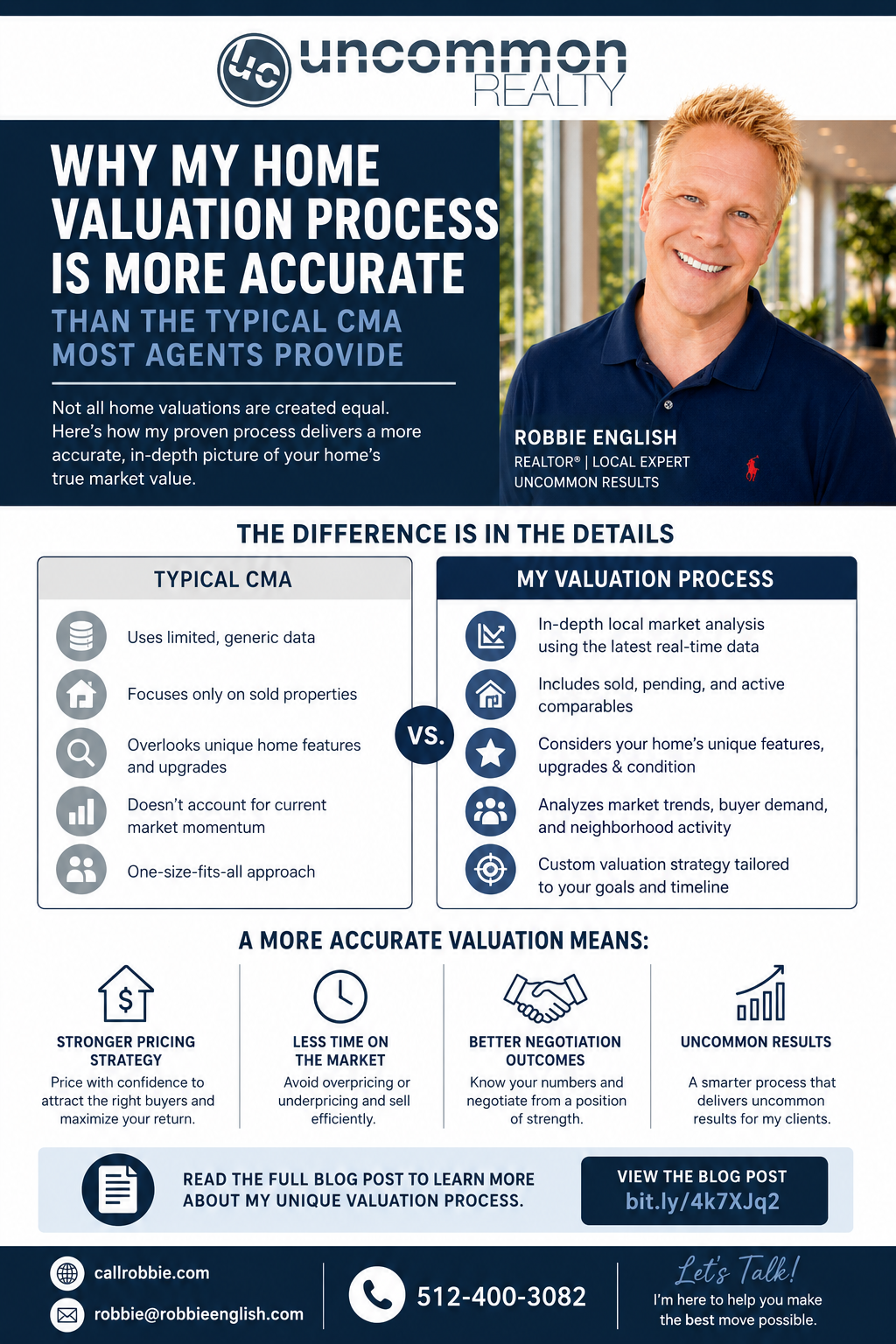
Some agents rely heavily on automated reports. Others manually analyze every property. Some focus solely on sold properties. Others evaluate active listings, pending transactions, withdrawn listings, and expired listings. The depth of the analysis directly impacts the reliability of the conclusion.
I have reviewed CMAs prepared by other agents where key market influences were completely ignored. I have seen reports that used inappropriate comparable sales. I have seen analyses that failed to adjust for significant property differences.
These oversights can easily create valuation gaps of $50,000 or more.
Why Experience Matters In Property Valuation
Experience influences every aspect of valuation.
- The more transactions an agent studies, the more patterns they recognize.
- The more neighborhoods they understand, the more accurately they can identify meaningful differences.
- The more buyer behavior they observe, the better they become at predicting market reactions.
- This is one reason I believe my background provides a significant advantage to my clients.
At the same time, if they do not obtain the proper education to ensure they are doing things accurately, they could be making the same mistake over and over again on each property they represent.
As a broker, instructor, and national speaker, I spend an extraordinary amount of time studying market behavior and valuation methodology.
- I teach these concepts.
- I write educational materials about these concepts.
- I analyze these concepts daily.
That level of immersion helps me identify factors many agents overlook.
The First Thing I Analyze Before Looking At Comparable Sales
Most agents begin a CMA by searching for nearby sales. I do not. The first thing I analyze is the subject property itself. Before I review a single comparable sale, I want to understand exactly what makes the home unique.
- I examine location.
- I evaluate condition.
- I assess upgrades.
- I review lot characteristics.
- I consider curb appeal.
- I analyze floor plan functionality.
- I study marketability.
- I identify strengths and weaknesses.
Only after I understand the property do I begin looking for comparable sales. This approach creates a much stronger foundation for the entire valuation process. Without understanding the subject property first, selecting appropriate comparables becomes far more difficult.
Understanding The Subject Property Before Pulling Data
Every home tells a story. The goal of a valuation is understanding that story before attempting to compare it to anything else.
- Does the property back to a greenbelt?
- Does it offer a premium view?
- Has it undergone extensive renovations?
- Does it contain unique architectural features?
- Does it suffer from functional obsolescence?
- Does it have exceptional outdoor living areas?
- These questions matter.
The answers often influence buyer perception significantly. Buyer perception influences value. This is why I spend time understanding the property itself before diving into market data.
Skipping this step often leads to inaccurate conclusions.
How Values Are Actually Determined
Many homeowners assume valuation is primarily a mathematical exercise. It is not. Data plays a major role, but valuation also requires interpretation. Market value emerges from the interaction between buyers and sellers.
- Comparable sales provide evidence.
- Current competition provides context.
- Buyer behavior provides insight.
- Property characteristics provide differentiation.
- Market conditions provide direction.
- All of these factors work together.
The challenge is determining how much weight each factor deserves. That is where expertise becomes valuable. Valuation is part science and part judgment. Successful pricing requires both.
How I Select Comparable Properties
One of the largest mistakes I see in many CMAs involves the selection of comparable properties. A valuation is only as good as the properties used to support it. If the comparables are weak, the conclusion becomes weak as well. When homeowners search "how much is my house worth in Austin TX area," they often assume the answer comes from simply locating a few nearby sales and averaging the prices. Real valuation does not work that way.
I begin by looking at proximity. Buyers typically compare homes within a reasonable geographic area. However, proximity alone does not create a good comparable. Two homes may sit close to one another while appealing to completely different buyer pools.
Next, I evaluate age. A property built twenty years ago often competes differently than a property built five years ago. Construction styles, floor plans, ceiling heights, energy efficiency, and finish levels frequently vary significantly.
Size matters as well. Buyers generally compare homes within a similar square footage range. While adjustments can account for differences, excessive size variation can distort results.
Lot size is another factor that many agents fail to properly analyze. A quarter-acre lot and a half-acre lot may exist within the same neighborhood, yet buyers often assign very different levels of value to those properties.
Condition becomes equally important. A completely renovated home does not compete directly with a property requiring significant updates. If comparable sales do not reflect similar condition levels, the analysis quickly loses credibility.
I also evaluate school attendance boundaries, neighborhood positioning, amenities, market segment, architectural style, and overall buyer appeal. These factors help ensure I compare properties that buyers would realistically view as alternatives.
Why I Don't Just Look At Sold Properties
Many real estate agents focus almost exclusively on sold properties. Sold homes matter but they are not the entire story.
In many situations, sold properties actually tell us what buyers were willing to pay weeks or months ago. Markets do not stand still. Conditions evolve constantly. That is why I also analyze active listings to see where the market is trending.
Active properties represent current competition. They reveal what buyers can purchase right now. If a home is priced significantly above competing listings, buyers will notice. If competing properties offer better value, buyers will notice that too.
Pending sales provide another important clue. Although final sales prices may not yet be available, pending transactions indicate what buyers are choosing today.
Withdrawn listings can also provide valuable insights. Sometimes sellers withdraw homes because pricing was unrealistic. Sometimes marketing issues exist. Sometimes conditions change. Understanding why properties leave the market without selling can be incredibly informative.
Expired listings deserve attention as well. Expired properties often teach valuable lessons about overpricing, presentation issues, or unrealistic seller expectations.
By studying active, pending, withdrawn, expired, and sold properties together, I develop a more complete understanding of the marketplace than a typical Quick CMA can provide.
Neighborhood Influences That Impact Value
Location remains one of the most important components of real estate valuation. However, neighborhood analysis goes far beyond simply identifying a subdivision name.
Within the Austin Metropolitan Area and Central Texas, I frequently see substantial value differences within the same community.
- One section of a neighborhood may offer larger lots.
- Another may provide superior views.
- Some streets experience more traffic.
- Others offer greater privacy.
- Some homes back to greenbelts.
- Others back to commercial development.
Buyers recognize these distinctions. They often assign value accordingly. I pay close attention to neighborhood positioning because even small location differences can significantly impact buyer demand.
When I prepare a CMA, I evaluate how buyers perceive each location rather than simply treating every property within a subdivision as identical.
School Boundaries And Their Influence On Buyer Demand
School attendance boundaries often influence buyer decisions. That does not mean every buyer prioritizes schools. Many do not.
However, school boundaries frequently impact buyer traffic, demand levels, and overall market activity. As a result, they often influence value.
When I select comparable properties, I carefully evaluate whether they fall within the same attendance boundaries as the subject property.
Using sales from different school attendance areas may create misleading conclusions. It is important to note that buyers should always conduct their own research regarding schools and educational opportunities. Individual priorities vary significantly.
From a valuation perspective, my responsibility involves understanding how school boundaries affect market behavior and buyer demand. That insight helps create a more accurate pricing strategy.
Condition Adjustments Are More Important Than Most Sellers Realize
Condition frequently creates some of the largest valuation differences between otherwise similar homes.
I have seen two properties with nearly identical floor plans produce dramatically different results because one received thoughtful updates while the other remained largely original.
- Buyers compare homes visually and emotionally.
- The condition of kitchens, bathrooms, flooring, paint, lighting, landscaping, and exterior appearance all influence perceived value.
- Many automated systems struggle to account for these differences.
- A computer may see two homes with similar square footage.
- A buyer may see one home as move-in ready and the other as a future renovation project.
- Those perceptions matter.
When preparing a CMA, I carefully evaluate condition because buyer perception frequently influences purchasing decisions more than raw data alone.
How I Adjust For Differences Between Homes
This is where valuation becomes particularly nuanced. No two homes are identical.
Every property contains strengths and weaknesses.
- A pool may increase value for some buyers and create concerns for others.
- A premium view may command substantial buyer interest.
- A renovated kitchen may significantly improve marketability.
- A larger garage may appeal to specific buyer segments.
- An unusual floor plan may reduce demand despite having excellent square footage.
- Functional obsolescence also deserves attention. A home may contain plenty of space but utilize that space inefficiently. Buyers often notice these issues immediately.
- Lot premiums, outdoor living areas, architectural features, energy improvements, storage solutions, and renovation quality all deserve consideration.
- This adjustment process requires judgment.
It requires experience. It requires understanding how actual buyers react to various features. This is another reason why automated valuations frequently struggle to capture true market dynamics.
Why Buyer Behavior Matters More Than Most Agents Realize
One of the biggest differences between my valuation process and many traditional CMAs involves buyer behavior analysis.
- Numbers tell part of the story.
- Buyer actions tell the rest.
- I pay close attention to showing activity.
- I monitor online engagement.
- I evaluate how quickly properties attract attention.
- I study price sensitivity.
- I analyze buyer reactions to competing inventory.
- These insights often reveal market conditions before closed sales data can.
For example, a property may technically support a certain value based upon historical sales. However, if buyers are consistently ignoring similar listings at that price point, that information becomes critically important.
Likewise, if properties receive strong showing activity and rapid engagement, that behavior often signals strong demand. Understanding buyer psychology helps create more accurate pricing recommendations.
The Importance Of Absorption Trends
Absorption trends help explain how quickly buyers consume available inventory. Many agents overlook this concept entirely. I do not.
Absorption trends provide valuable insight into supply and demand dynamics. When inventory moves quickly, pricing strategies often differ from periods where inventory accumulates. Understanding absorption trends helps me determine whether buyers are acting aggressively, cautiously, or somewhere in between.
- These patterns influence valuation.
- They also influence marketing strategy.
- A great CMA should not merely explain what happened yesterday.
- It should help predict what is likely to happen next.
The Market Trend Analysis Most Agents Skip
Many valuation reports focus heavily on comparable sales while largely ignoring broader market trends. I believe that is a mistake. Market trends influence virtually every transaction.
When preparing a CMA, I evaluate inventory levels, days on market, price reductions, list-to-sale relationships, buyer demand patterns, and overall market direction. These factors help explain whether pricing pressure is moving upward, downward, or remaining relatively stable. Without this analysis, valuations can become disconnected from current market realities.
- The goal is not simply determining what similar homes sold for.
- The goal is understanding what buyers are likely willing to pay moving forward.
- That distinction matters tremendously.
Why Pricing Mistakes Happen
Most pricing mistakes stem from incomplete analysis. Some sellers focus exclusively on the highest sale they can find. Others rely heavily on online estimates. Some agents attempt to win listings by presenting inflated values. Unfortunately, these approaches often create unrealistic expectations.
Accurate pricing requires discipline. It requires objectivity. It requires a willingness to separate emotion from data. I approach valuation with one goal: helping my clients make informed decisions based upon the strongest information available.
That process often produces better outcomes than chasing unrealistic pricing expectations.
Market Timing And Its Influence On Value
Timing matters. A property's value does not exist in isolation from the market environment surrounding it.
- Buyer demand fluctuates.
- Inventory levels fluctuate.
- Economic conditions evolve.
- Interest rate environments change.
- Consumer confidence changes.
- All of these factors influence purchasing behavior.
When preparing a CMA, I evaluate market timing because value exists within a specific moment in time. A valuation completed today may differ from one completed several months later. That is why I always encourage sellers to view valuation as a current analysis rather than a permanent number. The marketplace continues moving. Accurate pricing requires keeping pace with those changes.
Why Accurate Valuation Creates Better Results
The purpose of a CMA is not simply assigning a number to a property.
- The purpose is creating a strategy.
- An effective valuation helps position a home competitively.
- It helps attract qualified buyers.
- It helps generate stronger interest.
- It helps avoid costly pricing mistakes.
- Most importantly, it helps sellers make informed decisions.
That is why I invest significant time into every valuation I prepare. I believe homeowners deserve more than a generic report. They deserve analysis that reflects the complexity of the real marketplace.
How I Identify The Most Likely Sales Price Range
One of the biggest misconceptions I encounter when homeowners ask, "how much is my house worth in Austin TX area," is the belief that an accurate valuation should produce one exact number. Real estate simply does not work that way.
Only a licensed and certified appraiser can provide an opinion of value while operating under the standards established by USPAP. As a real estate broker, my role differs. I analyze market conditions, comparable properties, buyer behavior, competition, and current trends to estimate likely pricing outcomes and help develop an effective pricing strategy. In my experience, a value range is often more accurate than a single figure.
Think about how buyers behave. One buyer may absolutely love a property and place significant value on a view, a renovation, or a particular floor plan. Another buyer may not care about those same features. The market is made up of individual people making individual decisions.
When I complete a CMA, I identify where the property should realistically compete in today's market. I evaluate the lower end of likely outcomes, the upper end of likely outcomes, and the most probable sales range based upon current buyer behavior.
This approach creates more realistic expectations and helps sellers make better decisions.
- The goal is not to impress someone with the highest number possible.
- The goal is to help them understand what the market is most likely to do.
- That difference can have a major impact on the outcome of a sale.
Pricing Strategy Vs Home Value
Another area that creates confusion involves the difference between value and pricing strategy. They are not always the same thing. A home may have a likely market value within a certain range, yet the best listing strategy may involve a slightly different price point. Sometimes pricing at the upper end of a range makes sense because competition is limited and buyer demand remains strong. Other times a more aggressive pricing strategy may generate additional attention, increase showing activity, and encourage stronger buyer engagement.
This is where experience becomes incredibly important. Many agents confuse valuation with marketing. I view them as related but separate discussions.
First, I determine where the property fits within the marketplace. Then I evaluate the best strategy for positioning that property against competing inventory. Those conversations require more analysis than simply pulling a Quick CMA report from the MLS. They require understanding buyer psychology, competition, and market conditions. This is one of the reasons sellers often receive dramatically different recommendations from different agents.
The Cost Of Overpricing A Home
Overpricing remains one of the most expensive mistakes a seller can make. Unfortunately, it is also one of the most common.
Many homeowners understandably want to maximize their proceeds. That makes sense. The problem occurs when pricing becomes disconnected from buyer behavior.
Today's buyers have access to tremendous amounts of information. They compare homes carefully. They study competing listings. They evaluate value quickly.
When a home enters the market above where buyers believe it should be positioned, activity often slows immediately.
- Showings decline.
- Online engagement weakens.
- Buyer excitement fades.
- Momentum disappears.
The first days and weeks on the market are often the most important marketing period a property will ever experience. Once that initial momentum disappears, recovering it becomes difficult. Many overpriced homes eventually experience price reductions. The challenge is that buyers often notice those reductions and begin wondering why the property has not sold.
Sometimes a home that starts too high ultimately sells for less than it may have achieved had it been positioned correctly from the beginning. I have witnessed this scenario many times throughout my career. That is why honest pricing conversations matter. I would rather provide realistic guidance than tell a seller what they want to hear.
Why Underpricing Can Be A Problem Too
While overpricing receives most of the attention, underpricing can create challenges as well. Every seller deserves an opportunity to maximize their position within the marketplace. Pricing significantly below market expectations may leave money on the table.
- The goal should never be to price low simply to generate activity.
- The goal should be to identify the most effective strategy based upon the property, competition, and market conditions.
That requires thoughtful analysis.
- It requires understanding how buyers are responding to similar homes.
- It requires understanding supply and demand.
- Most importantly, it requires balancing exposure with realistic market positioning.
Good pricing is rarely accidental. It comes from careful preparation and informed decision making.
Why I Review Every CMA Manually
This may be the single biggest difference between my process and the process used by many agents. I review every CMA manually. Every one.
I do not simply enter an address into software, press a button, and email a report. Technology helps me gather information. It does not replace professional analysis. A Quick CMA report may contain useful data, but data alone does not create insight.
- Someone must interpret that information.
- Someone must understand which comparable sales matter most.
- Someone must identify adjustments that should be made.
- Someone must evaluate buyer behavior and market conditions.
- That someone is me.
Over the years I have written more than ten classes specifically related to comparative market analysis preparation and valuation methodology.
- I have taught agents how to analyze properties.
- I have taught agents how to identify meaningful comparables.
- I have taught agents how to understand market influences.
Because of that experience, I know firsthand how much variation exists in CMA quality. Some reports are thoughtful and thorough. Others are little more than automated printouts. My clients deserve better than a printout. They deserve analysis.
What Sellers Receive When I Complete A CMA
When I prepare a comparative market analysis, I provide significantly more than a list of recent sales. My process begins with a discussion about the property itself. I want to understand improvements, renovations, updates, maintenance history, unique features, and any characteristics that may influence buyer perception.
Next, I conduct detailed research regarding comparable properties, competing inventory, pending activity, and recent sales.
- I analyze market conditions and buyer behavior.
- I evaluate strengths and weaknesses.
- I identify opportunities and potential challenges.
- Once my analysis is complete, I walk sellers through my findings.
- I explain how I reached my conclusions.
- I discuss comparable sales.
- I explain pricing ranges.
- I review competitive positioning.
- I answer questions.
- I help sellers understand not only what the market has done, but what the market is likely to do next.
- Most importantly, I provide context.
Numbers alone rarely tell the entire story. Understanding the story behind those numbers often creates the greatest value.
Why My Experience As A Broker And National Real Estate Instructor Matters
One reason many homeowners choose me is because of the depth of experience I bring to the table.
- I am not simply selling homes.
- I have spent decades studying real estate.
- I have built my career around understanding contracts, negotiations, valuation methodology, buyer behavior, and market dynamics.
Again, my name is Robbie English, Broker, REALTOR, as an national senior instructor and speaker, I have written educational programs used by agents seeking to improve their professional knowledge.
- I have taught real estate classes across the country.
- I have instructed agents on contracts, pricing strategies, negotiations, comparative market analysis preparation, and numerous other topics that directly impact consumers.
- That educational background gives my clients an advantage.
When I analyze a property, I draw upon years of practical experience combined with years of professional instruction.
- I understand how buyers think.
- I understand how agents position listings.
- I understand how pricing impacts negotiations.
- I understand how contract terms influence outcomes.
- Most importantly, I understand that every home is unique.
That perspective helps me provide advice tailored specifically to the property rather than relying on generic formulas.
Why Experience Matters More In A Changing Market
In rapidly changing markets, experience becomes even more valuable. When conditions remain stable, many valuation methods produce similar conclusions. When conditions begin shifting, differences emerge quickly. Experienced professionals recognize changing trends sooner.
- They identify buyer behavior patterns earlier.
- They understand how competition influences pricing.
- They adapt strategies accordingly.
- This adaptability helps create more accurate recommendations.
- It also helps sellers avoid costly mistakes.
- Markets evolve.
- Buyer expectations evolve.
- Technology evolves.
The ability to interpret those changes remains one of the most important skills a real estate professional can possess.
The Human Element That Technology Cannot Replace
Technology continues improving every year. Artificial intelligence continues advancing. Data continues becoming more accessible. Those developments are valuable.
However, technology still struggles with one important challenge.
- Real estate remains deeply human.
- Buyers make emotional decisions.
- Sellers make emotional decisions.
- Neighborhood perceptions matter.
- Property presentation matters.
- Buyer preferences matter.
- These factors rarely fit neatly into an algorithm.
- The nuances that drive value often require human interpretation.
That is why I believe the best valuation process combines technology, data, market expertise, and professional judgment. No single component creates accuracy by itself. Together, they create a much stronger analysis.
Why So Many Sellers Contact Me Before Listing
Many homeowners contact me because they want clarity. They are tired of receiving conflicting information. One website shows one value. Another website shows a different value. One agent suggests one price. Another agent suggests something entirely different. The result becomes confusion.
My job is to eliminate that confusion. I help homeowners understand where their property fits within the marketplace. I explain the reasoning behind my conclusions. I provide transparency throughout the process.
Most importantly, I focus on helping clients make informed decisions rather than chasing unrealistic expectations. That approach has helped me build long-term relationships throughout Central Texas and the Austin Metropolitan Service Area.
If you have ever asked yourself, "how much is my house worth in Austin TX area," I hope this article has helped explain why the answer is often more complicated than most people realize.
A truly useful comparative market analysis requires far more than a Quick CMA report, an online estimate, or an automated algorithm.
- It requires understanding the property.
- It requires understanding the competition.
- It requires understanding buyer behavior.
- It requires understanding market trends.
- It requires professional judgment developed through years of experience.
That is exactly why my valuation process differs from what many sellers receive elsewhere.
I have dedicated decades to mastering the real estate profession. I have taught agents across the nation. I have written educational programs focused on valuation and pricing. I have helped countless clients make informed real estate decisions throughout the Austin Metropolitan Service Area and Central Texas.
If you are considering selling your home and want a detailed, thoughtful, and professionally prepared comparative market analysis, I would welcome the opportunity to help.
- I will not simply hand you a computer-generated report.
- I will help you understand the story behind the numbers.
- I will help you understand your competition.
- I will help you understand buyer behavior.
- Most importantly, I will help you develop a pricing strategy designed to position your property for success.
When you want more than a guess, more than an algorithm, and more than a generic CMA printout, reach out to me, Robbie English, Broker, REALTOR at Uncommon Realty. I would be honored to put my experience, expertise, and commitment to work for you.
Frequently Asked Questions About Home Values In The Austin Metropolitan Area
How Accurate Are Online Home Value Estimates?
Online estimates can provide a very broad starting point, but they often miss critical details that influence actual buyer behavior. Automated valuation models generally rely on public records, historical sales data, and algorithmic assumptions. They typically cannot accurately evaluate interior renovations, deferred maintenance, premium lots, views, functional floor plan differences, or the emotional appeal that often drives buyer decisions. Two homes with identical square footage may have vastly different market appeal. That is why I recommend using online estimates only as a rough reference point rather than a pricing strategy.
Can A Home Be Worth More Than Recent Comparable Sales?
Yes, it can. Recent sales represent historical data, while buyers make decisions in the present. If inventory is limited, buyer demand is strong, or a home offers unique features that competing properties lack, a property may command a higher price than prior sales suggest. Conversely, some homes may sell below comparable sales if condition, location, layout, or competition negatively impacts buyer interest. Every situation requires careful analysis.
How Often Should A CMA Be Updated?
A CMA should be updated whenever market conditions change significantly or when a homeowner is actively considering selling. In some situations, a valuation performed three months ago may remain relatively accurate. In other situations, new listings, pending sales, buyer activity, or shifts in competition may justify a fresh analysis. I generally recommend reviewing current conditions whenever a listing decision becomes serious.
Why Do Appraisals And CMAs Sometimes Differ?
An appraisal and a CMA serve different purposes. Appraisers follow USPAP standards and provide an opinion of value for lending and other formal purposes. A CMA is designed to help sellers and buyers understand current market positioning and likely pricing outcomes. While both processes analyze comparable sales, methodologies, objectives, and reporting requirements differ. Because of those differences, conclusions may not always be identical.
Should I Renovate Before Selling?
The answer depends on the specific property and marketplace. Some improvements generate strong buyer interest and may positively impact marketability. Other projects cost significantly more than the value they create. Before investing substantial money into renovations, I recommend obtaining professional guidance so improvements align with actual buyer expectations in your specific market segment.
Questions I Ask Every Seller Before Completing A CMA
One reason my valuation process differs from many agents is that I begin with questions instead of software.
I want to understand when major systems were updated. I want to know whether kitchens or bathrooms have been renovated. I ask about roofing, HVAC systems, windows, flooring, landscaping, and structural improvements. I want to understand what makes the property unique.
Many valuation mistakes occur because agents rely entirely on MLS data and public records. Unfortunately, those sources often fail to capture important improvements made over the years.
The more information I gather about the property, the more accurate my recommendations become.
The Difference Between A Listing Presentation And A Pricing Consultation
Many homeowners assume these are the same thing. I disagree. A listing presentation often focuses on marketing, services, and brokerage capabilities. A pricing consultation should focus on analysis.
When I meet with a seller, I spend substantial time discussing value drivers, competition, buyer expectations, pricing risks, and likely outcomes. My objective is not simply securing a listing. My objective is helping a homeowner make the best possible decision. Sometimes that means recommending immediate listing. Sometimes it means waiting. Sometimes it means making improvements first. The advice should fit the situation, not the other way around.
Why The Cheapest Pricing Mistake Is The One You Never Make
One of the lessons I have learned after decades in real estate is that prevention often costs less than correction. A pricing mistake made before a listing goes live can usually be avoided through proper analysis. A pricing mistake made after a property has accumulated weeks or months on the market becomes much harder to overcome.
That is why I spend so much time on valuation.
- Marketing matters.
- Photography matters.
- Negotiation matters.
- Contract expertise matters.
- Yet pricing remains the foundation that supports everything else.
- Without accurate pricing, even the best marketing strategy can struggle.
Final Thoughts
If you are searching for "how much is my house worth in Austin TX area," understand that the answer involves much more than a number generated by software.
- Every home tells a different story.
- Every neighborhood behaves differently.
- Every buyer evaluates value differently.
The most accurate pricing recommendations come from combining data, experience, market knowledge, buyer psychology, and professional judgment.
Remember, I am Robbie English, Broker, REALTOR, I have spent decades helping clients navigate these decisions. I have taught valuation methodology to agents, written more than ten classes related to CMA preparation and pricing analysis, and built my career around helping people make informed real estate decisions.
If you want a thoughtful, detailed, and professionally prepared analysis of your property, I would love the opportunity to help. My goal is not to tell you what you want to hear. My goal is to help you understand what the market is likely to do and how to position your home for the best possible outcome.
Categories
- All Blogs (918)
- !!! (59)
- !x (603)
- Austin Real Estate (102)
- Bee Cave Real Estate (1)
- Building A Home (14)
- Buying A Home (141)
- Buying Land (1)
- Cedar Park Real Estate (55)
- Central Austin Real Estate (73)
- Down Payment Assistance Programs (1)
- Downsizing (3)
- Downtown Austin Real Estate (5)
- Dripping Springs Real Estate (61)
- East Austin Real Estate (3)
- Financing and Mortgage (23)
- first-time homebuying (109)
- Georgetown Real Estate (9)
- Hill Country Real Estate (1)
- HOA (2)
- Home Appraisals (12)
- Home For Rent (1)
- Home Inspections (6)
- Home Pricing (5)
- Home Staging (1)
- Home Values (12)
- Homeownership (1)
- Homes For Rent (1)
- Homes For Sale (122)
- Hutto Real Estate (5)
- Investing (6)
- Investment Properties (4)
- Lakeway Real Estate (32)
- Leander Real Estate (58)
- LGBT+ Real Estate (8)
- Luxury Homes For Sale (4)
- Luxury Real Estate (19)
- Market Conditions (15)
- Moving to Austin (2)
- Moving to Texas (4)
- Negotiations (3)
- Neighborhoods (8)
- Northwest Austin Real Estate (93)
- Off Market Listings (7)
- Pflugerville Real Estate (10)
- Private Listings (2)
- Property Management (42)
- Property Tax (3)
- Real Estate (18)
- Reddit Question Answered (80)
- redwrite (63)
- Relocation (2)
- Renting (6)
- Representation (33)
- Round Rock Real Estate (57)
- Selling Your Home (61)
- South Austin Real Estate (1)
- Westlake Real Estate (3)
Recent Posts