
10 Austin Neighborhoods for Families to Explore

Choosing an Austin area means weighing the home itself against the week you’ll live there: school routes, work trips, parks, and the cost of owning. I’m Robbie English, REALTOR, and I’d start with these 10 areas, then check each specific address against your priorities.
Robbie English, REALTOR: local guidance for your search
I help buyers compare homes across Austin and Central Texas. A neighborhood name can point you in the right direction, but it can’t tell you the full story of a particular block, school assignment, commute, or tax bill.
That distinction matters in Austin. School assignments can change by address, and commute times shift with the route and time of day. I’d treat this shortlist as a set of places to investigate, not a promise that one area will suit every household.
Available comparison data is uneven. Brentwood has a walkability score of 70 and Franklin Park has a score of 40, while comparable scores aren’t available for most areas here.

1. Circle C Ranch: planned amenities in southwest Austin
Circle C Ranch is a large, established community in southwest Austin. It’s worth exploring if you want planned neighborhood amenities and a location outside the central core.
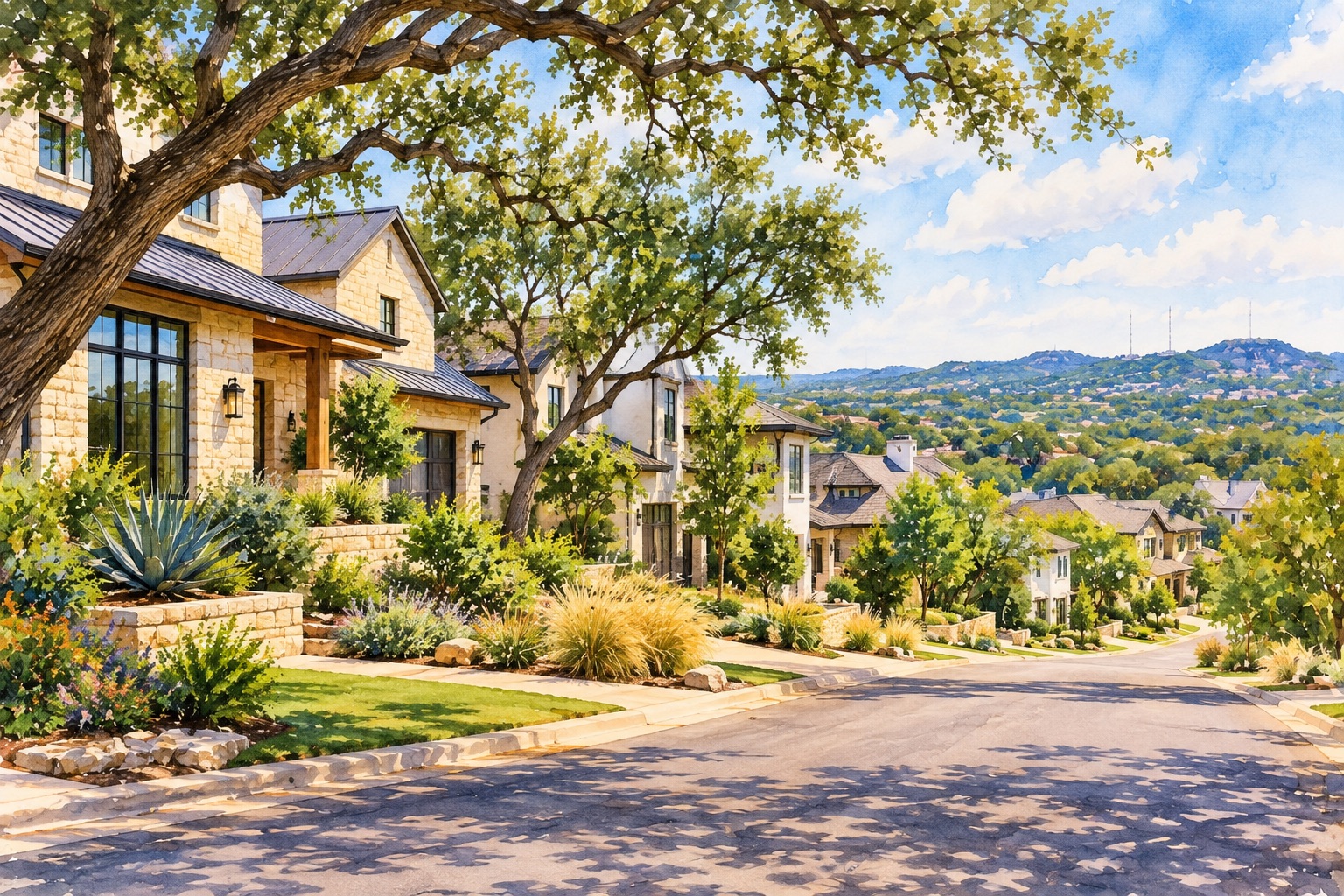
Housing varies by section. The area includes older homes as well as newer construction, so don’t assume every property has the same layout, age, or upkeep needs. A real estate video from Jacqueline Roland describes community pools, parks, and trails in Circle C, but those amenities may not be equally close to every home.
The school path is address-specific. Before you weigh any campus claims, verify the assigned schools for the property rather than relying on a neighborhood label. Public school information is one place to check details; confirm current attendance boundaries with the district as well.
I’d also test the drive to work during the hours you expect to travel. “Southwest Austin” covers a lot of ground, and a map’s distance from downtown won’t capture peak traffic or the trip to your own work site.
2. Westlake Hills: hillside homes near central Austin
Westlake Hills sits west of central Austin, with a hillside setting and a shorter drive toward downtown than many outlying areas. The median home price is $1.95 million, placing it at the higher end of this shortlist.

That figure is a useful point of reference, not a price promise for a particular house. Homes can vary by lot, condition, and location. Plan for a close look at the property itself, plus the full monthly cost of taxes, insurance, upkeep, and any association fees.
Westlake Hills is commonly associated with Eanes ISD, but school assignment still depends on the home’s address. I recommend confirming the current boundary directly with the district before making an offer. The Austin school districts guide can help you understand what to check across the metro.
Commute maps deserve the same care. A short distance can still involve a slower trip at peak times, and travel to a job outside downtown may look very different. Drive the route on a normal weekday before you make the location part of your budget decision.
3. Steiner Ranch: planned amenities near Lake Austin
Steiner Ranch is a master-planned community in northwest Austin’s 78732 area, near Lake Austin. When comparing homes, check which amenities are close to the specific property and whether they are within walking distance or require a drive.
Home prices vary. Compare recent sales for homes with similar size, age, and condition, and add any association costs to your monthly estimate.
Steiner Ranch is served by Leander ISD. School options include Steiner Ranch Elementary and Canyon Ridge Middle School, but assignments depend on the property address. Verify each address with the district before treating a school name as settled.
Travel time is an important trade-off to consider. Try the trip to your usual destinations at the times you’d typically travel, and account for how your family’s routines may affect the commute.
When considering a home near Lake Austin, check what “lake access” means for that specific property. Find out whether amenities are nearby on foot or require a drive.
4. Travis Country: southwest Austin access and neighborhood parks
I’d use Travis Country as a place to explore, not as a finished checklist. Start with the specific homes available, then map their distance to parks, grocery trips, and the routes you expect to use most often. A park that looks close on a map may be separated from a home by a busy road or a route without a sidewalk.
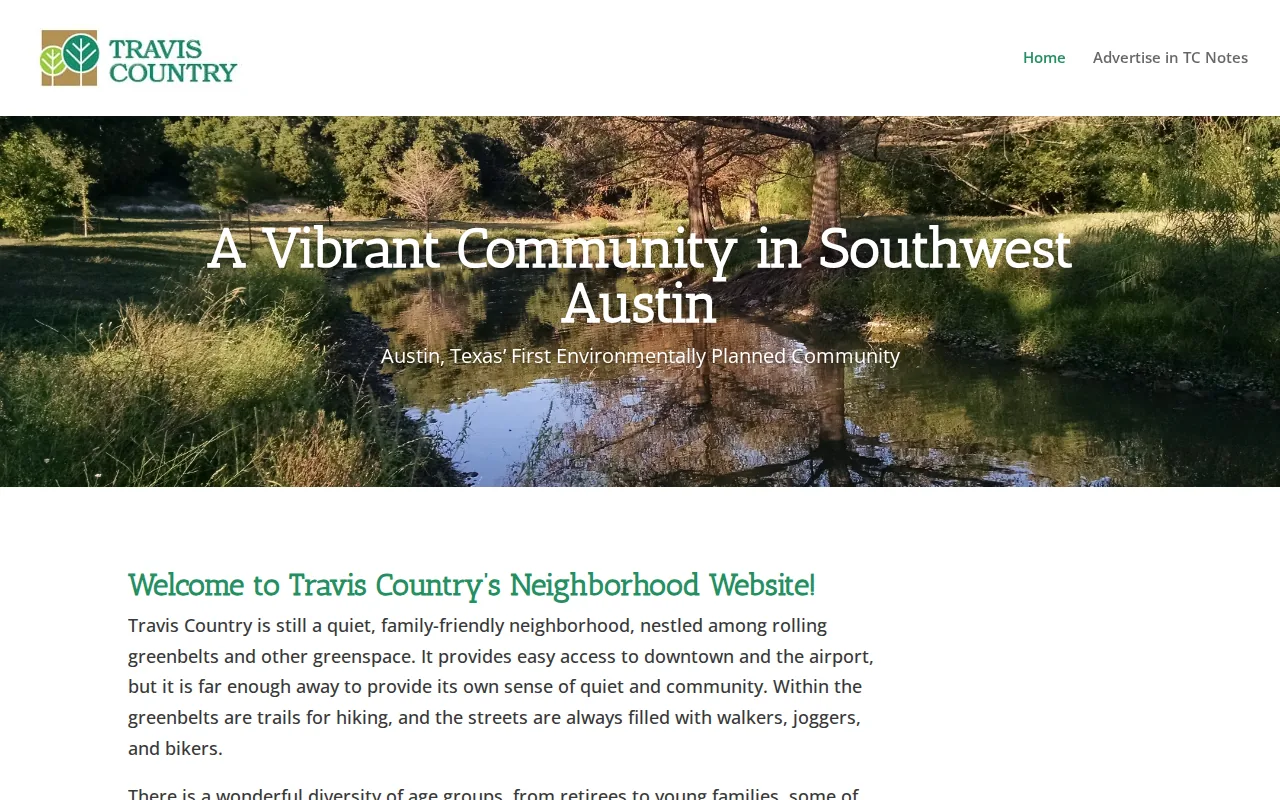
Before relying on a school name attached to a listing, check the address with the district. The same rule applies to taxes: each property can sit within a different mix of taxing entities. The Austin property-tax calculator guide can help you start an estimate, but confirm the actual tax details for the property.
Travis Country may fit your search if southwest Austin is convenient for work or daily errands. I’d compare the exact location against Circle C Ranch and other areas you’re considering, then visit during a weekday and on a weekend.
5. Tarrytown: central location and varied home styles
Tarrytown is a central Austin neighborhood between downtown and Lake Austin. If you’re comparing homes here, look at the specific property and block rather than assuming nearby homes will have the same features or condition.
Before making a decision, look closely at the roof, plumbing, electrical systems, and any past renovations. The asking price alone won’t tell you the cost of ownership, so consider the home’s condition and your likely maintenance needs.
Tarrytown’s location may make a downtown trip more convenient, but travel time can vary with traffic and your starting point. Test the route from the streets you’re considering rather than assuming every address has the same commute.
For school planning, confirm the current assignment for the specific address. Tarrytown may be worth a closer look if you value a central location and want to compare different home styles. Take time to weigh location, property condition, and the costs of ownership for each home.
6. Allandale: mid-century homes and central access
Home prices and lot sizes vary, so compare each property’s land and structure separately: a home’s value may depend as much on its lot and potential future work as on the rooms you see during a showing.
Before choosing a home, test a real route to your regular destinations. Walk or bike the nearby streets too, since access can change from one block to the next. These checks can help you see how a particular home fits your daily routine.
School assignments can vary by property, so verify the schools serving any address directly with Austin ISD. If central Austin is your focus, compare Allandale with other nearby neighborhoods using the central Austin neighborhood comparison, then judge each option by your own commute and budget.
7. Brentwood: walkable connections in north-central Austin
Brentwood has a useful data point that many areas lack: a walkability score of 70.
Home prices vary by property, and condition can differ from one listing to another. Look at the home’s condition and the specific block before comparing its price with another Brentwood listing.
Check routes to the places you visit regularly and test the commute when you’d actually travel. A neighborhood-wide score can’t show whether a particular trip feels convenient.
Brentwood is served by Austin ISD, but school assignments vary by address. Don’t treat any general neighborhood summary as confirmation. With its reported walkability score and central position, Brentwood is a useful comparison point for buyers who want to weigh driving against nearby daily errands.
8. Gracywoods: north Austin homes near major corridors
Gracywoods is a north Austin neighborhood with access to major commercial corridors and the Domain area.

A ZIP-code figure can include several nearby pockets and housing types, so it shouldn’t stand in for a neighborhood-level sale price. For a useful budget, compare recent sales near the address and account for the home’s condition, size, and any association costs.
The profile describes nearby school options but doesn’t establish a single school path for every Gracywoods home. Confirm the current Austin ISD assignment using the property address. You can also check the route to work at rush hour, since proximity to a highway corridor doesn’t mean the whole trip will be quick.
If you’re comparing north Austin areas, this Northwest Austin neighborhood overview gives you another set of nearby areas to consider. Use it to widen the search, then bring the options back to the same tests: home cost, commute, school boundary, and access to the places you visit each week.
9. Hyde Park: central streets and historic housing
Look at recent sales for the home type you want, then confirm the assigned schools with the district before you make a decision.
Historic homes can bring charm, but age alone doesn’t tell you how much work a property needs. Review permits and renovation records when available, and pay attention to major systems during inspection. A smaller home in a central location can still have costs that don’t show up in the listing photos.
Visit at more than one time of day. That lets you see how traffic, parking, and nearby activity change across a normal week. If you’re weighing central Austin against a larger home farther out, compare your likely daily routes as carefully as the purchase price.

10. Franklin Park: south Austin with a limited walkability data point
Franklin Park has a reported walkability score of 40, compared with Brentwood’s 70. Since comparable scores aren’t available for most other neighborhoods, those numbers can’t rank the full Austin area.
The score can still help frame a visit. Identify the places you’d want to reach on foot, then try the actual route. Distance, crossings, sidewalks, and shade all affect whether a walk works for your routine. A neighborhood score won’t answer those address-level questions.
Check recent sales before setting a budget and use the district’s address lookup for school boundaries. For green space, map public parks and visit them yourself instead of relying on a general label.
Franklin Park belongs on a comparison list if south Austin is part of your search. Just keep the evidence in proportion: the walkability figure is a single area-level measure, not a verdict on every block or a substitute for visiting.
Compare the Austin areas at a glance
The table keeps the trade-offs visible without pretending that every area has the same level of data.
| Area | Reported housing cost | School information | Commute or access note | Useful next check |
|---|---|---|---|---|
| Circle C Ranch | — | Verify by address | Southwest Austin | Check the home’s section and amenity distance |
| Westlake Hills | About $1.95 million median | Eanes ISD; verify by address | West of central Austin | Compare total ownership cost |
| Steiner Ranch | — | Leander ISD; verify by address | Peak travel may add time | Test both commute routes |
| Travis Country | — | Verify by address | Southwest Austin | Map parks and daily routes |
| Tarrytown | About $1.7 million median sold price | Austin ISD; verify by address | Reported 8 to 12 minutes to downtown | Inspect older-home systems |
| Allandale | — | Austin ISD; verify by address | Reported 10 to 15 minutes to downtown | Compare lot and home condition |
| Brentwood | — | Austin ISD; verify by address | Walkability score 70 | Test walking routes and commute |
| Gracywoods | — | Austin ISD; verify by address | North Austin corridor access | Use nearby sales, not ZIP value alone |
| Hyde Park | — | Verify by address | Central Austin | Check home condition and routes |
| Franklin Park | — | Verify by address | Walkability score 40 | Visit the actual walking routes |
For property taxes, use the current taxing entities for the specific address. Texas property tax bills depend on local rates and taxable value; the property tax information explains the state’s property tax system. Don’t use a metro-wide estimate as a substitute for checking a home’s tax record.
Frequently asked questions
What should I compare when choosing an Austin area?
Compare the home’s full cost, school assignment, commute, and access to the places you use each week. For Austin areas on this list, the data isn’t complete enough to rank every school or park option. Check the specific address, visit the streets, and test your likely routes before deciding which areas deserve another look.
Are school boundaries the same throughout an Austin neighborhood?
No, school boundaries can vary by address, even within the same neighborhood. For any Austin area you’re considering, enter the property address in the district’s current boundary tool and confirm the assignment with the district. Don’t rely only on a listing, a map pin, or a neighborhood-level summary.
Which Austin neighborhood has the highest walkability score in this list?
Franklin Park has a reported score of 40. Since most neighborhoods have no reported score here, the numbers don’t establish which area is most walkable overall. Test the routes that matter to your routine.
How much should I budget for property taxes in Austin?
Your tax bill depends on the property’s taxable value and the rates set by its local taxing entities. Two homes with similar prices can have different bills. Check the current tax record for each address and ask about any exemptions that may apply. Treat general online estimates as a first pass, not a final monthly-cost figure.
Can I compare Austin neighborhood home prices using these figures?
Use the figures as rough context, not as a direct price comparison. Some are median sold prices, while the Gracywoods figure is a median value for a ZIP area. The data also covers different snapshots. For a decision, compare recent sales of similar homes near the exact address and review condition, lot, and ownership costs.
A good next step
I’d narrow the list to three areas that match your budget and likely commute, then visit each one at the time you’d normally travel. Robbie English, REALTOR can help you compare addresses and verify the details that affect your decision. Start by sharing the areas and home features you’re weighing, and we’ll work through the trade-offs with you.
Categories
- All Blogs (970)
- !!! (59)
- !x (621)
- Austin Real Estate (113)
- Bee Cave Real Estate (1)
- Building A Home (14)
- Buying A Home (143)
- Buying Land (1)
- Cedar Park Real Estate (58)
- Central Austin Real Estate (75)
- Down Payment Assistance Programs (1)
- Downsizing (4)
- Downtown Austin Real Estate (5)
- Dripping Springs Real Estate (62)
- East Austin Real Estate (3)
- Financing and Mortgage (24)
- first-time homebuying (109)
- Georgetown Real Estate (9)
- Hill Country Real Estate (1)
- HOA (2)
- Home Appraisals (13)
- Home For Rent (1)
- Home Inspections (6)
- Home Pricing (6)
- Home Staging (1)
- Home Values (12)
- Homeownership (1)
- Homes For Rent (1)
- Homes For Sale (147)
- Hutto Real Estate (5)
- Investing (6)
- Investment Properties (4)
- Lakeway Real Estate (33)
- Leander Real Estate (59)
- LGBT+ Real Estate (8)
- Luxury Homes For Sale (5)
- Luxury Real Estate (19)
- Market Conditions (17)
- Moving to Austin (2)
- Moving to Texas (4)
- Negotiations (3)
- Neighborhoods (8)
- Northwest Austin Real Estate (94)
- Off Market Listings (7)
- Pflugerville Real Estate (10)
- Private Listings (2)
- Property Management (42)
- Property Tax (3)
- Real Estate (18)
- Reddit Question Answered (80)
- redwrite (63)
- Relocation (2)
- Renting (6)
- Representation (34)
- Round Rock Real Estate (59)
- Selling Your Home (62)
- South Austin Real Estate (1)
- Westlake Real Estate (3)
Recent Posts