
Austin Home Inspection Tips for Buyers and Sellers

A small ceiling stain in an Austin home could point to a roof leak, a plumbing repair, or HVAC condensation. I’m Robbie English, REALTOR, and these Austin home inspection tips will help you prepare, take part in the inspection, and make sense of what comes next.
An analysis of 39 comments and questions from YouTube and Quora about home inspection in Austin found that 28% mentioned foundation issues.
The goal isn’t to inspect the house yourself. It’s to make sure the inspector can see what matters and that you ask clear questions about what they find.
Step 1: Prepare the Austin Home Before Inspection Day
Start with access. Move boxes and stored items away from the electrical panel, water heater, furnace, and air conditioner. Clear paths to the attic and any crawlspace, and make sure gates or outbuildings can be opened. Inspectors usually can’t move heavy items or personal belongings, so blocked areas may limit what they can check.
If you’re selling, a pre-listing inspection can help you find issues before a buyer’s inspection. I explain how sellers can plan for one in my guide to pre-listing inspections in Austin. Keep receipts or notes for repairs you’ve already made. That gives you a clear record to share when questions come up.
Give the home working lights and access to its systems. If water or power is off, ask the inspector whether that will prevent them from testing parts of the house. Keep pets away from work areas so the inspector can move through the home without distraction.
Outside, clear gutters and check that downspouts carry water away from the house. Look for spots where the ground slopes toward the foundation. In Central Texas, soil movement and poor drainage can affect foundations, so ask about grading and water flow rather than trying to judge a foundation from one crack. Trim branches that block the roof view, but don’t climb up to inspect the roof yourself.
Step 2: Choose a Qualified Inspector and Make the Visit Useful
Ask what the inspection covers, what the inspector can’t access, and when you’ll receive the report. Ask about their experience with homes like the one you’re buying, including its age, foundation type, and major systems. Confirm that the written scope matches what you need before you book.
Local building departments may review permitted construction, remodels, and trade work for code compliance. That permitting process is different from a private home inspection that helps you assess a home’s visible condition for a purchase.
I can share experienced inspectors I’ve intentionally curated through my work, but you’re free to choose any provider you prefer. Compare the scope, communication style, and report process, not just the fee. My guide to home inspection costs in Austin explains what to ask when you request a quote.
Attend the inspection if you can. You’ll hear the inspector explain what they see and can ask follow-up questions while you’re standing near the issue. Ask them to point out shutoff locations and maintenance concerns, too. If you can’t attend, set a time to review the report with the inspector before making decisions.
Keep questions specific. Ask what they observed, whether the issue affects function or safety, and what kind of specialist should evaluate it if needed. A home inspector documents visible conditions; they don’t open walls or take apart systems to find hidden defects. By the end, you should know which areas were checked and which weren’t accessible.
Step 3: Follow the Core Inspection Checklist for Austin Homes
Use the inspection as a guided review of major systems, not a test you have to pass. Ask the inspector to explain what they observed and what deserves a closer look. My guide to what to look for during an Austin home inspection can help you follow the walk-through.
Roof and exterior: Ask about missing or damaged shingles, loose flashing, exposed fasteners, and hail marks. The inspector may not be able to walk every roof, especially if access or conditions make it unsafe. Also ask about gutters, fascia, window seals, and areas where water could collect beside the home.
Foundation and drainage: Ask whether the visible foundation has cracks or signs of movement. A crack alone doesn’t explain what caused it or whether it has changed. Ask how the ground slopes near the house, whether downspouts send water away, and whether trees sit close to the foundation. Those clues help frame a concern without replacing an expert’s assessment.
Heating and cooling: Ask whether the system starts and responds to the thermostat. Check whether air reaches the rooms through the supply vents, and ask about unusual sounds or visible damage. If the system doesn’t seem to cool or heat as expected, ask whether an HVAC professional should test it further.
Plumbing and electrical: Look for active moisture below sinks and around visible fixtures. Ask whether hot water reaches taps and whether drains flow. A stain may have more than one possible cause, so ask what evidence points to a roof, plumbing, or HVAC issue. For electrical systems, ask about unsafe or loose outlets and whether required GFCI protection is present where checked.
Interior and attic: Ask about water marks, damaged ceilings, window operation, and visible insulation or ventilation issues. The inspection is limited to areas the inspector can safely reach. A note that a space was blocked or inaccessible is a reason to ask what a follow-up inspection might involve.
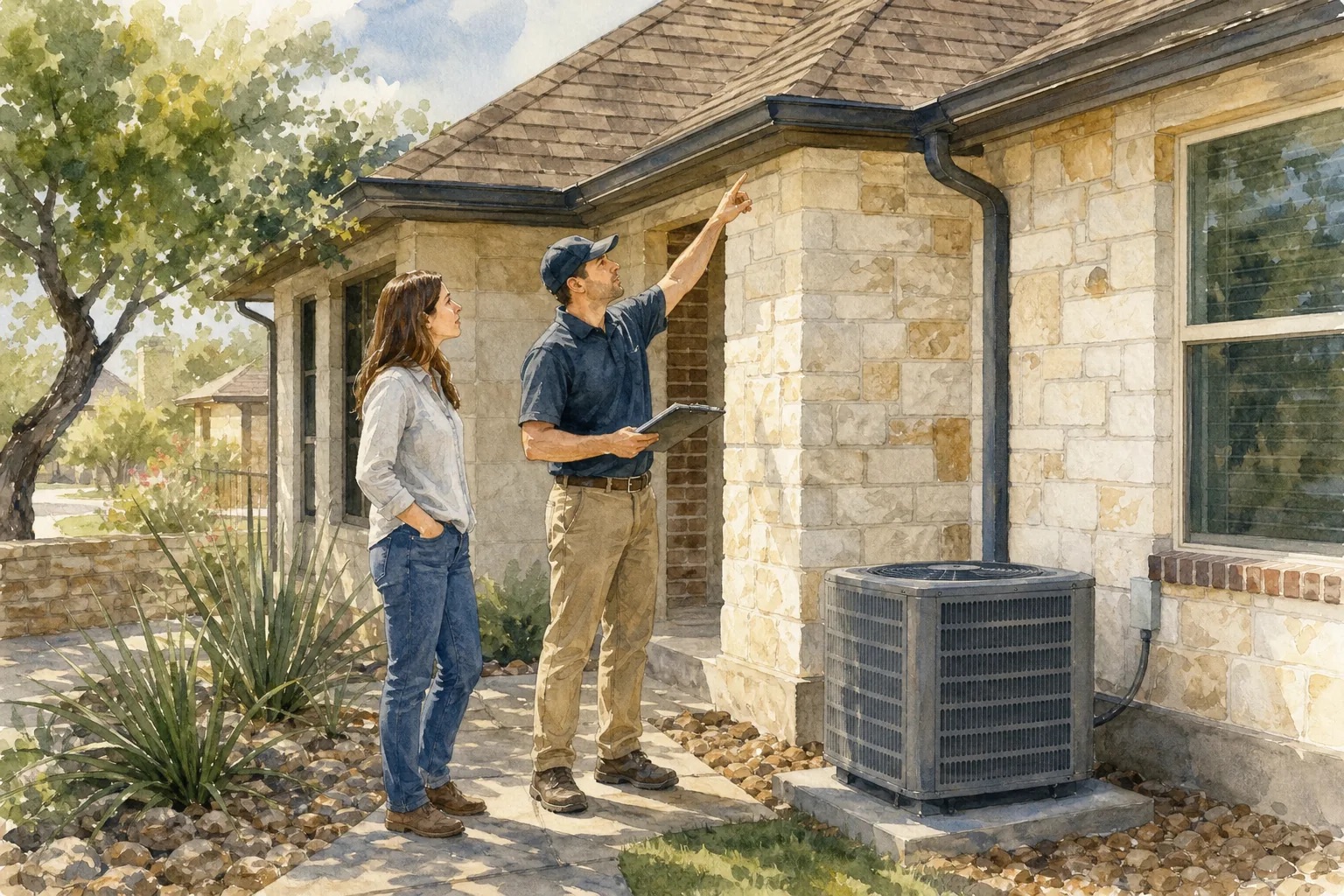
Step 4: Add Specialty Checks and Extra Care for New Construction
A standard home inspection may not answer every question about a property. Ask whether a separate termite or wood-destroying insect inspection makes sense. Depending on the home, you may also want a sewer scope, radon test, well evaluation, chimney review, or pest inspection. Match each extra check to the home’s features and the inspector’s findings instead of ordering every service by default.
For a new home, don’t assume that a city inspection replaces a private condition review. The City of Austin says its building inspections cover permitted construction and trade work under applicable codes. Its inspection process is tied to permit approval, while your purchase inspection helps you review the home’s condition.
Ask about inspections at different construction stages. Before walls close, a qualified inspector may be able to see framing, wiring, and plumbing that won’t be visible later. At later visits, ask about insulation, window installation, flashing, drainage, and whether doors and windows work as intended. Ask the builder how any concerns will be addressed and documented.
Some items need a specialist’s tools or training. A general inspector may note a concern but recommend an HVAC technician, structural engineer, roofer, or plumber for a closer assessment. That recommendation isn’t a verdict. It’s a way to get the right person to answer a specific question before you decide what to do.
Keep safety in mind during the visit. Attics can be hot, and roof access may not be safe. Let the inspector decide what they can reach, and don’t enter a space just to see it yourself. For homes with private water or waste systems, ask which checks apply and who is qualified to perform them.
Step 5: Read the Report and Prioritize the Next Steps
Read the report for patterns, not just the number of pages. A long report can include routine upkeep alongside serious concerns. Sort findings into issues that may affect safety or major systems, items that need specialist review, and normal maintenance. With over 40 years of experience, I’ve learned that a clear order of action can make a dense report easier to discuss.
Start with the inspector’s summary, then look at the photos and notes for each major concern. Check whether the report says an area couldn’t be inspected. Ask the inspector what they saw and what question remains unanswered. My guide to reading an Austin home inspection report walks through how to sort findings and plan follow-up.
For buyers, decide which items need a specialist’s opinion before you talk through a response. Depending on the contract and the parties’ choices, next steps may include requesting a repair, discussing a credit, seeking more information, or moving forward as agreed. Review your contract deadlines with your real estate professional so you have time to make an informed decision.
For sellers, avoid treating every note as a demand or brushing off every concern. Ask whether a repair is needed, whether a qualified professional should assess it, or whether a clear explanation and records may address the question. Any agreement depends on the contract and negotiation between the parties. Take time to review the facts before responding.
Keep perspective: An inspection is a snapshot of visible conditions on that day. It can’t promise that every hidden or future issue will be found. If the inspector recommends more evaluation, get that information before deciding how the finding affects your plans.
Austin Home Inspection FAQ
Should I attend a home inspection in Austin?
Yes, attending is useful if you can make it work. You can see the inspector’s observations firsthand and ask questions while you’re looking at the same part of the home. You don’t need to test systems yourself. Focus on what the inspector observed, what couldn’t be checked, and whether any finding calls for a specialist.
What should I ask an Austin home inspector?
Ask what the inspection includes, what areas may be out of scope, and when the report will arrive. During the walk-through, ask what a finding means, whether it affects safety or function, and what kind of professional could assess it further. For Austin homes, ask directly about drainage, grading, roof condition, and signs of moisture.
Does a home inspection check for termites or radon?
Not always. A standard inspection and specialty inspections can have different scopes. Ask the inspector which services are included, then consider a separate wood-destroying insect inspection or radon test if it fits the property and your concerns. For a well, chimney, or septic system, ask which qualified specialist can assess that system.
What happens if the inspection finds a major problem?
First, ask the inspector to explain the finding and whether a specialist should review it. Then look at the contract and your available time before choosing a response. You may discuss repairs, a credit, more information, or another path with the other party. A finding does not by itself decide what either party must agree to.
Should I inspect a new construction home?
Yes. A private inspection can give you another review of visible conditions, even when the City has completed inspections tied to permits. Ask about visits before walls close and near completion. The exact timing depends on the build stage and access. Raise concerns with the builder while there’s still a clear chance to discuss them.
Conclusion
Make the inspection a conversation: clear access, attend if you can, and ask the inspector to explain drainage, moisture, and any major system concerns. I’m Robbie English, REALTOR, Broker at Uncommon Realty. If you’re preparing to buy or sell in Austin or Central Texas, start by gathering the home’s repair records and writing down the questions you want answered.
Categories
- All Blogs (1004)
- !!! (59)
- !x (621)
- Austin Real Estate (113)
- Bee Cave Real Estate (1)
- Building A Home (16)
- Buying A Home (155)
- Buying Land (1)
- Cedar Park Real Estate (58)
- Central Austin Real Estate (75)
- Down Payment Assistance Programs (1)
- Downsizing (4)
- Downtown Austin Real Estate (5)
- Dripping Springs Real Estate (62)
- East Austin Real Estate (3)
- Financing and Mortgage (24)
- first-time homebuying (110)
- Georgetown Real Estate (9)
- Hill Country Real Estate (1)
- HOA (3)
- Home Appraisals (13)
- Home For Rent (1)
- Home Inspections (14)
- Home Pricing (6)
- Home Staging (1)
- Home Values (12)
- Home Warranties (1)
- Homeownership (1)
- Homes For Rent (1)
- Homes For Sale (147)
- Hutto Real Estate (5)
- Insurance (1)
- Investing (6)
- Investment Properties (4)
- Lakeway Real Estate (33)
- Leander Real Estate (59)
- LGBT+ Real Estate (8)
- Luxury Homes For Sale (5)
- Luxury Real Estate (19)
- Market Conditions (17)
- Moving to Austin (2)
- Moving to Texas (4)
- Negotiations (3)
- Neighborhoods (8)
- Northwest Austin Real Estate (94)
- Off Market Listings (7)
- Pflugerville Real Estate (11)
- Private Listings (2)
- Property Management (42)
- Property Tax (5)
- Real Estate (18)
- Reddit Question Answered (80)
- redwrite (63)
- Relocation (2)
- Renting (6)
- Representation (37)
- Round Rock Real Estate (59)
- Selling Your Home (64)
- South Austin Real Estate (1)
- Westlake Real Estate (3)
Recent Posts