Reddit Asked: "What Are Common Mistakes First-Time Buyers Make in Austin?"

Buying your first home in Austin can feel like learning a new language while making one of the largest financial decisions of your life. One minute you are scrolling through homes online and imagining where the sofa might go. The next minute somebody is talking about option fees, earnest money, title commitments, appraisal waivers, surveys, homeowners association documents, insurance deductibles, and foundation performance.
That is usually when first-time buyers begin wondering whether everyone else understands the process better than they do.
They do not.
Questions about first-time homebuyer mistakes appear regularly on Reddit because the buying process can be difficult to understand from the outside. Buyers hear stories about waived inspections, surprise repairs, rising mortgage payments, difficult commutes, bidding wars, bad agents, expensive closing costs, and homeowners who discovered too late that qualifying for a house and comfortably owning it are two different things.
Here is my front-porch answer. Most first-time buyer mistakes do not happen because buyers are careless. They happen because buyers make decisions before they understand the full cost, contract, property, neighborhood, or consequence.
You do not need to know everything before you begin. You do need the right questions, a realistic financial plan, qualified professionals, and enough breathing room to slow down when a decision deserves more thought.
Again, I am Robbie English, Broker, REALTOR with Uncommon Realty. I have more than 40 years of real estate experience and serve as a national real estate instructor. I have helped buyers through fast markets, slow markets, multiple-offer situations, inspection surprises, financing challenges, new construction purchases, and transactions where the smartest decision was walking away.
Let us sit down together and talk through the mistakes first-time Austin buyers most often make, why they happen, and how you can avoid learning these lessons the expensive way.

Too Long; Didn’t Read
- Do not begin serious home shopping until you understand your complete monthly payment, available cash, closing costs, emergency savings, and comfortable purchase range.
- Choose your buyer’s agent, lender, inspector, and other professionals carefully because experience, communication, and local knowledge can materially affect the purchase.
- Never judge a home only by photographs, finishes, or the monthly principal-and-interest payment. Investigate the property, location, taxes, insurance, condition, commute, and long-term ownership costs.
- Read and understand the contract, buyer representation agreement, inspection findings, title documents, homeowners association information, and financing deadlines before those documents control your choices.
- Do not become so emotionally attached to one property that you ignore warning signs, stretch beyond your budget, waive important protections, or lose the willingness to walk away.
Mistake 1: Shopping Before Completing a Mortgage Pre-Approval
One of the most common first-time buyer mistakes is beginning with the house instead of the financing.
Buyers often search online for weeks, save favorite homes, attend open houses, and imagine themselves living in a particular neighborhood before speaking with a lender. When they finally apply, they may discover that their comfortable payment supports a different price range than expected.
A mortgage pre-approval helps establish the estimated loan amount, available loan programs, down-payment options, likely closing costs, and documentation requirements. It can also reveal credit issues, debt-to-income concerns, or employment documentation problems while there is still time to address them.
Pre-approval is not merely about learning the highest price a lender might approve. A responsible buyer should compare that maximum approval with the payment that fits the household’s real budget.
You may qualify for a payment that technically works under lending guidelines but leaves too little room for retirement savings, travel, childcare, medical expenses, repairs, or the life you want to continue living.
The goal is not to purchase the most expensive home available to you. The goal is to buy a home you can comfortably own.
Mistake 2: Looking Only at the Mortgage Principal and Interest
A listing website may show an estimated mortgage payment that looks manageable. That number may include only principal and interest or may rely on assumptions that do not match your loan.
Your complete monthly housing expense may include principal, interest, property taxes, homeowners insurance, mortgage insurance, homeowners association dues, municipal utility district taxes, special assessments, and other recurring costs.
Texas property taxes can represent a substantial portion of the monthly payment. The seller’s current tax bill may reflect exemptions, assessment limitations, or ownership circumstances that will not apply to you.
Homeowners insurance should also be estimated using a property-specific quote. The home’s age, roof, claims history, construction, location, replacement cost, and deductible can affect the premium.
Two homes with the same purchase price can produce very different monthly ownership costs. A home in Austin may have a different tax and insurance structure than a newer home in Leander, Georgetown, or Hutto.
Compare the complete payment before deciding which home is more affordable.
Mistake 3: Using Every Dollar for the Down Payment
Some first-time buyers become so focused on maximizing the down payment that they leave themselves with little or no cash after closing.
A larger down payment can reduce the loan balance and may improve the payment or mortgage insurance. However, the Consumer Financial Protection Bureau advises buyers to subtract estimated closing costs from their available cash when determining the maximum down payment. Closing costs commonly require additional cash beyond the down payment and vary according to the home, loan, location, lender, and transaction.
Your savings must also cover inspections, appraisal, moving expenses, utility setup, immediate repairs, and the emergency fund you intend to retain after closing.
Ask your lender to compare several down-payment options. You may discover that keeping an additional $10,000 or $20,000 in accessible savings changes the monthly payment by an amount you can comfortably manage.
A home does not become safer financially merely because more cash was placed into the down payment. Cash reserves matter when an air-conditioning system fails, a vehicle needs repairs, or income is interrupted.
My article answering how much emergency fund you may need before buying an Austin home explains how to separate closing funds, moving expenses, household emergency savings, and home-repair reserves.
Mistake 4: Confusing Loan Approval With Personal Affordability
A mortgage approval answers whether the lender believes you meet the program’s underwriting requirements. It does not answer whether the payment supports your preferred lifestyle and long-term financial goals.
The lender may not know that you help support a family member, plan to start a business, expect childcare expenses, want to travel frequently, or need to replace a vehicle soon.
Create a post-purchase budget before making an offer. Include the complete housing payment, utilities, transportation, groceries, debt, savings, maintenance, association dues, lawn care, pest control, and other recurring obligations.
Then ask a more honest question than “Can I qualify?” Ask, “Will I still feel comfortable living my life after making this payment?”
There is no prize for becoming house-poor. A slightly smaller home with financial breathing room may provide more happiness than a larger home that causes stress every month.
Mistake 5: Choosing an Agent Based Only on Who Answers First
The first agent who responds to an online inquiry may be helpful, experienced, and an excellent fit. The speed of the response alone does not establish that.
Interview the agent before committing to a buyer representation relationship. Ask about experience, communication, market knowledge, contract preparation, pricing analysis, inspections, negotiations, new construction, and the neighborhoods you are considering.
A good buyer’s agent should do more than forward listings and unlock doors. The agent should help you understand value, property concerns, contract choices, deadlines, negotiation strategy, and the complete transaction.
Texas buyer-representation rules have changed. Written agreements are now an important part of working with a buyer’s agent, and many real estate professionals must have an agreement in place before touring a home with a buyer. Review the duration, area, services, termination provisions, exclusivity, and compensation before signing.
My guide answering whether you really need a buyer’s agent in Austin explains what representation should include and why finding the property is only a small part of the agent’s responsibility.

Mistake 6: Signing Documents Without Understanding Them
First-time buyers may feel pressure to sign quickly because the forms are described as standard. Standard does not mean unimportant.
Your buyer representation agreement is a contract. Your purchase agreement is a contract. Financing addenda, appraisal provisions, notices, amendments, and addenda can affect your money, obligations, deadlines, and ability to terminate.
Ask what each document does before signing it. Ask which sections are negotiable, what deadlines apply, what happens if a deadline is missed, and which obligations continue after termination or closing.
Your agent can explain the business details of the transaction and the meaning of real estate forms within the agent’s permitted role. When you need legal advice or interpretation beyond that role, consult a qualified real estate attorney.
Do not wait until a problem develops to read the document that controls the answer.
Mistake 7: Treating the Termination Option Like a Free Trial
The Texas termination option can provide the buyer with a negotiated period during which the buyer may terminate the contract by giving proper notice within the applicable deadline. The right is valuable, but it should not be treated casually.
The option period is often when inspections, specialist evaluations, insurance research, document review, repair analysis, and difficult decisions must occur.
Buyers sometimes believe the option period allows them to negotiate any repair they request. The seller is not automatically required to make repairs, reduce the price, or provide money toward closing expenses.
Repair negotiations are negotiations. The buyer must decide which issues are important enough to address, what resolution is acceptable, and whether to proceed if the seller declines.
The option period also has an exact expiration. Waiting until the final hour to review reports or request repairs creates unnecessary risk.
Mistake 8: Skipping or Limiting the Home Inspection
A home inspection cannot predict every future failure, open walls, guarantee code compliance, or eliminate ownership risk. It can still provide valuable information about the visible and accessible condition of the property.
A general inspection may identify concerns involving the roof, foundation, drainage, electrical system, plumbing, HVAC equipment, attic, appliances, windows, doors, interiors, and exterior components.
Specialist evaluations may be appropriate when the inspector identifies possible foundation movement, roof damage, sewer concerns, electrical hazards, structural problems, pool defects, septic issues, or other conditions requiring additional expertise.
First-time buyers sometimes focus on cosmetic items while overlooking expensive systems. Paint and flooring are easy to see. Drainage, foundations, roofs, sewer lines, electrical panels, and aging HVAC equipment may have a much larger financial impact.
My guide to what is included in a home inspection can help you prepare for that part of the process.
Mistake 9: Assuming New Construction Does Not Need Inspection
A newly built home has never been occupied, but that does not mean every component was installed perfectly or every issue was discovered by the builder.
New construction involves many workers, subcontractors, materials, inspections, weather events, schedule pressures, and construction stages. Problems can occur in the foundation, framing, roofing, electrical work, plumbing, HVAC installation, insulation, drainage, finishes, and appliances.
The builder’s representative works for the builder. Municipal inspections are not a substitute for an independent inspection performed for the buyer.
Buyers considering new homes in Liberty Hill, Georgetown, Round Rock, Pflugerville, Buda, or Kyle should also compare builder incentives, contracts, taxes, warranties, lot characteristics, and future resale competition.
Review my Austin New Construction Guide and my explanation of what a new construction inspection includes before visiting a builder.
Mistake 10: Falling in Love With the Finishes
Fresh paint, attractive countertops, new flooring, stylish lighting, and staged furniture can create a strong emotional response. That is why presentation works.
First-time buyers sometimes become so focused on the kitchen that they overlook the road behind the backyard, the drainage path along the foundation, the small secondary bedrooms, the lack of storage, or the forty-five-minute commute.
Cosmetic improvements can often be changed. The lot, location, floor plan, road exposure, school attendance zone, and commute are much harder to change.
Ask yourself how the home functions on an ordinary Tuesday, not just how it feels during a twenty-minute showing.
Where will groceries enter? Is there enough storage? Can the furniture fit? Is the street difficult during rush hour? Does the backyard receive road noise? Will the stairs become inconvenient? Is there space for working from home?
Buy the whole property, not just the countertop.
Mistake 11: Ignoring the Commute
A home may look affordable until the commute becomes part of the cost.
Buyers moving farther from Central Austin may receive more square footage, newer construction, or a larger lot. They may also spend more time and money commuting.
Traffic can vary significantly by time of day, direction, construction, school schedules, and major employers. A weekend drive does not necessarily show what the trip will feel like on a weekday morning.
Test the route when you would normally travel. Compare access to work, schools, childcare, medical care, groceries, family, entertainment, and the places you visit regularly.
A buyer comparing Cedar Park with Leander, or Northwest Austin with Round Rock, should evaluate the lifestyle and transportation tradeoffs rather than comparing prices alone.
Mistake 12: Choosing a Neighborhood From One Visit
A neighborhood may feel different at seven in the morning, five in the afternoon, ten at night, and during a weekend event.
Visit more than once when possible. Observe traffic, noise, parking, lighting, nearby commercial activity, construction, drainage, and how residents use the area.
Review nearby development plans and major road projects. A quiet view may change if neighboring land is planned for apartments, commercial construction, or a roadway extension.
Buyers should independently investigate schools, crime, environmental concerns, transportation, zoning, and other community factors important to them. Real estate professionals can direct buyers to available sources, but buyers should evaluate the information according to their own priorities.
A home can be renovated. The surrounding location usually cannot.
Mistake 13: Ignoring Drainage and Foundation Conditions
Central Texas soil and weather make drainage and foundation performance important subjects for buyers.
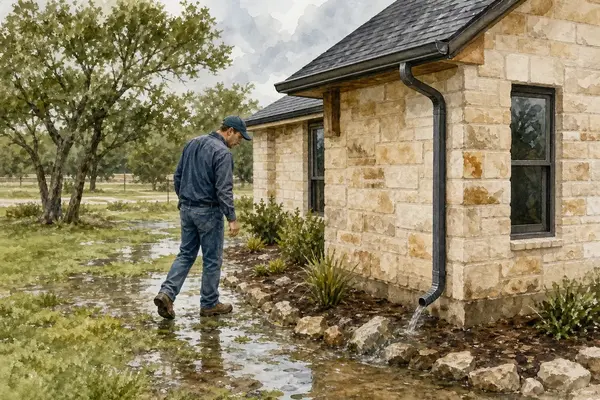
Look at the grading around the home, gutters, downspouts, soil separation, standing water, erosion, retaining walls, large trees, and the way water appears likely to move across the lot.
Cracks do not all mean the same thing. Some are cosmetic. Others may justify evaluation by a qualified structural engineer or foundation professional.
Do not rely only on a seller’s statement that a crack has always been there or a repair company’s promise that a foundation is fine. The appropriate specialist should evaluate the concern within the contract’s deadlines.
Older homes in Allandale, Crestview, Hyde Park, and Travis Heights can offer wonderful locations and character. Their age also makes it especially important to investigate additions, foundations, plumbing, electrical systems, drainage, and previous renovations.
Mistake 14: Underestimating Property Taxes
The seller’s current property-tax bill is not always the buyer’s future tax bill.
The seller may have a homestead exemption, over-65 exemption, disabled-person exemption, veteran exemption, or assessment limitation. The assessed value may also change after the sale.
New construction creates another source of confusion. A tax record may initially reflect only the land or an incomplete improvement. The future tax bill may increase after the completed home is fully assessed.
Ask the lender to estimate taxes using a reasonable projected value and the applicable tax rate. Review the taxing entities associated with the property.
A lower purchase price in a community with a higher tax rate may produce a similar payment to a more expensive home with a lower rate.
Do not compare home prices without comparing the complete monthly payment.
Mistake 15: Waiting Too Long to Obtain Homeowners Insurance
Insurance should be investigated during the contract period, not during the final days before closing.
The insurer may consider the roof, age, location, claims history, construction, systems, replacement cost, and other factors. The policy may contain deductibles expressed as percentages rather than small fixed amounts.
Ask for the premium and the deductible in dollars. Ask what is excluded and whether separate flood, wind, sewer-backup, or other coverage should be considered.
A home can be acceptable to the lender yet more expensive to insure than the buyer expected. Insurance availability can also affect the ability to close.
Obtain property-specific quotes early enough to evaluate the cost and address concerns within the applicable contract deadlines.
Mistake 16: Making Major Financial Changes Before Closing
Mortgage approval continues through closing. The lender may verify employment, credit, assets, debts, and available funds again before funding the loan.
Do not open a new credit account, finance furniture, purchase a vehicle, move large sums of money without documentation, change employment, cosign for another borrower, or increase credit-card balances without speaking with the lender first.
Even a purchase you can afford may affect the debt-to-income calculation or available cash.
Wait until the transaction has closed and funded before celebrating with financed furniture or a new vehicle. The empty living room can survive a little longer.

Mistake 17: Sending Money Without Verifying Wire Instructions
Real estate transactions can attract wire-fraud attempts because large amounts of money move near closing.
A buyer may receive an email that appears to come from the title company, lender, agent, or attorney but contains fraudulent wiring instructions.
Verify wiring instructions through a trusted telephone number obtained independently. Do not rely on the phone number included in an unexpected email. Confirm the receiving institution and account details before sending money.
Be suspicious of last-minute changes, unusual urgency, altered email addresses, and instructions requiring secrecy.
Once money has been sent to a fraudulent account, recovery can be difficult or impossible. Slow down and verify.
Mistake 18: Assuming the Appraisal Is a Home Inspection
The appraisal and inspection serve different purposes.
The appraiser provides an opinion of value for the lender and may identify certain property conditions relevant to the loan. The appraiser is not performing the buyer’s comprehensive home inspection.
An appraised value equal to the purchase price does not mean the roof, plumbing, electrical system, foundation, HVAC equipment, drainage, or appliances are free from problems.
Likewise, a favorable inspection does not guarantee the property will appraise at the contract price.
Buyers should understand the role of each professional rather than expecting one report to answer every question.
Mistake 19: Assuming the Homeowners Association Will Handle Everything
A homeowners association may maintain common areas, enforce restrictions, collect assessments, and manage community responsibilities. The association does not remove the homeowner’s obligations.
Review the governing documents, restrictions, budget, financial statements, insurance information, dues, pending increases, and special assessments when available.
Determine whether your plans comply with the restrictions. Parking, leasing, fences, exterior changes, pets, home businesses, solar equipment, and other uses may be regulated.
Condominium buyers should pay particular attention to reserves, insurance, maintenance responsibilities, litigation, special assessments, and lender eligibility.
Low association dues are not always a benefit if the community is postponing maintenance or underfunding reserves.
Mistake 20: Negotiating Every Inspection Item the Same Way
An inspection report may include dozens of observations, but every item does not carry the same cost, urgency, or risk.
Focus first on safety, structure, active water intrusion, roof condition, electrical hazards, plumbing problems, HVAC performance, drainage, major systems, and expensive repairs.
A missing switch plate and a failing sewer line should not receive equal attention.
The strength of the repair request also depends on the price, market conditions, competing offers, property condition, contract terms, and seller’s willingness to negotiate.
Sometimes a credit or price adjustment is more practical than asking the seller to complete repairs. In other situations, lender requirements or the nature of the problem may make actual repair necessary.
Your agent should help you organize the issues and make a deliberate request rather than forwarding the entire report and asking the seller to fix everything.
Mistake 21: Becoming Afraid to Walk Away
First-time buyers often invest substantial emotional energy before the contract is signed. They imagine holidays, furniture placement, gardens, pets, and future family moments.
That emotional attachment can make it difficult to respond rationally when the inspection, insurance quote, appraisal, title documents, or financing reveals a serious concern.
The money already spent on inspections and appraisal may feel wasted if you terminate. That money purchased information. Sometimes the information saves you from a much larger expense.
Walking away is not automatically the correct decision when a problem appears. Most homes have defects, and many concerns can be repaired or financially addressed.
The mistake is believing that you must proceed simply because you have already invested time, hope, or money.
Mistake 22: Expecting the Home to Be Perfect
The opposite mistake is expecting every used home to perform like new construction and every new home to be flawless.
Homes require maintenance. Materials age. Soil moves. Appliances fail. Paint becomes worn. Owners make imperfect repairs.
The inspection process should help you understand condition and risk, not create the expectation that the seller will deliver a property with no defects.
Separate ordinary maintenance from major concerns. Decide which conditions affect safety, value, insurability, financing, or your willingness to own the property.
The goal is an informed purchase, not a perfect house.
Mistake 23: Buying for Today Without Considering Resale
Your first home may not be your forever home. Employment, relationships, health, family size, and financial goals can change.
You do not need to buy entirely for the next buyer, but you should consider whether the home has features that may limit future demand.
An unusual floor plan, severe road noise, difficult access, poor lot usability, limited parking, unresolved additions, extreme maintenance needs, or location beside an incompatible use may affect resale.
Ask how long you expect to own the property and whether the home provides enough flexibility for likely changes.
A lower price can compensate for certain limitations. The danger is paying as though those limitations do not exist.
Mistake 24: Rushing Because Somebody Says You Must Buy Now
There will always be a reason somebody claims you must purchase immediately. Prices may rise. Rates may fall. Inventory may shrink. Another buyer may appear.
Real estate conditions matter, but urgency should not replace readiness.
You should buy when the purchase fits your finances, expected ownership period, housing needs, and ability to manage the responsibilities of ownership.
A good agent should help you move efficiently without pressuring you to ignore valid concerns. Sometimes speed matters when preparing an offer. The decision still needs to be yours.
No ethical professional should make you feel that asking questions is inconvenient.
Frequently Asked Questions About First-Time Buyer Mistakes
What is the biggest mistake first-time buyers make in Austin?
The biggest mistake is often focusing on the purchase price without understanding the complete monthly payment, closing costs, property condition, maintenance needs, and cash required after closing.
Should I get pre-approved before touring Austin homes?
Yes. A mortgage pre-approval helps you understand available loan options, estimated payments, cash requirements, and documentation concerns before you become emotionally attached to a property.
Do first-time buyers need a buyer’s agent?
A buyer may choose to proceed without representation, but a qualified buyer’s agent can assist with market analysis, property evaluation, contract strategy, inspections, negotiations, deadlines, title, appraisal, financing, and closing.
Do I have to sign a buyer representation agreement?
Texas law and industry rules govern when written buyer agreements are required. When working with a buyer’s agent, expect to review a written agreement before touring. Read the duration, services, compensation, area, and termination provisions before signing.
Can I rely on an online mortgage estimate?
Online estimates may omit or inaccurately estimate property taxes, insurance, mortgage insurance, association dues, closing costs, and loan-specific terms. Obtain a personalized estimate from a qualified lender.
How much should I save beyond the down payment?
Plan for closing costs, inspections, appraisal, moving expenses, immediate repairs, and emergency savings. The appropriate amount depends on the loan, home, household expenses, and property condition.
Should I waive the home inspection to make my offer stronger?
Waiving or limiting inspection rights can create substantial risk. Understand the property, contract, market, and financial consequences before giving up an important opportunity to investigate the home.
Does a new home need an independent inspection?
Yes. New construction can contain defects involving the foundation, framing, roof, plumbing, electrical system, HVAC installation, drainage, insulation, finishes, and appliances.
Can the seller’s current property-tax bill predict mine?
Not always. The seller may have exemptions or assessment limitations that do not transfer. New construction tax records may also reflect incomplete improvements.
When should I obtain homeowners insurance?
Request property-specific insurance quotes during the contract period so you can evaluate premiums, deductibles, exclusions, and insurability before important deadlines expire.
Can I buy furniture before closing?
Avoid opening credit accounts, increasing debt, or making large purchases before the loan has closed and funded unless your lender has specifically approved the action.
Is the appraisal the same as an inspection?
No. The appraisal primarily supports the lender’s valuation decision. The inspection evaluates visible and accessible property conditions for the buyer.
Should I ask the seller to repair everything in the inspection report?
Not necessarily. Prioritize major, costly, active, structural, safety, insurance, and financing concerns. Repair requests remain negotiable, and the seller may decline.
Is walking away after an inspection a failure?
No. Inspection expenses purchase information. When the condition, cost, or risk no longer fits your goals, terminating within your contractual rights may be the most responsible decision.
Take a Breath
First-time buyers often believe they should already understand the process. You should not.
You have probably never compared loan estimates, analyzed comparable sales, reviewed a title commitment, negotiated repairs, studied an inspection report, or calculated the effect of property taxes and insurance on a thirty-year mortgage.
That is why you build a team.
Ask questions until the answers make sense. Read the documents before signing. Slow down when the decision feels unclear. A good professional will not resent you for wanting to understand the purchase.
You are not trying to prove that you can buy a home without help. You are trying to make a decision your future self will be glad you made.
Robbie’s Perspective
After more than 40 years in real estate, I can tell you that the most expensive mistakes often begin with a buyer saying, “I did not know I needed to ask about that.”
My job is not simply to help you find a house. You can find plenty of houses online. My job is to help you evaluate what you are seeing, understand the choices in front of you, investigate the property, prepare the contract, manage the deadlines, and recognize when a concern deserves more attention.
I also believe representation includes telling a buyer when a home appears overpriced, when the monthly payment may be uncomfortable, when the inspection raises serious concerns, or when walking away should remain an option.
Buying your first home should be exciting. It should not require blind optimism.
The strongest first-time buyers are not the ones who know every answer. They are the ones who prepare carefully, ask good questions, listen to qualified professionals, and remain willing to make decisions based on facts rather than fear.
Avoiding Mistakes Begins Before the First Showing
The best time to avoid a first-time buyer mistake is before you are emotionally attached to a home.
Begin with a realistic budget and mortgage pre-approval. Build emergency savings. Interview your buyer’s agent. Learn the contract process. Decide which communities fit your lifestyle, commute, and complete payment.
Then begin comparing homes in Austin, Cedar Park, Leander, Georgetown, Round Rock, Pflugerville, Hutto, Lakeway, Buda, and Kyle with a clearer understanding of what each choice means.
You can begin with my greater Austin homebuying resources and explore more consumer questions in my Real Estate Questions Asked on Reddit collection.
Again, I am Robbie English, Broker, REALTOR with Uncommon Realty. I would rather help you avoid a costly mistake before the contract than explain afterward why the problem is difficult to fix.
Consumer Resources and Sources
- Consumer Financial Protection Bureau Homebuying Resources
- CFPB: Figure Out How Much You Want to Spend
- CFPB: Determine Your Down Payment
- Consumer Guide to Written Buyer Agreements
- Texas Real Estate Commission Contracts and Forms
This article provides general real estate and consumer education. It is not individualized legal, financial, tax, lending, engineering, inspection, or insurance advice.
Categories
- All Blogs (987)
- !!! (59)
- !x (621)
- Austin Real Estate (113)
- Bee Cave Real Estate (1)
- Building A Home (14)
- Buying A Home (150)
- Buying Land (1)
- Cedar Park Real Estate (58)
- Central Austin Real Estate (75)
- Down Payment Assistance Programs (1)
- Downsizing (4)
- Downtown Austin Real Estate (5)
- Dripping Springs Real Estate (62)
- East Austin Real Estate (3)
- Financing and Mortgage (24)
- first-time homebuying (109)
- Georgetown Real Estate (9)
- Hill Country Real Estate (1)
- HOA (3)
- Home Appraisals (13)
- Home For Rent (1)
- Home Inspections (9)
- Home Pricing (6)
- Home Staging (1)
- Home Values (12)
- Home Warranties (1)
- Homeownership (1)
- Homes For Rent (1)
- Homes For Sale (147)
- Hutto Real Estate (5)
- Insurance (1)
- Investing (6)
- Investment Properties (4)
- Lakeway Real Estate (33)
- Leander Real Estate (59)
- LGBT+ Real Estate (8)
- Luxury Homes For Sale (5)
- Luxury Real Estate (19)
- Market Conditions (17)
- Moving to Austin (2)
- Moving to Texas (4)
- Negotiations (3)
- Neighborhoods (8)
- Northwest Austin Real Estate (94)
- Off Market Listings (7)
- Pflugerville Real Estate (11)
- Private Listings (2)
- Property Management (42)
- Property Tax (5)
- Real Estate (18)
- Reddit Question Answered (80)
- redwrite (63)
- Relocation (2)
- Renting (6)
- Representation (34)
- Round Rock Real Estate (59)
- Selling Your Home (63)
- South Austin Real Estate (1)
- Westlake Real Estate (3)
Recent Posts