
What Are Seller Concessions And Can They Help You Save
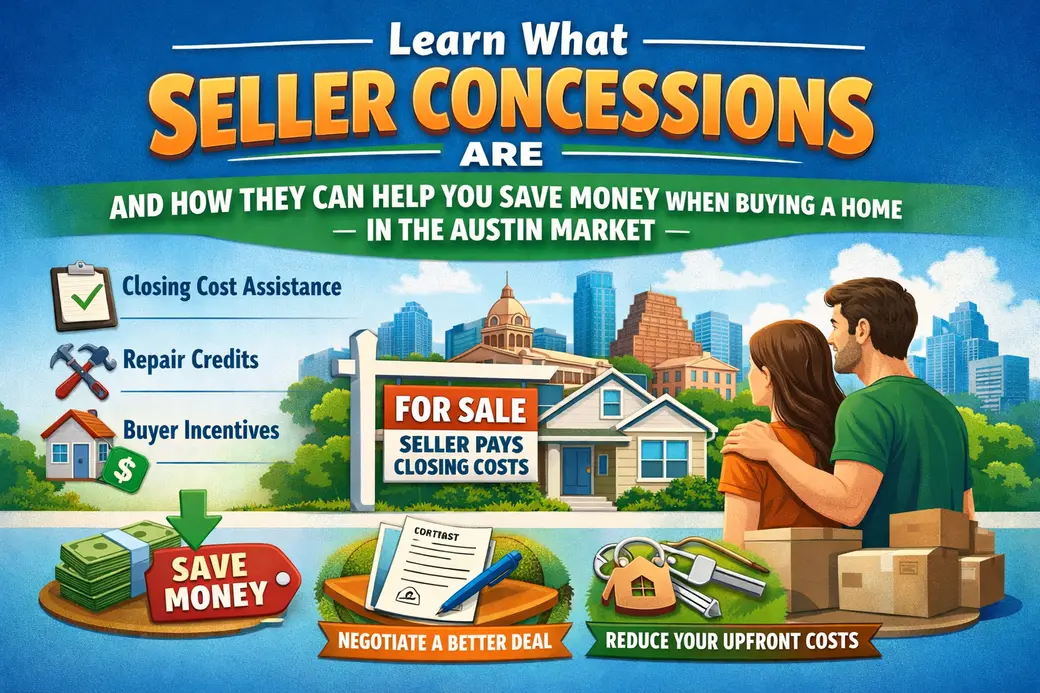
Seller concessions are amounts a seller agrees to contribute toward a buyer's closing costs, and real, specific caps apply based on your loan type: conventional loans cap concessions at 3% to 9% of the sales price depending on your down payment, FHA caps them at 6%, and VA loans cap them at 4% for certain items. This guide covers the actual, current rules for each loan type, not vague "ask your seller for help" advice that doesn't tell you anything concrete.
I am Robbie English, Broker, REALTOR at Uncommon Realty, and I've helped buyers structure seller-concession requests across Austin for years. My goal here is to give you the real numbers behind each loan type.

What Seller Concessions Actually Cover
Seller concessions typically apply toward a buyer's closing costs, loan origination fees, title insurance, appraisal and inspection fees, prepaid property taxes and insurance, and in some cases rate buydowns. They cannot be used to reduce your down payment below your loan program's minimum requirement, and they don't reduce the purchase price itself; they're a credit applied at closing rather than a price reduction.
Conventional Loan Concession Limits
Conventional loans following Fannie Mae and Freddie Mac guidelines cap seller concessions based on your down payment: 3% of the sales price if you're putting down less than 10%, up to 6% if you're putting down 10% to 25%, and up to 9% if you're putting down more than 25%. Investment properties carry a flat 2% cap regardless of down payment. These caps apply to the total concession amount; exceeding them can require your lender to reduce the credit or adjust your loan terms.

FHA Loan Concession Limits
FHA loans cap seller concessions at 6% of the lesser of the sales price or the appraised value. This cap covers closing costs, prepaid items, and discount points, and it's generally more generous than the conventional cap for buyers with a smaller down payment, part of why FHA financing remains popular for buyers who want meaningful seller-funded closing cost help.
VA Loan Concession Limits: The Rule Most Buyers Get Wrong
VA loans cap seller concessions at 4% of the sales price or appraised value, but this 4% cap applies specifically to certain items, payoff of buyer debts, a home warranty, gift funds, and similar extras, not to standard closing costs. Reasonable and customary closing costs, loan origination fees, title insurance, appraisal fees, can be paid by the seller without counting against that 4% cap. This distinction genuinely trips up buyers and even some agents, so confirm exactly what falls into the "concession" bucket versus regular closing costs with your specific lender before assuming your total ask is capped at 4%.
Cash Buyers Face No Concession Caps
Because loan-based concession caps exist to protect lenders from inflated sales prices used to disguise excessive seller contributions, cash buyers aren't subject to any lender-imposed concession limit at all. A cash transaction can structure seller contributions however both parties negotiate directly, though this is genuinely uncommon since cash buyers typically have less need for closing-cost help in the first place.
Why Concessions Must Be Properly Disclosed
Seller concessions must be disclosed on the sales contract and factored into the appraisal process, since an appraiser needs to know the actual net sales price versus any seller-paid credits to arrive at an accurate valuation. Structuring a deal to hide or mischaracterize concessions to inflate the apparent sales price is a real form of mortgage fraud, well beyond an aggressive negotiating tactic, and it can jeopardize the entire transaction if discovered during underwriting.
When Concessions Make The Most Sense
Seller concessions tend to be most useful for buyers who have enough for their down payment but limited cash remaining for closing costs, or for buyers negotiating a rate buydown to offset a higher interest rate environment. They're less useful in a genuinely competitive multiple-offer situation, where asking for a large concession can make your offer look weaker on net terms compared to a competing offer with no concession request.
How Concessions Interact With Your Offer Price
A buyer requesting a seller concession is effectively asking the seller to net less from the sale, so sellers often respond by holding firmer on price, or by countering with a higher sales price that offsets the concession's cost to them. Understanding this tradeoff, a concession isn't free money, it's typically absorbed somewhere in the overall deal structure, helps you negotiate more realistically rather than assuming a concession is purely additive to your position.
Structuring A Concession Request Correctly
Work with your agent and lender together to determine the specific dollar amount or percentage to request, based on your actual loan program's cap and your realistic closing cost estimate, rather than asking for the maximum allowed cap by default. Requesting exactly what you need, with a clear breakdown your agent can present to the seller's side, tends to land better than an unexplained maximum-cap request that can read as excessive to a seller.
USDA Loan Concession Limits
USDA loans, available for eligible rural and some suburban Central Texas properties, generally follow a similar concession cap to FHA financing, up to 6% of the sales price. Given USDA's broader eligible-area map extends further than many buyers assume, including some Austin-area exurbs, it's worth checking eligibility directly if you're targeting a lower-density area outside the urban core, since USDA financing can offer genuinely favorable terms including no down payment requirement for eligible buyers.
Second Mortgages And Down Payment Assistance Programs
Seller concessions operate independently from down payment assistance programs, which provide a separate source of funds, often as a deferred second lien or grant, specifically for your down payment and sometimes closing costs. Texas programs like TDHCA's My First Texas Home or TSAHC's Home Sweet Texas can be combined with a seller concession in many cases, meaningfully reducing your total cash-to-close, though eligibility requirements and income limits apply. Ask your lender directly whether a specific down payment assistance program can be layered with a seller concession on your particular loan.
Concessions Versus A Straight Price Reduction
Buyers sometimes assume a seller concession and an equivalent price reduction are financially identical, but they aren't quite the same. A price reduction lowers your loan amount and therefore your monthly payment slightly, while a concession covers upfront costs without affecting your loan amount or ongoing payment. Depending on your specific cash position and monthly budget priorities, one structure may genuinely serve you better than the other, worth discussing directly with your lender rather than assuming they're interchangeable.
How Concessions Show Up In The Closing Disclosure
Seller concessions appear as a specific line item on your Closing Disclosure, the document you receive at least three business days before closing under federal lending rules, itemizing exactly how the concession was applied across your various closing costs. Reviewing this document carefully, and comparing it against your Loan Estimate from earlier in the process, helps you confirm the concession was applied as negotiated rather than discovering a discrepancy at the closing table itself.

Common Mistakes Buyers Make With Concessions
A common mistake is requesting the maximum allowed concession by default without first calculating actual closing costs, which can make an offer look weaker than necessary in a competitive situation. Another common mistake is assuming a concession is guaranteed once verbally discussed, rather than confirming it's written explicitly into the purchase contract with a specific dollar amount or percentage. A third mistake is not confirming with your lender early whether your specific down payment tier and loan type allow the concession amount you're planning to request, only to discover a cap issue midway through underwriting.
Rate Buydowns As A Specific Type Of Concession
Some seller concessions go toward a temporary or permanent interest rate buydown rather than direct closing costs, a genuinely popular strategy when rates are elevated. A temporary buydown reduces your rate for the first one to three years before reverting to the full note rate, while a permanent buydown lowers your rate for the full loan term. Confirm with your lender which specific buydown structures they offer and how the cost compares to a straightforward closing-cost credit for your specific situation.
Negotiating Concessions In A Seller's Versus Buyer's Market
In a buyer-leaning market with more inventory and negotiating room, sellers are generally more willing to offer meaningful concessions to get a deal done. In a genuinely competitive seller's market, requesting a large concession can put you at a real disadvantage against buyers offering cleaner terms. Understanding current market conditions in your specific target area and price range should shape how aggressively you request concessions, not a fixed rule of thumb.
A Practical Way To Approach This
Before writing an offer, get a genuine closing cost estimate from your lender so you know the real dollar figure you're trying to cover, then work with your agent to determine whether requesting a concession, offering a slightly lower price instead, or some combination makes more sense given current market conditions for the specific listing you're pursuing. A well-structured, clearly justified request tends to outperform an unexplained maximum-cap ask.
Working With Your Lender On The Right Number
Rather than picking a concession percentage arbitrarily, ask your lender for a genuine, itemized closing cost estimate specific to your loan amount, property, and program before you write your offer. This gives you a real, defensible number to request rather than a round figure that might overshoot what you actually need, or worse, undershoot it and leave you scrambling for additional cash at closing.
Concessions For New Construction Purchases
Builders frequently offer their own version of seller concessions, closing cost credits, rate buydowns through a preferred lender, or design-center allowances, structured somewhat differently than a resale transaction's negotiated concession. These builder incentives are often tied to using the builder's affiliated lender or title company, worth comparing carefully against your own independent lender's terms to confirm the incentive genuinely nets out favorably rather than simply steering you toward a specific provider.
How Appraisal Gaps Interact With Concessions
In situations where an appraisal comes in below the negotiated sales price, buyers and sellers sometimes renegotiate the concession amount as part of resolving the gap, rather than the buyer covering the full shortfall independently. This is a real, practical negotiating tool: a seller might agree to reduce or eliminate a previously agreed concession in exchange for closing at the original price despite a low appraisal, effectively redirecting concession funds toward covering the appraisal gap instead.
Concessions On Investment And Second-Home Purchases
Investment properties carry meaningfully tighter concession caps, typically 2% regardless of down payment under conventional guidelines, reflecting lenders' view that investment purchases carry different risk than an owner-occupied primary residence. Second homes generally follow the same concession caps as primary residences under conventional guidelines, though specific lender overlays can vary, so confirm your property's specific classification and its applicable cap directly with your lender before assuming a primary-residence cap applies.
Negotiating Concessions As A Seller
If you're selling and a buyer requests a concession, evaluate the request against your net proceeds and how it compares to simply reducing your asking price by an equivalent amount; in many cases, a concession costs you the same net dollar amount as a price cut but can help the buyer's financing work, potentially preserving a sale that might otherwise fall through on a debt-to-income or cash-to-close issue. Understanding the buyer's actual motivation for the request, closing cost shortfall versus a broader negotiating tactic, helps you respond strategically rather than reflexively rejecting or accepting the ask.
State-Specific Considerations In Texas
Texas doesn't impose additional state-level restrictions on seller concessions beyond the federal and loan-program caps already covered, but the TREC one-to-four family residential contract does require concessions to be clearly itemized within the contract's financing addendum or a separate agreed amendment, rather than handled through an informal side agreement. Working with an agent and, where appropriate, a real estate attorney familiar with TREC contract mechanics ensures your specific concession request is documented correctly and enforceable.
Timing Your Concession Request
Requesting a concession as part of your initial offer, rather than introducing it during a later renegotiation, tends to produce a cleaner, more predictable outcome, since the seller can evaluate your full offer, price and concession together, as a single package from the start. Introducing a concession request late in the process, after inspection or appraisal issues have already created friction, can complicate an already tense negotiation and reduce your leverage compared to requesting it upfront as part of your original terms.
Bringing It All Together
Seller concessions can genuinely help you save real money at closing, but they come with real, specific caps: 3% to 9% for conventional loans depending on down payment, 6% for FHA, and 4% for VA loans on certain items specifically, with standard closing costs treated separately from that VA cap. Understanding your specific loan program's rules, and structuring a realistic, well-justified request, matters more than simply asking for the maximum allowed.
Whether you're structuring your first offer, negotiating concessions on a specific listing, or evaluating a concession request as a seller, I'm glad to walk you through what makes sense for your specific loan program, your specific situation, and the current market conditions. You can browse current listings on my website or through my app.
Written for buyers and sellers in the Greater Austin, Texas area by Robbie English, REALTOR, Broker at Uncommon Realty.
Categories
- All Blogs (970)
- !!! (59)
- !x (621)
- Austin Real Estate (113)
- Bee Cave Real Estate (1)
- Building A Home (14)
- Buying A Home (143)
- Buying Land (1)
- Cedar Park Real Estate (58)
- Central Austin Real Estate (75)
- Down Payment Assistance Programs (1)
- Downsizing (4)
- Downtown Austin Real Estate (5)
- Dripping Springs Real Estate (62)
- East Austin Real Estate (3)
- Financing and Mortgage (24)
- first-time homebuying (109)
- Georgetown Real Estate (9)
- Hill Country Real Estate (1)
- HOA (2)
- Home Appraisals (13)
- Home For Rent (1)
- Home Inspections (6)
- Home Pricing (6)
- Home Staging (1)
- Home Values (12)
- Homeownership (1)
- Homes For Rent (1)
- Homes For Sale (147)
- Hutto Real Estate (5)
- Investing (6)
- Investment Properties (4)
- Lakeway Real Estate (33)
- Leander Real Estate (59)
- LGBT+ Real Estate (8)
- Luxury Homes For Sale (5)
- Luxury Real Estate (19)
- Market Conditions (17)
- Moving to Austin (2)
- Moving to Texas (4)
- Negotiations (3)
- Neighborhoods (8)
- Northwest Austin Real Estate (94)
- Off Market Listings (7)
- Pflugerville Real Estate (10)
- Private Listings (2)
- Property Management (42)
- Property Tax (3)
- Real Estate (18)
- Reddit Question Answered (80)
- redwrite (63)
- Relocation (2)
- Renting (6)
- Representation (34)
- Round Rock Real Estate (59)
- Selling Your Home (62)
- South Austin Real Estate (1)
- Westlake Real Estate (3)
Recent Posts