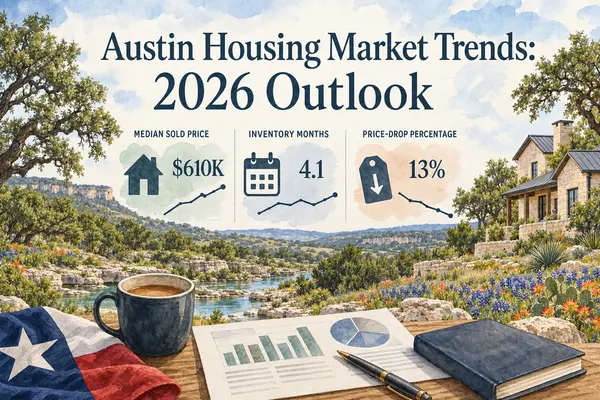
Austin Neighborhoods for Young Professionals

Austin gives you more choices than a downtown condo or a far-out suburb. I’ve seen buyers find central condos, older homes near campus, and lower-cost houses south of the river. The median home price across the areas with available data is $429,000, so your search does not have to start above $1 million. Here are seven places worth exploring, plus the tradeoffs I’d want you to know before you visit.
1. Robbie English, REALTOR
Robbie English, REALTOR is my local real estate team for buyers who want help comparing Austin areas before they commit. I work with first-time buyers, relocation clients, move-up buyers, luxury clients, and people who are still deciding whether buying makes sense.
My role is not to tell you which neighborhood you must choose. Fair Housing rules and good service require something better. I help you compare objective factors such as price, commute, housing type, taxes, HOA costs, transit access, and nearby services.
Over 40 years of experience in Central Texas has taught me that a map can mislead you. Two homes may look close to downtown, yet their rush-hour routes can feel very different. A short drive at 6 a.m. does not tell you much about the trip home at 5:30 p.m. I also want you to see the block at more than one time of day.
We can compare a condo with a single-family home, review HOA documents, estimate property taxes, and think through resale needs. You are free to select any lender, inspector, title company, or other provider. I can share experienced professionals I have intentionally curated, but using those providers is never required.
If you are buying for the first time, my guide to Austin neighborhoods for first-time homebuyers can help you build a short list around price, commute, and ownership costs. The right first step is usually a conversation about your daily routine, not a rush to tour every available home.
2. East Austin, Cultural energy, downtown access, and varied housing stock
East Austin is one of the most discussed areas for young professionals because it sits east of downtown and has a mix of older homes, condos, and newer construction. In my view, it is worth exploring if you want access to central Austin without choosing a high-rise lifestyle.

The area has changed quickly. Older houses have been renovated or replaced in some pockets, while new homes have appeared on smaller lots. That means two nearby streets can have very different housing stock. Review the specific property instead of assuming the whole area feels the same.
Access to downtown is a major draw. East Austin also connects you with Lady Bird Lake, whose trail and water access support running, cycling, paddling, and other outdoor plans. The City of Austin’s background on Lady Bird Lake helps explain why this part of the river remains such a useful city landmark.
Nightlife and dining are concentrated in certain pockets rather than spread evenly across the district. Walkability can also change from one address to the next. Before you buy, test the walk to the places you would use most. Then check parking, noise, drainage, and the condition of nearby sidewalks.
Price data shows the wide spread in Austin. East Cesar Chavez, which sits in the broader east-side discussion, has a reported median closed price of $715,000. That figure is a neighborhood reference point, not a promise about any one property. Condos and smaller homes may sit below it, while new construction can rise much higher.
East Austin may fit if you value central access and a changing mix of housing. It may frustrate you if you want a uniform subdivision, large lots, or a quiet street at every hour.
3. Hyde Park, Historic character, central location, and usable commute options
Hyde Park gives you a central Austin setting with older homes, smaller apartment buildings, and access toward the University of Texas area. For someone comparing the best neighborhoods in Austin for young professionals, I’d put Hyde Park on the list when location and character matter more than new construction.

The housing stock needs close review. Historic homes may have charm, but age can bring higher repair needs. Look closely at electrical systems, plumbing, foundation history, roof age, insulation, and any local restrictions that affect future work.
Hyde Park’s position near central employers and campus can reduce the need for long cross-town drives. Still, commute time depends on your exact job site and schedule. The roads around the University of Texas can change during major events, so I would test the route during the hours you actually travel.
The area also gives you a useful middle ground between downtown energy and a more residential street pattern. You may find coffee shops, local services, and transit access nearby, but you should verify the route from each home. Walkability is not a single number that describes every block.
Median rent, walkability scores, and nightlife ratings are not available in the neighborhood data I’m using here. That gap matters. If you plan to rent first, ask for current property-level rent information. If you plan to buy, visit on a weekday evening and a weekend morning before making a decision.
Hyde Park makes sense when you want central access and older-home character. It is less suited to a buyer who wants a new build with modern systems and little immediate maintenance.
4. Clarksville, Central west-side living near Downtown Austin
Clarksville is a compact central-west area near downtown. I’d show it to a buyer who wants a short connection to central jobs, restaurants, cultural venues, and outdoor areas without living in a tower.

The housing mix includes older homes, attached properties, and smaller residences. That can make the search more personal, but it also means inventory may vary by street. A buyer should compare lot size, parking, renovation quality, and any shared maintenance obligations before comparing prices alone.
Clarksville’s central position is its main advantage. You can reach downtown, the lake area, and west-side routes without starting from the edge of the metro. But central access does not remove traffic. A short distance can still take longer during events, peak commute periods, or road work.
Outdoor access is another reason to inspect the area in person. Zilker and the Barton Springs area are key west and south Austin reference points, while the river corridor connects several parts of the city. The history of Zilker Park gives useful context for its place in Austin’s public park system.
Clarksville can carry a higher price because land is scarce near downtown. The data set does not provide a current median price for Clarksville, so I would not use a round estimate as a buying rule. Instead, compare recent homes with similar size, condition, parking, and outdoor space.
This area may fit if you want central convenience and are comfortable paying close attention to property condition. It may not fit if you need a large yard, easy parking, or a newer planned community.
5. Highland, Transit-oriented redevelopment and access to the north tech corridor
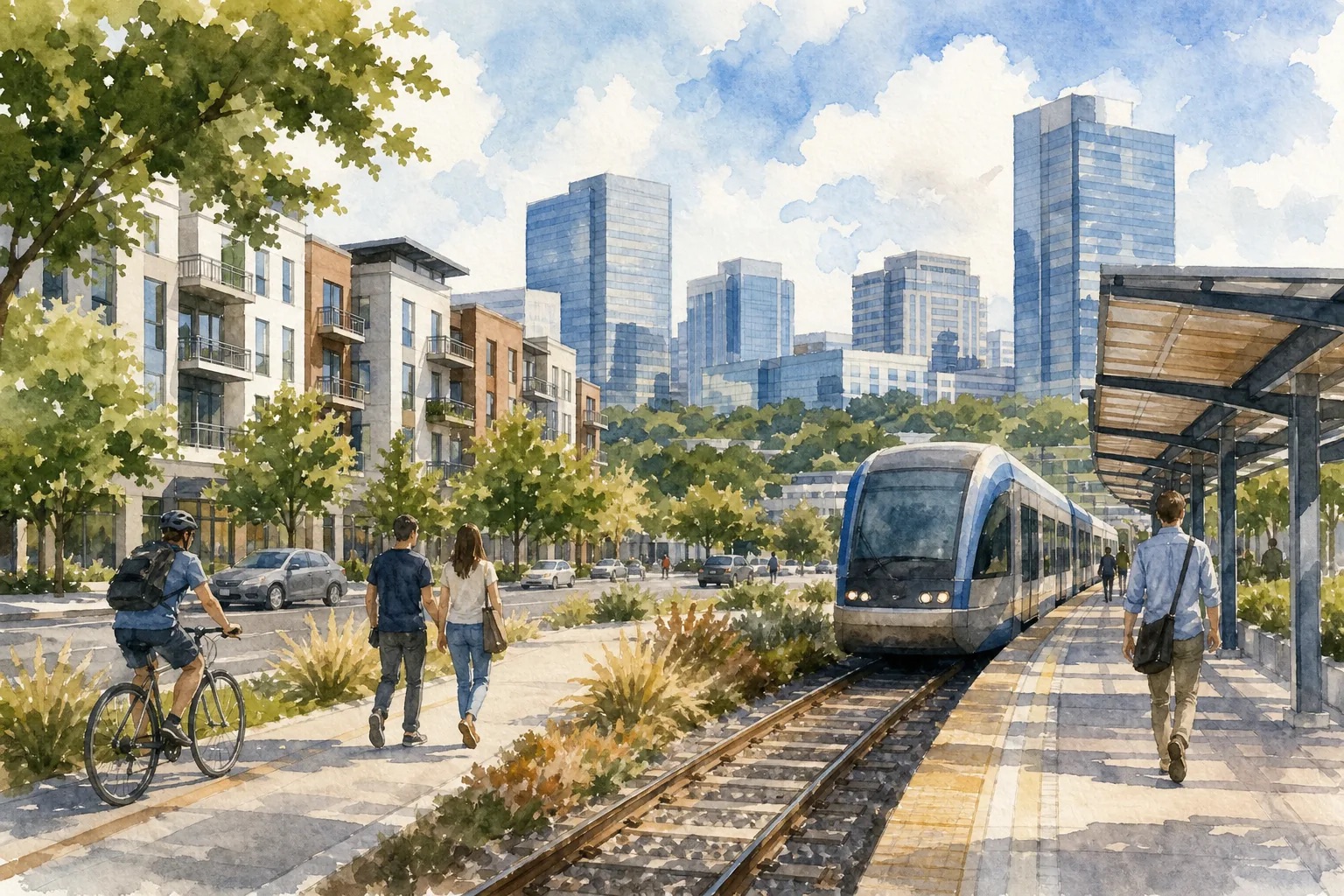
Highland is a north-central option with access toward the north tech corridor and transit-oriented redevelopment. The reported median home price is $429,000, which places it near the broader middle of the price range shown in the available neighborhood data.
That price does not tell you what the monthly budget will be. A buyer still needs to account for property taxes, insurance, repairs, HOA dues, and financing. If you are comparing a condo with a detached home, the monthly payment can change even when the purchase prices look close.
Highland’s location can work well for someone who travels north for work or wants a more manageable connection to central Austin. The Domain and North Burnet area are major reference points for tech jobs, shopping, restaurants, apartments, and office space. I would map your actual employer before assuming the corridor will save time.
Redevelopment can bring new housing and services, but it can also mean construction, changing traffic patterns, and an evolving streetscape. Ask what is approved nearby. Then consider how that work may affect noise, parking, and the route you use each day.
The area’s housing options can include older homes, apartments, and newer projects. Older homes may provide more yard or a lower entry price, while newer buildings may provide updated systems and shared amenities. Neither choice is automatically better. The right choice depends on your repair budget and how much space you need.
Highland is a reasonable place to compare when commute direction matters and you want a central-north location. If your daily life centers on South Austin, the commute may cancel out the benefit.
6. Olympic Heights, A lower-cost entry point with a suburban-style layout
Olympic Heights gives buyers a lower-cost entry point than many central Austin areas.
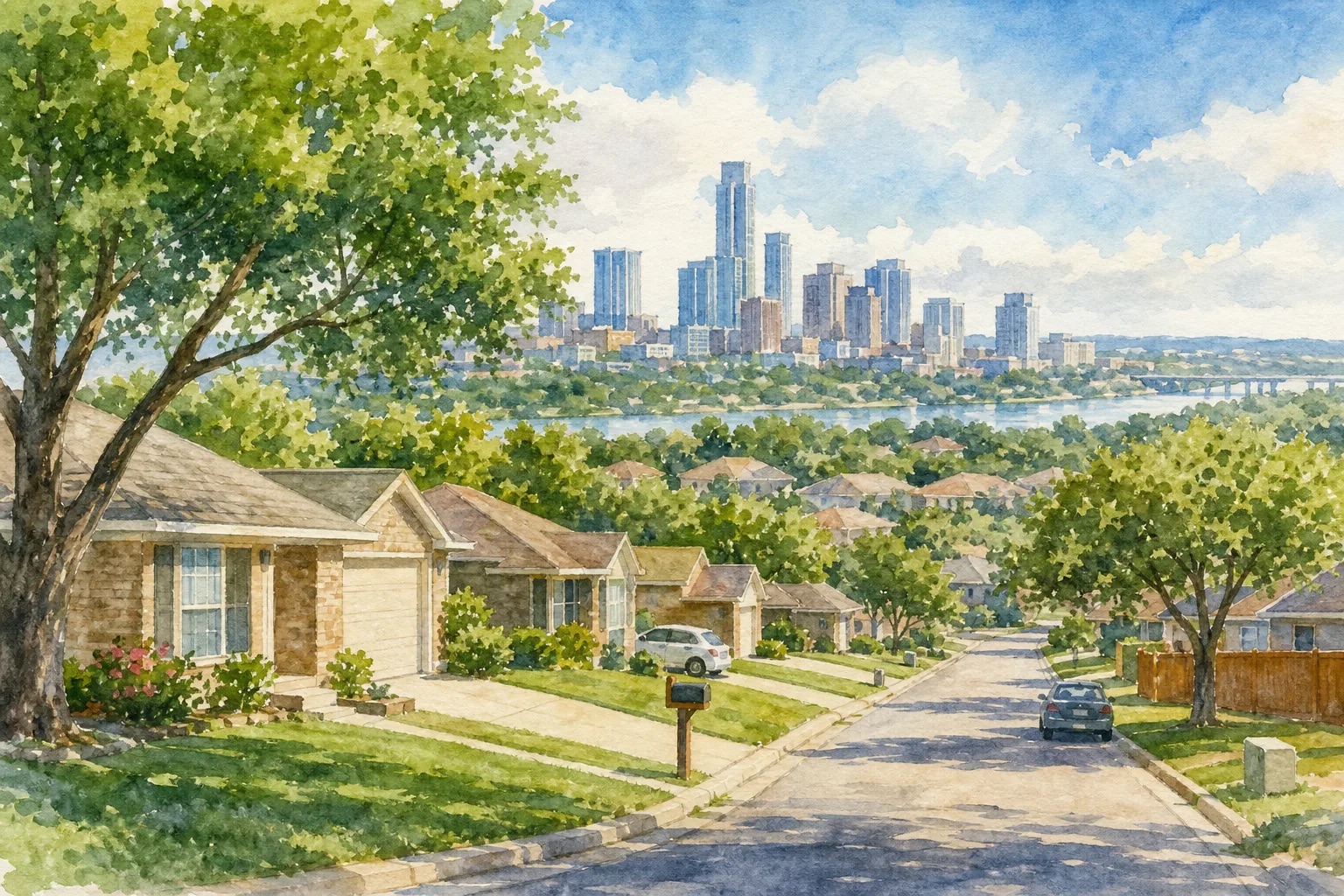
The area’s suburban-style layout can mean more separation from downtown activity and more room than a small central condo. That can help if you want a garage, outdoor space, or a conventional floor plan. It can also mean more driving for work, dining, nightlife, and errands.
Commute time deserves extra attention here. The available neighborhood data does not provide a verified downtown drive time for Olympic Heights. I would test the route on a normal workday, then repeat it after a rain event if drainage or low-water crossings affect your route.
Lower purchase price does not always mean lower monthly cost. Check tax records, insurance quotes, utility bills, HOA rules, and the age of the major systems. A home with a modest price can still need a larger repair fund if the roof, HVAC, or plumbing is near replacement age.
Outdoor access may feel different from central areas. You may have more private yard space, yet fewer daily destinations within walking distance. Decide which tradeoff fits your routine. If you work from home, measure internet options and create a test workspace before you make an offer.
Olympic Heights may suit you if ownership cost and space come before nightlife. It may be a poor match if you expect to walk to bars, restaurants, or a downtown office most days.
7. Cherry Creek, Established south Austin housing with access to trails and daily services
Cherry Creek is an established south Austin area with a reported median closed price of $523,000. I’d compare it with other south-side options when you want a residential setting while staying connected to trails, daily services, and routes toward central Austin.

The housing stock can include older single-family homes and updated properties. That creates room to compare condition and lot size, but it also makes inspection work important. Look for foundation movement, drainage patterns, tree impact, roof age, and additions that may not match the original construction.
South Austin offers access to outdoor recreation, yet the exact distance depends on your address. A home that appears close to a trail on a map may require crossing a busy road or driving to an access point. Visit the route before you treat proximity as a lifestyle benefit.
Cherry Creek may also work for someone who wants daily services without paying the price of a downtown address. Commute times can change sharply during peak hours, so map the trip to your office rather than using downtown as a stand-in.
If you work north of the river, consider the cost of crossing town several days each week. If you work in south or central Austin, the location may fit your routine better. Compare the work route before you compare the home.
For buyers who are still weighing ownership against renting, my guide to buying an Austin condo with confidence explains the questions I would ask about HOA dues, reserves, financing, and resale. Those checks matter in any shared property, not only downtown buildings.
Austin neighborhood comparison: budget, housing type, commute, and lifestyle tradeoffs
The phrase best neighborhoods in Austin for young professionals hides a key question: best for which daily routine? Olympic Heights is just under $395,000, Highland is $429,000, Cherry Creek is $523,000, and several west-side or luxury areas sit above $1.5 million.
The data also has limits. Median rent, walkability scores, and nightlife ratings are not consistently available across the areas reviewed. I would treat those as items to verify during your own search, not as facts to infer from a neighborhood name.
| Area | Reported home-price reference | Housing and commute question | Lifestyle tradeoff |
|---|---|---|---|
| East Austin | $715,000 in East Cesar Chavez | Can you accept varied housing stock and changing construction? | Central access versus street-by-street noise and parking differences |
| Hyde Park | — | Are you comfortable with older systems and event-related traffic? | Central character versus maintenance needs |
| Clarksville | — | Does the compact central setting justify the price? | Downtown access versus limited space and parking |
| Highland | $429,000 | Does your work route run north? | Transit and redevelopment versus construction activity |
| Olympic Heights | Just under $395,000 | Can you trade a longer drive for more space? | Lower entry price versus fewer walkable destinations |
| Cherry Creek | $523,000 | Does south Austin shorten your normal work trip? | Established homes and trails versus cross-town traffic |
Renters should compare the full monthly bill, not rent alone. Rental pricing varies by building and neighborhood, and a neighborhood average does not predict the rent for a particular building. Parking, utilities, pet fees, deposits, and lease terms can change the total.
Buyers should compare the full ownership cost. My Austin property tax calculator guide explains why taxes belong in the first budget draft rather than as an afterthought.
For a wider north, south, and suburban comparison, my guide to Austin suburbs and places to consider can help you decide whether staying inside Austin’s core is worth the tradeoff.
Frequently asked questions
What is the most affordable Austin neighborhood for young professionals?
Olympic Heights has the lowest reported median home price among the named areas in this list, at just under $395,000. Highland follows at $429,000, while Cherry Creek is reported at $523,000. These figures describe neighborhood-level references, not the price of every home. Inspect the property and calculate taxes, insurance, repairs, and HOA costs before comparing affordability.
Which Austin areas have the shortest commute to downtown?
Commute times change with traffic, weather, road work, and your exact starting point. East Austin, Clarksville, Hyde Park, and nearby central areas may offer short routes, but you should test the trip during your normal work hours.
Is East Austin a good place to buy a home?
East Austin is worth considering if you want central access and varied housing stock. The area includes older homes, condos, and newer construction, so conditions and prices can change sharply from one block to the next. Review parking, noise, drainage, permits, and nearby development. A street visit at different times will tell you more than a neighborhood label.
Should I rent before buying in Austin?
Renting first can be useful when you do not yet know how Austin traffic, heat, noise, and daily routes affect you. A year can reveal details that a weekend tour misses. Buying may make sense sooner if your job, budget, and preferred area are stable. Compare the cost of flexibility with the full monthly cost of ownership before deciding.
What should I compare besides the home price?
Compare the commute, property taxes, insurance, HOA dues, repair needs, parking, outdoor space, and resale flexibility. Also check the route to groceries, work, trails, and the places you use each week. The best neighborhoods in Austin for young professionals will differ by routine, so a lower price may not help if the location adds a long daily drive.
Conclusion
I’d start with three visits that match your budget and commute, not three areas chosen only for reputation. If you want local guidance, Robbie English, REALTOR can help you compare homes, ownership costs, and routes without taking the decision away from you. Send me your target budget, work location, and housing needs, then we’ll build a focused Austin search together.
Categories
- All Blogs (964)
- !!! (59)
- !x (621)
- Austin Real Estate (109)
- Bee Cave Real Estate (1)
- Building A Home (14)
- Buying A Home (143)
- Buying Land (1)
- Cedar Park Real Estate (57)
- Central Austin Real Estate (75)
- Down Payment Assistance Programs (1)
- Downsizing (4)
- Downtown Austin Real Estate (5)
- Dripping Springs Real Estate (62)
- East Austin Real Estate (3)
- Financing and Mortgage (23)
- first-time homebuying (109)
- Georgetown Real Estate (9)
- Hill Country Real Estate (1)
- HOA (2)
- Home Appraisals (13)
- Home For Rent (1)
- Home Inspections (6)
- Home Pricing (6)
- Home Staging (1)
- Home Values (12)
- Homeownership (1)
- Homes For Rent (1)
- Homes For Sale (147)
- Hutto Real Estate (5)
- Investing (6)
- Investment Properties (4)
- Lakeway Real Estate (33)
- Leander Real Estate (59)
- LGBT+ Real Estate (8)
- Luxury Homes For Sale (5)
- Luxury Real Estate (19)
- Market Conditions (17)
- Moving to Austin (2)
- Moving to Texas (4)
- Negotiations (3)
- Neighborhoods (8)
- Northwest Austin Real Estate (94)
- Off Market Listings (7)
- Pflugerville Real Estate (10)
- Private Listings (2)
- Property Management (42)
- Property Tax (3)
- Real Estate (18)
- Reddit Question Answered (80)
- redwrite (63)
- Relocation (2)
- Renting (6)
- Representation (34)
- Round Rock Real Estate (58)
- Selling Your Home (62)
- South Austin Real Estate (1)
- Westlake Real Estate (3)
Recent Posts