Why Dripping Springs Buyers Prioritize Outdoor Living Spaces
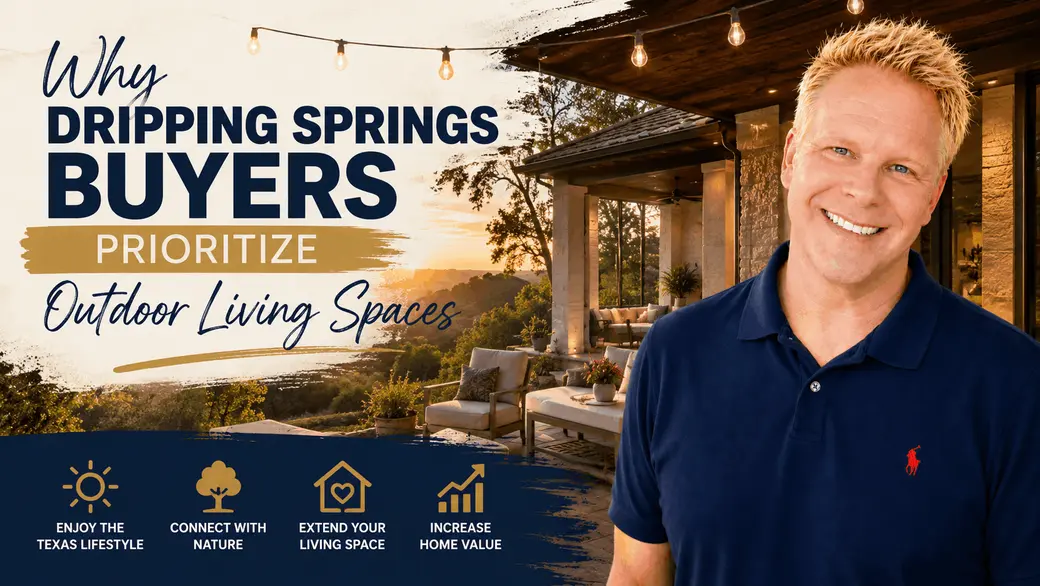
Ask why buyers prioritize outdoor living in Dripping Springs specifically, and the honest answer isn't just "nice views" — it's a handful of concrete, local facts that make outdoor space here genuinely different from a patio anywhere else in the Austin area. This covers those specifics: what the town's Dark Sky status actually means for your evenings, what outdoor features actually cost to build on Hill Country terrain, and what to plan for given the local soil and climate.
TLDR: Why Outdoor Living Matters in Dripping Springs
- Dripping Springs was the first International Dark Sky Community in Texas (2014) and the sixth in the world, thanks to a 2000 outdoor lighting ordinance that genuinely limits light pollution.
- Premium custom pools with rock excavation, hardscaping, and an outdoor kitchen commonly run $120,000-$300,000+ on Hill Country terrain.
- Unexpected rock during excavation typically adds $2,000-$10,000, or 10-20% to the project, given the area's shallow limestone.
- Outdoor kitchens need $2,000-$6,000 in utility extensions plus $5,000-$20,000 for a covered structure like a pergola or pavilion.
- Native, drought-tolerant landscaping is both a climate necessity and a practical response to the area's thin, rocky soil.
The Dark Sky Status Is a Real, Rare Thing
In 2014, Dripping Springs became the first International Dark Sky Community in Texas and only the sixth in the world, a designation earned through the city's 2000 Outdoor Lighting Ordinance, which genuinely restricts fixture type, shielding, and brightness citywide. This isn't a marketing phrase — it's an enforced local ordinance that has kept light pollution low enough that residents can regularly see the Milky Way from their own backyard. For buyers who want to actually use an outdoor space at night, not just during daylight hours, this is a concrete, unusual advantage that most Austin-area suburbs simply can't offer, since they haven't adopted anything comparable.
What a Pool Actually Costs Here
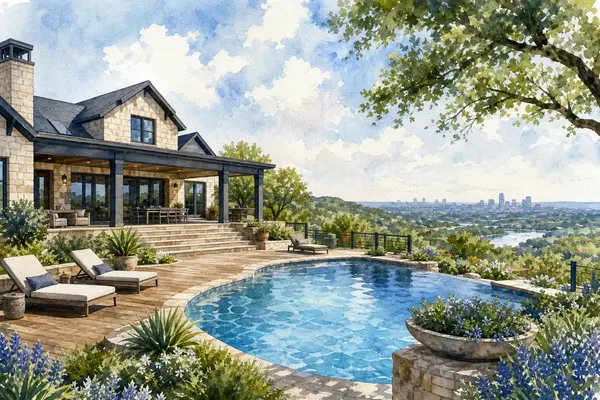
Hill Country terrain changes pool costs in ways flat-lot buyers don't expect. A premium custom pool build here — freeform design, integrated spa, water and fire features, full hardscaping, and an outdoor kitchen — commonly runs $120,000 to $300,000 or more. Part of that reflects the area's shallow limestone bedrock: hitting unexpected rock during excavation typically adds $2,000-$10,000 to a project, and difficult terrain, slopes, or rock overall can add 10-20% to excavation costs alone. Get a site-specific excavation assessment before you budget a pool off a national average cost estimate, since the Hill Country premium is real and it varies lot to lot.
Outdoor Kitchens: Utilities and Cover Add Up
An outdoor kitchen sounds like a simpler addition than a pool, but the utility work behind it isn't free. Budget $2,000-$6,000 for gas, electrical, and plumbing extensions depending on distance from the house, and most Hill Country homeowners also add a pergola, covered patio roof, or full pavilion to protect the space from Texas summer sun, which adds another $5,000-$20,000 depending on size and materials. The combination of shade and outdoor cooking space is what actually makes these spaces get used daily rather than sitting empty most of the year.
Landscaping That Works With the Land, Not Against It
Because bedrock sits close to the surface across much of the area, deep-rooted lawns and non-native plantings often struggle here regardless of how much you water them. Native and drought-tolerant landscaping — Texas sage, agarita, native grasses, live oaks — isn't just a stylistic choice, it's a practical response to thin soil and a climate that swings from hard freezes to extended summer heat. Buyers who plan landscaping around what actually grows well on Hill Country soil generally spend less on ongoing maintenance and replacement than those who fight the terrain with a more traditional lawn.
What the Lighting Ordinance Means for Your Own Property
The Dark Sky designation isn't just a nice fact about the town — it affects what fixtures you can install on your own property. New construction and major renovations within the city's jurisdiction generally need to comply with shielding and brightness standards under the outdoor lighting ordinance, which means a builder unfamiliar with the requirement can end up specifying fixtures that need to be swapped out later. If you're building or doing a significant outdoor renovation, confirm your builder or landscape lighting designer actually knows the local ordinance rather than assuming standard suburban lighting fixtures will pass inspection.
Privacy and Lot Size Do Real Work Here
Acreage lots are common in Dripping Springs, and that space does more than provide a view — it creates genuine separation from neighboring homes, which matters for how comfortably you can actually use an outdoor space. A pool or patio surrounded by neighbors on three sides gets used differently than one with real privacy, and that difference is part of what buyers are paying for when they choose acreage here over a comparable home on a standard suburban lot.
Wildlife Is Part of the Experience, Not a Nuisance
Whitetail deer, songbirds, and other Hill Country wildlife are a regular part of daily life on larger Dripping Springs lots, and most buyers view this as a feature rather than a downside. That said, it's worth planning landscaping and fencing with deer activity in mind if you want a garden that survives the season — native, deer-resistant plantings hold up better than ornamental beds that weren't chosen with local wildlife in mind.
Designing for the Actual Climate
Central Texas summers routinely push into the high 90s and low 100s for weeks at a time, which means an outdoor space without real shade or airflow planning gets used far less than one designed around the heat. Covered patios, pergolas with retractable shade, ceiling fans rated for outdoor use, and pools deep enough to stay comfortably cool all factor into whether a space actually gets daily use from May through September, or just looks good in listing photos and sits empty most of the year. Winters here are mild by comparison, with occasional hard freezes, so outdoor fireplaces or fire pits extend the usable season into the cooler months rather than being purely decorative.
Outdoor Living and Resale Value
A well-executed outdoor space in Dripping Springs tends to hold value better than a comparable investment inside the house itself, simply because it's one of the primary reasons buyers choose this area over a more urban alternative. That said, quality matters more than scale — a smaller, well-designed space with real shade, working utilities, and landscaping suited to the soil will typically outperform a larger but poorly planned one when it comes time to sell. I'd rather help you prioritize the features that actually get used daily than build for square footage alone.
What to Budget For Realistically
If outdoor living is a major reason you're buying here, plan for the full picture: a site-specific excavation and grading assessment before committing to a pool budget, utility extension costs for any outdoor kitchen, and a landscaping plan built around native plants rather than a generic suburban lawn. None of these are optional extras once you've decided outdoor space is the priority — they're the actual cost of doing it right on this terrain.
Moving Quickly When the Right Property Comes Up
Properties with mature outdoor spaces already built out — established landscaping, existing pools, covered patios — don't sit long, since replicating that from scratch is a real investment of both time and money. Live MLS search and my mobile app both give you real-time alerts rather than a daily digest, and you can message me directly through the app if a new listing comes up and you want a same-day read on it.
Working With Someone Who Knows What Outdoor Living Actually Costs Here
I'm Robbie English, Broker, REALTOR at Uncommon Realty, and when clients tell me outdoor living is the priority in Dripping Springs, I walk them through the real cost of building or expanding it on this terrain, not just the finished photos, so the property you choose actually matches the outdoor lifestyle you're picturing.
Written for buyers and sellers in the Greater Austin, Texas area by Robbie English, REALTOR, Broker at Uncommon Realty.
Categories
- All Blogs (970)
- !!! (59)
- !x (621)
- Austin Real Estate (113)
- Bee Cave Real Estate (1)
- Building A Home (14)
- Buying A Home (143)
- Buying Land (1)
- Cedar Park Real Estate (58)
- Central Austin Real Estate (75)
- Down Payment Assistance Programs (1)
- Downsizing (4)
- Downtown Austin Real Estate (5)
- Dripping Springs Real Estate (62)
- East Austin Real Estate (3)
- Financing and Mortgage (24)
- first-time homebuying (109)
- Georgetown Real Estate (9)
- Hill Country Real Estate (1)
- HOA (2)
- Home Appraisals (13)
- Home For Rent (1)
- Home Inspections (6)
- Home Pricing (6)
- Home Staging (1)
- Home Values (12)
- Homeownership (1)
- Homes For Rent (1)
- Homes For Sale (147)
- Hutto Real Estate (5)
- Investing (6)
- Investment Properties (4)
- Lakeway Real Estate (33)
- Leander Real Estate (59)
- LGBT+ Real Estate (8)
- Luxury Homes For Sale (5)
- Luxury Real Estate (19)
- Market Conditions (17)
- Moving to Austin (2)
- Moving to Texas (4)
- Negotiations (3)
- Neighborhoods (8)
- Northwest Austin Real Estate (94)
- Off Market Listings (7)
- Pflugerville Real Estate (10)
- Private Listings (2)
- Property Management (42)
- Property Tax (3)
- Real Estate (18)
- Reddit Question Answered (80)
- redwrite (63)
- Relocation (2)
- Renting (6)
- Representation (34)
- Round Rock Real Estate (59)
- Selling Your Home (62)
- South Austin Real Estate (1)
- Westlake Real Estate (3)
Recent Posts