Why Dripping Springs Is One of Texas' Top Luxury Markets

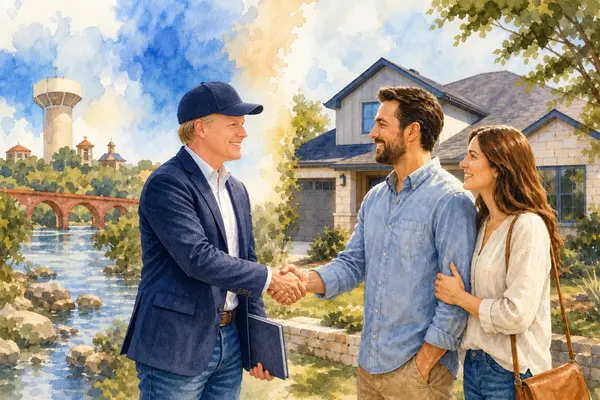
I get some version of this question a lot, usually from someone who's already fallen for the Hill Country a little and just needs someone to talk them through it: is Dripping Springs actually a smart place to buy luxury real estate, or is it just a pretty place to visit on the weekends?
Here's my honest answer, the same one I'd give you sitting on my porch with a glass of sweet tea: yes, and for reasons that go beyond how a property looks in photos. Dripping Springs works as a luxury market because the land itself does the heavy lifting — the privacy, the terrain, the space between neighbors — and because that appeal hasn't proven to be a trend. It's held up year after year, through buyers who come for different reasons and stay for the same one.
Let me walk you through why.

What Actually Makes This a Luxury Market
Luxury in Dripping Springs isn't about square footage bragging rights. I've shown clients homes that were beautifully sized but felt small because the lot cramped them, and I've shown clients smaller homes on the right piece of land that felt enormous. The difference is space — real, physical, breathing-room space — combined with privacy and a setting that doesn't ask you to compete with the house next door for a view.
Buyers who come out here from more urban markets almost always mention the same shift: they feel calmer. Not in a vague, spa-day way — in a practical way. Nobody's headlights are sweeping across their bedroom window at 11 p.m. Nobody's second-story addition is suddenly blocking their sunset. That's not an accident of good luck. It's baked into how this part of Hays County developed, with larger lots, deed-restricted setbacks, and a terrain that naturally spaces properties apart.
The Land Is the Foundation, Not the Backdrop
Dripping Springs sits in the eastern edge of Texas Hill Country, where the flat blackland prairie around Austin starts folding into limestone bluffs, cedar breaks, and live oak groves. That terrain is the actual reason this market holds up. You can't manufacture rolling hills or a spring-fed creek bed. You either bought where the land does something interesting, or you didn't.
I've walked properties with clients where the view alone closed the deal — not because it was staged well, but because you could stand on the back porch and watch the light change across three ridgelines as the sun went down. That kind of view doesn't get built next door in five years. It's part of why buyers who've been watching this area for a decade keep telling me the same thing: what they bought still feels like what they bought. The hill hasn't moved.
On the acreage side, I've worked with buyers looking at gated sections on lots under an acre and buyers looking at raw Hill Country spreads pushing past twenty or thirty acres, sometimes with their own stretch of a spring or creek running through it. Both are "Dripping Springs luxury." They're just answering different questions about how much land you actually want to maintain versus enjoy.
Custom Homes Built Around How You Actually Live
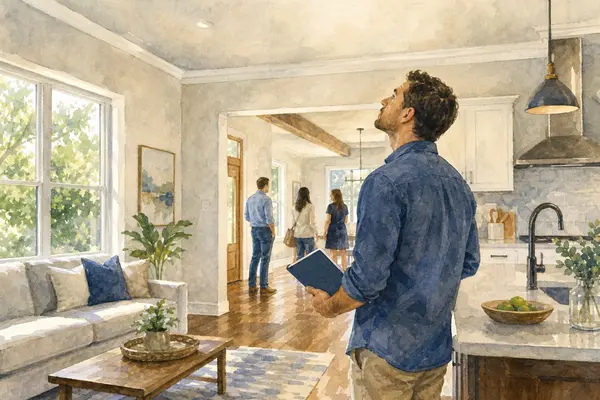
Most of what I show in this price range isn't a spec home. It's a custom build, and that changes how you should be evaluating it. I push my clients to look past the finishes — the counters and fixtures are the easy part — and pay attention to flow. Does the kitchen actually connect to where people gather? Does the primary suite face the view or the driveway? Do the outdoor spaces feel like an extension of the house or an afterthought bolted onto the back of it?
When a custom home gets that right, it tends to hold its appeal for the next buyer too, which matters more than people think when they're focused only on today. I've seen plenty of beautifully finished homes lose value on resale because the layout fought against daily life. I've also seen modest homes outperform because whoever built them thought hard about how a family actually moves through a day.
Gated Communities vs. Open Acreage
This is one of the first forks in the road I talk through with buyers. Gated communities in Dripping Springs give you a defined, consistent environment — you know what's around you, what the architectural standards are, and that the lot next door isn't going to turn into something you didn't sign up for. For buyers coming from HOA-heavy suburbs or dense urban neighborhoods, that predictability is genuinely valuable, not just a marketing word.
Open acreage is the opposite trade. You give up some of that predictability in exchange for total control over your own land — no shared amenities to maintain, no committee to ask before you build a barn or plant an orchard. Neither one is "more luxury" than the other. It comes down to whether you want structure or freedom, and I'd rather spend an hour with you figuring out which one actually fits how you live than sell you on whichever one I happen to have listed that week.
Outdoor Living Is the Real Living Room
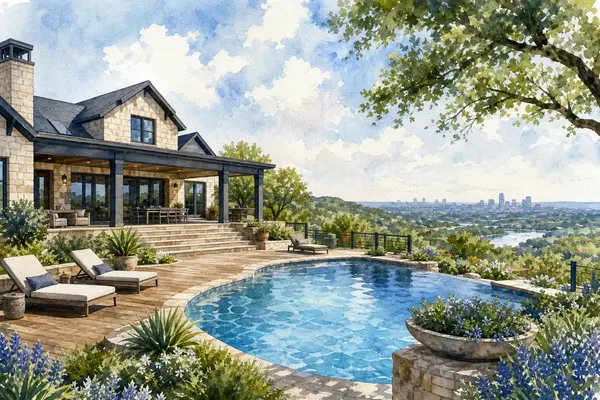
Ask anyone who's owned a home out here for a few summers, and they'll tell you the pool, the outdoor kitchen, and the covered porch get more use than half the rooms inside. That's not exaggeration — the Hill Country climate practically demands it. Long stretches of mild spring and fall weather, evenings that cool off even when the days are hot, and views worth sitting outside for.
I've had clients redesign their whole property search around this once they understood it: instead of asking "how big is the house," they started asking "how good is the transition between indoors and outdoors." A well-placed outdoor kitchen and a shaded porch facing west toward the hills will get used almost every night from March through November. A home without that gets used a lot less than its square footage would suggest.
What Nobody Tells You About Wells and Septic Systems
Here's something I make sure every buyer coming from a city market understands before they fall in love with a property: a lot of Dripping Springs, especially outside the incorporated city limits, runs on private wells and septic systems instead of municipal water and sewer. That's not a red flag — it's just different, and it comes with things worth knowing.
Wells need to be tested and understood in terms of flow rate and depth. Septic systems need periodic maintenance and have real limits on what they can handle. None of this is complicated once someone walks you through it, but I've seen buyers get spooked by "well and septic" on a listing sheet simply because nobody explained it to them. Once you understand how these systems work and what a normal service history looks like, it stops being a mystery and starts being just another line item you factor into ownership — the same way you'd budget for pool maintenance or a metal roof recoat.
Picking Your Spot: Privacy vs. Access to Austin
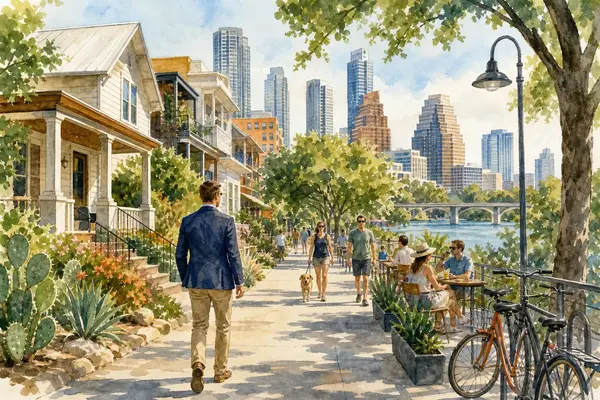
Not every corner of Dripping Springs feels the same, and location within the area matters as much as the choice to be here at all. Some of my clients want maximum separation — long driveways, no visible neighbors, quiet enough to hear the wind. Others want to keep a shorter drive into Austin for work, dinner, or the airport, and they're willing to trade a little privacy for it.
Highway 290 is the spine that connects Dripping Springs to Austin, and depending on exactly where a property sits, you're looking at anywhere from a quick fifteen-minute hop to closer to forty-five minutes if you're tucked well back into the hills. I walk every client through that trade-off specifically, because it's one of the few decisions in this market you can't really undo later — you can renovate a kitchen, but you can't shorten your commute after closing. Getting this part right up front is what lets you actually enjoy the privacy instead of resenting the drive.
Why This Market Tends to Hold Its Value
I'll be straight with you: nobody can promise what any market does next, and I'm not going to stand on my porch and tell you otherwise. What I can tell you is why Dripping Springs has behaved differently than markets built on trend or proximity alone.
Demand here is driven by lifestyle, not by momentum. Buyers aren't chasing a hot ZIP code — they're choosing land, space, and a specific way of living that doesn't go out of style the way a design trend can. That tends to create steadier, more consistent demand over time rather than sharp spikes followed by pullbacks. The land itself doesn't change. The views that sold a property in 2015 are the same views that'll sell it again down the road, because nobody built a strip center in front of them. Custom homes designed with real intention also tend to hold appeal for the next buyer, not just the first one, which matters a lot if you're thinking about this as a long-term hold rather than a five-year flip.
None of that is a guarantee. It's a pattern, and it's one I've watched play out with buyer after buyer who came here focused on lifestyle first and found the long-term value followed naturally.
Finding the Right Property Before Someone Else Does
Good luxury inventory in this area doesn't sit long, and a lot of it moves before it ever shows up in a general online search. I keep my listings current directly through MLS, and my app connects to that same feed in real time — so when something new comes on that matches what you're looking for, you're seeing it the moment it's available, not a few days later after it's already gone under contract.
You can set your own criteria in the app, track properties you're watching, and message me directly when you want more detail on something specific. It's not a replacement for actually walking a property with someone who knows the area — it's just what keeps you from finding out about the right one too late.
A Quick Story
I had a client a couple of years back who told me flat out: "I don't want the house I love today. I want the house I still love in fifteen years." We spent weeks passing on properties that were beautiful but felt trend-driven — the kind of finishes that photograph well but date fast. We finally landed on a place with strong bones: good land, a layout that made sense, views that weren't going anywhere. It wasn't the flashiest property we looked at. It's the one that's aged the best, and it's the one they still talk about like they got it right.
That's the version of "luxury" I try to steer people toward. Not the loudest house on the tour — the one that's still going to feel right a decade from now.
Where This Leaves You
Dripping Springs earns its reputation as a top luxury market because the fundamentals are real: land that can't be replicated, privacy that doesn't require a fence to feel genuine, and a lifestyle that's proven durable rather than trendy. Whether you're drawn to a gated community with clear structure or a wide-open acreage estate with a creek running through it, the decision that matters most isn't which listing photographs best — it's which one actually fits how you want to live, today and fifteen years from now.
If you're at the stage where you're just trying to understand this market before you start seriously looking, that's exactly the conversation I like having. No pressure, no pitch — just an honest look at whether this is the right fit for you.
FAQ
Is Dripping Springs still a good long-term investment for a luxury buyer?
I think so, and my reasoning has less to do with predicting the market and more to do with what's driving demand here. Buyers choose Dripping Springs for land, privacy, and lifestyle — not because it's trending — and that kind of demand tends to be steadier over time than markets built on hype. That said, I never promise outcomes. I'll walk you through what I'm seeing and let you make the call.
What's it actually like owning a home on a well and septic system instead of city utilities?
Once you understand it, it's manageable and honestly pretty routine. You'll want the well tested for flow and quality and the septic system's service history reviewed before you close, and then it's just a maintenance item like anything else. I go through this with every client buying outside the city utility footprint so there are no surprises.
How far is Dripping Springs from downtown Austin?
It depends heavily on exactly where the property sits. Closer to Highway 290 near the edge of town, you might be fifteen to twenty minutes out. Further back into the hills for more privacy, you could be looking at thirty-five to forty-five minutes. This is one of the first things I map out with buyers because it's a trade-off you're living with every day.
Should I look at gated communities or open acreage?
It comes down to whether you want predictability or total control. Gated communities give you consistency and defined standards for what's around you. Open acreage gives you freedom with fewer shared rules but also fewer guarantees about what happens on neighboring land. I'd rather talk through your day-to-day priorities with you than assume one is automatically the better fit.
How do I see new luxury listings in Dripping Springs as soon as they hit the market?
My site pulls current MLS listings, and my app connects to that same feed in real time, so you're not waiting on a general search engine to catch up. You can set your own search criteria, track what you're watching, and message me straight from the app when you want to see something in person.
Categories
- All Blogs (970)
- !!! (59)
- !x (621)
- Austin Real Estate (113)
- Bee Cave Real Estate (1)
- Building A Home (14)
- Buying A Home (143)
- Buying Land (1)
- Cedar Park Real Estate (58)
- Central Austin Real Estate (75)
- Down Payment Assistance Programs (1)
- Downsizing (4)
- Downtown Austin Real Estate (5)
- Dripping Springs Real Estate (62)
- East Austin Real Estate (3)
- Financing and Mortgage (24)
- first-time homebuying (109)
- Georgetown Real Estate (9)
- Hill Country Real Estate (1)
- HOA (2)
- Home Appraisals (13)
- Home For Rent (1)
- Home Inspections (6)
- Home Pricing (6)
- Home Staging (1)
- Home Values (12)
- Homeownership (1)
- Homes For Rent (1)
- Homes For Sale (147)
- Hutto Real Estate (5)
- Investing (6)
- Investment Properties (4)
- Lakeway Real Estate (33)
- Leander Real Estate (59)
- LGBT+ Real Estate (8)
- Luxury Homes For Sale (5)
- Luxury Real Estate (19)
- Market Conditions (17)
- Moving to Austin (2)
- Moving to Texas (4)
- Negotiations (3)
- Neighborhoods (8)
- Northwest Austin Real Estate (94)
- Off Market Listings (7)
- Pflugerville Real Estate (10)
- Private Listings (2)
- Property Management (42)
- Property Tax (3)
- Real Estate (18)
- Reddit Question Answered (80)
- redwrite (63)
- Relocation (2)
- Renting (6)
- Representation (34)
- Round Rock Real Estate (59)
- Selling Your Home (62)
- South Austin Real Estate (1)
- Westlake Real Estate (3)
Recent Posts