
How Much Does a Home Inspection Cost in Austin?
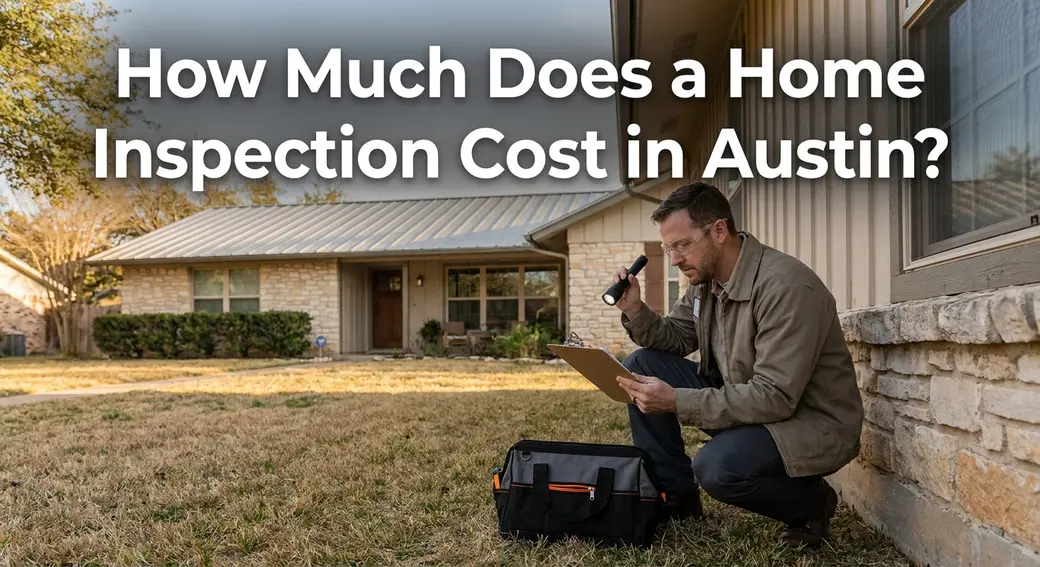
A standard home inspection in Austin has pricing that varies by provider and property. The final bill can reach $500 to $700 when the property needs add-ons such as a sewer scope, thermal imaging, or a specialty review.
I’m Robbie English, REALTOR. With over 40 years of experience, I’ve learned that the lowest quote is rarely the whole story. The inspection fee depends on the home’s size, age, layout, access, and the services included in the written scope.
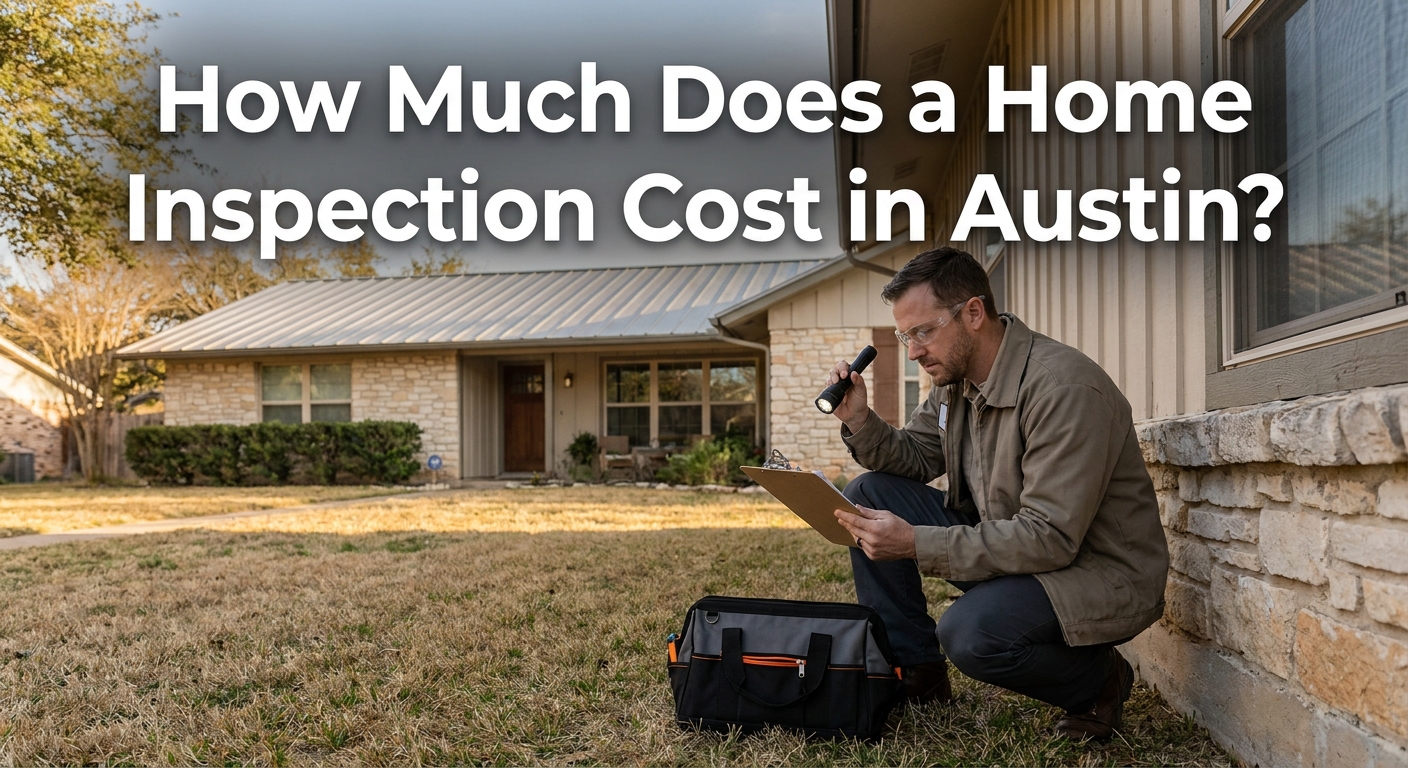
What a Home Inspection Typically Costs in Austin
So, how much does a home inspection cost in Austin? For most buyers, a sensible starting budget is $350 to $700. One local pricing source gives a wider standard range of $350 to $700.
That spread exists because inspectors price different scopes. One quote may cover a basic visual review. Another may include thermal imaging, drone photos, irrigation, or other services that a lower quote bills separately.
In a review of five Austin-area pricing sources collected on August 4, 2026, the four sources with stated starting prices averaged $355. The median starting price was $350. The lowest listed starting price was $325, while the highest was $395.
Those figures are useful for planning, but they are not a promise of what your property will cost. No reviewed company published a clear cost-per-square-foot formula. That means you should ask for a property-specific quote instead of assuming a flat rate.
| Property situation | Budget approach | Question to ask before booking |
|---|---|---|
| Typical resale home | Start with the inspector's published range | Which major systems are included? |
| Older home or complex property | Plan for the base fee plus specialty checks | Will age, foundation type, or access change the price? |
| Home with sewer, pool, irrigation, or septic systems | Set aside extra funds for each needed add-on | What is the fee for each service? |
| New construction | Ask about phase inspections and warranty reviews | Does the quote cover one visit or several phases? |
For local context, an inspection is separate from an appraisal. An appraisal estimates value for the lender. An inspection helps you understand the home’s visible condition. I explain that difference in my guide to appraisal versus home inspection because confusing the two can lead to poor budget decisions.
The quote should show more than one number. It should tell you what the inspector will examine, what remains outside the scope, and which fees may apply if the property is larger or harder to access.
What You Usually Get for the Inspection Fee
The inspection fee usually pays for a visual review of the home’s accessible structure and major systems. It is not a pass-or-fail test, and it does not guarantee that every future problem will be found.
A standard inspection may address the following areas:
- Foundation and visible structural components
- Roof coverings and accessible roof areas
- Exterior walls, windows, doors, grading, and drainage
- Electrical panels, outlets, and visible wiring
- Plumbing supply lines, drains, fixtures, and water heaters
- Heating and cooling equipment
- Attic spaces, insulation, and ventilation
- Interior rooms, built-in appliances, and visible safety concerns
Actual coverage depends on the inspection agreement and what the inspector can safely reach. A locked attic, blocked crawl space, stored belongings, active construction, or unsafe roof can limit the review. The report should state those limitations.
Packages vary sharply. First Responding Home Inspections lists a $325 pre-drywall starting price and describes a standard inspection of the structure and major systems with thermal imaging and drone photos. FRH Inspect lists a $395 starting price with foundation, roofing, plumbing, electrical, HVAC, insulation, interior spaces, drone photos, and thermal imaging.
That comparison shows why price alone can mislead you. A $325 quote may be a good fit if its scope matches the property. It may also become more expensive once you add services that another company already includes.
A code inspection checks construction against required standards. A private home inspection gives you a separate condition review for your purchase decision. Read the applicable building information alongside the inspector’s scope, rather than treating a permit or code signoff as a replacement.
I also recommend attending the closing discussion when possible. The report may contain many small maintenance notes, but the inspector can help you separate a safety issue from a routine repair or an item that needs specialist review.
Why Home Inspection Prices Vary Around Austin
The cost of a home inspection in Austin changes with the property, not only with the inspector. The same base price may not apply to a compact one-story home and a large property with several systems, outbuildings, or difficult access.
Square footage and layout
Larger homes take more time to inspect and document. A two-story floor plan may also take longer than a single-story home with the same square footage because the inspector must assess more levels, stairs, roof areas, and HVAC zones.
One local pricing source states that its base price applies to homes up to 1,500 square feet, with an added charge for each additional 500 square feet. That is one company’s model, not a universal Austin rule. Still, it shows why you should provide the correct square footage before accepting a quote.
Age and condition
Older Austin homes may have aging roofs, altered electrical systems, previous additions, or plumbing materials that deserve closer review. Age does not prove that a home has a defect. It can affect the time needed to understand how the property was built and changed.
Visible foundation movement, moisture signs, poor drainage, or damaged roof areas may lead to a recommendation for further evaluation. A general inspector can document the concern, but a structural engineer, roofer, plumber, or other specialist may need to determine the cause.
Foundation type and access
Slab foundations and pier-and-beam homes present different access conditions. A crawl space may be tight, damp, obstructed, or unsafe. If the inspector cannot enter an area, the report should say so, and a later specialist review may be needed.
Location and travel
Pricing can also change with driving distance from the inspector’s service area. That may affect a home in Leander, Dripping Springs, Round Rock, or another Central Texas market differently from a property in central Austin.
Ask these questions before scheduling:
- Is the quote based on the property address?
- Does the price include travel?
- Are detached structures included?
- What happens if an area is inaccessible?
- When will the report arrive?
A clear quote lets you compare scope instead of comparing headline prices. That is the fair comparison.
Common Add-On Inspections and When They May Be Worth Considering
Add-on inspections can change the answer to how much a home inspection costs in Austin. Many extra services fall between $75 and $200, although the amount depends on the provider and property.
Sewer scope
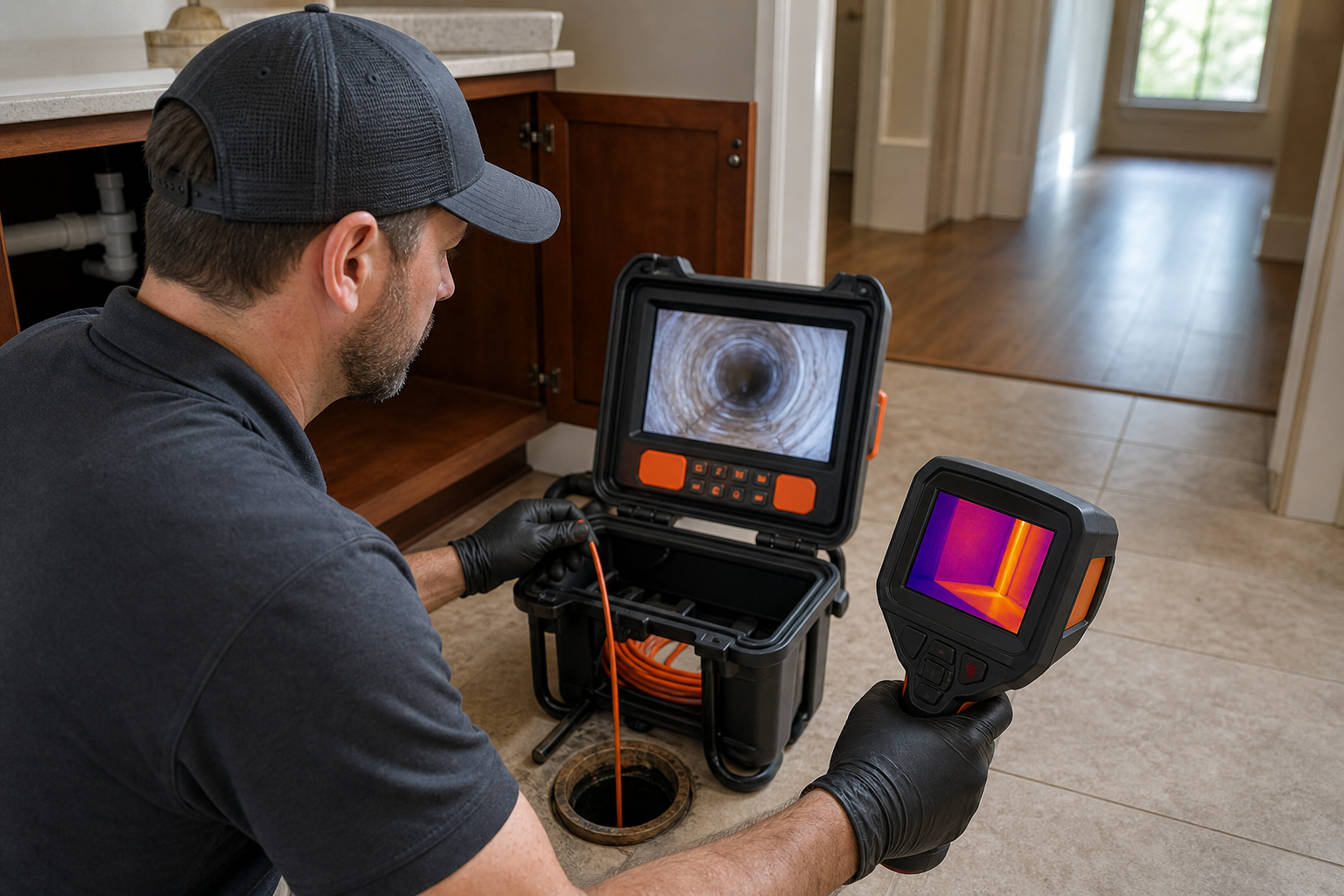
A sewer scope uses a camera to view the private sewer line from an access point. It can be worth considering when the home is older, large trees grow near the line, drains have recurring problems, or the line’s condition is unknown.
Published examples show the range. CTXInspect lists a sewer scope at $125. Knight Home Inspections lists a sewer camera at $200. Another Austin pricing source lists a sewer scope starting at $175 when added to a home inspection. Ask whether the fee includes access, the video, and a written explanation of findings.
Thermal imaging
Thermal imaging can show temperature differences that deserve a closer look. It may help identify suspected moisture patterns, missing insulation, or unusual electrical heat. It does not diagnose every defect by itself.
Knight Home Inspections lists thermal imaging at $75. Other published Austin pricing material places the add-on around $75 to $125. Some packages include it, so confirm before paying twice for the same service.
Termite or WDI inspection
A wood-destroying insect inspection focuses on evidence associated with termites and similar pests. It is separate from the general inspection unless the agreement says otherwise. Knight Home Inspections lists a WDI inspection at $100.
This service may deserve attention when there is visible wood damage, an active crawl space, moisture near the foundation, or a lender or contract requirement. The inspector’s report can point out signs, but treatment decisions belong with the qualified pest professional.
Irrigation, pool, septic, and foundation reviews
These systems need their own scope because a general inspection may not test them in depth. Knight Home Inspections lists irrigation inspection at $50. Published Austin service information also identifies pool inspection, septic inspection, and foundation measurements as possible separate services.
New construction creates another pricing question. A pre-drywall inspection occurs before walls hide framing, insulation, wiring, and plumbing. A final inspection takes place near completion. A warranty inspection checks the home before the applicable warranty period ends. Those are separate visits, so ask whether the quote covers one phase or a package.
For a new build, my guide to what a new construction home inspection includes explains why timing changes the scope. A defect hidden by drywall may be harder to assess after the construction phase has passed.
Do not order every add-on automatically. Match each service to the home’s age, systems, visible conditions, and contract timeline.
How to Budget for an Inspection During an Austin Home Purchase
Plan inspection money as part of your option-period budget, not as a surprise expense at closing. The fee is usually paid directly to the inspector and may not appear in the lender’s closing-cost estimate.
For a typical resale home, I would begin with the base quote and then leave room for one or two property-specific add-ons. A buyer who budgets only for the base inspection may face a higher bill after adding a $175 sewer scope and a $100 WDI inspection.
Inspection fees aren't the only due-diligence cost to plan for — if the appraisal comes in low, see my guide to appraisal gap coverage in Texas so you know your options before it happens.
Use this simple worksheet before scheduling:
- Base inspection fee
- Square-footage adjustment
- Travel or access charge
- Sewer scope, if appropriate
- WDI or termite inspection, if needed
- Pool, irrigation, septic, or foundation service
- Possible specialist review after the report
Keep the last item separate. A general inspection may recommend a specialist, but that follow-up is not always part of the first invoice.
Timing matters in Texas transactions. Schedule early in the option period so you have time to , ask questions, request specialist opinions, and make a contract decision. A rushed inspection can leave you with information but too little time to use it.
Do not confuse inspection findings with an automatic repair list. The report describes observed conditions. You then decide whether an issue affects safety, function, future maintenance, negotiation, or your willingness to proceed.
In my work with Austin buyers, I encourage clients to compare the report with the home’s age and price. A 20-year-old air conditioner is different from a new unit with a visible installation problem. Both may appear in the report, but they call for different questions.
I am Robbie English, REALTOR and I can help you understand where an inspection fits into the purchase timeline and negotiation process. You are free to choose any inspector or specialist. If you use professionals I have intentionally curated, that choice is optional, based on working relationships and communication rather than a requirement.
My broader Austin closing cost guide for buyers also explains why inspection expenses should sit outside your down-payment calculation. Keep a separate reserve for due diligence and early repairs.
Frequently Asked Questions
How much does a home inspection cost in Austin?
A home inspection in Austin commonly starts with a base fee, while the total can reach $500 to $700 with add-ons. Size, age, access, foundation type, travel distance, and included services affect the quote. Ask for a written scope that lists the base fee and each possible extra charge.
What is included in a standard Austin home inspection?
A standard Austin home inspection usually covers visible and accessible structure, roofing, plumbing, electrical, HVAC, attic areas, interiors, and exterior conditions. Coverage varies by agreement. Thermal imaging, drone photos, irrigation, pools, sewer lines, and termite checks may be included or billed separately.
Is a home inspection required in Texas?
A home inspection is generally not required for every Texas home purchase, but many buyers choose one because it reveals visible condition issues before closing. Loan, contract, or insurance requirements can differ. Your agent and lender can explain the terms that apply to your transaction.
Should I get a sewer scope in Austin?
A sewer scope may be worth considering for an older home, a property with mature trees, recurring drain problems, or an unknown sewer line. Published Austin pricing examples range from $125 to $200. The general inspection may not assess the private sewer line with a camera.
When should I schedule a home inspection?
You should schedule the inspection as early as possible during the option period. That gives you time to receive the report, ask questions, obtain specialist opinions, and make contract decisions. Confirm access before booking, especially for new construction or homes with locked crawl spaces.
My recommendation is to budget at least the base fee plus room for property-specific add-ons, then compare inspectors by scope rather than price alone. Before you schedule, send the property address and ask for a written list of what is included. Again, I am Robbie English, REALTOR and I can help you place that inspection decision within the larger Austin purchase timeline.
Categories
- All Blogs (959)
- !!! (59)
- !x (621)
- Austin Real Estate (106)
- Bee Cave Real Estate (1)
- Building A Home (14)
- Buying A Home (143)
- Buying Land (1)
- Cedar Park Real Estate (57)
- Central Austin Real Estate (75)
- Down Payment Assistance Programs (1)
- Downsizing (3)
- Downtown Austin Real Estate (5)
- Dripping Springs Real Estate (62)
- East Austin Real Estate (3)
- Financing and Mortgage (23)
- first-time homebuying (109)
- Georgetown Real Estate (9)
- Hill Country Real Estate (1)
- HOA (2)
- Home Appraisals (13)
- Home For Rent (1)
- Home Inspections (6)
- Home Pricing (6)
- Home Staging (1)
- Home Values (12)
- Homeownership (1)
- Homes For Rent (1)
- Homes For Sale (147)
- Hutto Real Estate (5)
- Investing (6)
- Investment Properties (4)
- Lakeway Real Estate (33)
- Leander Real Estate (59)
- LGBT+ Real Estate (8)
- Luxury Homes For Sale (5)
- Luxury Real Estate (19)
- Market Conditions (16)
- Moving to Austin (2)
- Moving to Texas (4)
- Negotiations (3)
- Neighborhoods (8)
- Northwest Austin Real Estate (94)
- Off Market Listings (7)
- Pflugerville Real Estate (10)
- Private Listings (2)
- Property Management (42)
- Property Tax (3)
- Real Estate (18)
- Reddit Question Answered (80)
- redwrite (63)
- Relocation (2)
- Renting (6)
- Representation (34)
- Round Rock Real Estate (58)
- Selling Your Home (62)
- South Austin Real Estate (1)
- Westlake Real Estate (3)
Recent Posts