What to Look for During an Austin Home Inspection

Buying a home in Austin is exciting, but inspection day can bring a long list of questions. I’ll show you what to look for during a home inspection in Austin, how to prepare, and how to sort urgent repairs from routine upkeep.
An analysis of 32 YouTube comments about home inspections in Austin found that 44% mentioned foundation and framing issues.
Step 1: Prepare the Home and Plan Who Will Attend
Start by making the home easy to inspect. Ask that utilities be on and that the inspector can reach the attic, electrical panel, water heater, HVAC equipment, and under-sink areas. Clear paths matter. If stored items block a wall or access hatch, the inspector may not be able to see what’s behind them.
Plan to attend at least part of the inspection, if your schedule allows. Let the inspector lead, then ask questions when they pause. You’ll learn where key systems are and what a finding looks like in person. Don’t climb on the roof, open electrical equipment, or enter a tight crawl space yourself.
I’m Robbie English, REALTOR, and I encourage buyers to treat the inspection as a chance to understand the property, not as a pass-or-fail test. A report records visible conditions at a point in time. It isn’t a promise that every hidden issue will be found.
If you want a clearer picture of the usual inspection scope before the appointment, my explanation of what’s included in a home inspection can help you set expectations.
By now, you should have access arranged, utilities confirmed, and a plan to attend without interrupting the inspector’s work.

Step 2: Check the Roof, Foundation, Drainage, Windows, and Doors
Ask the inspector to explain what they can see from safe, accessible areas. On the roof, that may include visible wear, missing material, and flashing details around roof openings. Look for roof starter-course tabs and flashing details. If access is limited, ask what wasn’t viewed and whether a roofer should take a closer look.
Next, look for patterns around the foundation and inside the home. Note cracks near doors or windows, doors that stick, and floors that seem to slope. One clue alone doesn’t diagnose a foundation problem. Several signs in different parts of the home may give a specialist more to assess. For more on those clues, see my guide to spotting foundation issues while house hunting.
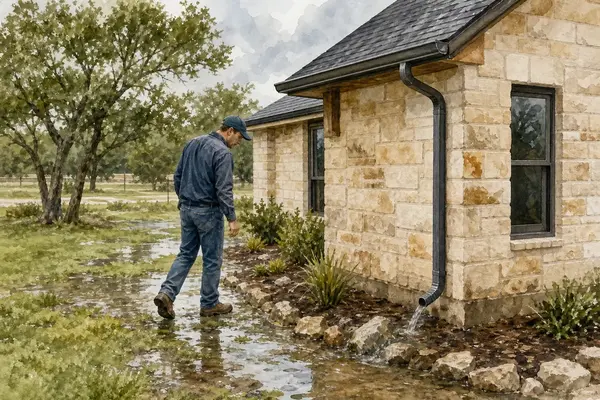
Walk the outside with the inspector if that’s permitted. Look at gutters and downspouts, then trace where roof water goes. Does it drain away from the house, or does it collect by the foundation? In Central Texas, grading and drainage deserve close attention, especially after heavy rain. The inspection may not show how a yard performs during a storm, so ask about visible signs of past pooling or water entry.
Open and close accessible windows and doors. Look for cracked glass, gaps, damaged weather stripping, and locks that don’t line up. Stains around a window or a soft area nearby can point to past moisture. For a deeper look at roof clues, I’ve also written about assessing roof condition when buying a home.
By now, you should have a clear list of visible exterior concerns and any areas that need a specialist’s view.
Step 3: Test the Major Systems and Look Inside the Home
Ask the inspector to test the heating and cooling system using the controls and conditions they consider safe. Note whether the system starts and runs, and ask about signs of leaks, damage, or poor drainage around the equipment. Austin heat puts steady demand on cooling equipment, but an inspection isn’t a forecast of future performance or a substitute for a service check.
For plumbing, watch the inspector run faucets and flush toilets. Look under sinks for stains, active drips, or damp materials. Check how quickly tubs and showers drain. Note whether a bathroom exhaust fan works and vents outside, and whether a tub or shower drains nearly all its water.
Electrical checks should cover accessible outlets and installed safety devices. Ask the inspector to explain any issue with GFCI or AFCI protection, or a double-tapped neutral conductor. Check for GFCI protection at garage receptacles. Don’t remove panel covers or test wiring yourself. A licensed electrician can assess a concern that needs more than a visual inspection.
Look at the water heater and visible gas connections. Note whether a gas appliance connector is missing or longer than six feet. Also check whether a cover blocks a water heater from view. Inside the rooms, check for ceiling stains, loose railings, damaged stair treads, and doors that fail to latch.
Ask whether the inspector uses tools such as infrared cameras or a sewer camera, and what those tools can show in this home. Infrared images may point to a temperature difference, but they don’t explain its cause on their own. A sewer camera can help assess a line when that service is included or booked separately. If a concern appears, ask what follow-up would answer the question.
By now, you should have notes on system performance, visible safety concerns, and any tests that may need a specialist.
Step 4: Investigate Austin-Specific Features and Consider Specialty Inspections
A general inspection doesn’t answer every question about an Austin-area property. Central Texas soil can shift as moisture changes, so connect drainage clues with any foundation signs rather than treating them as separate issues. Ask about irrigation heads near the house and whether they keep one area of soil wet. If the home has a pool, spa, septic system, or private well, ask which parts the general inspection covers and which need a separate review.
Flood risk also needs its own check. Ask about the property’s drainage history and review available floodplain information for the address. A visual inspection can note signs such as water marks or damaged materials, but it can’t predict how a lot will handle a future storm. Heat and sun exposure deserve attention too: ask about attic insulation, window condition, and visible wear on exterior materials.
Consider a pest or wood-destroying insect inspection if you see damaged wood or want a separate assessment. Visible damage from wood-destroying insects must be noted as a deficiency; only licensed persons may comment on it. A mold inspection may also call for a state-required license. Depending on the home, you might ask about radon testing or a chimney inspection as well.

For new construction, do a careful blue-tape walk-through. Check walls in natural light for uneven paint or texture, then test doors, drawers, windows, lights, and outlets. Look closely at floor transitions and gaps around trim. Local building inspections check permitted work for compliance with applicable codes. A city approval doesn’t replace your own home inspection.
By now, you should have a list of features that need a specialist, plus questions about local drainage and site conditions.
Step 5: Review the Report, Prioritize Repairs, and Verify Follow-Up
Read the report once for the full picture, then go back and sort findings by risk and next action. A small cosmetic flaw and a possible active leak shouldn’t carry the same weight in your decision. Focus first on safety concerns, water entry, major system failures, and signs that may need a specialist. Ask the inspector to clarify terms you don’t understand.
Keep the inspection’s limits in mind. Inspectors report visible conditions they can access. They may note an area they couldn’t inspect, but that doesn’t tell you what’s behind the obstruction. If a concern is hidden or uncertain, ask what type of professional can assess it and whether that review fits your contract timeline.
Use the findings to make a measured request. You might ask for a repair, seek a credit, or discuss a price change, depending on the contract and the issue. Get a specialist’s written assessment or contractor quote when the scope is unclear. A long list of small maintenance items may feel daunting, but it helps to keep the conversation focused on the few findings that affect safety, cost, or the home’s function.
When repairs are agreed upon, ask for receipts or other records. At the final walk-through, check that agreed work appears complete and that the home’s condition hasn’t changed. If a repair needs a licensed trade, ask for the relevant paperwork. My guide to Austin home inspection red flags can help you think through which findings deserve closer review.
I’m Robbie English, REALTOR, and I help clients keep the report in context as they consider their next move. You’re free to choose any inspector or specialist. I can also share professionals I’ve intentionally curated based on working relationships and clear communication. That support is optional, and the decision stays yours.
By now, you should have a short repair priority list, a plan for any added evaluations, and a way to verify agreed work.
Home Inspection FAQ
Should I attend a home inspection?
Yes, attending can help you understand the inspector’s findings and ask questions as you see the home. Let the inspector lead the process, and avoid handling equipment or climbing into unsafe areas. If you can’t stay for the full inspection, ask when you can review the main findings. Make sure you know which areas the inspector couldn’t access.
What does a home inspection not cover?
A general inspection focuses on visible, accessible parts of the home. It may not include specialist testing for a sewer line, septic system, pool, mold, pests, radon, or chimney. Coverage depends on the inspector and the property. Ask what’s included before the appointment, then arrange a separate evaluation if a concern calls for one.
What should I do if the inspector finds a foundation concern?
Ask the inspector to explain the visible signs and whether they recommend further evaluation. A general inspection can identify concerns, but it may not determine the cause or repair plan. If several clues line up, such as cracks plus sticking doors, consider getting an assessment from a qualified foundation professional or structural engineer before your contract deadline.
Is a city inspection the same as a home inspection?
No. A municipal inspection and a buyer’s home inspection serve different purposes. A buyer’s home inspection gives you a separate view of visible conditions in the property. For new construction, review any available inspection records alongside your own inspection findings. One doesn’t replace the other.
Conclusion
Choose an inspector who explains findings clearly, then follow up on issues that could affect safety, water control, or major systems. Before your inspection, confirm access and utilities, and write down your questions. I’m Robbie English, REALTOR, and I’m glad to help you review the findings and decide what deserves a closer look.
Categories
- All Blogs (997)
- !!! (59)
- !x (621)
- Austin Real Estate (113)
- Bee Cave Real Estate (1)
- Building A Home (15)
- Buying A Home (154)
- Buying Land (1)
- Cedar Park Real Estate (58)
- Central Austin Real Estate (75)
- Down Payment Assistance Programs (1)
- Downsizing (4)
- Downtown Austin Real Estate (5)
- Dripping Springs Real Estate (62)
- East Austin Real Estate (3)
- Financing and Mortgage (24)
- first-time homebuying (110)
- Georgetown Real Estate (9)
- Hill Country Real Estate (1)
- HOA (3)
- Home Appraisals (13)
- Home For Rent (1)
- Home Inspections (13)
- Home Pricing (6)
- Home Staging (1)
- Home Values (12)
- Home Warranties (1)
- Homeownership (1)
- Homes For Rent (1)
- Homes For Sale (147)
- Hutto Real Estate (5)
- Insurance (1)
- Investing (6)
- Investment Properties (4)
- Lakeway Real Estate (33)
- Leander Real Estate (59)
- LGBT+ Real Estate (8)
- Luxury Homes For Sale (5)
- Luxury Real Estate (19)
- Market Conditions (17)
- Moving to Austin (2)
- Moving to Texas (4)
- Negotiations (3)
- Neighborhoods (8)
- Northwest Austin Real Estate (94)
- Off Market Listings (7)
- Pflugerville Real Estate (11)
- Private Listings (2)
- Property Management (42)
- Property Tax (5)
- Real Estate (18)
- Reddit Question Answered (80)
- redwrite (63)
- Relocation (2)
- Renting (6)
- Representation (35)
- Round Rock Real Estate (59)
- Selling Your Home (64)
- South Austin Real Estate (1)
- Westlake Real Estate (3)
Recent Posts