
Austin Housing Market Trends: 2026 Outlook
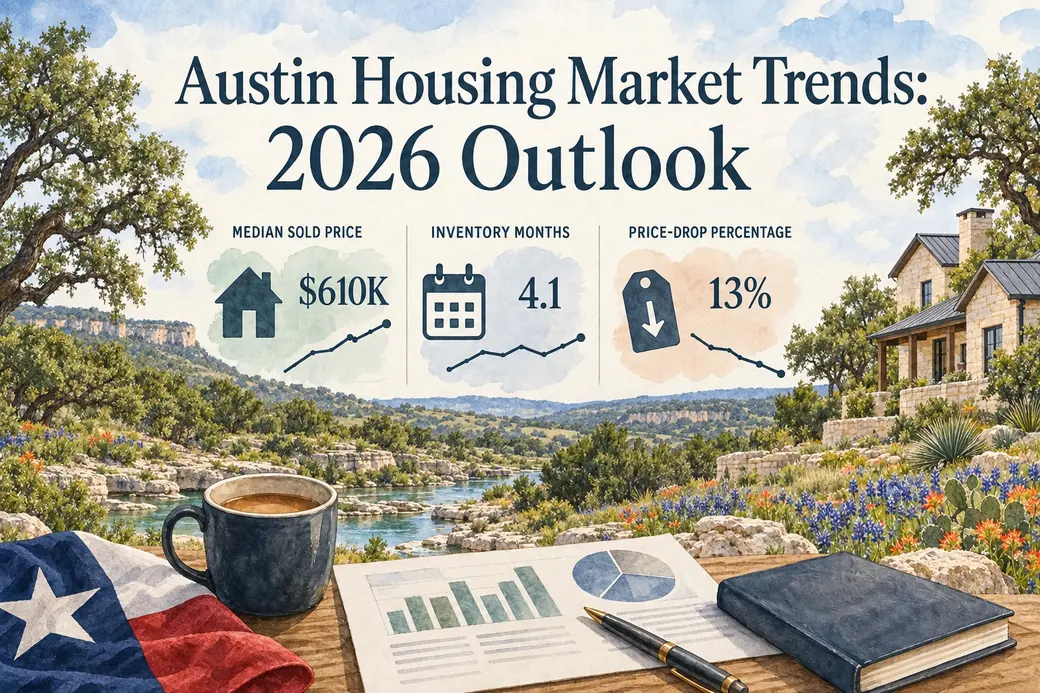
Home prices in Austin have slipped more than 20% from their 2022 peak, yet most sellers still pull offers close to asking. That paradox reshapes how buyers and sellers should think about pricing today. Below you’ll find the data, what it means, and usable steps for anyone eyeing Austin real estate.
Austin Housing Market Trends at a Glance
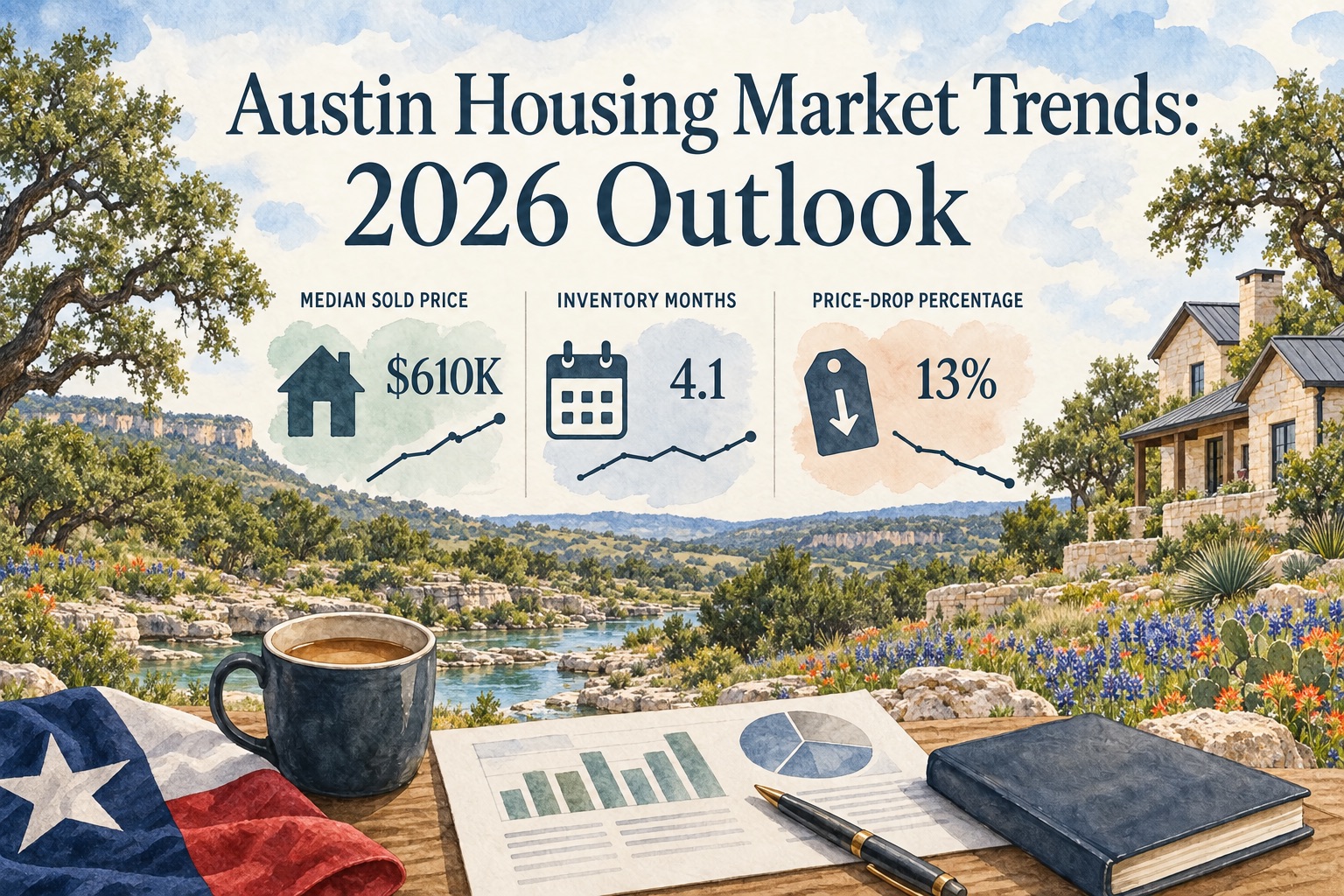
As of mid‑April 2026 the market shows a mix of cooling and lingering demand. The median sold price sits at $430,000, a 21.82% drop year‑over‑year. Still, the sold‑to‑list ratio is 97.21%, meaning buyers are often willing to meet the seller’s ask.
Active listings total 17,147, with 55.42% of those having reduced their price since first hitting the market. Inventory measures 5.8 months, nudging the market toward a balanced state. Activity Index, an indicator of transaction volume relative to the previous year, has slipped to 18.47%, pointing to slower turnover.
The chart below visualizes these headline numbers.
For a deeper look at new‑construction dynamics, see my Austin New‑Construction Home Trends 2026 analysis. It explains how builder pipelines are reacting to the same price pressure.
What Austin Prices, Inventory, and Market Speed Mean
When the median price drops, the first thing most people wonder is whether homes become cheaper for everyone. In Austin the median is $430,000, but the average sold price stays high at $574,357 because luxury transactions pull the mean up. That gap tells you the market is split: entry‑level buyers see real savings, while high‑end buyers still face premium prices.
Months of inventory at 5.8 suggests a shift from a classic seller’s market (under 4 months) toward a more balanced environment. Sellers now have to price competitively, especially for more affordably priced homes.
Average days on market have risen to 70 days. Longer exposure gives buyers time to negotiate, but it also means sellers risk price erosion if a home lingers too long.
Understanding these metrics helps you set realistic expectations. For instance, a buyer targeting a home can now expect a broader selection and more room to negotiate, while a seller of a $600,000 property must be ready to justify the price with upgrades or concessions.
A housing market reflects the interaction of supply, demand, and price in plain terms.
How Current Trends Affect Austin Home Buyers
Buyers entering the market in 2026 enjoy a few advantages that didn’t exist during the 2021‑2022 boom. First, the 21.82% median price dip opens up price points that were previously out of reach. Second, the higher sold‑to‑list ratio means sellers still value their homes, so you can negotiate without fearing a lowball offer will be rejected outright.
Mortgage rates have stabilized near historic lows, but they remain a key cost factor. A lower price combined with a modest rate can improve monthly cash flow dramatically. Use a mortgage calculator to see the impact before you start touring homes.
Because inventory sits at 5.8 months, you’ll likely have multiple viewings before finding the right fit. That extra time lets you conduct thorough inspections and compare neighborhood amenities.
If you’re a first‑time buyer, consider the city’s affordable‑housing blueprint. It aims to add 60,000 units for households earning under 80% of median family income, which could expand lower‑price options in the next few years.
For a usable look at why some buyers are still losing homes, check out my Why Buyers Are Losing Homes In Austin And How To Fix It post. It walks through appraisal gaps and timing tricks that matter in a slower market.
Pro tip: get pre‑approved before you start house hunting. A pre‑approval letter signals seriousness and can tip the scales when you’re competing on a property with multiple offers.

How Current Trends Affect Austin Home Sellers
Sellers in 2026 face a different reality than those who rode the 2022 peak. The median price has slipped, but the sold‑to‑list ratio remains high, meaning buyers still value listings close to asking when price is right.
One key to success is pricing strategically. Listings that drop price early, 55.42% of active homes have already done so, tend to attract more traffic and can still close near the original list price if the reduction is modest.
Homes staying on the market longer (average 70 days) risk price fatigue. To avoid that, consider staging, minor upgrades, or offering a buyer’s concession. These moves can keep your home fresh in a market where buyers have patience.
Another factor is the pending‑to‑new ratio of 0.86. Fewer pending deals relative to new listings suggests competition among sellers is rising. Positioning your home with high‑quality photos and a clear, data‑backed price justification can help you stand out.
The median sold price has declined year‑over‑year through mid‑April 2026, underscoring the importance of timing and pricing strategy.
For an estimate of how property taxes will affect your net proceeds, see my Austin Texas Property Tax Calculator Guide. It walks you through exemptions and budgeting tips.
Austin Housing Supply, Affordability, and the Outlook
The city’s Strategic Housing Blueprint sets a 10‑year goal of 60,000 affordable units for households earning under 80% of median family income. Meeting that goal will require sustained attention to housing production and affordability across Austin.
Funding is a major hurdle. The blueprint estimates an additional $6‑$11 billion in resources will be needed to meet the goal. That funding need remains an important consideration as the city evaluates housing priorities.
Affordability remains a challenge for residents earning below 60% of median income. Those challenges often show up in neighborhoods farther from transit corridors, where development costs are higher.
From a buyer’s perspective, this means affordable‑housing projects may appear in emerging districts, offering lower entry prices but potentially longer commutes. From a seller’s view, the influx of new affordable units can increase overall market supply, modestly nudging prices downward in adjacent market‑rate neighborhoods.
Looking ahead to 2027, the city plans to align new zoning incentives with the blueprint’s targets. If those incentives succeed, we could see a steadier flow of mid‑range homes that help bridge the gap between high‑end condos and low‑cost apartments.
Frequently Asked Questions About Austin Housing Market Trends
What is the current median home price in Austin?
The median sold price in Austin sits at $430,000 as of April 2026, reflecting a 21.82% year‑over‑year decline.
Are Austin home prices still falling in 2026?
How long do homes stay on the market now?
Average days on market have risen to about 70 days, giving buyers more time to negotiate and sellers more time to adjust pricing.
What does the sold‑to‑list ratio tell me?
A ratio of 97.21% means most homes still sell near their asking price, indicating buyer willingness to meet sellers despite lower median prices.
Will affordable housing help lower prices?
The city aims to add 60,000 affordable units by 2027, which should increase lower‑price inventory and ease pressure on entry‑level buyers.
Conclusion
If you’re buying, use the price dip and longer market times to negotiate smartly. If you’re selling, price competitively and consider modest upgrades to keep interest high. Need a local expert to guide you through the numbers? Robbie English, REALTOR can walk you through the data and help you make the right move.
Categories
- All Blogs (958)
- !!! (59)
- !x (621)
- Austin Real Estate (105)
- Bee Cave Real Estate (1)
- Building A Home (14)
- Buying A Home (143)
- Buying Land (1)
- Cedar Park Real Estate (57)
- Central Austin Real Estate (75)
- Down Payment Assistance Programs (1)
- Downsizing (3)
- Downtown Austin Real Estate (5)
- Dripping Springs Real Estate (62)
- East Austin Real Estate (3)
- Financing and Mortgage (23)
- first-time homebuying (109)
- Georgetown Real Estate (9)
- Hill Country Real Estate (1)
- HOA (2)
- Home Appraisals (13)
- Home For Rent (1)
- Home Inspections (6)
- Home Pricing (6)
- Home Staging (1)
- Home Values (12)
- Homeownership (1)
- Homes For Rent (1)
- Homes For Sale (147)
- Hutto Real Estate (5)
- Investing (6)
- Investment Properties (4)
- Lakeway Real Estate (33)
- Leander Real Estate (59)
- LGBT+ Real Estate (8)
- Luxury Homes For Sale (5)
- Luxury Real Estate (19)
- Market Conditions (16)
- Moving to Austin (2)
- Moving to Texas (4)
- Negotiations (3)
- Neighborhoods (8)
- Northwest Austin Real Estate (94)
- Off Market Listings (7)
- Pflugerville Real Estate (10)
- Private Listings (2)
- Property Management (42)
- Property Tax (3)
- Real Estate (18)
- Reddit Question Answered (80)
- redwrite (63)
- Relocation (2)
- Renting (6)
- Representation (34)
- Round Rock Real Estate (58)
- Selling Your Home (62)
- South Austin Real Estate (1)
- Westlake Real Estate (3)
Recent Posts