Austin Luxury Homes for Sale

Austin luxury real estate has more room to negotiate than the headlines suggest. Current research tracks 537 active homes priced above $2 million, with a median sale price of $2.75 million and a 92.7% sale-to-list ratio. I’ve organized the main areas by setting, home style, and tradeoffs so you can focus your search.
1. Robbie English, REALTOR
When you’re comparing Austin luxury homes for sale, I start with the property and the way you plan to use it. Robbie English, REALTOR helps buyers search across Central Texas, including established neighborhoods, waterfront areas, acreage, and new construction.

My team can help you compare a Westlake estate with a Tarrytown rebuild or a Lakeway home with a private dock. That comparison matters because luxury value often comes from the lot, view, access, and construction quality, not square footage alone.
I also flag details that can change a decision later, such as flood exposure, garage size, HOA rules, insurance needs, and the difference between lake access and direct shoreline ownership. You’re free to choose any lender, inspector, title company, or other provider. I can share experienced professionals I’ve worked with, but the choice remains yours.
2. Westlake Estates, Established Homes, Views, and Larger Lots
Westlake estates give Austin luxury home buyers more land, separation, and hill views. Current market research places West Lake Hills at a median sale price of $2.6 million, though each property can vary sharply by lot, view, age, and finish level.

Some homes sit on more than an acre, while others occupy smaller hillside lots. The setting can support large windows, outdoor kitchens, pools, and multi-car garages. Older homes may also offer a useful path for renovation or replacement.
One tradeoff is access. Westlake often feels more private, but daily errands usually depend on a car. School assignment also needs property-level review because taxing jurisdiction and campus boundaries can differ. I verify those details before a buyer relies on them.
The site itself matters, including slope, driveway grade, retaining walls, drainage, and future build limits. The view may be the headline. The site work can drive the budget.
3. Tarrytown, Central Austin Luxury Near Lake Austin
Tarrytown gives buyers an established Central Austin setting near Lake Austin, downtown, and west-side corridors. Research places recent median sale activity in the luxury range, with luxury listings varying by lot size, renovation, and architectural character.

The housing stock includes older homes, bungalows, estates, and newer builds on redeveloped lots. That mix means two homes with similar interior size can have very different values. Mature trees, street position, parking, and the condition of the underlying lot all matter.
Tarrytown’s smaller parcels often trade some land for a close-in location. Buyers who want a newer home may need to consider a substantial remodel or a scrape-and-rebuild project. I also ask buyers to review drainage and flood-map information near creeks and low-lying corridors. Public flood map resources are a useful starting point, but a property review still needs local due diligence.
For a lower entry point within the area, I keep a separate watch on Tarrytown homes near the $1.5 million range, when available.
4. Bright Leaf Preserve, Newer Custom Homes and Open Land
Bright Leaf Preserve is worth reviewing if you want newer custom construction beside open land.
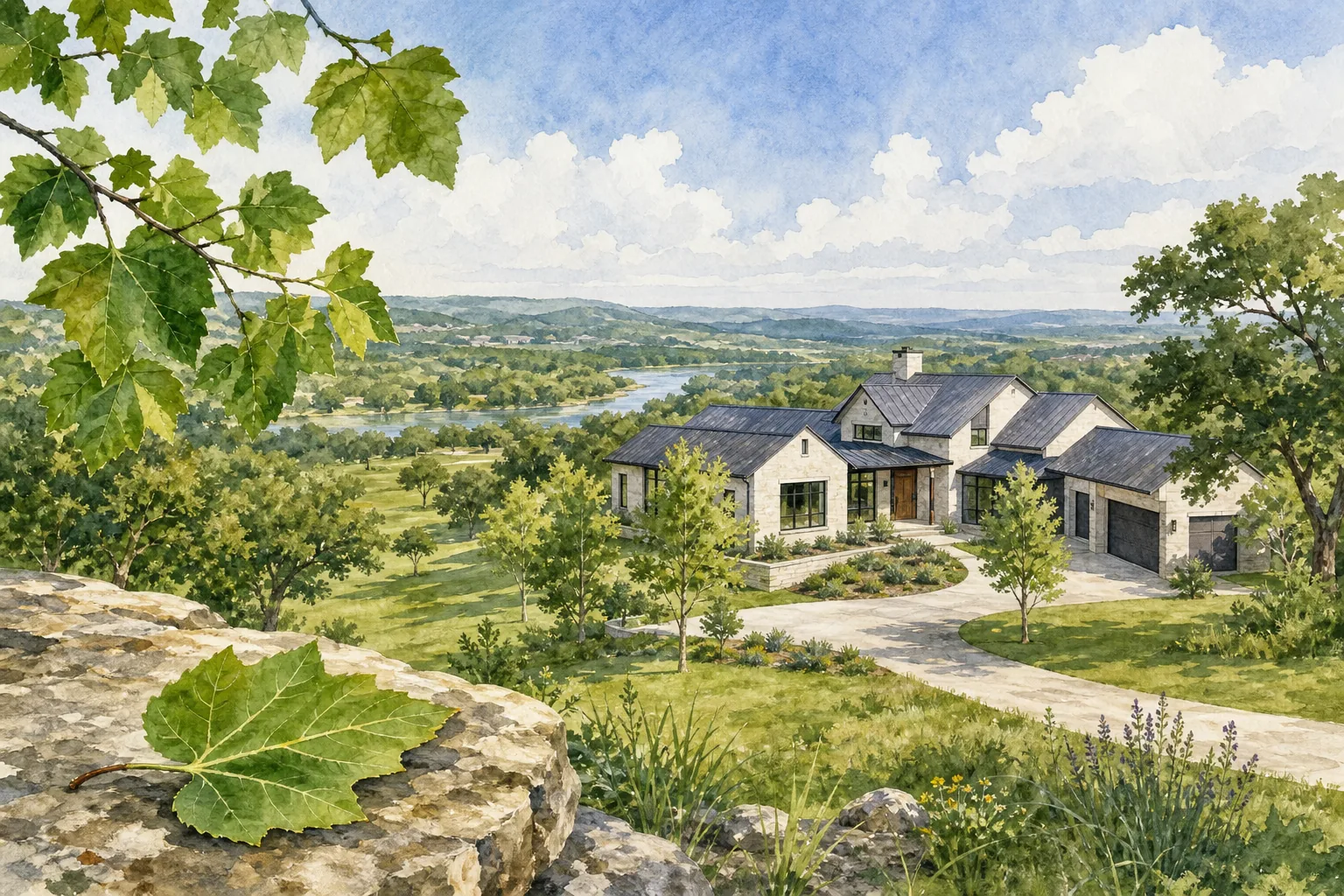
That kind of layout can support flexible use without forcing every room into the main floor. A lower level may include bedrooms, baths, a kitchenette, offices, and living space. A garage apartment can add privacy for guests or another household arrangement.
Custom homes also need a closer inspection than a quick showing can provide. Buyers should review builder records, warranties, drainage, retaining work, pool equipment, and the age of major systems. Open land behind a home can be a major asset, but buyers should confirm what protections actually apply.
The main question here is whether the home’s flexibility matches your plans. A large floor plan only helps when the rooms work for your daily routine.
5. Lake Austin Waterfront, Dock Access, Views, and Outdoor Living
Lake Austin waterfront homes command attention because the land includes a scarce feature: direct water access. A lakefront property may include a dock, boating access, broad views, or private shoreline, but those terms don’t mean the same thing.
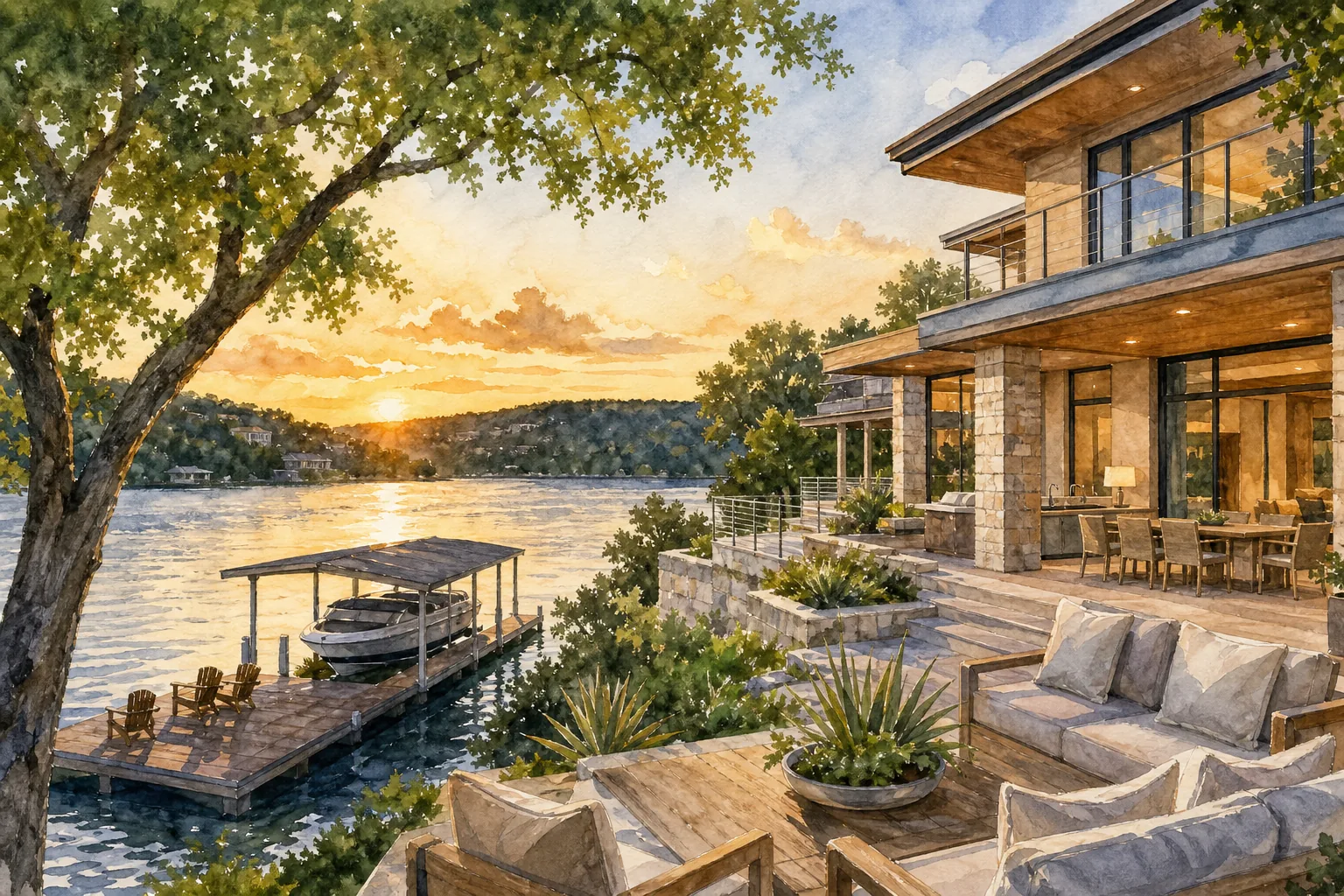
I confirm dock permits, water-level conditions, floodplain status, shoreline maintenance, insurance, and any use limits before a buyer gets too far into the process. The value is tied to the water setup as much as the house itself.
Waterfront homes also need a different inspection mindset. Look closely at seawalls, drainage, erosion, retaining structures, decks, pool placement, and mechanical equipment exposed to outdoor conditions. A remodeled kitchen cannot offset a shoreline issue that needs major work.
Price per square foot can mislead here. Pricing varies, and the premium may reflect water access, dock rights, land, and views rather than interior finishes alone.
6. Southwest Austin, Resort-Style Amenities and Hill Country Architecture
Southwest Austin combines Hill Country terrain with custom homes and resort-style amenities about eight miles southwest of downtown Austin. The area includes several distinct sections, so elevation, golf access, trails, gates, and road approach can change the feel of one property to the next.

Some properties sit near club amenities, while others focus more on canyon views or private outdoor space.
Ownership costs need a full review. Depending on the property, buyers may face HOA dues, club costs, insurance, property taxes, and upkeep for pools or large lots. I separate those costs before a client compares Southwest Austin with a Central Austin home.
For buyers considering gated options, my guide to Austin gated communities and their HOA tradeoffs can help frame the questions. Gated access is limited in Central Austin, so the community rules matter.
7. Spanish Oaks, Contemporary Design and Private Amenities
Spanish Oaks fits buyers who want newer contemporary design with private community amenities. Research on Austin luxury pricing provides context, but that comparison is only a starting point.

The lot, floor plan, view, finish quality, and community costs still control the decision. A modern home may include wide glass openings, indoor-outdoor living, a pool, a sport space, or a separate guest area, but each feature needs an inspection and maintenance review.
I pay close attention to HOA documents and architectural rules here. They may affect fences, exterior changes, landscaping, additions, and future resale plans. A buyer who wants to modify a home should understand those limits before making an offer.
Spanish Oaks can make sense when private amenities matter more than a close-in street grid. The right choice depends on how often you’ll use those amenities and how much drive time you accept.
8. Rollingwood, Central-West Location and Custom Construction
Rollingwood gives buyers a central-west location with custom construction and a short route toward downtown. Pricing varies, which shows why a single average cannot price a luxury home by itself.
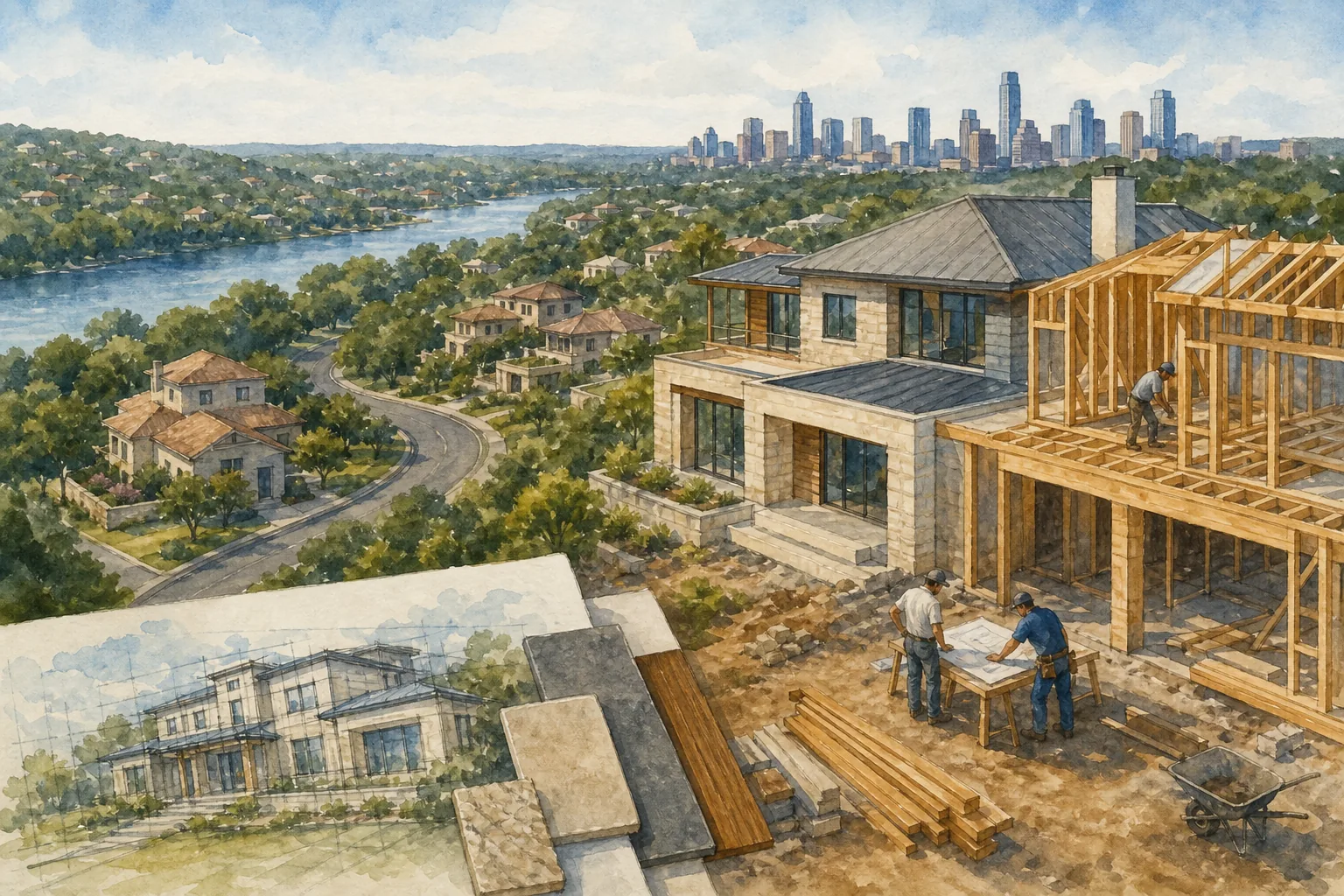
Two homes with the same interior size may differ because of lot value, trees, renovation age, construction quality, and privacy. Outdoor improvements also sit outside the heated square footage used in many listing calculations.
Recent comparable sales and lot characteristics should inform price-per-square-foot analysis.
Rollingwood is worth a close look if you want central access without choosing a downtown condo. The tradeoff is that inventory can be limited, so the property condition needs careful review when one becomes available.
9. Bee Cave and West Austin, New Construction and Flexible Floor Plans
Bee Cave and West Austin give buyers more access to new construction, larger homesites, and flexible floor plans. Current listings in the broader area show homes with greenbelt lots, dedicated offices, guest suites, three-car garages, and modern open layouts.
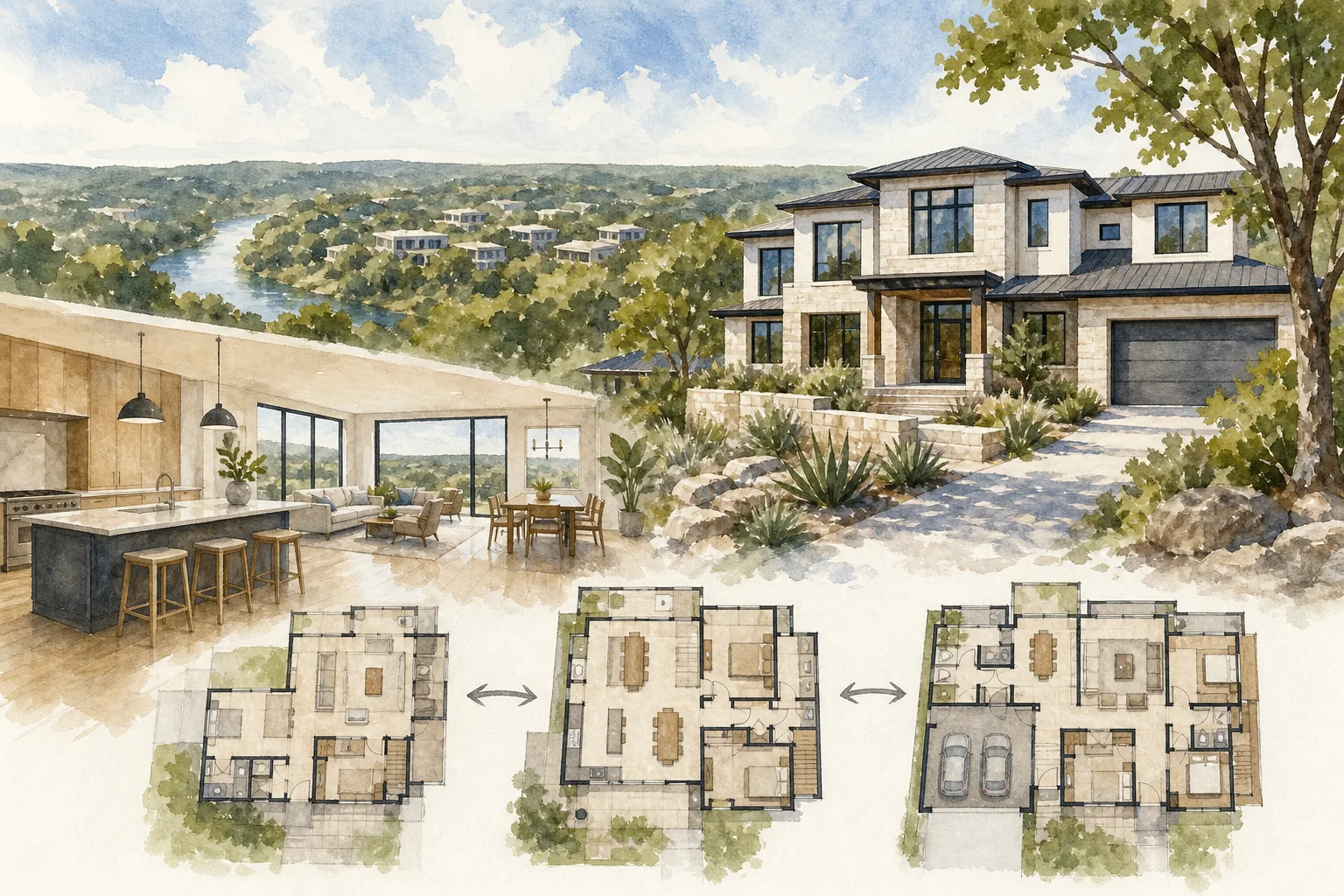
New construction can reduce near-term repair needs, but it doesn’t remove due diligence. I still recommend an independent inspection, even when a builder provides its own warranty process. Buyers should review allowances, completion dates, change orders, drainage, energy systems, and neighborhood restrictions.
Flexible plans can include a private guest area, a second living room, a garage apartment, or a ground-floor office. The best layout is the one that works without leaving large rooms unused.
For a wider view of current building patterns, I track Austin new-construction trends and buyer implications as inventory changes.
10. Lakeway and the Lake Travis Area, Waterfront Views and More Space
Lakeway and the Lake Travis area offer more space, lake views, custom homes, and access to waterfront settings. Current listings include newer homes with panoramic views, older waterfront residences, private docks, pools, and large outdoor areas.
Water view is not the same as waterfront. A home may overlook the lake without having shoreline access, a boat dock, or a usable path to the water. I confirm that distinction early because it changes both value and daily use.
Buyers should also compare tax rates, HOA dues, insurance, commute patterns, and road access. A home farther west may give you more land, but the drive to work, medical care, or the airport can become part of the ownership cost.
Lakeway can be a strong fit for buyers who want a retreat-style setting and more room. The key is to test the drive at the times you’ll actually make it.
11. Downtown Austin and West Downtown, High-End Condos and Lock-and-Leave Living
Downtown and West Downtown condos suit buyers who want a lock-and-leave home near restaurants, cultural venues, offices, and Lady Bird Lake. Popular urban trails add convenient access to outdoor recreation.

Condo ownership shifts much of the exterior work to the association, but the monthly cost includes more than the mortgage. Buyers need to review HOA dues, property taxes, insurance, utilities, parking, reserves, and possible special assessments.
Condo insurance usually covers the unit’s contents, fixtures, and belongings, while the association carries coverage for common elements. Read the master policy and resale documents so you know where one policy ends and the other begins.
Parking deserves its own review. Confirm whether spaces are deeded, assigned, leased, or tied to the unit. A polished lobby is pleasant. The building’s financial records matter more.
Austin Luxury Homes Compared: Location, Features, Costs, and Tradeoffs
Here is how I frame the main choices when a buyer is comparing Austin luxury homes for sale. The market has depth, but each area solves a different problem.
| Area | What you gain | What to check | Best fit when you value |
|---|---|---|---|
| Westlake | Large lots and views | Drive times, slope, jurisdiction | Privacy and land |
| Tarrytown | Central location and older character | Lot limits, drainage, renovation scope | Close-in living |
| Lake Austin | Water access and shoreline views | Dock rights, flood status, insurance | Boating and outdoor living |
| Barton Creek | Hill Country setting and private amenities | HOA, club, pool, and lot costs | Resort-style surroundings |
| Bee Cave or Lakeway | Newer homes and more space | Commute, taxes, completion details | Flexible floor plans |
| Downtown | Convenience and lock-and-leave ownership | HOA dues, reserves, parking | Urban access |
The broader market also deserves context. Research tracks a median of 59 days on market for $2 million-plus homes and an average of $657 per square foot. That pace gives buyers time to inspect the property and compare terms, though a well-priced home with a rare feature can still draw strong interest.
I don’t treat the 92.7% sale-to-list ratio as a promise of a discount. It is a reminder to study recent closed sales instead of assuming every luxury home will sell at its first asking price.
Frequently Asked Questions
How much do luxury homes in Austin cost?
Luxury homes in Austin vary widely by neighborhood, land, condition, and access. Current research tracks homes above $2 million, with a median sale price of $2.75 million. Waterfront access, large lots, custom construction, and central locations can move pricing well above that level, while older homes may offer a lower entry point with renovation costs.
Are Austin luxury homes selling below asking price?
Many Austin luxury homes are selling below their original asking price, based on a reported 92.7% sale-to-list ratio for homes priced above $2 million. That does not mean every seller will negotiate. Rare waterfront property, strong views, and well-priced custom homes can still attract serious interest.
What should I inspect before buying a luxury home in Austin?
Inspect the structure, roof, drainage, HVAC systems, pool, retaining walls, windows, and major finishes before buying Austin luxury real estate. Add flood-map review for low-lying areas, dock documents for waterfront homes, and HOA records for gated communities or condos. High-end finishes don’t replace a careful inspection.
Can I finance an Austin luxury home?
Yes, buyers can finance Austin luxury homes through jumbo loans, portfolio loans, or other lender options, depending on the property and borrower. Luxury financing may require more documentation and a larger reserve review. I suggest comparing terms early, before making an offer, so the loan structure fits your broader cash plan.
Which Austin area has the largest luxury homes?
Westlake, Barton Creek, Bee Cave, and the Lake Travis area often provide more room for large homes and outdoor features. Central Austin areas such as Tarrytown can still have substantial estates, but lot sizes may be tighter. The right comparison depends on whether land, commute, views, or a close-in setting matters most.
How do I start looking at Austin luxury homes for sale?
Start by setting a total monthly budget, choosing two or three areas, and listing the features you will not compromise on. Then work with Robbie English, REALTOR to compare active listings with recent sales. I recommend touring different property types before narrowing the search, because photos often hide drainage, access, noise, and lot conditions.
Conclusion
I recommend starting with the setting you want, then testing the home against your budget, commute, maintenance plan, and resale needs. If you’re ready to compare current listings, financing terms, and neighborhood tradeoffs, review Austin mortgage options and reach out to Robbie English, REALTOR for a focused search plan.
Categories
- All Blogs (958)
- !!! (59)
- !x (621)
- Austin Real Estate (105)
- Bee Cave Real Estate (1)
- Building A Home (14)
- Buying A Home (143)
- Buying Land (1)
- Cedar Park Real Estate (57)
- Central Austin Real Estate (75)
- Down Payment Assistance Programs (1)
- Downsizing (3)
- Downtown Austin Real Estate (5)
- Dripping Springs Real Estate (62)
- East Austin Real Estate (3)
- Financing and Mortgage (23)
- first-time homebuying (109)
- Georgetown Real Estate (9)
- Hill Country Real Estate (1)
- HOA (2)
- Home Appraisals (13)
- Home For Rent (1)
- Home Inspections (6)
- Home Pricing (6)
- Home Staging (1)
- Home Values (12)
- Homeownership (1)
- Homes For Rent (1)
- Homes For Sale (147)
- Hutto Real Estate (5)
- Investing (6)
- Investment Properties (4)
- Lakeway Real Estate (33)
- Leander Real Estate (59)
- LGBT+ Real Estate (8)
- Luxury Homes For Sale (5)
- Luxury Real Estate (19)
- Market Conditions (16)
- Moving to Austin (2)
- Moving to Texas (4)
- Negotiations (3)
- Neighborhoods (8)
- Northwest Austin Real Estate (94)
- Off Market Listings (7)
- Pflugerville Real Estate (10)
- Private Listings (2)
- Property Management (42)
- Property Tax (3)
- Real Estate (18)
- Reddit Question Answered (80)
- redwrite (63)
- Relocation (2)
- Renting (6)
- Representation (34)
- Round Rock Real Estate (58)
- Selling Your Home (62)
- South Austin Real Estate (1)
- Westlake Real Estate (3)
Recent Posts