Austin New‑Construction Home Trends 2026
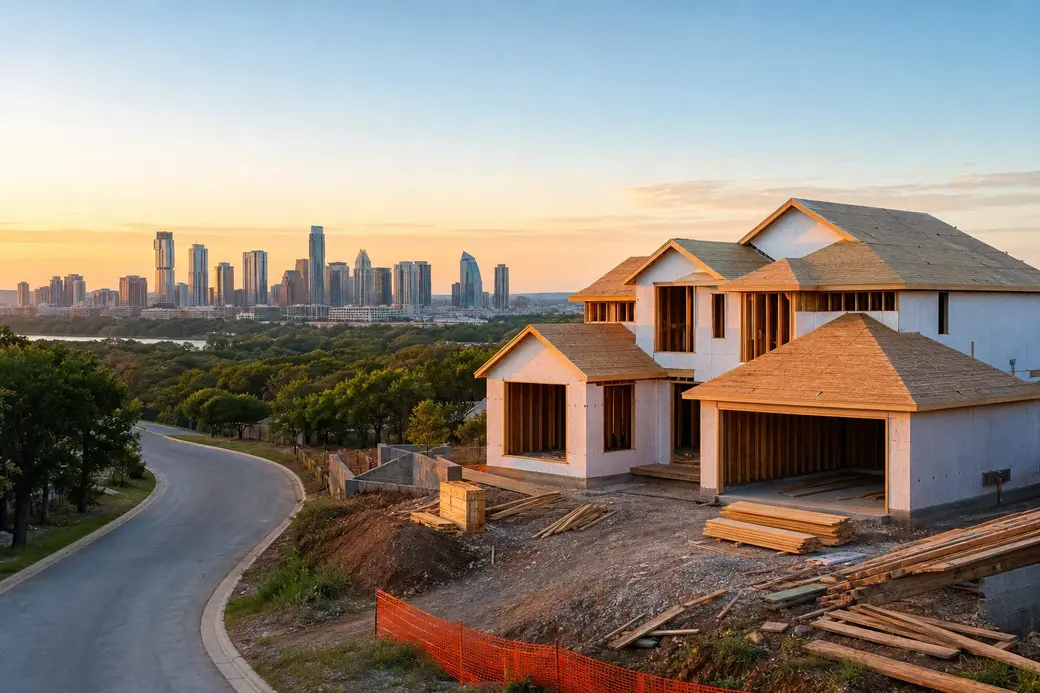
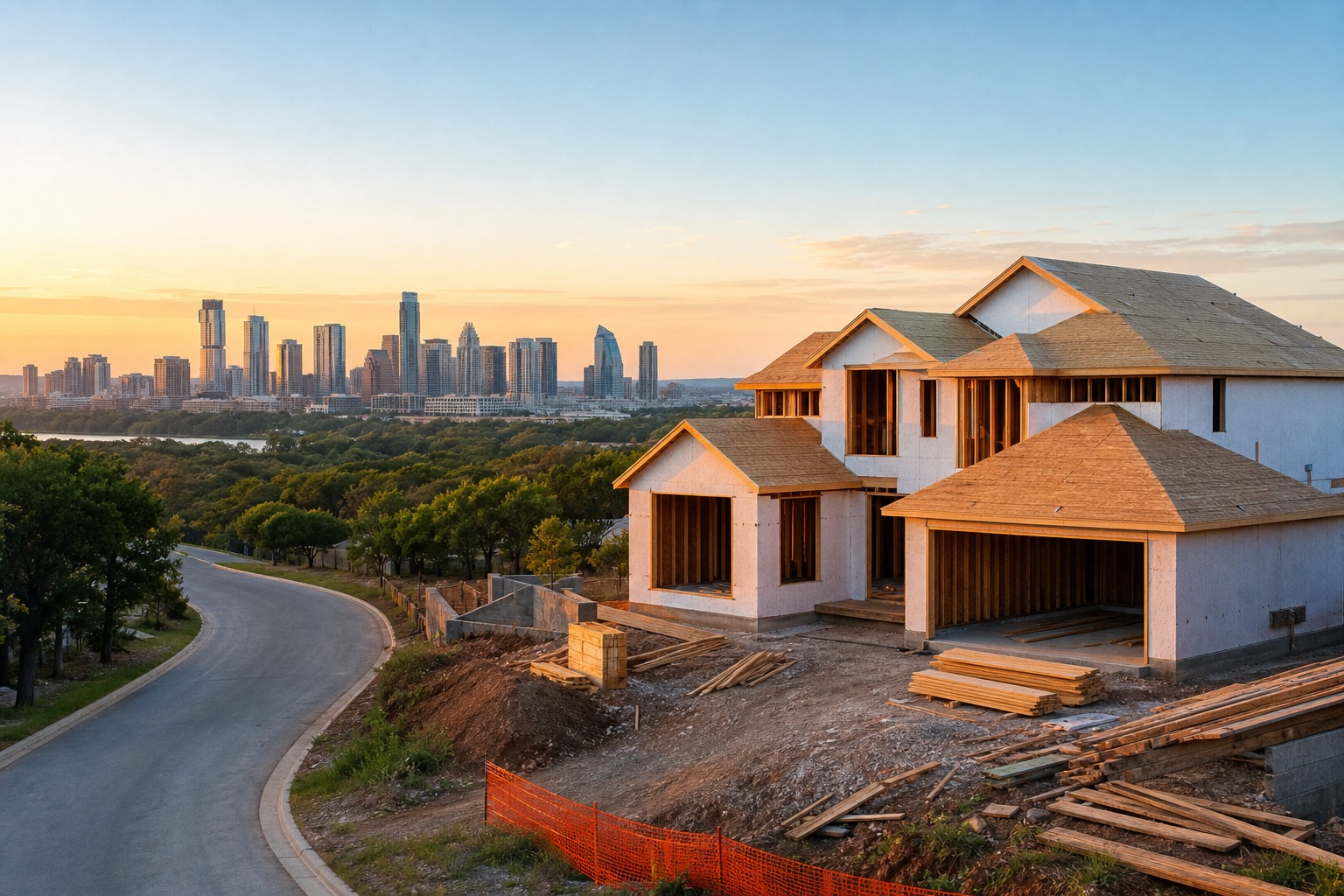
New‑construction activity in Austin is changing the market faster than most people expect. Here’s the full picture of what’s happening in 2026 and what it means for buyers, sellers and anyone thinking of moving to town.
What the 2026 numbers reveal about Austin’s construction market
Permit data tells the story before any homes hit the streets. In the first half of 2026 the city issued fewer total permits than a year ago, reaching the lowest first‑half total since 2011. Single-family permits held relatively steady, while multifamily permits pulled back sharply. That split shows a market still leaning heavily on houses, even as apartment builders pull back.
Because permits are the earliest reliable signal of future supply, they help us gauge where inventory will flow in the next 18‑30 months. The slowdown in multifamily permits suggests fewer apartment deliveries by late 2027, while the relative strength of single‑family permits points to a steady trickle of new homes entering the market.
| Permit Type | 2026 YTD Total | YoY Change |
|---|---|---|
| Single‑Family | Not provided | Not provided |
| Multifamily (5+ units) | Not provided | Not provided |
| Total Residential | Not provided | Not provided |
Even with the dip, Austin still logs 57.7 permits per 100,000 residents , a rate not seen since the early‑2010s recovery. That per‑capita figure matters because it adjusts for the city’s rapid population growth.
Lower rents are a direct outcome of the added housing stock, especially the surge in large‑apartment projects that now make up 47% of new builds.
Why Austin’s growth is producing more than traditional single‑family homes
The city’s zoning reforms are opening up space for accessory dwelling units (ADUs). In 2026, 2,850 ADUs were built, representing 7% of all new detached or attached homes. Homeowners see ADUs as flexible extensions , they can host grandparents, provide a home office or generate rental income.
Detached ADUs are especially popular for multigenerational living, while attached ADUs let owners add square footage without sacrificing yard space. The trend aligns with the council’s push for “missing‑middle” housing, which aims to fill the gap between single‑family homes and large apartment complexes.
City planners are also loosening lot‑size minimums from 5,750 sq ft to 1,800 sq ft and trimming height‑compatibility zones. Those changes let developers build taller, higher‑density projects in neighborhoods that once only allowed low‑rise houses.
For buyers, the ADU surge means more options for income generation or flexible living arrangements, even in established neighborhoods.
The design and floor‑plan shifts showing up in new Austin homes
Design preferences have moved away from stark minimalism toward warmer palettes, layered textures and wood‑forward spaces. Builders are incorporating vaulted ceilings, arched openings and large windows that blur indoor‑outdoor boundaries.
Energy‑efficiency is now a baseline expectation. Local rebate programs may offer support for whole‑home upgrades, and smart‑thermostat incentives may provide additional benefits. Those incentives push builders to install high‑efficiency heat pumps and high‑performance insulation.
Because lot sizes shrink in infill areas, architects rely on clever massing: courtyards, glazed walls and interior‑focused layouts keep homes bright without expanding footprints.
One standout example is a townhouse in Central Austin that uses a “room‑within‑room” concept to separate sleeping zones while keeping a single‑level flow. The design maximizes privacy without adding stairs.
For homeowners, the blend of comfort‑focused aesthetics and green upgrades translates into lower utility bills and higher resale appeal.
Austin Real Estate Guide walks through how to evaluate these design features during a home tour.
Why luxury construction and remodeling are growing alongside new builds
Luxury developers are betting on high‑end, large‑lot projects even as overall permits dip. In June 2026 a single day saw 77 building permits filed, tied to large construction loan financing near $870M.
At the same time, remodel permits remain strong. The city logged 226 renovation permits in the same month, just edging out the 216 new‑single‑family permits. Homeowners with sizable lots are choosing to upgrade existing homes rather than buy new, especially when the cost of land rises.
These parallel tracks reflect a bifurcated market: buyers seeking brand‑new, tech‑enabled homes on the urban fringe, and affluent owners renovating legacy properties in established neighborhoods.
For buyers, it means more competition for upscale inventory and a need to act quickly on new‑build incentives.
Older Homes vs New Construction in Northwest Austin offers a side‑by‑side look at how luxury remodels stack up against new builds.
What these trends mean for Austin buyers, sellers, and relocators
If you’re buying, the growing supply of single‑family homes and ADUs gives you more negotiating power on price and design credits. My experience shows that buyers who lock in a design‑center allowance can offset upgrade costs without hurting appraisal values.
Sellers of resale homes face a tighter inventory in central neighborhoods, which can drive up demand and shorten time‑on‑market. However, the influx of new construction means buyers have alternatives, so pricing must stay realistic.
Relocators should map their commute early. New‑build communities on the metro edge often add 20‑40 minutes to a downtown drive, while established neighborhoods keep commutes tighter but may lack the brand‑new amenities of a master‑planned community.
Energy rebates and smart‑home incentives also tilt the cost‑benefit analysis. A new home built to the latest Austin Energy standards may offer lower monthly utility costs than a comparable resale, though savings vary by home and household.
For a deeper look at market numbers, check out the Austin Real Estate Market Report, which updates inventory, pricing trends and buyer activity weekly.
If you're weighing a new build as a rental rather than a primary home, compare the numbers against my roundup of Austin real estate investment opportunities.
Frequently Asked Questions
What is the current pace of new‑construction permits in Austin?
Permit activity in Austin has shifted in 2026, with single-family and multifamily construction continuing at different rates. Current permit totals are available through local market reports.
Are ADUs a good investment?
ADUs can provide added rental or multigenerational flexibility. Research indicates that 2,850 ADUs account for 7% of new detached and attached homes, although construction costs and returns vary by project.
How do luxury builds affect the overall market?
Luxury projects can generate high-value activity and keep the high-end segment active, even as volume permits dip.
Will lower rents continue?
Rent pressure eased in 2026 because of the added housing stock, especially large-apartment buildings. If new permits stay modest, rents may stabilize rather than keep falling.
Should I prioritize a new build or a remodel?
New builds offer warranties, modern systems and the chance to customize, while remodels let you stay in an established neighborhood and potentially avoid higher land costs.
Conclusion
Overall, Austin’s 2026 new‑construction picture gives buyers more choices and sellers clearer price signals. If you’re ready to explore specific communities or need a buyer’s advocate, reach out to me, Robbie English, REALTOR, for a tailored market plan.
Categories
- All Blogs (964)
- !!! (59)
- !x (621)
- Austin Real Estate (109)
- Bee Cave Real Estate (1)
- Building A Home (14)
- Buying A Home (143)
- Buying Land (1)
- Cedar Park Real Estate (57)
- Central Austin Real Estate (75)
- Down Payment Assistance Programs (1)
- Downsizing (4)
- Downtown Austin Real Estate (5)
- Dripping Springs Real Estate (62)
- East Austin Real Estate (3)
- Financing and Mortgage (23)
- first-time homebuying (109)
- Georgetown Real Estate (9)
- Hill Country Real Estate (1)
- HOA (2)
- Home Appraisals (13)
- Home For Rent (1)
- Home Inspections (6)
- Home Pricing (6)
- Home Staging (1)
- Home Values (12)
- Homeownership (1)
- Homes For Rent (1)
- Homes For Sale (147)
- Hutto Real Estate (5)
- Investing (6)
- Investment Properties (4)
- Lakeway Real Estate (33)
- Leander Real Estate (59)
- LGBT+ Real Estate (8)
- Luxury Homes For Sale (5)
- Luxury Real Estate (19)
- Market Conditions (17)
- Moving to Austin (2)
- Moving to Texas (4)
- Negotiations (3)
- Neighborhoods (8)
- Northwest Austin Real Estate (94)
- Off Market Listings (7)
- Pflugerville Real Estate (10)
- Private Listings (2)
- Property Management (42)
- Property Tax (3)
- Real Estate (18)
- Reddit Question Answered (80)
- redwrite (63)
- Relocation (2)
- Renting (6)
- Representation (34)
- Round Rock Real Estate (58)
- Selling Your Home (62)
- South Austin Real Estate (1)
- Westlake Real Estate (3)
Recent Posts