
Average HOA Fees in Austin Suburbs 2026 – What Buyers Need to Know
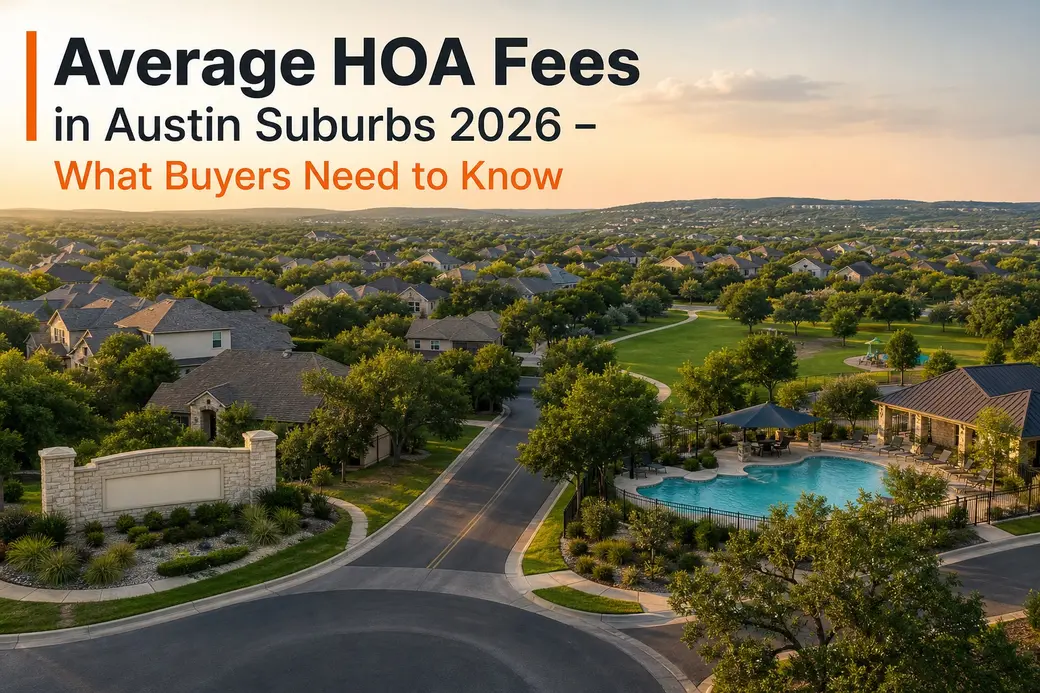
Looking at homes in Austin’s suburbs? One of the first line items you’ll see is the HOA fee. It can swing your monthly budget by dozens of dollars, so you need a clear picture before you start hunting.
Below is a deep‑look at what the fees look like, where they differ, what they usually cover, and how to size the true cost of a home.
What Is the Average HOA Fee in Austin’s Suburbs?
The only suburb that reports a concrete average is Cedar Park at $25 per month, for the metro area. The other six suburbs list fee ranges that sit between $40 and $125. When you take the midpoint of those ranges, the average comes out to roughly $46.67, with a median of $50.
Those numbers sit near the national median of $135 ed for 2025, but Austin’s single‑family market stays lower because many master‑planned communities keep fees modest.
For a broader look at how HOA fees stack up across the state, see this reference page. It explains the typical budget categories and why fees vary so much.
HOA Fee Comparison: Cedar Park, Leander, Round Rock, and Georgetown
Below is a side‑by‑side view of the four communities that show the widest spread in fees. The table highlights the low end, high end, and any notable amenities that push fees higher.
| Community | Low End | High End | Typical Amenities |
|---|---|---|---|
| Cedar Park | $25 | $25 | Basic common‑area upkeep |
| Leander | $50 | $125 | Resort‑style pools, trails, community center |
| Round Rock | $40 | $100 | Neighborhood parks, security gates |
| Georgetown | $40 | $100 | Extensive amenity package, club‑house |
Leander’s range is the widest because some newer subdivisions charge for high‑end amenities while older pockets have no HOA at all.
Notice: When you request a resale certificate, package pricing is available on request ( see the relevant state resource).
For a real‑world example of how fees affect a listing, check out a recent sale at 6729 Vicenza Dr, where the HOA was $41 semi‑annually. It shows how even a modest fee shows up on the buyer’s cost sheet.
Higher‑Fee Communities: Lakeway, Dripping Springs, Bee Cave, and Sun City
These four areas sit at the top of the fee ladder. Lakeway’s Rough Hollow, Dripping Springs’ Headwaters, and Bee Cave’s Sweetwater each list a range of $50‑$125 per month, and they all bundle resort‑style amenity centers, pools, trails, and waterfront access.
Sun City, a senior‑focused enclave inside Georgetown, pushes the ceiling to $120‑$150 per month. The higher price reflects gated access, a large community center, and a strong events calendar.
Notice: Because Texas has no statutory reserve‑fund minimum, you’ll often see a wide gap between what the fee is and how much is set aside for future repairs. Ask the board for the latest reserve study before you sign.
When I helped a client compare a $350k home in Lakeway to a $300k home in Cedar Park, the extra $75 per month for amenities paid for a private dock and a fitness hub. The client liked the lifestyle boost, but we built the higher fee into the loan calculations so the monthly payment stayed within budget.
What Your Austin‑Area HOA Fee Usually Covers
HOA fees fund two main buckets: operating expenses and reserves. Operating money pays for day‑to‑day upkeep, landscaping, street lighting, pool cleaning, security, and insurance for common areas. Reserves sit aside for big‑ticket items like roof replacement, pavement resurfacing, or a new clubhouse.
In Austin, many master‑planned subdivisions also pay a management‑company fee that runs $10‑$22 per unit each month. That cost is baked into the HOA fee you see on the MLS.

For a quick snapshot of typical fee components, the Austin cost of living guide breaks down average fees by community type and shows how newer neighborhoods trend higher because they include more amenities.
How to Calculate the True Cost Before You Buy
Step 1: Pull the resale certificate and the most recent budget. Look for the total annual assessment, the reserve balance, and any pending special assessments.
Step 2: Convert the annual fee to a monthly figure. Add that to your mortgage, taxes, and insurance to get a realistic cash‑flow number.
Step 3: Run a reserve‑fund health check. If the reserve is under 30% funded, add a contingency of $50‑$100 per month to cover potential special assessments.
Step 4: Check the CC&Rs for restrictions that could affect your plans, rental limits, pet rules, or solar‑panel bans.
Step 5: Factor in any one‑time fees the HOA may charge at closing, such as transfer fees or document preparation costs.
When I walked a first‑time buyer through a home in Round Rock, the HOA fee was $85 per month. After adding a $75 reserve buffer, the total monthly housing cost rose, which fit comfortably within the buyer’s 28% debt‑to‑income target.
For a deeper look at the resale-certificate timeline and review period, consult a qualified Texas real estate professional.
New-build communities often carry their own HOA structure — see how that fits into the broader picture in my Austin new construction home trends guide.
Frequently Asked Questions About Austin Suburban HOA Fees
What is a typical HOA fee range in the Austin suburbs?
The range usually falls between $25 in Cedar Park and $150 in the most amenity‑heavy communities like Lakeway. Most suburbs cluster between $40 and $100 per month.
Do HOA fees include utilities?
Generally, fees cover common‑area utilities, street lighting, pool pumps, and community‑center electricity. Your own home’s water, gas, and electricity are billed separately.
Can I negotiate HOA fees?
You can’t change the fee itself, but you can ask the seller for a credit to cover upcoming special assessments or request that the seller pay a portion of the first year’s fees.
Are there hidden costs besides the monthly fee?
Yes. Special assessments, transfer fees, and sometimes parking or pet fees can add to your costs. Review the budget and recent meeting minutes for clues.
What rights do I have if the HOA mismanages funds?
If an HOA mismanages funds, review its financial records and governing documents and consider seeking professional advice.
Do HOA fees affect my mortgage qualification?
Lenders include the monthly fee in your debt‑to‑income calculation. A higher fee can reduce the amount you’re approved for, so factor it in early.
Conclusion
If you want a budget‑friendly entry point, Cedar Park’s $25 fee is hard to beat. For lifestyle‑driven buyers, the higher fees in Lakeway or Sun City buy you resort‑style amenities.
Start by asking your agent for the resale certificate, run the five‑step cost calc, and decide whether the amenities are worth the extra dollars. Need help sorting the paperwork? I’m here to walk you through it, just reach out.
Ready to put this into practice? Robbie English, REALTOR was built for exactly this.
Categories
- All Blogs (964)
- !!! (59)
- !x (621)
- Austin Real Estate (109)
- Bee Cave Real Estate (1)
- Building A Home (14)
- Buying A Home (143)
- Buying Land (1)
- Cedar Park Real Estate (57)
- Central Austin Real Estate (75)
- Down Payment Assistance Programs (1)
- Downsizing (4)
- Downtown Austin Real Estate (5)
- Dripping Springs Real Estate (62)
- East Austin Real Estate (3)
- Financing and Mortgage (23)
- first-time homebuying (109)
- Georgetown Real Estate (9)
- Hill Country Real Estate (1)
- HOA (2)
- Home Appraisals (13)
- Home For Rent (1)
- Home Inspections (6)
- Home Pricing (6)
- Home Staging (1)
- Home Values (12)
- Homeownership (1)
- Homes For Rent (1)
- Homes For Sale (147)
- Hutto Real Estate (5)
- Investing (6)
- Investment Properties (4)
- Lakeway Real Estate (33)
- Leander Real Estate (59)
- LGBT+ Real Estate (8)
- Luxury Homes For Sale (5)
- Luxury Real Estate (19)
- Market Conditions (17)
- Moving to Austin (2)
- Moving to Texas (4)
- Negotiations (3)
- Neighborhoods (8)
- Northwest Austin Real Estate (94)
- Off Market Listings (7)
- Pflugerville Real Estate (10)
- Private Listings (2)
- Property Management (42)
- Property Tax (3)
- Real Estate (18)
- Reddit Question Answered (80)
- redwrite (63)
- Relocation (2)
- Renting (6)
- Representation (34)
- Round Rock Real Estate (58)
- Selling Your Home (62)
- South Austin Real Estate (1)
- Westlake Real Estate (3)
Recent Posts