
Best USDA Loan Texas Options for Home Buyers
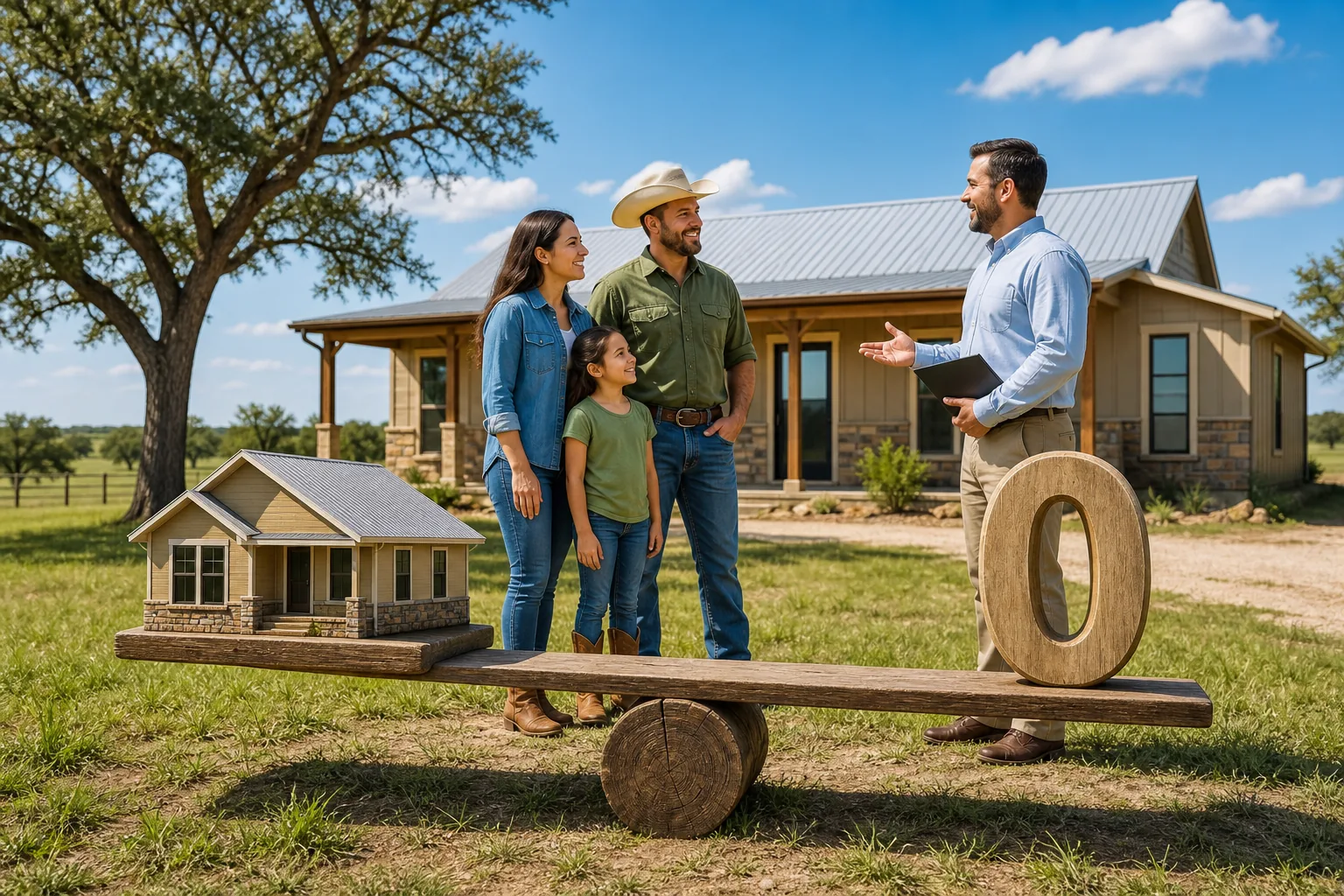
Many Texas buyers assume they need a large down payment before they can buy. A USDA loan may allow qualified buyers to purchase an eligible primary home with zero down, but the address, household income, property condition, and lender review must all fit. I’ve organized the main options below so you can see which path may fit your plans.
1. Robbie English, REALTOR
Robbie English, REALTOR, is an Austin-area real estate resource for buyers considering USDA financing around Central Texas. I help you connect the financing question to the actual home search, which matters because an eligible loan does not make every property eligible.

Before we look seriously at homes, I want you to understand your price range, estimated payment, cash needed at closing, and any loan conditions. A pre-approval is useful here. It does not commit you to buying. It gives us better numbers before an offer is on the table.
In Austin, Cedar Park, Leander, Round Rock, Dripping Springs, Georgetown, and nearby areas, the mailing address alone does not decide USDA eligibility. The exact property address must be checked. I also want the lender to understand appraisal rules, repair concerns, contract dates, and the time needed for underwriting.
Clients may choose any lender. I can introduce you to mortgage professionals who have worked well with my clients, but using a recommended lender is never required. The goal is simple: keep the lender and real estate sides aligned.
My Austin mortgage guide explains why pre-approval should come before a serious home search. That order can prevent a costly surprise after you find the right house.
2. USDA Guaranteed Loan: The Mainstream Zero-Down Option
The USDA Guaranteed Loan is the route most buyers mean when they ask about a USDA loan in Texas. An approved private lender makes the mortgage, while the U.S. Department of Agriculture provides a guarantee to support the loan.
The main attraction is 100% financing for a qualifying primary residence. You may not need a down payment, though zero down does not mean zero cash. You may still need money for inspections, earnest money, prepaid costs, moving expenses, or a gap caused by the appraisal.
Guaranteed loans generally have fixed-rate structures. The lender sets the interest rate, so you should compare more than the advertised payment. Ask for the rate, lender fees, underwriting conditions, estimated closing timeline, and the full cash-to-close figure.
The guarantee also comes with fees. Research used for this article identifies a 1% upfront guarantee fee and a 0.35% annual fee paid over time. The upfront charge may be financed when the transaction allows it. The annual fee is different from conventional private mortgage insurance because it does not automatically disappear after you build a set amount of equity.
3. USDA Direct Loan: Support for Lower-Income Buyers
The USDA Direct Loan is designed for buyers with lower income who cannot obtain suitable financing through standard private lending. The USDA provides the funding directly rather than relying on a private lender to make a guaranteed mortgage.

This option can have more targeted eligibility rules. Your income must fall within the limit for your area and household size. You must also show that you can repay the loan and that the home will be your primary residence.
Direct financing may provide more favorable payment help for eligible borrowers, but the review can take longer. The process may involve detailed income review and agency processing. Do not assume that a Direct Loan and a Guaranteed Loan use the same rate, approval path, or timeline.
A web search completed for this article found one named lender source, Neighbors Bank, listing both USDA Guaranteed and USDA Direct products. Its page did not publish a minimum credit score, rate range, typical closing time, fee schedule, or buyer profile. That gap means you must ask direct questions before choosing a lender.
This route may fit when income is lower and standard financing is out of reach. A USDA-approved housing professional or lender can tell you which program to test first.
4. USDA-Eligible Small-Town Homes: Location Comes First
For a USDA loan in Texas, location is often the first filter. The program uses an eligibility map, and many small towns or outlying areas may qualify even when they are not remote farmland.
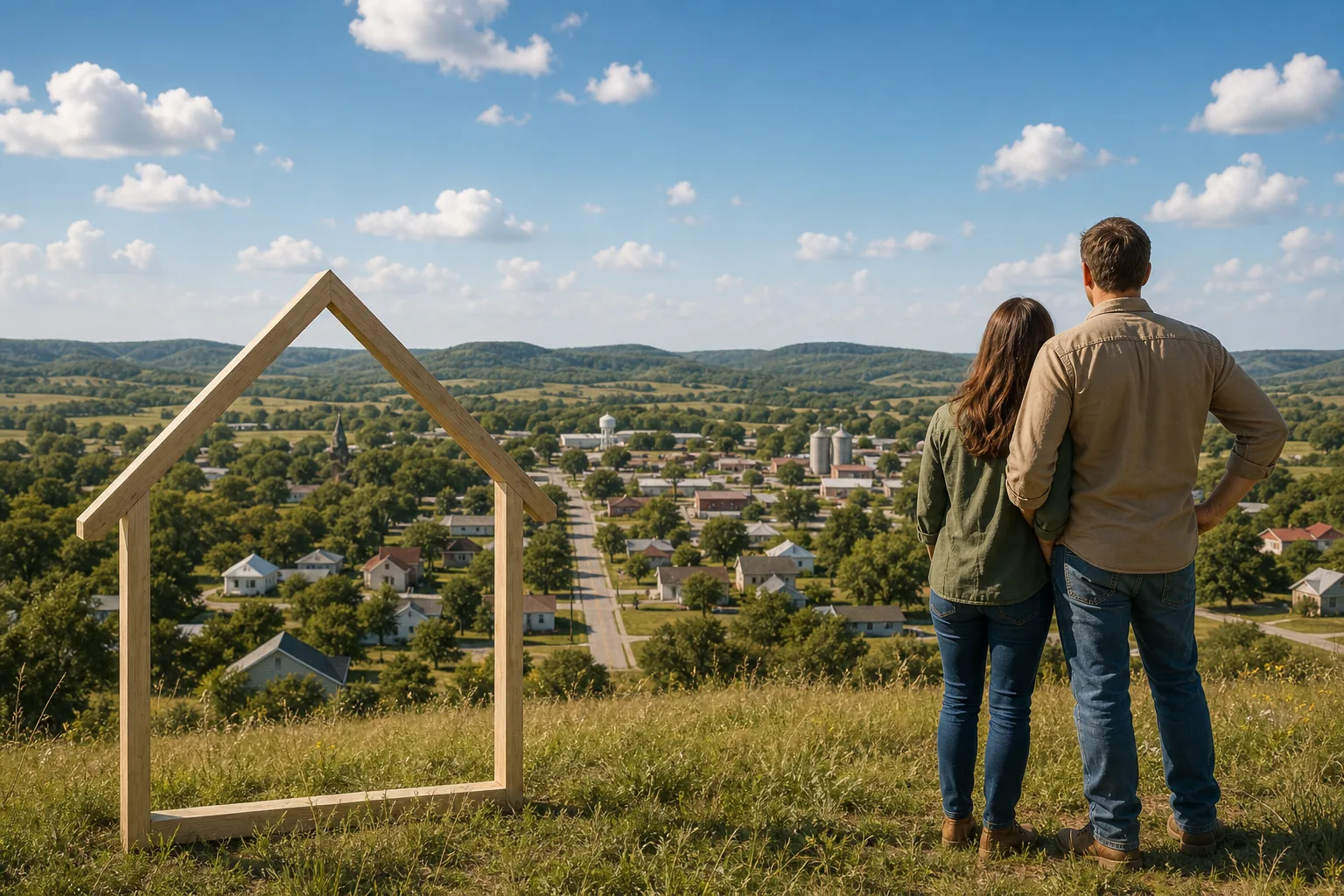
Common guidance describes eligible places as areas with fewer than 20,000 people, but boundaries and designations can change. A home outside a larger city may qualify while a nearby home with a similar price may not. An Austin mailing address is not enough to answer the question.
Enter the exact address into the USDA property eligibility map before you spend time on an offer. Treat the map as an early screen, not the final approval. Your lender must verify the address during underwriting.
Location affects more than the loan. It may change commute time, available services, utility arrangements, road access, and insurance costs. the survey and ask who maintains roads or shared drives.
The right decision rule is direct: confirm the exact address before treating the home as a USDA candidate.
5. USDA Income-Limit Eligibility: Matching Household Income to the Area
USDA income eligibility is based on household income, county rules, and household size. The income limit is not simply the amount earned by the person signing the mortgage.
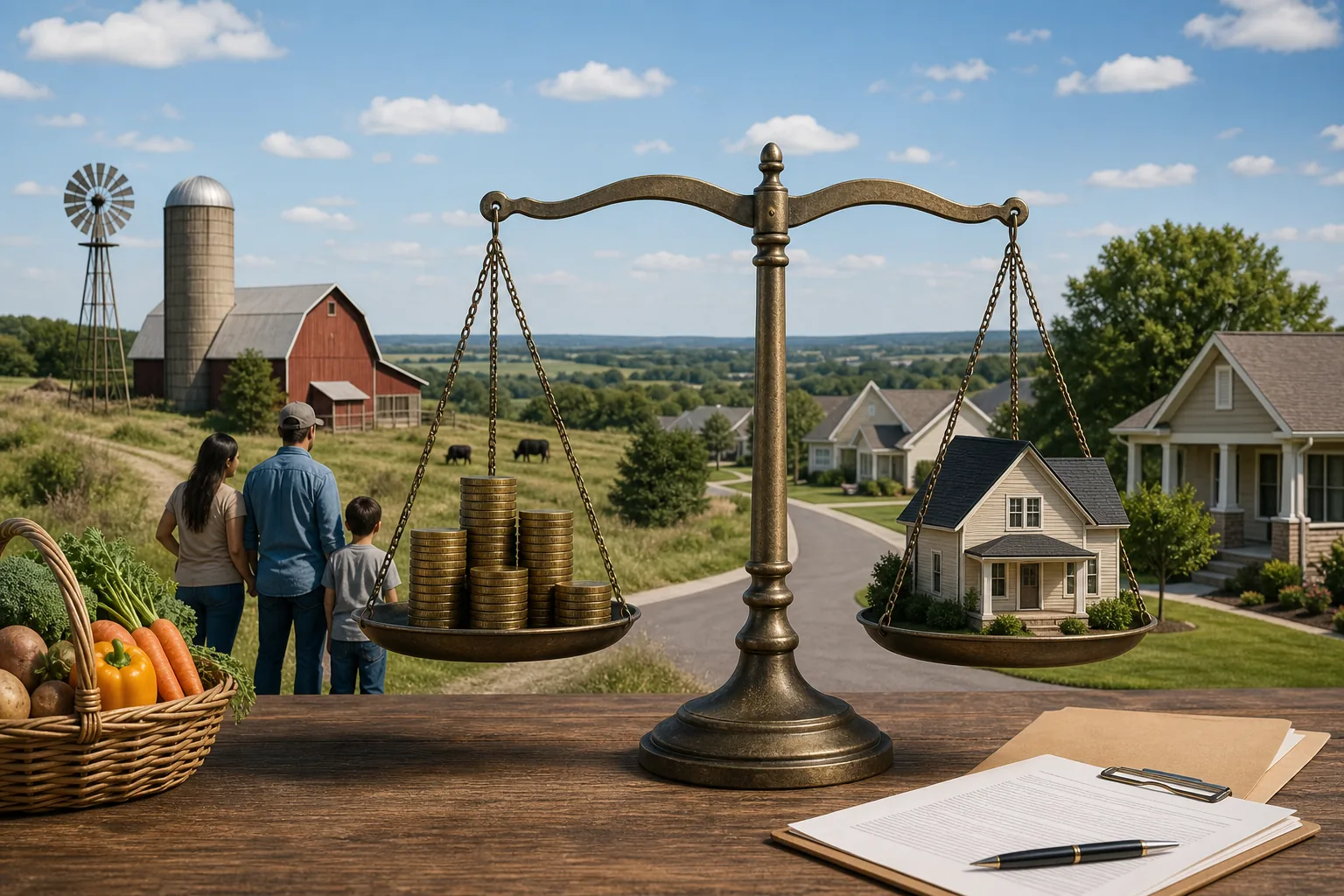
Income from people who live in the home may count, even when they are not borrowers. A lender may review wages, Social Security, child support, commission income, self-employment income, and other recurring sources. Deductions and adjustments can affect the final calculation, so an online estimate is only a starting point.
Keep documents ready before applying:
- Recent pay records and W-2 forms.
- Tax returns when required.
- Bank statements for available funds.
- Proof of employment history.
- Business tax records for self-employed applicants.
- Statements for debts and other income.
Do not leave out a household member or income source because you think it will not matter. Give the lender a complete picture early. That makes the eligibility review more reliable.
If you are buying your first home, other programs may also be worth comparing. My page on Texas first-time home buyer options covers assistance programs that follow different rules.
6. USDA Existing-Home Financing: Properties That Meet USDA Standards
Existing homes can qualify for USDA financing, but the property must meet health, safety, and livability standards. The appraisal is not only about market value. It also helps identify conditions that may affect the loan.

Potential concerns include peeling or chipped paint, unsafe steps, damaged systems, roof problems, missing utilities, or repairs needed to protect the home’s basic use. A lender may require repairs before closing. The seller may agree to complete them, or the transaction may need a different solution.
USDA financing generally focuses on a single-family primary residence. Some condominiums, modular homes, and manufactured homes may qualify when they meet program and lender rules. Duplexes and larger multifamily properties usually create a different financing question.
Review the seller disclosure, inspection report, appraisal conditions, survey, and repair estimates together. A home that looks affordable may need more cash than expected if repairs cannot be included or completed before closing.
USDA property standards can make the contract timeline less flexible than other types of home purchase transactions. Build that possibility into the offer discussion.
7. USDA New-Construction Financing: Buying a Newly Built Home
New construction may qualify for USDA financing when the site is eligible and the finished home meets program rules. A new build does not bypass the location or income tests.
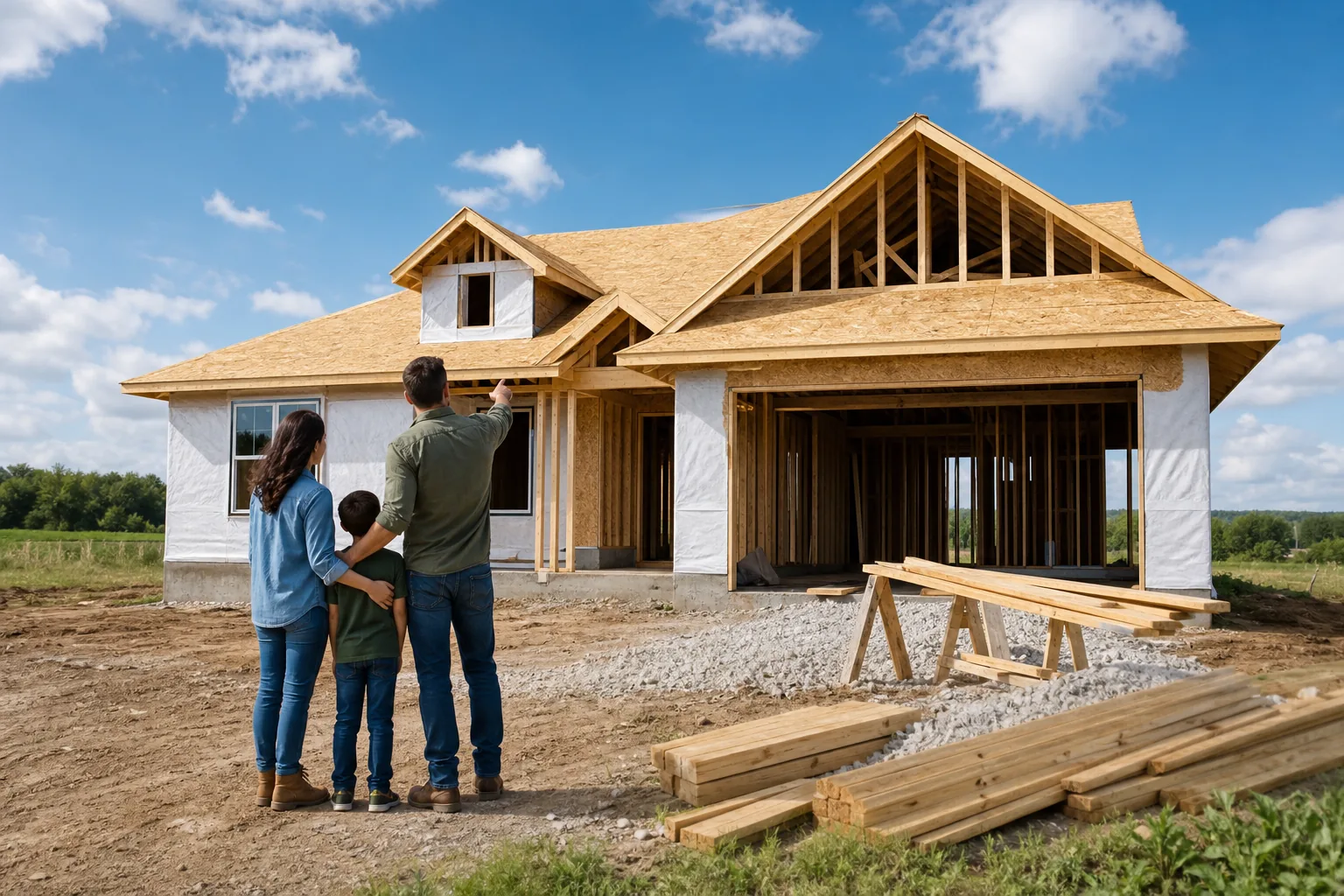
Ask the lender how it handles the builder, construction documents, inspections, warranty items, and final appraisal. The lender may need plans, specifications, permits, builder information, and proof that the home will meet required standards.
Construction schedules can move. Materials may arrive late. A completion date may shift after the contract is signed. Your loan approval and rate-lock terms need to match that risk.
Also review what the purchase includes. Appliances, fencing, driveways, wells, septic systems, and site work can affect the budget. A written specification sheet is more useful than a sales conversation.
New construction can fit a buyer who wants a home with fewer repair needs, but the loan still depends on final documentation and approval.
8. USDA Financing for Buyers with Credit and DTI Questions
The USDA program does not set one universal minimum credit score, but lenders may apply their own standards. Some lenders commonly look for a score near 640 for automated underwriting, while others may review lower scores with added documentation or conditions. Ask each lender what it requires before applying.
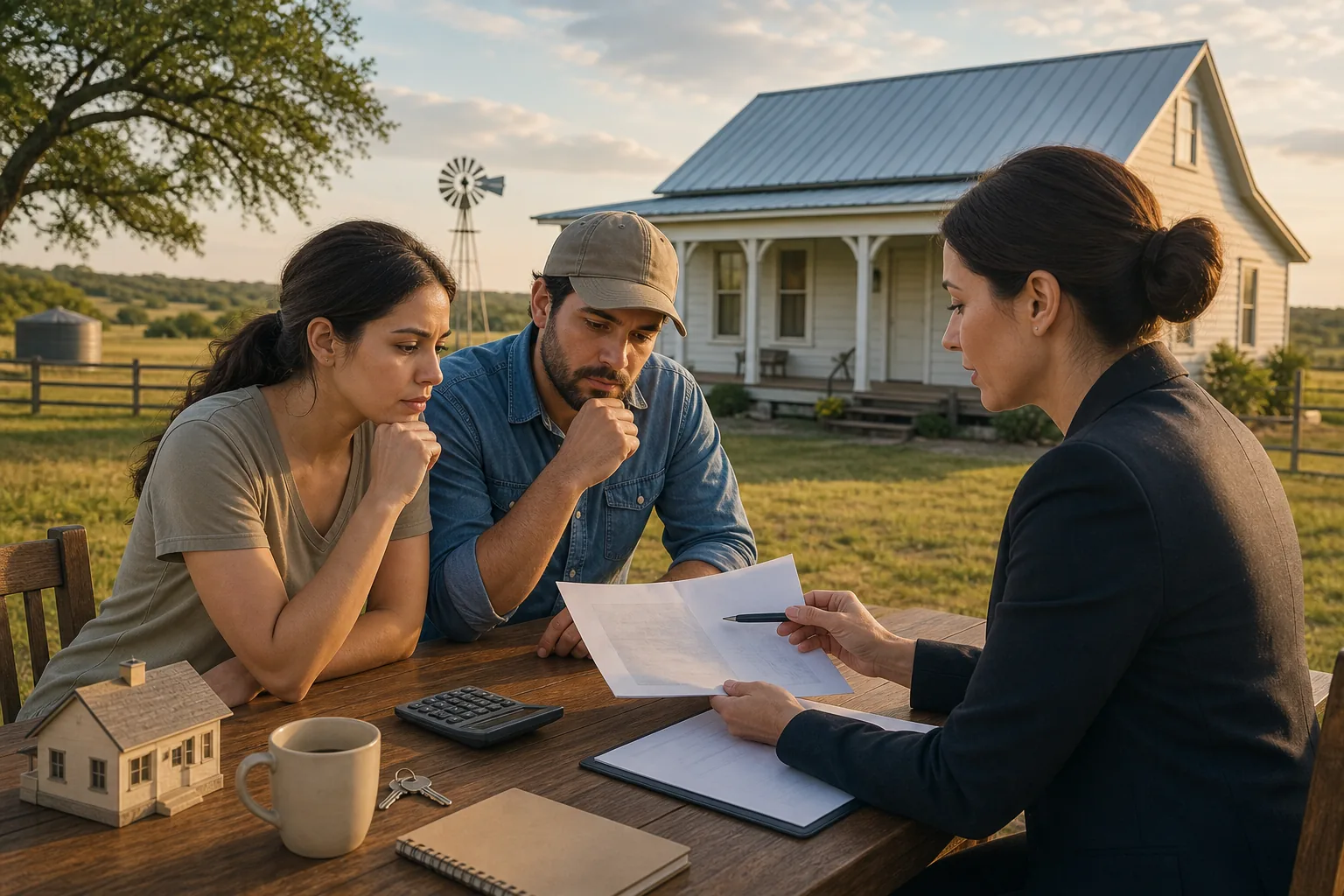
Your debt-to-income ratio, or DTI, compares monthly debt payments with gross monthly income. Housing costs count. So do car loans, student loans, credit cards, child support, and other obligations. A lender may approve a file through automated underwriting even when a manual review would be harder.
Do not open new credit accounts or move large sums between accounts without telling the lender. Avoid paying off a debt with borrowed money. Keep records for gifts, deposits, and transfers.
Credit improvement may help, but timing matters. Paying down a card can change the score. Closing the card may create a different issue. Ask the lender for a written plan before taking action.
Income stability matters too. W-2 employment and self-employment can both work, but self-employed buyers may need business returns and added proof. College may count toward parts of an employment history in some cases, subject to lender review.
9. USDA Loan Alternatives: Other Financing Options
A USDA loan is one choice, not an automatic answer. Other financing options may be worth reviewing when the property is outside an eligible USDA area or when the household does not fit USDA requirements. Some options may also have different property rules than USDA financing.

Other financing options may fit a borrower whose circumstances do not match USDA requirements. Each option has its own occupancy, eligibility, property, and underwriting rules. Available choices may provide different levels of property flexibility, depending on the borrower and transaction.
Compare the full transaction rather than focusing only on the down payment:
- Monthly principal and interest.
- Guarantee fee or mortgage insurance.
- Property repair requirements.
- Cash needed at closing.
- Appraisal and underwriting timing.
- Future plans for the home.
Down payment assistance may also deserve a separate review. My Austin down payment assistance guide explains why assistance programs can have their own income, repayment, and timing rules.
The best loan on paper may not be the loan that fits your address, budget, and contract timeline. Let the lender price several choices with the same home value and debt picture.
USDA Loan Texas Options at a Glance
This comparison shows which question each option answers. It is a screening tool, not an approval decision.
| Option | May fit when | Watch closely |
|---|---|---|
| Robbie English, REALTOR | You need Austin-area home search and contract coordination | Your lender still decides loan approval |
| Guaranteed Loan | You want zero-down financing through an approved lender | Income, address, property, fees, and lender rules |
| Direct Loan | Your income is lower and private financing may not fit | Agency review and processing time |
| Existing-home financing | The home is already built and meets property standards | Repairs, appraisal conditions, and utilities |
| New-construction financing | You are buying an eligible newly built home | Builder documents, completion, and final approval |
| Other financing types | USDA location or income rules do not fit | Different eligibility and down-payment terms |
One additional research finding deserves attention. A search for Texas-specific USDA providers on August 20, 2026, surfaced only Neighbors Bank as a named lender source, and that page listed both Guaranteed and Direct products without publishing key loan metrics. That does not mean only one lender exists. It means online search results may not give you a useful side-by-side market view.
For a wider comparison, ask at least two lenders for the same written loan estimate. Compare the same assumptions. Otherwise, a lower payment may simply reflect a different rate, tax estimate, fee, or loan amount.
If you're buying as an investor rather than an owner-occupant, USDA financing won't apply — see my guide to DSCR loans in Texas instead.
USDA Loan Texas FAQ
Can you buy a house in Texas with a USDA loan and no money down?
Yes, qualified buyers may use a USDA Guaranteed Loan to finance 100% of an eligible home’s purchase price. You may still need cash for inspections, earnest money, prepaid costs, moving expenses, or appraisal issues. The lender must confirm your income, credit profile, debts, household information, property address, and occupancy.
What areas in Texas qualify for USDA loans?
Eligible areas are set by USDA location rules, and many small towns or outlying areas may qualify. The home does not need to sit on a farm. Use the USDA eligibility map for the exact address, then ask the lender to verify the result before you write an offer.
What income qualifies for a USDA loan in Texas?
USDA income limits depend on the county and household size. Household income may include earnings from people who live in the home, even when they are not borrowers. The lender reviews wages, benefits, self-employment income, and other sources. Do not rely on a statewide figure because the limit can vary by location.
What credit score do you need for a USDA loan in Texas?
There is no single USDA credit-score minimum set for every borrower, but lenders can impose their own standards. Some lenders commonly use a 640 benchmark for automated underwriting, while others may consider a lower score with extra review. Ask for the lender’s current standard and avoid major credit changes during approval.
Does a USDA loan have mortgage insurance?
A USDA Guaranteed Loan has guarantee fees instead of private mortgage insurance associated with other loan programs. Research for this article identifies a 1% upfront fee and a 0.35% annual fee. The annual charge is paid over time and may not end simply because you build equity. Confirm current fees and financing treatment with your lender.
Can you use a USDA loan for an investment property?
No, USDA financing is intended for your primary residence. Vacation homes and investment properties do not fit the basic occupancy purpose. Anyone included in the mortgage must meet the lender’s occupancy rules. If your plan involves rental income, a second home, or multiple units, ask about another loan type.
Conclusion
A USDA loan may be worth testing when you want a primary home in an eligible Texas location and your household income fits the county limit. My recommendation is to verify the exact address and request written comparisons from more than one lender before touring homes seriously. If you want help connecting the financing review with an Austin-area search, Robbie English, REALTOR, can help you plan the next step without requiring you to use any particular lender.
Categories
- All Blogs (970)
- !!! (59)
- !x (621)
- Austin Real Estate (113)
- Bee Cave Real Estate (1)
- Building A Home (14)
- Buying A Home (143)
- Buying Land (1)
- Cedar Park Real Estate (58)
- Central Austin Real Estate (75)
- Down Payment Assistance Programs (1)
- Downsizing (4)
- Downtown Austin Real Estate (5)
- Dripping Springs Real Estate (62)
- East Austin Real Estate (3)
- Financing and Mortgage (24)
- first-time homebuying (109)
- Georgetown Real Estate (9)
- Hill Country Real Estate (1)
- HOA (2)
- Home Appraisals (13)
- Home For Rent (1)
- Home Inspections (6)
- Home Pricing (6)
- Home Staging (1)
- Home Values (12)
- Homeownership (1)
- Homes For Rent (1)
- Homes For Sale (147)
- Hutto Real Estate (5)
- Investing (6)
- Investment Properties (4)
- Lakeway Real Estate (33)
- Leander Real Estate (59)
- LGBT+ Real Estate (8)
- Luxury Homes For Sale (5)
- Luxury Real Estate (19)
- Market Conditions (17)
- Moving to Austin (2)
- Moving to Texas (4)
- Negotiations (3)
- Neighborhoods (8)
- Northwest Austin Real Estate (94)
- Off Market Listings (7)
- Pflugerville Real Estate (10)
- Private Listings (2)
- Property Management (42)
- Property Tax (3)
- Real Estate (18)
- Reddit Question Answered (80)
- redwrite (63)
- Relocation (2)
- Renting (6)
- Representation (34)
- Round Rock Real Estate (59)
- Selling Your Home (62)
- South Austin Real Estate (1)
- Westlake Real Estate (3)
Recent Posts