
DSCR Loans Texas: 10 Investor Options

Texas investors often ask whether a property can qualify on rent alone. A DSCR loan may do that, but the details change by lender, property, and loan structure.
The biggest surprise is the missing data. None of the reviewed entries publishes a minimum DSCR figure in the comparison data, while only a few disclose rates, LTV, or loan caps. Use this list to narrow your search, then request written terms before you make an offer.
Table of Contents
- Robbie English, REALTOR: Austin-area investor guidance
- Ridge Street Capital: buy-and-hold and BRRRR flexibility
- Little City Investments: Austin refinance continuity
- Capital Fund 1: larger and more complex portfolios
- Park Place Finance: short-term-to-DSCR refinancing
- Asteris Lending: fast and flexible lending solutions
- Griffin Funding: major Texas metro coverage
- Easy Street Capital: options for new and experienced investors
- New Silver Lending: flexible underwriting and higher LTV potential
- Lone Star Financing: reduced reliance on traditional income verification
- Compare the 10 Texas DSCR loan options side by side
- FAQ
- Conclusion
1. Robbie English, REALTOR: Austin-area investor guidance
Robbie English, REALTOR is an Austin-area brokerage team that helps investors assess properties across Central Texas. I am not a lender, so I don’t issue DSCR loans. My role is to help you judge the property before you spend time on financing.
That means reviewing the contract, rent potential, property condition, and local market facts together. In Austin, Cedar Park, Leander, Round Rock, and Dripping Springs, the same loan structure can produce very different results because taxes, insurance, HOA dues, and rents vary by address.
Before you speak with a lender, I suggest building a property-level budget. My Austin real estate investment services page explains how I help investors review opportunities. You remain free to choose any lender, title company, inspector, or other provider.
The limitation is simple: brokerage guidance does not replace loan underwriting. A lender must confirm the final ratio, reserves, appraisal, entity documents, and closing terms.
2. Ridge Street Capital: buy-and-hold and BRRRR flexibility
Ridge Street Capital fits investors using long-term rentals, BRRRR plans, or short-term rentals across Texas. Its published DSCR material lists up to 80% LTV for purchases and rate-and-term refinances, with up to 75% LTV for cash-out refinances.

It is also one of the few reviewed options with published price-related details. The lender lists rates from 6.0% to 7.99%, origination from 0%, loan sizes that vary by program, and a stated DSCR above 1.0 for one rental program.
Ridge Street also states that an LLC can hold title when the LLC is registered where the property sits. That can help an investor who wants entity ownership, although legal and tax advice should come from qualified professionals.
The caveat is that its larger multifamily program has different requirements. That program lists a DSCR above 1.15 and a higher experience threshold. Ask which program applies before comparing the rate.
3. Little City Investments: Austin refinance continuity
Little City Investments may fit an Austin investor moving from hard money into long-term DSCR financing. Its published rental program supports purchases, refinances, and cash-out refinances for single-family homes, condos, and two-to-four-unit properties.

The company lists up to 80% LTV, a $150,000 minimum loan amount, a 0.80 minimum DSCR, and a 660 minimum credit score. It also lists six months of PITIA or ITIA reserves. Those figures are more useful than vague claims about flexibility because they give you questions to ask about your own deal.
Little City states that its long-term options include a 30-year fixed structure and a 10-year interest-only structure. It also describes a path from renovation financing into permanent financing for investors who need short-term capital during a renovation.
That continuity can reduce a handoff between lenders. Still, refinancing is never automatic. The completed property must appraise, meet condition standards, and support the new payment.
4. Capital Fund 1: larger and more complex portfolios
Capital Fund 1 is aimed at investors whose holdings include construction, land acquisition, commercial property, or residential rentals.
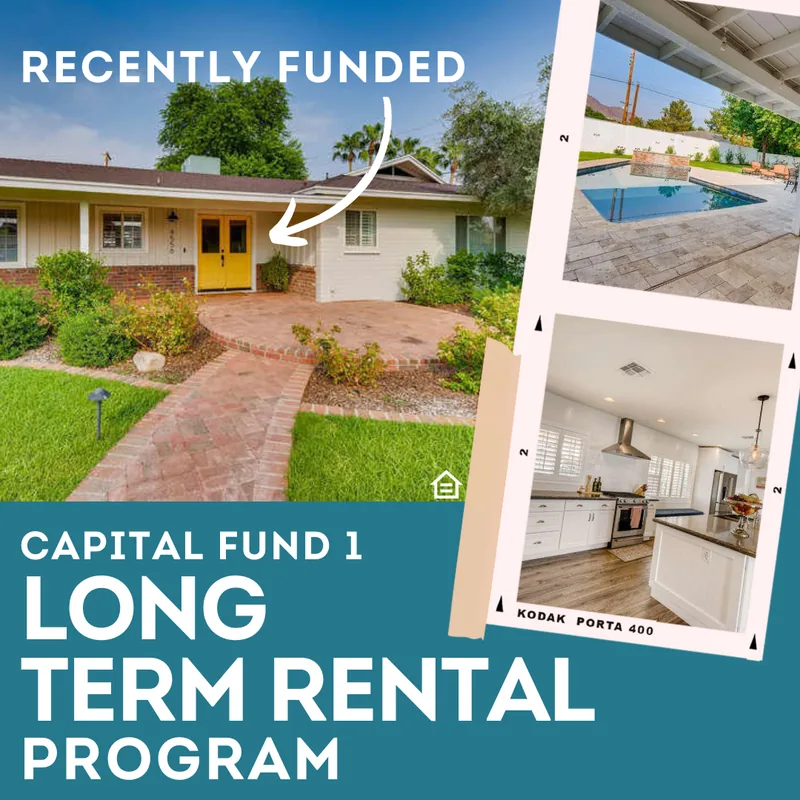
That makes it a name to investigate when a standard rental loan is too small or the overall portfolio has several moving parts. A large loan request may also need a different appraisal process, stronger liquidity, and more detailed entity records.
The published comparison does not provide a minimum DSCR, LTV ceiling, rate range, or fee schedule for this option. That missing information matters. A high loan cap does not tell you whether a particular Texas property qualifies.
Use this option as a conversation starter for a complex file, not as proof that the full requested amount is available.
5. Park Place Finance: short-term-to-DSCR refinancing
Park Place Finance may fit an investor actively flipping or using short-term financing for a Texas property who wants to refinance a stabilized rental into long-term DSCR financing within the same lender relationship.

Short-term financing is designed for a limited period, so the exit plan must be clear before closing because an extension can add fees and a refinance may not work if rents or value fall short.
Park Place is worth asking about when speed matters during acquisition or when a property needs time before it can support permanent debt. The cost will usually be higher than a long-term mortgage, so test the deal with interest, holding costs, taxes, insurance, and the refinance payment.
The limitation is timing. Short-term financing is not a substitute for a permanent plan. Put the expected refinance date, rent target, and fallback sale plan in writing.
6. Asteris Lending: fast and flexible lending solutions
Asteris Lending focuses on rental property financing for buy-and-hold investors, BRRRR strategists, turnkey buyers, and larger portfolio operators. Its material says financing can support purchases, refinances, and portfolio consolidation.

Asteris lists fixed-rate long-term financing with use options up to 80% LTV on eligible properties. It also describes LLC-friendly financing, appraisal-based rent analysis, and documentation that varies by program and transaction.
This option may suit an investor who wants the same lending relationship while moving from one property toward several. A financing structure involving multiple properties can change the risk picture, though. Cross-collateralization may place more than one property behind one obligation.
Ask for a written breakdown of recourse, reserve rules, prepayment terms, and what happens if one property underperforms.
7. Griffin Funding: major Texas metro coverage
Griffin Funding may fit investors focused on large Texas metro areas such as Austin, Dallas, Houston, and San Antonio. The research describes it as a national lender with several non-QM products, including DSCR financing.

That wider product menu may help when a borrower has both investment financing and a separate personal mortgage need.
Those figures come from published program information, not a promise for every Texas property. Credit, use, property type, rent support, and reserves can change the result.
Metro coverage is useful, but the address still controls the underwriting. Check taxes, insurance, HOA limits, and rental rules before assuming a citywide program applies.
8. Easy Street Capital: options for new and experienced investors
Easy Street Capital is described as an option for both new and experienced investors. That matters because first-time investors may face extra reserve, credit, or equity requirements even when a lender accepts them.

The research also identifies the company with long-term, medium-term, and short-term rental programs. An investor considering an Airbnb property should verify how projected income is calculated and whether local rules permit the planned use.
Short-term rental underwriting can look attractive on paper, then weaken after cleaning costs, vacancy, taxes, insurance, and permit limits enter the budget. Use long-term rent as a fallback test when possible.
New investors should ask for a full estimate rather than focus on an advertised rate. The payment is only one part of the monthly property cost.
9. New Silver Lending: flexible underwriting and higher LTV potential
New Silver Lending may fit investors who need flexible underwriting for stabilized residential rentals. Its published Texas material lists up to 80% LTV, a 660 minimum FICO, a $150,000 minimum loan amount, and a maximum loan amount of $3 million.

The lender also publishes a 30-year fixed rental product and states that short-term vacation rentals may qualify under program rules. Another published page lists a minimum DSCR of 0.75 for its Rent program, although a separate Texas page says there is no minimum DSCR. That conflict is exactly why written program terms matter.
New Silver publishes origination and prepayment terms that should be compared with the total cost over your expected hold period. A lower prepayment penalty may come with a higher rate, so compare total cost over your expected hold period.
The debt service coverage ratio describes the basic relationship between income and debt service. Your lender may use a different rent or expense calculation.
10. Lone Star Financing: reduced reliance on traditional income verification
Lone Star Financing focuses on Texas investors who want rental income considered instead of tax returns, W-2s, or a traditional debt-to-income calculation. Its material covers purchases, refinances, cash-out refinances, LLC ownership, condos, short-term rentals, and multi-unit properties.

The company states that many of its lenders use minimum DSCR figures between 1.00 and 1.20, depending on credit, property type, and loan terms. That range is a useful planning guide, but it is not a universal Texas rule.
Cash-out refinancing can release equity, but the new debt must still fit the property’s rent. A higher loan balance may reduce coverage and increase the risk of a payment shortfall during vacancy.
If you are buying near Austin, I would also review property taxes before relying on a rent estimate. My Austin property tax calculator guide can help you build a more complete monthly budget.
Compare the 10 Texas DSCR loan options side by side
The comparison below uses the strongest stated fit for each option. In the 12-entry review, qualitative borrower descriptions appeared for every lender, but quantitative terms were much less common.
| Option | Useful fit | Published detail | Check before applying |
| Robbie English, REALTOR | Austin property guidance | Brokerage support | Choose a lender separately |
| Ridge Street Capital | Buy-and-hold, BRRRR, STR | Terms vary by program | Program and prepay terms |
| Little City Investments | Austin refinance path | 0.80 DSCR; $150K minimum | Reserves and appraisal |
| Capital Fund 1 | Complex portfolios | Up to $10M | Rate, LTV, and DSCR |
| Park Place Finance | Refinance stabilized rentals | Long-term DSCR financing | Exit plan and extension fees |
| Asteris Lending | Portfolio expansion | Up to 80% LTV on eligible loans | Cross-collateral terms |
| Griffin Funding | Major Texas metros | Property-specific terms | Property-specific approval |
| Easy Street Capital | New and seasoned investors | Rental strategy flexibility | STR income method |
| New Silver Lending | Flexible underwriting | Up to 80% LTV; up to $3M | Conflicting DSCR disclosures |
| Lone Star Financing | Less personal income paperwork | Common 1.00 to 1.20 DSCR range | Which lender receives the file |
Texas taxes and insurance can change a deal faster than a small rate difference. Local hotel occupancy tax guidance is relevant when you are modeling a short-term rental, while city rules and HOA restrictions need separate review.
For Central Texas properties, I also recommend reviewing disclosures before you rely on a repair budget or projected rent. My guide to Texas property disclosure laws explains why the seller’s information is only one part of your due diligence.
If your rate is a sticking point at closing, a 2-1 buydown can lower your payment temporarily — see how the numbers work.
FAQ
What is a DSCR loan in Texas?
A DSCR loan qualifies an investment property mainly through its rental income instead of the borrower’s personal employment income. The lender compares qualifying rent with debt service, which often includes principal, interest, taxes, insurance, and HOA costs. You may still need credit, reserves, an appraisal, entity records, and proof of funds.
What credit score do DSCR lenders require?
Many DSCR programs reviewed for Texas list credit minimums between 620 and 660, but the exact cutoff depends on the lender and deal. A lower score may affect the rate, required equity, reserves, or property choices. Ask for the full pricing sheet rather than relying on one advertised minimum.
How much down payment is needed for a Texas DSCR loan?
A 20% down payment is common, while some programs may allow 15% with different pricing or conditions. Published options in the review include up to 80% LTV, which equals 20% equity before closing costs. Cash-out refinances often use lower LTV limits than purchases.
Can I get a DSCR loan through an LLC?
Yes, some Texas DSCR programs allow an LLC to hold title, but entity rules vary. The lender may require state registration, personal guarantees, organizational documents, and business-purpose paperwork. Confirm the vesting plan before signing a contract because changing ownership at closing can delay the file.
What properties qualify for DSCR loans in Texas?
Common eligible properties include single-family rentals, two-to-four-unit buildings, condos, short-term rentals, and some five-to-eight-unit or larger properties. Non-warrantable condos may qualify with certain lenders. The property must usually be rentable, and the lender must accept the rental strategy, condition, location, and projected income.
Are DSCR loan rates higher than conventional rates?
DSCR loan rates are often higher than conventional investment-property rates because the lender accepts less personal income documentation and underwrites the asset’s cash flow. Fees and prepayment penalties also affect the total cost. Compare the annual payment, origination fee, reserve requirement, and expected hold period before choosing a structure.
Conclusion
I would start with property numbers, not a lender advertisement. Build a full budget for rent, taxes, insurance, HOA dues, repairs, vacancy, reserves, and debt service. Then send the same file to two or three suitable providers and request written terms. If you are evaluating an Austin-area property, Robbie English, REALTOR can help you review the real estate side while you choose the financing provider that fits your plan.
Categories
- All Blogs (970)
- !!! (59)
- !x (621)
- Austin Real Estate (113)
- Bee Cave Real Estate (1)
- Building A Home (14)
- Buying A Home (143)
- Buying Land (1)
- Cedar Park Real Estate (58)
- Central Austin Real Estate (75)
- Down Payment Assistance Programs (1)
- Downsizing (4)
- Downtown Austin Real Estate (5)
- Dripping Springs Real Estate (62)
- East Austin Real Estate (3)
- Financing and Mortgage (24)
- first-time homebuying (109)
- Georgetown Real Estate (9)
- Hill Country Real Estate (1)
- HOA (2)
- Home Appraisals (13)
- Home For Rent (1)
- Home Inspections (6)
- Home Pricing (6)
- Home Staging (1)
- Home Values (12)
- Homeownership (1)
- Homes For Rent (1)
- Homes For Sale (147)
- Hutto Real Estate (5)
- Investing (6)
- Investment Properties (4)
- Lakeway Real Estate (33)
- Leander Real Estate (59)
- LGBT+ Real Estate (8)
- Luxury Homes For Sale (5)
- Luxury Real Estate (19)
- Market Conditions (17)
- Moving to Austin (2)
- Moving to Texas (4)
- Negotiations (3)
- Neighborhoods (8)
- Northwest Austin Real Estate (94)
- Off Market Listings (7)
- Pflugerville Real Estate (10)
- Private Listings (2)
- Property Management (42)
- Property Tax (3)
- Real Estate (18)
- Reddit Question Answered (80)
- redwrite (63)
- Relocation (2)
- Renting (6)
- Representation (34)
- Round Rock Real Estate (59)
- Selling Your Home (62)
- South Austin Real Estate (1)
- Westlake Real Estate (3)
Recent Posts