Why Seattle Buyers Are Falling in Love With Austin’s Lifestyle and Housing Market

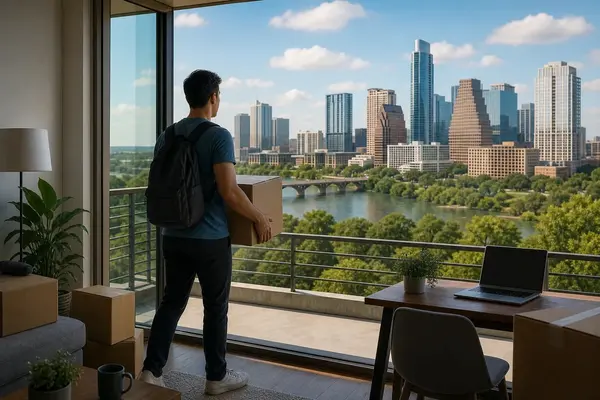
Every year I work with buyers who arrive in Austin from the Pacific Northwest, and the Seattle-to-Austin move has become one of the most common relocations I see. The reasons people give sound personal at first. They talk about wanting more sunshine, more space, and a life that feels a little less expensive to hold onto. But underneath the personal reasons sits a very practical story about two things: what a home actually costs here, and what daily life actually feels like. This article is about those two forces, the housing market and the lifestyle, because they are what turn a curious Seattle buyer into someone who closes on a home and never looks back.
I am Robbie English, Broker, REALTOR at Uncommon Realty, and I have guided many buyers through the move from Seattle to Austin, TX. My goal here is not to sell you on a fantasy version of Texas. It is to give you an honest picture of why this specific move keeps working out for people who make it, including the parts that are genuinely better and the parts that are simply different. If you want the step-by-step logistics of the move itself, I cover that separately in my guide on moving from Seattle to Austin. Here, I want to answer the deeper question: why do so many Seattle buyers fall in love with Austin once they get here?

The housing math is the first thing that changes minds
The single biggest reason Seattle buyers pay attention to Austin is what their money buys. As of 2026, the median home price across the Seattle metro area runs somewhere between roughly $728,000 and $870,000 depending on the month and the source. In the Austin metro, the median sits closer to $426,000 to $440,000. In plain terms, the typical Austin home costs about half of what the typical Seattle home does. That is not a small gap you optimize around. It is a structural difference that reshapes what kind of home, and what kind of life, is within reach.
For a Seattle homeowner, this often means selling a modest house and using the equity to buy something larger here, sometimes with a much smaller mortgage or none at all. For a Seattle renter who felt permanently priced out of ownership, it can mean actually buying a first home. The emotional shift people describe usually traces back to this number. When housing stops being the thing that consumes most of your income and most of your worry, the rest of life has more room in it.
Timing matters too, and 2026 has been unusually favorable for buyers here. Austin's market has cooled significantly from its May 2022 peak, with metro prices down roughly 20 to 25 percent from that high. Inventory has climbed to several months of supply, homes are sitting on the market longer, and sellers are far more willing to negotiate than they were a few years ago. That is a very different environment from the bidding-war Austin that made headlines during the pandemic. You can track where things stand at any given time on my Austin market snapshot. For a Seattle buyer used to competing hard for every listing, a market that gives you time to think and leverage to negotiate feels like a genuine change of pace.
The tax picture is more honest than most people expect
A lot of relocation articles wave around the phrase "no state income tax" as if it were Austin's secret weapon over Seattle. It is not, and I would rather you hear that from me than discover it later. Washington also has no state income tax on wages. So on that specific line, the two states are even. If income tax is the only reason someone is telling you to move, they have not done the math.
Where the picture actually differs is worth understanding. Washington imposes a state capital gains tax of 7 percent on long-term gains above roughly $278,000, rising to 9.9 percent on gains over $1 million, and Washington also levies an estate tax. Texas has neither. For a household that expects large investment gains or is thinking about the long-term estate picture, that difference can be meaningful. On the other side of the ledger, Texas property taxes are higher. Effective property tax rates in Texas commonly land in the 1.2 to 1.8 percent range depending on the county and local rates, while Washington's effective rate is closer to 0.75 to 0.9 percent. Austin's lower home prices soften the blow, since a percentage of a smaller number is a smaller bill, but it is real money and you should budget for it. Sales tax runs about 8.25 percent in Austin versus roughly 10.25 percent in Seattle, so everyday purchases tilt slightly in Austin's favor.
The honest summary is this: Austin is often the more affordable place to own a home, but the reason is housing cost and capital gains treatment far more than income tax. When I walk buyers through their real numbers, that clarity is usually what lets them move forward with confidence instead of a vague sense that Texas is simply cheaper.
The light and the pace are what people fall for
Money gets buyers to look at Austin. The way life feels here is what makes them stay. Seattle averages somewhere around 150 sunny days a year, well below the national average, and the long stretch of gray from fall into spring is a real, documented part of living there. Austin averages well over 220 sunny days a year. That difference is not a marketing line. Buyers describe it as waking up to light more often, spending more of the year outdoors without planning around rain, and feeling the low-grade weight of a gray season lift.
The outdoor culture follows the weather. Austin runs on lake days at Lake Travis and Lady Bird Lake, greenbelt trails, patio dinners that stretch across most of the calendar, live music, and a food scene that spills outside. The pace is a little less compressed than a dense Seattle commute allows, and for a lot of families that translates into more evenings that feel like their own. None of this erases what Seattle does beautifully, and I will get to the honest tradeoffs in a moment. But the lifestyle pull is genuine, and it is specifically the combination of sunshine, space, and a lower cost of living that lets people actually enjoy their time rather than just manage their expenses.
Your career does not have to end at the city limits
One quiet reason the Seattle-to-Austin move works so often is that the two cities share a professional backbone. Seattle is an Amazon and Microsoft town. Austin is home to a major Apple campus, Tesla's headquarters and Gigafactory, Samsung's semiconductor operations in nearby Taylor, Oracle, Dell in Round Rock, and sizable Google and Meta offices. Amazon and Microsoft themselves both maintain a significant presence in Austin. For many tech professionals, relocating here does not mean walking away from a career path. It means continuing it in a lower-cost city with a comparable employer base.
If you are weighing the two cities primarily as a tech worker, I go much deeper on that head-to-head in my article Seattle vs Austin: which city gives tech workers the better quality of life, so I will not repeat the full comparison here. The short version is that the career continuity is one more reason the move feels less like a leap and more like a lateral step into a better daily life.
An honest look at what Seattle does better
I would be doing you a disservice if I pretended Austin wins on everything. Seattle's summers are mild and gorgeous. Austin's summers are hot, with long stretches above 100 degrees, and your cooling bills in July and August will remind you of it. Seattle has the Cascades, Puget Sound, the ferries, and an almost unfair amount of natural beauty right at the edge of the city. Austin has the Hill Country and its lakes, which are wonderful, but they are a different kind of landscape, and Lake Travis in particular is a fluctuating reservoir rather than a constant. Central Texas also has a real allergy season, cedar fever, that catches a lot of newcomers off guard in winter. And as covered above, property taxes here are higher than what you left behind.
None of that scares off the buyers who are a good fit for this move. It just means the decision should be made with clear eyes. When I help someone relocate, part of my job is making sure the tradeoffs are ones they will be happy to live with, not surprises they discover in their first Texas August.
Where Seattle buyers actually land
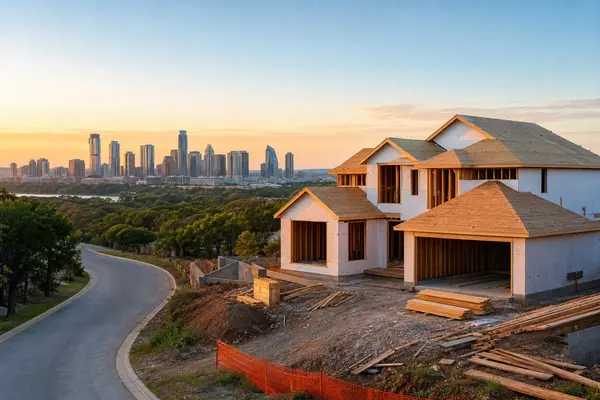
Once the decision is made, the next question is where in the Austin area to buy, and the answer depends heavily on lifestyle. Some Seattle buyers want walkability and culture close in and gravitate toward central Austin. Others are after more square footage, newer construction, and strong schools farther out. Buyers coming from Seattle equity often find that their budget stretches into Austin's luxury market in a way it never could in the Pacific Northwest. I have written a full guide to the Austin neighborhoods Seattle buyers tend to love most, which digs into specific areas and what makes each one fit a different kind of buyer, so start there when you are ready to narrow things down.
It is also worth knowing that this pattern is not unique to Seattle. I see a very similar story with buyers arriving from the West Coast for the same mix of housing value and lifestyle, which I cover in why so many California buyers are choosing Austin instead of staying put. The common thread is people deciding they would rather own their time and their home than keep renting a lifestyle that always felt just out of reach.
How I help Seattle buyers make the move
Relocating from one metro to another is not something you should do on guesswork. When I work with buyers moving from Seattle, we start with the real numbers, comparing what your Seattle equity or budget translates to here, what your property tax and insurance picture will actually look like, and which parts of the metro fit how you want to live. Then we tour with intention, and I represent you through negotiation, inspections, and closing in a market that, right now, gives buyers real room to negotiate.
If you are even in the early stages of thinking about this move, the best first step is to see what is actually available. You can browse current listings on my home search, or download my real estate app to follow the market from wherever you are and reach me directly when you have questions. When you are ready to talk through your specific situation, my team and I are here to help you make the Seattle-to-Austin move on terms that work in your favor.
Written for buyers and sellers in the Greater Austin, Texas area by Robbie English, REALTOR, Broker at Uncommon Realty.

Categories
- All Blogs (891)
- !!! (38)
- !x (599)
- Austin Real Estate (91)
- Bee Cave Real Estate (1)
- Building A Home (14)
- Buying A Home (133)
- Buying Land (1)
- Cedar Park Real Estate (56)
- Central Austin Real Estate (75)
- Down Payment Assistance Programs (1)
- Downsizing (3)
- Downtown Austin Real Estate (5)
- Dripping Springs Real Estate (61)
- East Austin Real Estate (3)
- Financing and Mortgage (19)
- first-time homebuying (103)
- Georgetown Real Estate (7)
- Hill Country Real Estate (1)
- HOA (2)
- Home Appraisals (12)
- Home For Rent (1)
- Home Inspections (6)
- Home Pricing (4)
- Home Values (11)
- Homeownership (1)
- Homes For Rent (1)
- Homes For Sale (147)
- Hutto Real Estate (3)
- Investing (2)
- Lakeway Real Estate (33)
- Leander Real Estate (58)
- LGBT+ Real Estate (8)
- Luxury Homes For Sale (4)
- Luxury Real Estate (19)
- Market Conditions (11)
- Moving to Texas (3)
- Negotiations (2)
- Neighborhoods (8)
- Northwest Austin Real Estate (93)
- Off Market Listings (6)
- Pflugerville Real Estate (8)
- Private Listings (2)
- Property Management (42)
- Property Tax (1)
- Real Estate (18)
- Reddit Question Answered (80)
- redwrite (63)
- Relocation (1)
- Renting (6)
- Representation (34)
- Round Rock Real Estate (55)
- Selling Your Home (48)
- Westlake Real Estate (3)
Recent Posts