
Austin Home Warranty Options: 4 Providers

A broken air conditioner in an Austin summer can put a home warranty to the test. I’m Robbie English, REALTOR, and I’ve put four provider options side by side so you can compare known fees and coverage, then check the contract details that matter before you sign.
1. HomeSafe: a budget-focused option with a stated $65 service fee
HomeSafe is a customizable home warranty option with a stated $65 service call fee per visit. It may suit Austin homeowners who want a lower service fee to be part of their budgeting plan. The fee is what you pay when a covered service request is handled, separate from the plan’s price.
HomeSafe also offers local pre-screened technicians, flexible payment terms, and a 30-day money-back guarantee. Those details can matter when you’re comparing how service gets arranged, how you’ll pay, and what happens soon after enrollment. Read the contract to see how the guarantee works, including any deadlines or conditions.
A $65 fee gives you a known per-visit figure, but it doesn’t tell you the full cost of a plan. Ask for a quote that includes the monthly or annual premium, the service fee, and any add-on charges. Then check whether the contract sets a maximum payment for each covered item. The payment cap can matter more than the visit fee if a large system needs repair.
If you’re weighing contract terms alongside the rest of your Texas home costs, my Texas home warranty overview explains the same kinds of fees and limits in a broader state context. For this Austin comparison, I’d start by confirming how a claim is approved before a technician begins work.
2. Liberty Home Guard: flexible add-ons for pools and other systems
Liberty Home Guard has more than 40 add-on options, including pool equipment and gutter cleaning. Its starting price is $55 to $65 per month. That combination may fit a home with features that need coverage beyond the basic appliance and system list, especially a pool.

Its coverage approach gives you a choice between a base plan and additional items. The exact add-on matters: a pool owner should check which parts of the pool equipment are included, what exclusions apply, and whether the contract has a separate limit for that item. Don’t treat “pool coverage” as a promise to cover every leak, part, or repair.
Liberty Home Guard charges a $65 service call fee. Add that amount to your plan cost when estimating what two or three service visits could mean for your budget. A low monthly premium can still lead to more out-of-pocket cost if you file several claims.
Liberty Home Guard’s Texas plans cover appliances and systems, including air conditioning, heating, plumbing, and electrical. For an Austin home, I’d compare the contract’s HVAC terms with the equipment you own. A plan name alone doesn’t confirm coverage for every part, cause of failure, or repair amount.
If a pool is part of the property you’re considering, my Austin pool-home overview can help you think through ownership details beyond warranty coverage. For the warranty itself, ask for the current contract and confirm the pool add-on’s limits before paying for it.
3. Select Home Warranty: an entry-level option to compare for Texas homes
Select Home Warranty is an entry-level option for first-time Texas homeowners, with starting prices under $50 across its three plans. The provider also includes limited roof coverage. That may make the initial quote worth comparing if you want to keep the monthly premium in view while checking what the plan leaves to you.
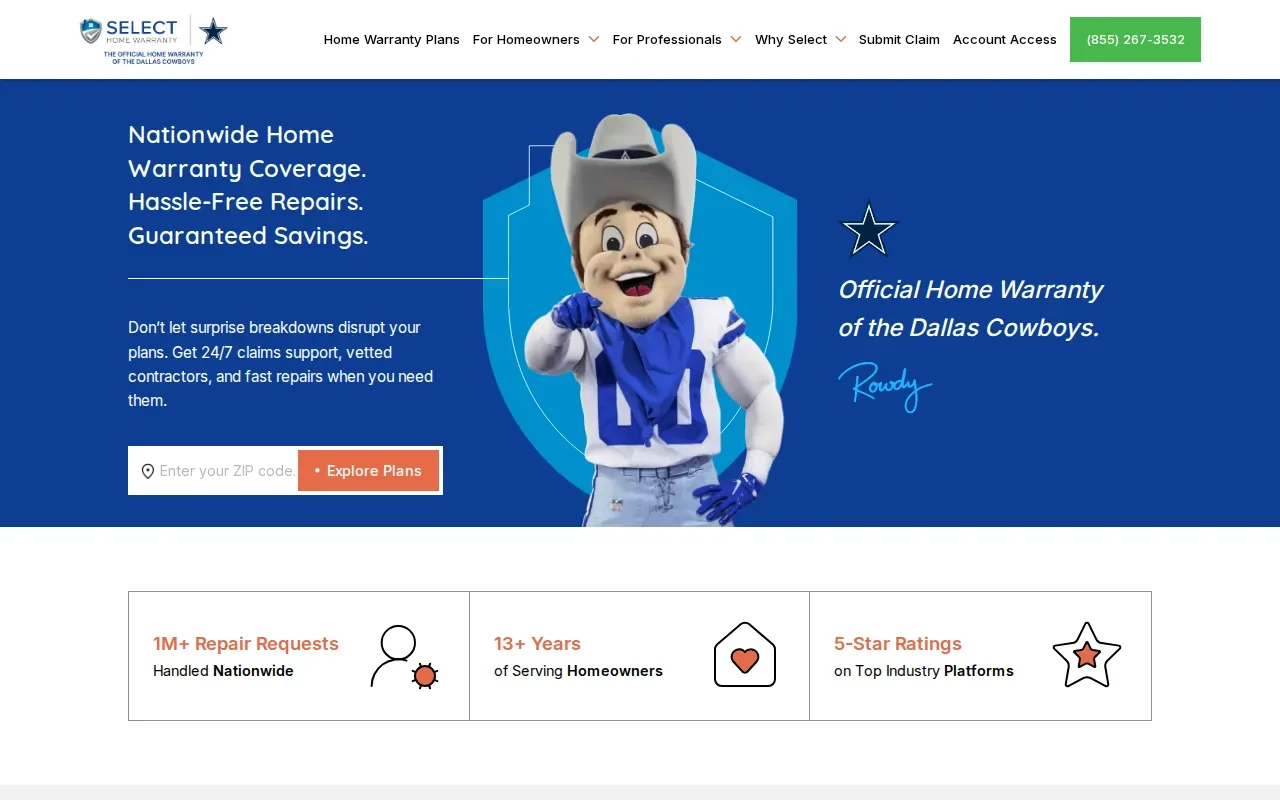
“Limited” is the key word for roof coverage. Review the contract’s definition of a covered leak, any dollar cap, and the parts of the roof it excludes. Don’t assume it pays for roof replacement or damage that starts outside the covered terms.
Customer reviews are mixed, with praise for sign-up and complaints about claim handling, delays, and cancellation. Those are individual accounts, not a guarantee of what your claim will be like. When reading reviews, look for repeated details about the same issue, such as whether a reviewer received approval before hiring a technician.
Before you enroll, ask for the full Texas contract. Check the service fee, payment caps, roof terms, cancellation rules, and any required maintenance records. A low starting price helps you compare the first bill, but it can’t tell you what the provider will pay on a specific repair.
For buyers looking at a newly built home, my Austin new construction guide covers builder warranties and why those terms need a separate review. A builder warranty and a home service contract can cover different things, so keep their documents distinct.
4. Super Home Warranty: verify Austin availability and contract terms
Super Home Warranty is a home service contract provider with appliance and system plans. Super Home Warranty serves Austin, but its service area can vary. Confirm that your exact address is eligible before comparing plan details or paying for coverage.

The service fee is $75 per visit. Treat that as a figure to verify in your current quote, since contract terms and prices can change. Ask whether the fee applies to each separate issue or each visit, and whether you’ll owe it when a claim is declined.
Super Home Warranty allows customers to use their own technician or a provider from its service network. That choice can be useful if you already have a repair professional you trust, but ask how the company authorizes work and whether you must get approval before scheduling. A contractor choice doesn’t by itself mean the company will reimburse any price or repair.
Plan names and prices change over time, so I wouldn’t rely on older figures as a current Austin quote. Request the Texas contract and confirm the premium, service fee, item caps, claim process, cancellation terms, and any time limits on repairs. If a detail affects your decision, get it in writing.
Super may be worth comparing if contractor choice matters to you. The terms decide how that choice works in practice, so confirm authorization and payment rules before you file a claim.
Austin home warranty comparison: coverage, fees, and fit
Use this table as a starting point, not a substitute for a quote. A plan’s monthly premium is only one part of its cost. The service fee, coverage caps, exclusions, and rules for choosing a technician can change what you pay when something breaks.
| Provider | Known price or fee | Known coverage angle | Worth checking before you choose |
|---|---|---|---|
| HomeSafe | $65 per service visit | Customizable plans; pre-screened local technicians | Premium, item caps, guarantee terms |
| Liberty Home Guard | $55 to $65 per month starting price; $65 service fee | More than 40 add-ons, including pool equipment | Pool add-on limits, exclusions, claim fee |
| Select Home Warranty | Starting price under $50 | Limited roof coverage | Service fee, roof cap, cancellation terms |
| Super Home Warranty | $75 service fee | Appliance and system plans | Current Austin quote, technician rules, item caps |
The price details aren’t identical: some are monthly starting prices, while others are service fees. Compare each provider using the same questions. What’s the premium for your address? What do you pay per visit? What is the most the contract will pay for the item you care about?
Home warranties are service contracts, not homeowners insurance. A service contract may cover repair or replacement of specific items that fail under its terms. Homeowners insurance generally addresses covered damage from events such as fire or severe weather, subject to the policy. Read both documents; don’t expect one to replace the other.
For help thinking through a property’s condition before closing, my Austin home inspection cost guide explains what a home inspection can and can’t tell you. An inspection is not the same as a warranty, but its findings can help you ask better questions about known issues and maintenance records.
What Austin homeowners should check before buying or filing a claim
Start with the systems you most want help paying for. In Austin, air conditioning can be a key concern during hot weather. But the right plan depends on the equipment in your home and the contract’s actual coverage, not a general promise to cover “HVAC.” Check which units, parts, and causes of failure qualify.
Then read the exclusions and payment caps. Common contract questions include how the provider treats pre-existing conditions, improper installation, maintenance, and parts still under a manufacturer’s warranty. Ask how the company defines each term. Also check whether the cap applies per item, per claim, or across the full contract term.
Before a claim, follow the company’s process in order. Submit the service request through an approved channel. Confirm the fee and wait for instructions on a technician. Don’t hire someone or authorize work until you know whether the contract requires approval first. Keep the claim number, messages, diagnosis, and receipts together.
Contractor access deserves its own question. Ask whether the provider assigns a technician or lets you choose one. If you can use your own contractor, confirm the approval steps and payment limits before work begins. That can prevent a dispute over a repair you thought the plan would cover.
Texas homeowners can also review a consumer-protection handout for residential service contracts. It gives you a state resource to consult alongside the contract. For questions about a specific agreement, rely on its written terms and seek qualified advice when needed.
My team at Robbie English, REALTOR helps clients think through home decisions across Austin and Central Texas. A warranty can be one part of the ownership budget, but it shouldn’t replace an inspection, maintenance planning, or a close read of the terms. When clients ask me about vendors, I share the experienced professionals I’ve come to trust over the years, and you’re always free to choose any provider you wish.
Frequently asked questions
What does a home warranty usually cover?
A home warranty may cover specified appliances or home systems that break down under the contract’s terms. Common categories include HVAC, plumbing, electrical systems, and kitchen appliances, but each plan differs. Check covered parts, exclusions, and payout caps in the contract. A listed category doesn’t mean every failure or repair cost qualifies.
Is a home warranty the same as homeowners insurance?
No. A home warranty is a service contract for certain covered repairs or replacements. Homeowners insurance is a separate policy for covered losses, such as damage from a fire, subject to its terms. They address different risks. Read both documents so you know which company to contact when a problem involves damage and equipment failure.
How much does a home warranty cost in Austin?
Costs vary by provider, plan, and add-ons. Among the options here, Liberty Home Guard has a stated starting price of $55 to $65 per month, while Select Home Warranty starts under $50. Those figures don’t include every possible fee. Get a current quote for your address and add the service fee and optional coverage.
Do I pay a fee every time I file a home warranty claim?
Many home warranty contracts charge a service fee when you request a visit, but the amount and billing rules vary. HomeSafe charges $65 per visit, Liberty Home Guard charges $65, and Super Home Warranty charges $75. Confirm whether the fee applies to each issue, each visit, or a declined claim.
Can I choose my own repair technician?
That depends on the provider and contract. Super Home Warranty allows customers to choose a technician or use its network. Before hiring anyone, ask whether the company must approve the contractor or repair first. Confirm reimbursement rules and limits in writing, because choosing a technician doesn’t guarantee a claim payment.
Conclusion
I’d compare the contract’s caps, exclusions, and claim rules before choosing based on a low monthly price. Request current written quotes from the providers you’re considering, then check each term against the systems in your Austin home. If you’re also weighing a home purchase or sale, Robbie English, REALTOR can help you assess the property and plan your next steps.
Categories
- All Blogs (978)
- !!! (59)
- !x (621)
- Austin Real Estate (113)
- Bee Cave Real Estate (1)
- Building A Home (14)
- Buying A Home (145)
- Buying Land (1)
- Cedar Park Real Estate (58)
- Central Austin Real Estate (75)
- Down Payment Assistance Programs (1)
- Downsizing (4)
- Downtown Austin Real Estate (5)
- Dripping Springs Real Estate (62)
- East Austin Real Estate (3)
- Financing and Mortgage (24)
- first-time homebuying (109)
- Georgetown Real Estate (9)
- Hill Country Real Estate (1)
- HOA (3)
- Home Appraisals (13)
- Home For Rent (1)
- Home Inspections (6)
- Home Pricing (6)
- Home Staging (1)
- Home Values (12)
- Home Warranties (1)
- Homeownership (1)
- Homes For Rent (1)
- Homes For Sale (147)
- Hutto Real Estate (5)
- Insurance (1)
- Investing (6)
- Investment Properties (4)
- Lakeway Real Estate (33)
- Leander Real Estate (59)
- LGBT+ Real Estate (8)
- Luxury Homes For Sale (5)
- Luxury Real Estate (19)
- Market Conditions (17)
- Moving to Austin (2)
- Moving to Texas (4)
- Negotiations (3)
- Neighborhoods (8)
- Northwest Austin Real Estate (94)
- Off Market Listings (7)
- Pflugerville Real Estate (11)
- Private Listings (2)
- Property Management (42)
- Property Tax (5)
- Real Estate (18)
- Reddit Question Answered (80)
- redwrite (63)
- Relocation (2)
- Renting (6)
- Representation (34)
- Round Rock Real Estate (59)
- Selling Your Home (62)
- South Austin Real Estate (1)
- Westlake Real Estate (3)
Recent Posts