
House Hacking Austin: A Practical Guide

Austin house hacking can start with a spare bedroom, a duplex, or a garage conversion that costs far less than buying a larger multifamily property. The right setup depends on your cash, privacy needs, financing, and the exact parcel. I’ll show you how to compare each path, check the rules, and test the numbers before you make an offer.
What House Hacking Austin Means and Whether It Fits
House hacking Austin means buying a home, living in part of it, and renting another part to lower your housing cost. You might rent a separate unit, lease a detached ADU, or share your home with roommates.
The key feature is owner occupancy. Because you live there, you may qualify for residential financing instead of a standard investment loan. That can reduce the down payment and change the monthly math. It also creates a real duty. You must intend to live in the property and follow the occupancy terms in your loan documents.
In the research reviewed for this guide, duplex rents were listed near $1,400 per unit. Room rentals were listed near $800 to $1,200 per bedroom. Detached ADUs had higher rent potential in some cases, but construction costs can change the result.
That spread matters. A room rental may need only a lease and a furnished room. An ADU may need design work, permits, utility changes, and a long construction period. A duplex gives you a separate unit at closing, but the purchase price and repair needs may be higher.
I’ve worked with buyers who first focus on the rent. I ask them to start with the life they’ll have at the property. Can you share a kitchen with tenants? Can you handle a repair next door? Do you have cash left after closing? With over 40 years of experience, I’ve learned that a deal can look good on paper and still be a poor fit for the person living there.
Want to stress-test the numbers before you tour homes? My house hacking calculator walks through the same cash-flow math step by step.
For a broader view of local rental property types and tradeoffs, my Austin real estate investment opportunities guide can help you frame the search without treating every property as the same.
Compare Austin House-Hacking Models: Duplexes, ADUs, and Rooms
For house hacking Austin buyers, the main choice is how much separation you want between your home and the rental space. A duplex gives the clearest boundary. Room rentals cost less to start but require more shared space. An ADU sits between those two options.
The figures below come from the supplied Austin research. They are planning ranges, not promises. Actual rent depends on the unit’s size, condition, location, lease term, utilities, and permitted use.
| Model | How it works | Known planning range | Daily tradeoff |
|---|---|---|---|
| Duplex (live-in) | Buy a duplex, live in one unit and rent out the other unit. | About $1,400 monthly rent per unit in the supplied research. | FHA and VA financing are listed options. |
| Triplex or fourplex | Occupy one unit and rent the remaining units. | Rent depends on the unit mix and lease market. | More income potential, plus more repairs and tenant work. |
| Single-family home with ADU | Live in the main house and rent the second unit. | One source lists about $2,150 monthly for a legal ADU. | More privacy, but zoning and construction must be verified. |
| Room rental | Live in the main bedroom and rent other bedrooms. | About $800 to $1,200 per bedroom. | Lower setup cost, with less privacy. |
| Garage conversion | Turn a detached garage into a permitted rental unit. | About $40,000 to $80,000 for the conversion. | Lower build cost, but the unit may be small. |
A duplex is often easier to underwrite because the second unit exists before you close. You can inspect it, review any current lease, and compare nearby rents. A triplex or fourplex can add more rent, but each extra unit adds another roof area, HVAC system, plumbing network, and tenant relationship.
An ADU may suit you if personal space matters. An additional dwelling unit is a separate dwelling on the same property as a single-family home. The unit must meet requirements for items such as utilities, access, occupancy, and its own address.
Room rentals are the most direct test of your tolerance for shared living. A four-bedroom home with three rented rooms could produce more monthly income than one detached unit. But the income comes with more contact, more wear in common rooms, and more risk that one vacancy affects your personal budget.
Garage conversions can reduce the construction bill compared with a new backyard unit. The work still needs permits and code review when the space becomes a dwelling. A lower price does not remove the need for legal approval.
My view is simple. Start with a duplex if you want predictable separation. Consider rooms if cash is tight and sharing space feels acceptable. Consider an ADU only after the lot passes a property-specific review.
Plan the Financing, Down Payment, and Owner-Occupancy Requirements
Financing is where house hacking Austin becomes different from buying a pure rental. An eligible property occupied by the buyer may qualify for FHA, VA, or other financing, subject to the lender’s rules.
The supplied research lists FHA financing at 3.5% down for eligible properties occupied by the buyer. It lists VA financing at 0% down for eligible borrowers. Some eligible loan programs may allow 5% down in certain cases.
Those figures describe minimum program terms. They do not include closing costs, prepaid items, lender fees, reserves, repairs, or the cash needed to make the property rent-ready. A buyer who uses every dollar for the down payment may have a low entry cost and a fragile budget.
Ask the lender these questions before touring properties:
- What unit count and property condition does the loan program allow?
- How will projected rent appear in the income calculation?
- What reserves must remain after closing?
- How will mortgage insurance affect the payment?
- Does the property fit the current county loan limit?
Lenders often use a reduced share of market rent when qualifying a buyer. One supplied source describes a reduced share of projected rent as a common figure. The appraiser may document market rent through a rent schedule. Your lender will confirm the exact rule for your loan and income profile.
Three- and four-unit FHA purchases can have another test. The lender may require the property’s qualifying rental income to cover the full payment under an FHA self-sufficiency calculation. A duplex does not face that same test, which can make it easier to qualify.
Owner occupancy is a legal commitment. Common loan guidance requires you to move in soon after closing and occupy the property for at least 12 months. Do not claim occupancy if you already know you will not live there. Ask for the rule in writing and plan your move around it.
If you’re buying your first home, review Texas first-time home buyer options with your lender. Assistance programs may have their own income, purchase-price, education, and occupancy rules. You remain free to select any lender or provider you wish. I can help you compare the questions, but the lender must confirm approval.
Run the Numbers Before You Buy an Austin Property
A house hack should work in two versions. First, test the year when you live there. Then test the property after you move out and rent the unit you occupied.
Use actual inputs. Start with the purchase price and a current loan estimate. Add taxes, insurance, mortgage insurance, HOA dues, utilities you will pay, repairs, and a reserve for major systems.
For rent, use nearby leased comparables when possible. Match the unit’s bedroom count, size, condition, parking, and included utilities. Use a conservative figure. Do not base your offer on the highest active listing.
- Calculate the owner-occupied cost. Add the full monthly cost, then subtract rent from the spaces you will lease. This gives your housing cost while you live there.
- Calculate the fully rented cost. Pretend you moved out. Rent your former unit at a supportable market rate. Subtract every expense, including vacancy and management.
- Stress the result. Test lower rent, a longer vacancy, a tax increase, and a major repair. If one small problem turns the deal negative, the margin is too thin.
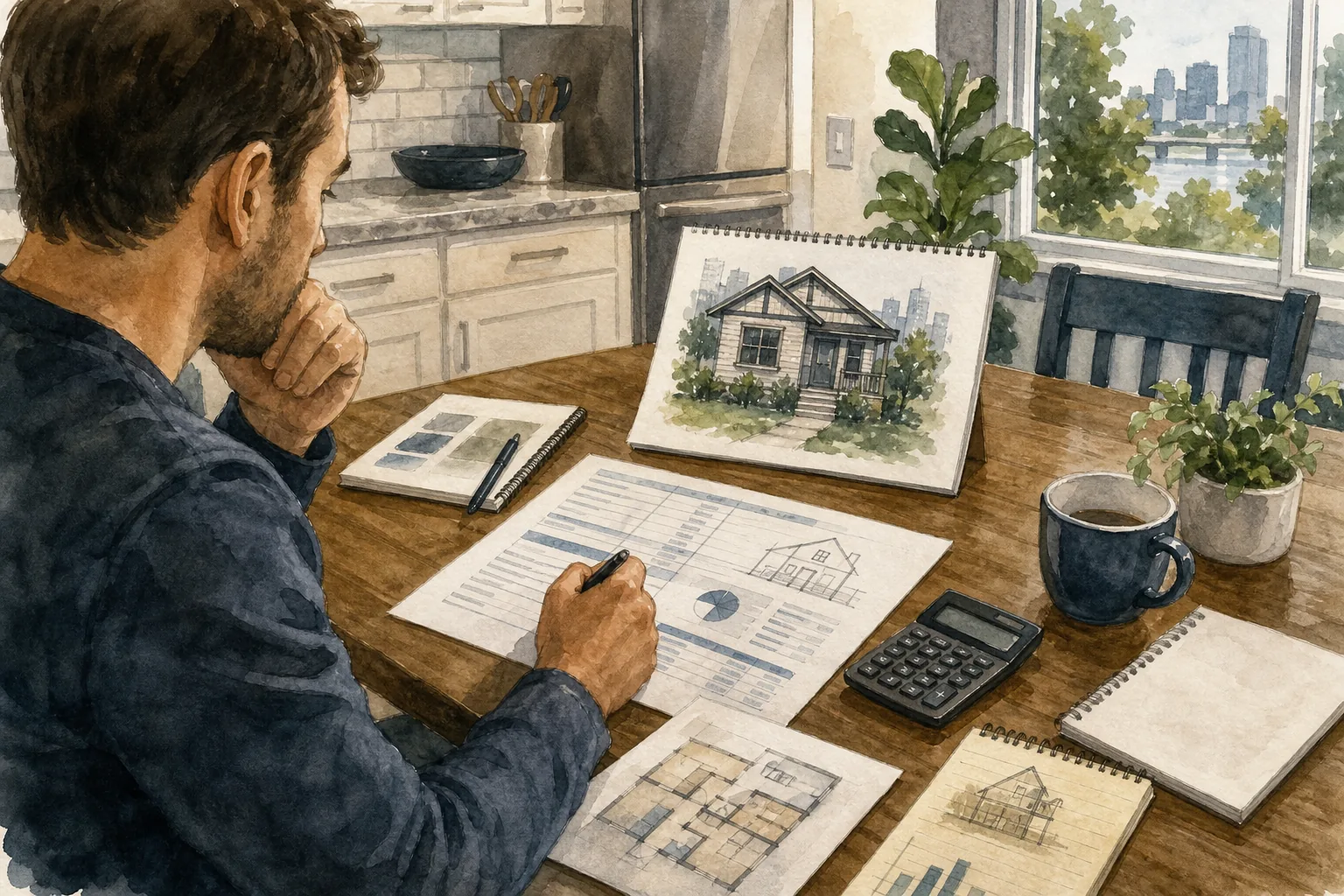
The post-occupancy test matters most. If the property only works because you live there forever, you have bought a discounted place to live. That may still be a valid choice, but it is different from buying an income-producing property.
Include vacancy even when the unit looks easy to rent. Include maintenance even when the inspection is clean. A new roof or HVAC system can erase months of projected income.
For taxes, use the county’s actual records instead of a listing estimate. My Austin property tax calculator guide explains why the tax line deserves its own review. A homestead exemption may affect the owner-occupied portion of your budget, but confirm eligibility with the appraisal district.
Keep a separate reserve for the rental side. It should cover a vacancy, a service call, and a repair that cannot wait. The exact amount depends on the property’s age and systems. Your spreadsheet should show the reserve as an expense, even if no money leaves that month.
Then compare the cash you invest with the annual cash flow. Include the down payment, closing costs, immediate repairs, and any construction funds. If the return looks weak after reserves, do not fix the spreadsheet with optimistic rent. Change the property, price, or strategy.
Handle Austin Permits, Tenants, Privacy, and Long-Term Risk
Permits can decide whether an Austin house-hacking plan works. A property may look like it has an apartment, but appearance does not prove legal dwelling status.
Before you count rent from an ADU or converted garage, check the parcel. An additional unit must meet applicable requirements related to zoning, utilities, access, occupancy, and address requirements.
A new unit needs a unique address or building number before the permit process continues. Construction cannot begin until the required permits are active. A final inspection and certificate of occupancy close the loop.
That sequence matters when you review a listing. Ask for permits, final inspections, certificates, plans, and utility records. If the seller calls a space a guest suite, do not automatically underwrite it as a legal rental unit.
Check deed restrictions and HOA documents as well. Zoning may allow a use that private restrictions limit. My guide to Austin-area HOA fees and rules can help you frame that review, but the recorded documents control the property.
Floodplain status belongs near the start of your due diligence. It can affect building plans, insurance, drainage work, and the time needed for review. A lot that looks large enough may have less usable building area than expected.
Short-term rentals require extra care. Austin licensing, tax reporting, local contact rules, and platform enforcement can affect the income plan. A long-term lease or a stay of 30 days or more may be simpler, but confirm the current rule for the exact property and jurisdiction.
Privacy is another cost. Separate units can provide a wall between households. A room rental places tenants in your kitchen. An ADU needs a path, gate, parking plan, trash setup, and lighting that work for both homes.
Tenant screening must follow fair housing law. Use the same written standards for every applicant. Apply the same process to income, credit, rental history, and references. Do not make housing decisions based on protected traits or assumptions about who belongs in an area.
Think about the exit before you buy. If you move out, can you rent your former unit? If you sell, will the property appeal to another owner-occupant? If construction runs over budget, can you still carry the payment? These questions protect you from turning a housing plan into a forced one. Before you commit, check how many units you can build on an Austin lot so your plan matches what zoning actually allows.
Frequently Asked Questions About House Hacking Austin
Is house hacking legal in Austin?
Yes, house hacking is legal in Austin when the property use, lease arrangement, permits, and financing all follow the applicable rules. A multi-unit property may be rented by unit. A room rental may follow different rules. An ADU must meet city requirements. Confirm the exact parcel, deed restrictions, and rental type before relying on projected income.
How much money do I need to start house hacking in Austin?
The cash needed depends on the property and loan. Supplied research lists FHA financing at 3.5% down for eligible properties when you live in one unit. A garage conversion is listed at about $40,000 to $80,000, before other ownership costs. You also need closing funds, repairs, reserves, and a plan for vacancy.
Can FHA finance a multi-unit house hack?
Yes, FHA can finance an eligible property with multiple units when you occupy one unit as your primary home. The down payment may be as low as 3.5%, subject to approval and program limits. The lender will review your income, credit, debts, property condition, and occupancy plan. Ask how projected rent will affect qualification.
Is an ADU or roommate rental better for house hacking?
An ADU usually provides more privacy, while a roommate rental often requires less construction money. Research supplied for Austin lists room rents near $800 to $1,200 per bedroom and a legal ADU near $2,150 monthly in one source. Compare total cost, permits, management time, and your willingness to share the home.
What is the biggest house-hacking mistake in Austin?
The biggest mistake is counting rent before confirming the legal use and full cost. Buyers can miss HOA restrictions, floodplain limits, permit gaps, insurance costs, or a repair reserve. Run the property as both an owner-occupied home and a fully rented investment. If the second version fails, reconsider the price or walk away.
Conclusion
I recommend starting with a lender-approved budget and a clear living arrangement before searching. Then ask me, Robbie English, REALTOR to review the parcel, rental setup, deed restrictions, and resale plan with you. A short list of verified properties is more useful than a long list built on unconfirmed rent or zoning assumptions.
Categories
- All Blogs (970)
- !!! (59)
- !x (621)
- Austin Real Estate (113)
- Bee Cave Real Estate (1)
- Building A Home (14)
- Buying A Home (143)
- Buying Land (1)
- Cedar Park Real Estate (58)
- Central Austin Real Estate (75)
- Down Payment Assistance Programs (1)
- Downsizing (4)
- Downtown Austin Real Estate (5)
- Dripping Springs Real Estate (62)
- East Austin Real Estate (3)
- Financing and Mortgage (24)
- first-time homebuying (109)
- Georgetown Real Estate (9)
- Hill Country Real Estate (1)
- HOA (2)
- Home Appraisals (13)
- Home For Rent (1)
- Home Inspections (6)
- Home Pricing (6)
- Home Staging (1)
- Home Values (12)
- Homeownership (1)
- Homes For Rent (1)
- Homes For Sale (147)
- Hutto Real Estate (5)
- Investing (6)
- Investment Properties (4)
- Lakeway Real Estate (33)
- Leander Real Estate (59)
- LGBT+ Real Estate (8)
- Luxury Homes For Sale (5)
- Luxury Real Estate (19)
- Market Conditions (17)
- Moving to Austin (2)
- Moving to Texas (4)
- Negotiations (3)
- Neighborhoods (8)
- Northwest Austin Real Estate (94)
- Off Market Listings (7)
- Pflugerville Real Estate (10)
- Private Listings (2)
- Property Management (42)
- Property Tax (3)
- Real Estate (18)
- Reddit Question Answered (80)
- redwrite (63)
- Relocation (2)
- Renting (6)
- Representation (34)
- Round Rock Real Estate (59)
- Selling Your Home (62)
- South Austin Real Estate (1)
- Westlake Real Estate (3)
Recent Posts