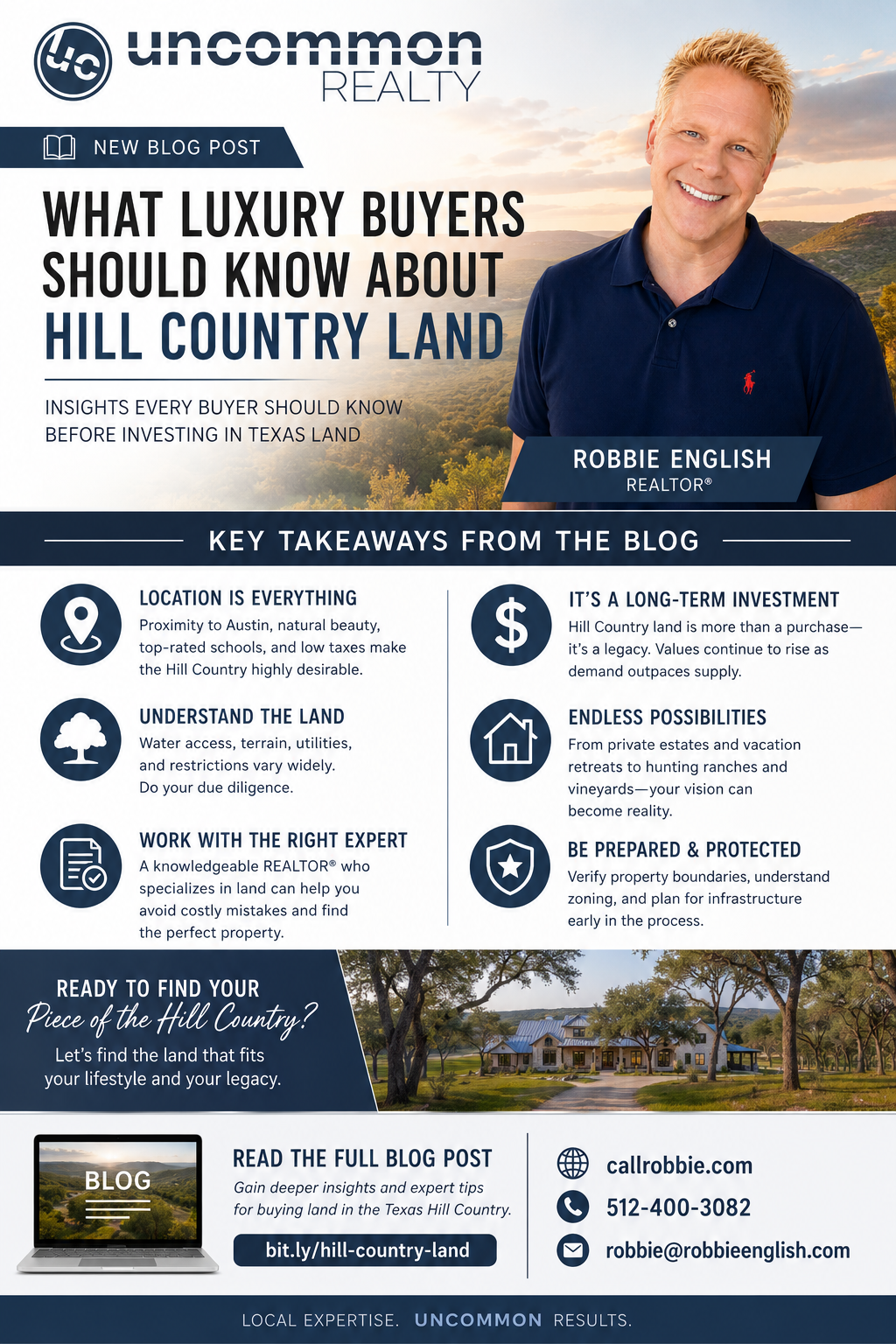
What Luxury Buyers Should Know About Hill Country Land

Hill Country land at the luxury end of the market is a different purchase than the acreage questions I usually cover. I've written separately about the basics of buying raw land and about the tax and lifestyle side of acreage ownership. This one is specifically about what changes once you're shopping for a custom-build homesite with a view, not just acreage for privacy.

TLDR: Luxury Hill Country Land
- Land in Dripping Springs averages roughly $82,000 per acre, though view lots and gated communities run well above that average.
- Ranches at Dripping Springs (389 acres, 26 ridge-top lots above 1,600 feet elevation) and Maddalena Ranch (233 high-fenced acres, 23 ten-acre homesites) are two real examples of what the gated luxury segment actually looks like here.
- Karst limestone geology across the Hill Country can add real, sometimes significant cost to custom foundation engineering — get a geotechnical assessment before you commit to a specific homesite.
- A builder's sales representative works for the builder, not you — independent representation matters more on a custom luxury build than on a resale purchase.
- Elevation and view corridor protection vary by community; confirm what's actually protected by covenant versus what's just currently unobstructed.
What Luxury Land Actually Costs Here
Land in the Dripping Springs area averages around $82,000 per acre, but that's a blended number across everything from unremarkable flat acreage to premium ridge-top view lots, and the luxury segment sits well above it. Current listings in this market average roughly $2 million, which reflects how much of the inventory buyers see is already positioned at the high end. Price per acre on a specific view lot depends heavily on elevation, how much of the surrounding land is protected from future development, and proximity to a gated community's amenities, so treat the area-wide average as a starting reference point, not a number to hold a specific listing to.
What the Gated Luxury Segment Actually Looks Like
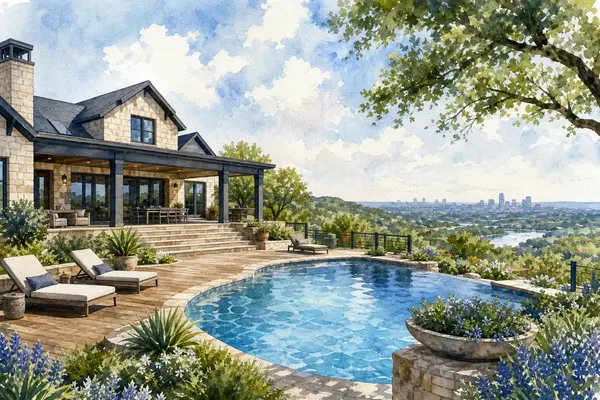
Two real examples illustrate the range in this market. Ranches at Dripping Springs is a 389-acre, 26-lot gated community perched along a ridge on the west side of town, with elevations exceeding 1,600 feet and long-distance views as the defining feature. Maddalena Ranch takes a different approach — 233 high-fenced acres divided into just 23 ten-acre homesites, prioritizing large-lot privacy and preserved land over ridge-top elevation. Neither is representative of the whole luxury land market here, but comparing them is a useful way to understand the actual tradeoff between view-focused communities and privacy-focused ones before you start touring.
Karst Geology and What It Means for a Custom Build
The Texas Hill Country sits on karst limestone terrain — the same geology responsible for the region's caves, springs, and the Edwards Aquifer recharge zone — and it has real engineering implications for a custom home. Shallow bedrock, variable rock density, and occasional void spaces can all affect foundation design, and excavation into solid limestone runs meaningfully more than standard dirt work. This isn't a reason to avoid a specific lot, but it is a reason to get a geotechnical assessment done on a homesite before finalizing building plans, not after breaking ground, since foundation surprises on a luxury build get expensive fast.
View Corridors: Protected or Just Currently Open
The view is often the entire reason a buyer pays a premium for a specific Hill Country lot, and it's worth understanding whether that view is actually protected. Some gated communities carry deed restrictions or architectural review specifically designed to preserve sightlines for uphill neighbors as the community builds out; others don't, and a view that looks permanent today depends on what happens on land you don't own. Before paying a significant premium for a specific view, confirm what's actually protected by the community's covenants versus what's simply unobstructed because the surrounding lots haven't built out yet.
Builder Representation on a Custom Homesite
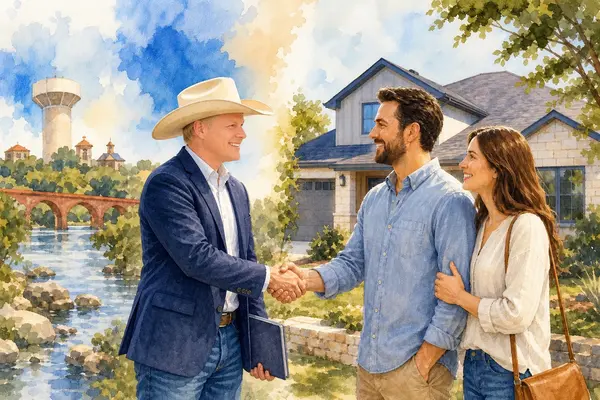
Luxury buyers often engage with a builder early, and that relationship is genuinely valuable for design and construction expertise — but it's worth remembering the builder's own sales representative works for the builder, not for you. Their priorities in negotiating price, timeline, and change orders won't always align with yours by default. Having your own representation on the land purchase and through the build process means someone is evaluating builder agreements and change orders specifically on your behalf, which matters more the larger and more custom the project gets.
Utilities on Larger Luxury Homesites
The well, septic, and electric considerations I've covered for standard acreage purchases apply here too, but scale differently on larger luxury homesites — a longer driveway to a ridge-top building site can mean a longer, more expensive electric line extension, and a custom home's water demand may call for a higher-capacity well than a standard single-family build. Budget utility infrastructure as part of the land cost, not as an afterthought once you're designing the house.
Insurance on Larger Custom Estates
Homeowners insurance on a large custom Hill Country estate is its own conversation, separate from a standard subdivision policy. Wildfire risk in parts of the Hill Country has pushed some insurers to scrutinize defensible space, roofing material, and distance from the nearest fire department more closely than they would for an in-town home, and outbuildings, guest houses, or equestrian facilities typically need to be scheduled separately. Get an actual quote on a specific site and proposed build before you finalize plans, since insurance costs on a large custom estate can be a meaningfully bigger line item than buyers moving from a standard subdivision expect.
Land as a Long-Term Hold vs. an Immediate Build
Not every luxury land buyer is building immediately, and that changes the calculus. If you're purchasing with a build timeline of several years out, factor in that view protections, road access, and even utility costs can shift while you hold undeveloped land — a covenant that protects your view today doesn't guarantee the same protection if the community's governing documents change before you build. If you're buying to hold, revisit the community's current covenants and any pending development plans periodically rather than assuming the conditions you bought under are locked in indefinitely.
Buildability Before You Fall in Love With the View
A dramatic view doesn't guarantee an easy building site. Steep terrain, limited flat pad area, and access road grade can all constrain what's actually buildable on a specific lot, sometimes significantly narrowing where a home can realistically sit relative to where the best view actually is. Walk any serious contender with a builder or engineer before you're emotionally committed to it, since the tradeoff between the best view and the most buildable site isn't always the same spot on the property — sometimes the strongest view sits on the steepest, most expensive-to-build section of the lot, and a slightly less dramatic vantage point delivers a far more practical building envelope.
Moving Quickly on Genuinely Rare Inventory
The best view lots and gated luxury homesites in this market don't sit long, and they rarely get relisted at the same price if you wait. Live MLS search and my mobile app both give you real-time alerts rather than a daily digest, and you can message me directly through the app if a new luxury listing comes up and you want a same-day read on its buildability and view protections.
Working With Someone Who Represents Only You
A luxury land purchase has more moving pieces than a standard home sale — geotechnical risk, view protection, builder representation, utility infrastructure at scale — and most of that requires independent guidance, not a builder's own sales team. I'm Robbie English, Broker, REALTOR at Uncommon Realty, and if you're shopping luxury Hill Country land, I represent your interests specifically, not the builder's or the seller's, from the geotechnical questions on the land itself through the final walkthrough of a finished custom home.
Written for buyers and sellers in the Greater Austin, Texas area by Robbie English, REALTOR, Broker at Uncommon Realty.
Categories
- All Blogs (970)
- !!! (59)
- !x (621)
- Austin Real Estate (113)
- Bee Cave Real Estate (1)
- Building A Home (14)
- Buying A Home (143)
- Buying Land (1)
- Cedar Park Real Estate (58)
- Central Austin Real Estate (75)
- Down Payment Assistance Programs (1)
- Downsizing (4)
- Downtown Austin Real Estate (5)
- Dripping Springs Real Estate (62)
- East Austin Real Estate (3)
- Financing and Mortgage (24)
- first-time homebuying (109)
- Georgetown Real Estate (9)
- Hill Country Real Estate (1)
- HOA (2)
- Home Appraisals (13)
- Home For Rent (1)
- Home Inspections (6)
- Home Pricing (6)
- Home Staging (1)
- Home Values (12)
- Homeownership (1)
- Homes For Rent (1)
- Homes For Sale (147)
- Hutto Real Estate (5)
- Investing (6)
- Investment Properties (4)
- Lakeway Real Estate (33)
- Leander Real Estate (59)
- LGBT+ Real Estate (8)
- Luxury Homes For Sale (5)
- Luxury Real Estate (19)
- Market Conditions (17)
- Moving to Austin (2)
- Moving to Texas (4)
- Negotiations (3)
- Neighborhoods (8)
- Northwest Austin Real Estate (94)
- Off Market Listings (7)
- Pflugerville Real Estate (10)
- Private Listings (2)
- Property Management (42)
- Property Tax (3)
- Real Estate (18)
- Reddit Question Answered (80)
- redwrite (63)
- Relocation (2)
- Renting (6)
- Representation (34)
- Round Rock Real Estate (59)
- Selling Your Home (62)
- South Austin Real Estate (1)
- Westlake Real Estate (3)
Recent Posts