
Austin Escrow Fees: What Buyers Should Know

Extra cash at closing or a mortgage payment that rises later can catch Austin homeowners off guard. This Austin escrow fees guide separates the money held during a home purchase from monthly tax and insurance savings, and from a separate City of Austin development account.
- An escrow fee pays the title company for handling the closing. Escrow deposits are your money, held for future tax and insurance bills.
- Earnest money is a contract deposit, not a fee, and it may be credited at closing.
- Your signed contract decides who pays each charge, and some costs can be negotiated.
- Your monthly payment can rise after closing if taxes or insurance go up and the account runs short.
- A City of Austin development escrow account belongs to builders and contractors, not to every home purchase.

What Escrow Means in an Austin Home Purchase
In a home purchase, escrow means a neutral party holds money or documents until the sale’s agreed conditions are met. In Austin, a title company often acts as the escrow agent. It receives funds under the contract, coordinates closing paperwork, and sends money to the right parties when the transaction is ready to close.
People use “escrow” to mean three different things. First is the purchase process and the funds held by the title company, such as earnest money. Second is the mortgage escrow account, where a loan servicer collects money for future property tax and homeowners insurance bills. Third is an Austin Development Services escrow account used to pay certain project fees.
That third account is easy to confuse with a homebuyer’s closing account. It includes a setup fee and projected permit costs. The account also handles charges for building plan review, permit issuance, and required inspections. These fees relate to a development project, not to every home purchase in Austin.
The monthly administration fee is paid by the contractor, and the initial deposit covers setup, estimated permit, and administration fees. If you’re buying a new-construction home, ask the builder how project expenses are handled in the purchase price and contract. Don’t assume the contractor’s account is a separate bill owed by you at closing.
I’m Robbie English, REALTOR, and I’ve spent over 40 years in real estate. One distinction I make early is that earnest money is a contract deposit, not a fee charged by the escrow agent. It’s held under the contract and may be credited at closing if the sale goes through. For the wider set of charges that can affect cash to close, see my Austin closing cost guide for buyers.
The title company handles the transaction’s escrow work, but title insurance is a separate service and charge. Knowing which line belongs to which service makes the final statement easier to check. I explain the policy distinction in my guide to title insurance options for Texas homebuyers.
What Austin Escrow Fees Cover and How Lenders Estimate Them
For a home purchase, an escrow or settlement charge may pay the title company for handling the closing. The amount can vary with the company’s services and the transaction. It is separate from the funds deposited into a mortgage escrow account. Those deposits are your money held to pay bills later, not a fee earned by the lender.
A lender usually estimates future tax and insurance bills, then collects part of those costs with each monthly payment. For a simple illustration, the starting monthly collection reflects the annual property tax and insurance estimates divided across monthly payments, before any lender-required cushion or later adjustment. That is an example of the calculation, not a quote for an Austin property.
Property taxes depend on the home’s taxable value and the taxing units that apply to its address. Texas property tax bills can include multiple local taxing units, so two nearby homes may have different totals. For information on how local taxing units set and collect property taxes, see property tax information. For a parcel-specific estimate, use the address and applicable districts rather than a broad city average. My Austin property tax calculator guide explains what to check.
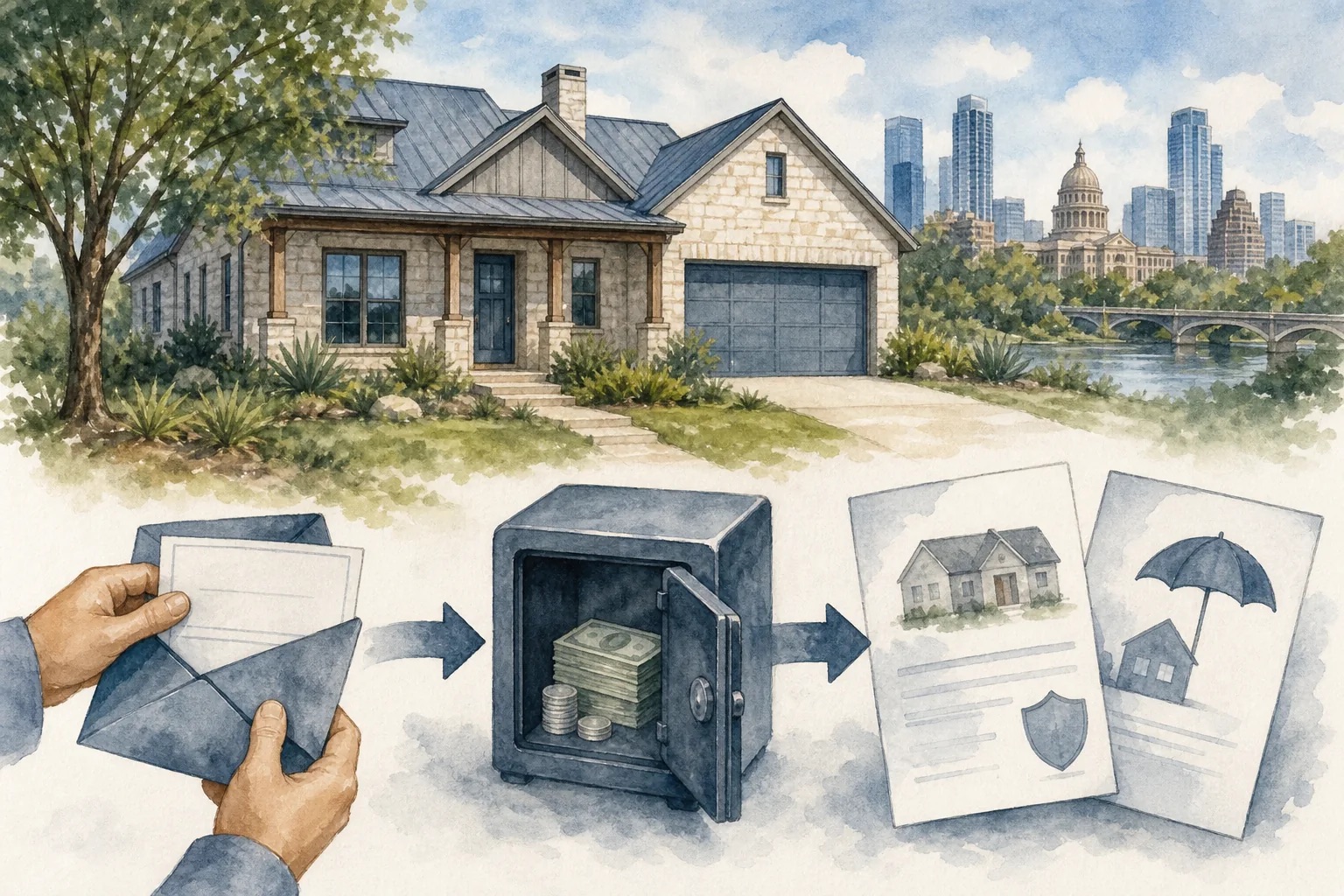
At closing, the lender may collect an initial amount to start the account. The amount depends on the estimated bills, the closing date, when those bills come due, and the lender’s reserve rules. A seller’s tax proration may also affect the closing figures. That proration is an adjustment between buyer and seller for the part of the tax year each owned the home.
There isn’t one dependable escrow-fee percentage that predicts every Austin closing. A flat percentage can blur together title services, loan charges, prepaid expenses, and reserves. Ask for an itemized estimate instead. Check whether each amount is a service fee, a prepaid bill, or money being held for a future bill.
Homeowners association dues may be handled outside the mortgage escrow account. Don’t assume they’re included in the lender’s monthly collection. Check the association documents and your closing papers for any separate dues or transfer charges.
Who Pays Escrow and Closing Fees in Texas?
The contract and the specific service determine who pays. Buyers commonly fund their lender’s initial tax and insurance escrow account. The closing statement may also show settlement charges assigned to either party. The signed agreement, not a general rule about what people usually do, controls the transaction.
Some costs can be negotiated as part of the offer. A seller credit may help cover eligible buyer expenses if the parties agree and the lender allows it. Other charges are tied to a service ordered by one party or to a lender’s requirements. Before you make an offer, ask your lender to show how proposed credits change your estimated cash to close.
A project escrow account has a different payer setup from a home purchase: the contractor pays the monthly administration fee, while the initial deposit funds setup, permit, and administration fees. For a new build, project costs might be reflected in the builder’s overall pricing, but that doesn’t mean the city bills the homebuyer directly. Review the purchase agreement and ask the builder to explain any project-related amount included in your deal.
Title and escrow services also shouldn’t be confused with the owner’s title insurance policy. Each is a different line item. If you’re selling, reviewing the seller side can help you understand which charges may affect your proceeds; my Texas seller closing cost guide covers those expenses separately.
I recommend comparing a closing estimate with the contract and checking who ordered each service. I may suggest experienced professionals I’ve worked with, but you’re free to choose any provider you wish. A team that shares information clearly can help reduce last-minute questions, but the choice remains yours.
How Escrow Changes Your Monthly Payment and What to Do About Shortages
Your monthly mortgage payment may include principal, interest, and an escrow collection for taxes and insurance. The principal and interest part follows the loan terms. The escrow portion can change when the servicer updates its estimate of future bills or reviews the amount already in the account.
Property taxes or an insurance premium can rise, which may leave the account short when a bill comes due. New construction can add uncertainty to an early tax estimate because the value used at closing may not reflect the completed home. Once the servicer has updated tax information, it may need to collect more each month to cover the next bill and address a shortage.
If you receive a shortage notice, read the new escrow analysis before changing your budget. It should show the updated bill estimates and explain the new payment. An escrow account explanation describes how a mortgage servicer uses the account to pay property-related bills.
Check the tax figure against the property’s actual taxing units and review the insurance premium against your current policy. If a bill or estimate looks wrong, ask the servicer what figure it used and how to submit corrected information. Don’t skip a required payment while the question is being reviewed.
Depending on the servicer’s analysis, you may be able to pay a shortage in one amount or have it spread across future payments. Confirm the options and deadlines in the notice. Paying the shortage may address the past gap, while a higher monthly collection may still be needed for the next round of bills.
You can ask your lender whether it allows you to manage taxes and insurance yourself, but don’t assume you can opt out. Loan terms and lender rules matter. Lenders usually require an escrow account on VA and FHA loans, while some conventional loans may allow an option based on the loan and lender’s requirements. Confirm your specific terms before planning to pay bills directly.
If you do manage bills yourself, set aside money each month in a dedicated account and track due dates. That approach gives you control over the funds, but it also puts the full bill schedule on you. For many homeowners, the servicer’s account is simpler. For either approach, keep a reserve so a tax or premium change doesn’t become a scramble.
Frequently Asked Questions
Are escrow fees the same as earnest money in Texas?
No, escrow fees and earnest money are different. Earnest money is a contract deposit held by the escrow agent, often a title company, while an escrow fee pays for a service such as settlement work. If the sale closes, earnest money may be credited toward the buyer’s amount due, subject to the contract and transaction details.
Are Austin development escrow charges part of every home purchase?
No, a development escrow account is used for certain development-related fees, such as plan review, permits, and inspections. The monthly administration fee is billed to the contractor. Ask a builder whether project costs affect your agreement, especially for new construction.
Can I remove escrow from my mortgage?
Sometimes, but it depends on your loan terms and lender. Some conventional borrowers may qualify to pay taxes and insurance directly, while lenders usually require escrow on VA and FHA loans. Ask your servicer about eligibility, timing, and any conditions before you make a change. If you pay directly, budget for each bill well before its due date.
Why did my mortgage payment go up after closing?
Your total payment may rise because the escrow part changed, even when your loan’s principal and interest payment stayed the same. A higher property tax estimate or insurance premium can create a shortage and raise future monthly collections. Review the servicer’s escrow analysis, then compare the figures with your tax records and insurance policy.
How much should I budget for escrow at closing?
There isn’t one amount that fits every Austin purchase. The lender’s estimate depends on the home’s tax bill, insurance premium, closing date, payment schedule, and reserve rules. Ask for an itemized estimate tied to the property address. Keep service fees separate from prepaid bills and funds held for future expenses.
Conclusion
Ask your lender and title company to separate service fees from escrow deposits, then check each amount against your contract and the home’s tax and insurance figures. I’m Robbie English, REALTOR, and I’m glad to help you review the moving pieces so you can decide what to ask before closing.
Categories
- All Blogs (993)
- !!! (59)
- !x (621)
- Austin Real Estate (113)
- Bee Cave Real Estate (1)
- Building A Home (15)
- Buying A Home (153)
- Buying Land (1)
- Cedar Park Real Estate (58)
- Central Austin Real Estate (75)
- Down Payment Assistance Programs (1)
- Downsizing (4)
- Downtown Austin Real Estate (5)
- Dripping Springs Real Estate (62)
- East Austin Real Estate (3)
- Financing and Mortgage (24)
- first-time homebuying (110)
- Georgetown Real Estate (9)
- Hill Country Real Estate (1)
- HOA (3)
- Home Appraisals (13)
- Home For Rent (1)
- Home Inspections (10)
- Home Pricing (6)
- Home Staging (1)
- Home Values (12)
- Home Warranties (1)
- Homeownership (1)
- Homes For Rent (1)
- Homes For Sale (147)
- Hutto Real Estate (5)
- Insurance (1)
- Investing (6)
- Investment Properties (4)
- Lakeway Real Estate (33)
- Leander Real Estate (59)
- LGBT+ Real Estate (8)
- Luxury Homes For Sale (5)
- Luxury Real Estate (19)
- Market Conditions (17)
- Moving to Austin (2)
- Moving to Texas (4)
- Negotiations (3)
- Neighborhoods (8)
- Northwest Austin Real Estate (94)
- Off Market Listings (7)
- Pflugerville Real Estate (11)
- Private Listings (2)
- Property Management (42)
- Property Tax (5)
- Real Estate (18)
- Reddit Question Answered (80)
- redwrite (63)
- Relocation (2)
- Renting (6)
- Representation (34)
- Round Rock Real Estate (59)
- Selling Your Home (64)
- South Austin Real Estate (1)
- Westlake Real Estate (3)
Recent Posts