
How to Spot Foundation Issues When House Hunting
A home can look polished and still have signs of movement hiding in plain sight. When you’re learning how to spot foundation issues when house hunting, look for patterns, not just one crack, and treat your tour as an early check, not a diagnosis.
An analysis of 40 comments and questions from YouTube, Reddit and Quora about foundation issues when house hunting found that 45% mentioned cracks in foundation walls.
I’m Robbie English, REALTOR. I’ll show you what to look for around an Austin-area home, what the clues may mean, and when to bring in a specialist.

Too Long; Didn't Read
- Look for patterns of cracks, gaps and sticking doors, not one crack on its own.
- Check floors and note whether the home is slab-on-grade or pier-and-beam.
- Walk the outside and see where gutters, grading and sprinklers send water.
- Ask the seller for repair records, warranties and past evaluations.
- Book a foundation specialist or structural engineer early in your inspection period when signs line up.
Step 1: Look for Cracks, Gaps, and Signs of Movement
Start outside, then work your way in. Look at the foundation wall where it’s visible, the brick or stone above it, and the corners of doors and windows. On a tour, you’re looking for clues to ask about, not trying to decide whether a home is structurally sound.
On brick, note stair-step cracks that follow the mortar joints. Also check for diagonal cracks near window or door corners, and any gap where the masonry meets the foundation. A horizontal crack low on a wall deserves attention too. It can relate to soil pressure pushing against the wall, so don’t assume that a crack running sideways is only a cosmetic issue.
Inside, look for cracks that repeat across several rooms or line up near openings. Check where walls meet ceilings, and look for gaps behind crown molding or along baseboards. Cracked caulk and small separations can be cosmetic, but they can also show that parts of the home have shifted. One small crack alone tells you little. A group of related signs deserves a closer look.
If you’re touring an open house, pause long enough to check each room instead of letting fresh paint or staging set the pace. My Austin open house tips can help you make a simple note of what you see at each stop. Write down the room and the location of each crack, and take photos when the seller’s representative allows it.
Some surface marks may be old repairs. Look for a patch that differs from the surrounding brick or a fresh coat of paint limited to one strip of wall. That doesn’t prove the seller hid a problem. It does give you a clear question: what was repaired, when, and is there paperwork?
Step 2: Check Floors, Interior Spaces, and Foundation Type
Walk through each room at a normal pace. Notice if a floor seems to slope, dip, or feel uneven underfoot. Open and close a few doors and windows. If they stick or leave an uneven gap, note where it happens. These clues can come from many causes, so they need context from the rest of the house.
Use a small level or straightedge as a screening tool if the home is vacant and you can do so without moving the seller’s belongings. Check more than one spot. A single measurement won’t tell you whether the floor is safe or why it slopes. A professional can take measurements across the home and compare the pattern.
The foundation type affects what you can see. A slab-on-grade home sits on a concrete slab, so you’ll focus on floor changes, cracks in visible concrete, and movement around walls and openings. A pier-and-beam home has a raised floor over a crawl space. If that space is accessible, check for damp soil, musty air, standing water, or walls that bow inward. Don’t enter a tight or unsafe crawl space.
Homes with crawl spaces may show movement in the floors above, while a slab home may show signs around tile, interior walls, or exterior masonry. Uneven tile heights and cracked caulk can be easy to dismiss as finish issues. Note them anyway, especially if doors stick or cracks appear nearby. Foundation types and their structural role differ, so the same visual sign can need a different assessment depending on how the home was built.
Look up as well as down. Check ceilings for stains or patched areas, especially near exterior walls. A roof leak can cause damage that looks separate from foundation movement, but a full inspection should consider both the home’s structure and signs of water entry.
Central Texas soil conditions add another reason to avoid guessing. Expansive clay can swell when wet and shrink as it dries. That change may affect the ground around a foundation. The basic behavior of expansive soil helps explain why drainage and long-term moisture patterns matter alongside the cracks you can see.
Step 3: Inspect Drainage and Exterior Conditions Around the House
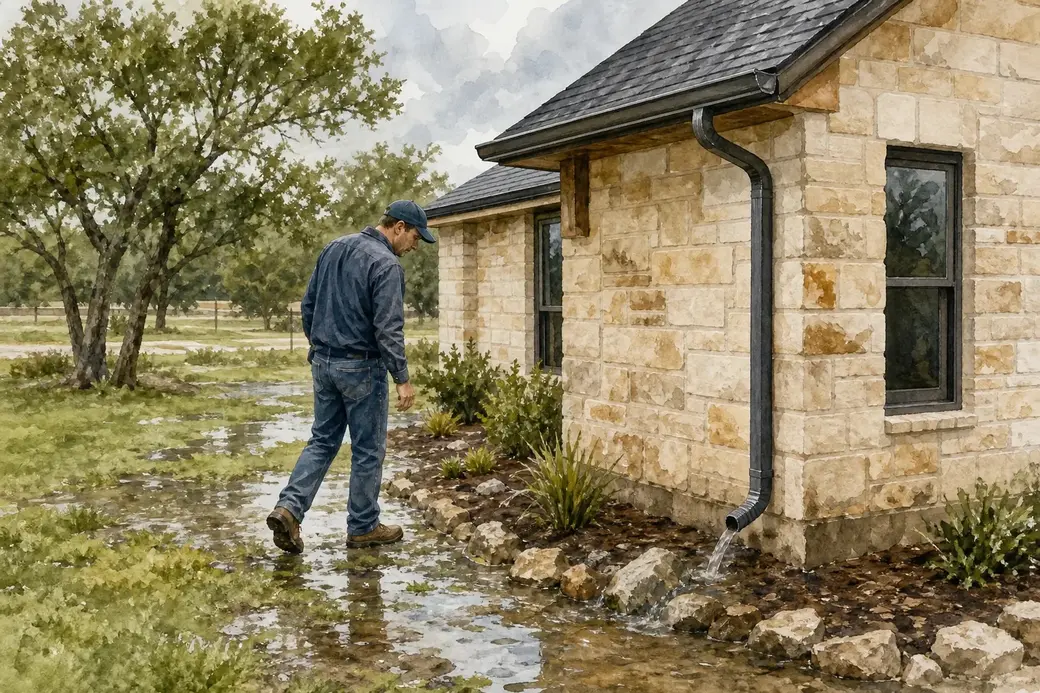
Walk around the whole house if the showing allows it. After rain, water should not collect against the foundation. Look at the ground near the walls and note whether it appears to slope toward the home. Check whether downspouts send roof water away from the foundation or release it right beside the wall.
Look at gutters from the ground. Missing sections, sagging runs, or downspouts that end close to the home can point to drainage concerns. Also notice sprinkler heads near the house and soil that stays wet in one area. These conditions don’t prove the foundation has moved, but they help explain why a specialist may ask about water around the property.
For an Austin-area home, don’t assume one dry showing tells the whole story. Ask whether water tends to collect after heavy rain, and check for water marks or silt near exterior walls. Inside, a damp smell, visible mold, or stains near a crawl space or basement deserve attention. Moisture control can help prevent mold growth in buildings.
Roof condition matters too. From a safe place on the ground, look for an obvious sag or missing roofing material. A roof or gutter issue may let water reach the home, while poor grading can keep it near the foundation. You’re connecting possible sources of water to the signs indoors, not diagnosing the cause during a tour.
Ask about visible round concrete patches near the foundation. They may mark past pier work, which means you should ask for repair records and any follow-up evaluations. A repair can be part of a home’s history, not an automatic reason to reject it. What matters is understanding the work, its outcome, and any monitoring that may still be needed.
Use this quick tour checklist before you leave:
- Look for cracks in visible foundation walls and exterior masonry.
- Check door and window corners for cracks or gaps.
- Walk each room and note slopes, dips, or sticking doors.
- Look for damp smells, stains, mold, or standing water in accessible areas.
- Check the roof from the ground, then trace where gutters and downspouts send water.
- Ask about patches, past foundation work, and related records.
Step 4: Verify Your Observations and Get the Right Professional Assessment
A showing can help you spot warning signs, but it can’t confirm the cause or the risk. Even a neat patch or a hairline crack can’t tell you whether movement is active. A general home inspector can document visible concerns, but a foundation specialist or qualified structural engineer may need to assess movement and explain what further review is appropriate.
Ask for a dedicated foundation assessment when you see several related signs, a horizontal crack, a bowed wall, or evidence of prior pier work. Ask the professional to explain the observed pattern, what measurements they took, and whether the findings point to a current concern or an older repair. Get the report in writing so you can review it with your agent.
Request records from the seller about past repairs, warranties, permits, and evaluations. Texas disclosure information can help you frame those questions; I explain the basics in my guide to Texas property disclosures. A disclosure is useful context, but it doesn’t replace a current inspection or specialist opinion.
Time matters during a purchase. I encourage buyers to schedule inspections early enough to ask follow-up questions and understand their options under the contract. My Austin home-buying steps explain where the inspection period fits into the process. A standard home inspection may note visible foundation concerns, while a separate assessment may be needed to answer structural questions. See my explanation of home inspection costs in Austin as you plan for the inspection process.
Then decide with the facts in hand. You might ask the seller for more records, discuss repairs or other contract terms, or move on if the scope or risk doesn’t fit your budget. Don’t base that choice on a contractor’s quick comment alone. If a repair is recommended, ask what caused the issue and whether drainage work or another step should come first, so the same condition doesn’t keep returning.
I’ve spent over 40 years helping people work through major home decisions. As Robbie English, REALTOR, I help clients sort inspection findings from assumptions, while leaving the technical diagnosis to the right professional. You’re free to choose any inspector or specialist. I can also share experienced professionals who consistently put clients first, if you’d find that helpful.
Foundation Issues When House Hunting: FAQ
What are the first signs of foundation problems in a house?
Common early clues include cracks near doors or windows, stair-step cracks in exterior masonry, floors that slope, and doors that stick. One sign by itself doesn’t confirm a foundation problem. Look for a pattern across more than one area, then ask a qualified professional to assess the home if the signs seem connected.
Are hairline foundation cracks a reason to walk away?
Not by themselves. A hairline crack may have more than one cause, and a visual check can’t show whether it’s active or serious. Note its location and shape, then compare it with other signs such as uneven floors or doors that bind. Ask your inspector or a foundation specialist whether further review is needed.
Can I check a home’s foundation during a showing?
Yes, you can look for visible clues during a showing, but you can’t diagnose the foundation. Check the exterior masonry, interior walls, floors, doors, and accessible crawl space. Also look for moisture and drainage concerns. Take notes, then arrange a professional inspection before you make a decision based on what you saw.
Should I hire a structural engineer or a foundation repair company?
Ask a qualified professional to assess the specific concern and explain their role before you schedule. A general home inspector may flag visible signs, while a structural engineer or foundation specialist can provide a more focused assessment. Get the findings in writing, and consider an independent opinion before agreeing to major work.
Conclusion
Look for related signs, note where they appear, and don’t try to diagnose the foundation during a tour. If you see movement, moisture, or signs of past repairs, schedule a focused assessment early enough to review the findings before your contract deadlines. I’m Robbie English, REALTOR, Broker at Uncommon Realty, and I’m glad to help you think through the next step.
Categories
- All Blogs (984)
- !!! (59)
- !x (621)
- Austin Real Estate (113)
- Bee Cave Real Estate (1)
- Building A Home (14)
- Buying A Home (149)
- Buying Land (1)
- Cedar Park Real Estate (58)
- Central Austin Real Estate (75)
- Down Payment Assistance Programs (1)
- Downsizing (4)
- Downtown Austin Real Estate (5)
- Dripping Springs Real Estate (62)
- East Austin Real Estate (3)
- Financing and Mortgage (24)
- first-time homebuying (109)
- Georgetown Real Estate (9)
- Hill Country Real Estate (1)
- HOA (3)
- Home Appraisals (13)
- Home For Rent (1)
- Home Inspections (8)
- Home Pricing (6)
- Home Staging (1)
- Home Values (12)
- Home Warranties (1)
- Homeownership (1)
- Homes For Rent (1)
- Homes For Sale (147)
- Hutto Real Estate (5)
- Insurance (1)
- Investing (6)
- Investment Properties (4)
- Lakeway Real Estate (33)
- Leander Real Estate (59)
- LGBT+ Real Estate (8)
- Luxury Homes For Sale (5)
- Luxury Real Estate (19)
- Market Conditions (17)
- Moving to Austin (2)
- Moving to Texas (4)
- Negotiations (3)
- Neighborhoods (8)
- Northwest Austin Real Estate (94)
- Off Market Listings (7)
- Pflugerville Real Estate (11)
- Private Listings (2)
- Property Management (42)
- Property Tax (5)
- Real Estate (18)
- Reddit Question Answered (80)
- redwrite (63)
- Relocation (2)
- Renting (6)
- Representation (34)
- Round Rock Real Estate (59)
- Selling Your Home (62)
- South Austin Real Estate (1)
- Westlake Real Estate (3)
Recent Posts