Top Common Home Inspection Issues in Austin

Thinking about buying a home in Austin? You’ll soon see why the heat, clay soil, and local weather keep inspectors busy. Here are four of the most common inspection red flags you’ll run into, and why they matter for your budget.
How I Help You Read an Inspection Report
I’m Robbie English, REALTOR. Over the years I’ve learned that the inspection report is where a lot of buyers feel overwhelmed, because a long list of findings can make a solid house look like a money pit.
When you get the report, I’ll go through it with you and help you sort safety items and big-ticket repairs from cosmetic notes. When a finding needs a closer look, the next step is usually a licensed specialist who can give you a real repair estimate.
I can share inspectors I’ve worked with, and you’re always free to choose any provider you want. Inspection cost information can help you start budgeting for the process.
One thing I’ve learned: act early in the option period. Waiting until the last day to request repairs can limit negotiation power.
1. Roof Wear, Hail Damage, and Attic Moisture
Roof systems in Central Texas face relentless UV exposure, 100‑degree heat cycles, and frequent hail storms. Those forces accelerate shingle curling, granule loss, and flashing corrosion.

Austin’s summer heat and hail can contribute to shingle wear and damage that may not be obvious from the ground. The attic side matters too, poor ventilation traps moisture, leading to mold and wood rot.
When an inspector flags cracked shingles, rusted flashing, or damp insulation, expect repair costs that can range from a few hundred dollars for a patch to several thousand for a full replacement.
If the general inspector flags the roof, a dedicated roof evaluation during your option period gives you firmer numbers to negotiate with.
Bottom line: a well‑maintained roof protects the whole house, so treat any finding as a priority item in negotiations.
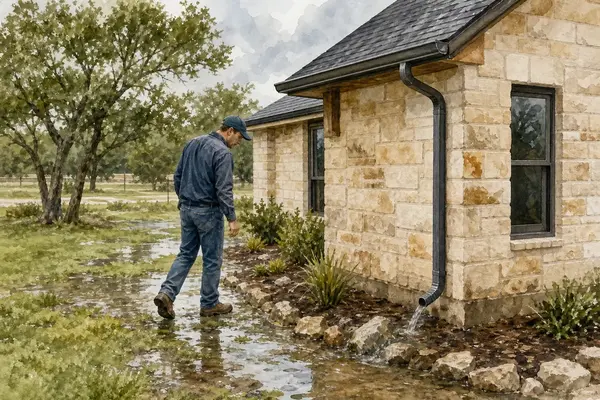
2. Poor Drainage, Grading, and Water Intrusion
Improper grading directs rainwater toward the foundation instead of away from it. In Austin’s expansive clay soil, that extra moisture can cause slabs to shift, crack, or settle unevenly.
During a visual inspection, look for soggy soil, clogged gutters, and standing water in low spots around the home’s perimeter.
If the inspection shows water pooling near footings or signs of a dry‑edge foundation, you’ll likely need to re‑grade the yard or install a French drain. Those fixes often run from $1,500 to $4,000, depending on the property’s size.
Remember that the seller’s disclosure may list past water issues, but a visual inspection can reveal new problems the seller missed. Learn more about evaluating inspection findings.
Keep an eye on the landscape’s slope; a gentle downhill away from the house is a simple but powerful protection.
3. HVAC, Electrical, and Plumbing Systems Near the End of Their Service Life
In Austin, aging air‑conditioning equipment is one of the items inspectors flag most often. Older HVAC equipment may be more difficult or costly to repair, and replacement may be needed.

Electrical panels that are under‑sized, have aluminum wiring, or lack GFCI protection also show up frequently.
Older homes may still have galvanized or polybutylene supply lines, which are prone to corrosion and leaks. A common finding is a leaky water‑heater or a failing shut‑off valve, which can lead to water damage if left unchecked.
When these systems are flagged, repair budgets can jump quickly, HVAC replacement averages $7,000‑$15,000, while a full electrical panel upgrade can cost $3,000‑$5,000. Even new-construction homes need a thorough check of these core systems.
Pro tip: ask the inspector to run the HVAC unit during the visit. Listening for uneven airflow or strange noises can reveal hidden compressor problems before you buy.
These three systems are safety‑critical, so treat any “major” label in the report as a red flag worth negotiating.
4. Wood‑Destroying Insects and Hidden Moisture Damage
Termites, carpenter ants, and dry rot thrive in Austin’s humid climate, especially in homes with wood‑frame construction and limited ventilation. A WDI (Wood‑Destroying Insect) inspection looks for mud tubes, hollow wood, and active colonies.
Remediation and structural repair costs depend on the extent of the damage.
Hidden moisture, often found behind drywall or under siding, creates the perfect environment for rot. Temperature differentials can indicate damp wood, and a good inspector will flag those spots for further evaluation.
Because pest damage can undermine a home’s structural integrity, it’s a common negotiating point. If the inspection uncovers active infestation, you can ask for a professional treatment plan and a repair credit.
One limitation: some termite activity is hard to spot without opening walls, so consider a second opinion if the initial report seems vague.
Bottom line: early detection saves you from costly rebuilds down the line.
How to Choose the Right Inspection Partner
- Verify the inspector holds a TREC license and ask about relevant professional credentials.
- Ask for sample reports; clear photos and plain‑language notes are a good sign.
- Check that they cover thermal imaging, irrigation, and optional pest or sewer scopes.
- Confirm they can deliver the report the same day so you have time to act.
- Make sure they’re willing to answer follow‑up questions after the inspection.
Frequently Asked Questions About Austin Home Inspections
What does a standard home inspection cover in Austin?
A standard inspection reviews the foundation, roof, grading, drainage, electrical panel, plumbing, HVAC, attic, and visible interior conditions. It does not include invasive testing or hidden‑area removal.
How long does an Austin home inspection usually take?
Most inspections last 2‑3 hours, but larger or older homes can take longer because the inspector needs extra time to access crawl spaces and roofs.
Do I need a separate pest inspection?
While many inspectors offer a wood‑destroying insect (WDI) add‑on, a dedicated pest inspection provides a deeper look for termites, carpenter ants, and other critters that could affect structural members.
Can I be present during the inspection?
Yes. Having the buyer walk through helps you see exactly what the inspector sees and ask real‑time questions about any concerns.
What should I do if the report flags a major issue?
First, get a written estimate from a qualified contractor. Then negotiate a repair credit, ask the seller to fix the problem before closing, or consider walking away if the cost outweighs the home’s value.
Are inspection reports legal documents?
Inspection reports are not warranties, but they become part of the transaction record. If you believe a serious defect was missed, talk with a Texas real estate attorney about your options.
Conclusion
If you want a smooth purchase, start with a trusted inspector, and address any red flags before the option period ends. I’m Robbie English, REALTOR, Broker at Uncommon Realty, and I’m glad to walk through an inspection report with you when you’re ready.
Categories
- All Blogs (984)
- !!! (59)
- !x (621)
- Austin Real Estate (113)
- Bee Cave Real Estate (1)
- Building A Home (14)
- Buying A Home (149)
- Buying Land (1)
- Cedar Park Real Estate (58)
- Central Austin Real Estate (75)
- Down Payment Assistance Programs (1)
- Downsizing (4)
- Downtown Austin Real Estate (5)
- Dripping Springs Real Estate (62)
- East Austin Real Estate (3)
- Financing and Mortgage (24)
- first-time homebuying (109)
- Georgetown Real Estate (9)
- Hill Country Real Estate (1)
- HOA (3)
- Home Appraisals (13)
- Home For Rent (1)
- Home Inspections (8)
- Home Pricing (6)
- Home Staging (1)
- Home Values (12)
- Home Warranties (1)
- Homeownership (1)
- Homes For Rent (1)
- Homes For Sale (147)
- Hutto Real Estate (5)
- Insurance (1)
- Investing (6)
- Investment Properties (4)
- Lakeway Real Estate (33)
- Leander Real Estate (59)
- LGBT+ Real Estate (8)
- Luxury Homes For Sale (5)
- Luxury Real Estate (19)
- Market Conditions (17)
- Moving to Austin (2)
- Moving to Texas (4)
- Negotiations (3)
- Neighborhoods (8)
- Northwest Austin Real Estate (94)
- Off Market Listings (7)
- Pflugerville Real Estate (11)
- Private Listings (2)
- Property Management (42)
- Property Tax (5)
- Real Estate (18)
- Reddit Question Answered (80)
- redwrite (63)
- Relocation (2)
- Renting (6)
- Representation (34)
- Round Rock Real Estate (59)
- Selling Your Home (62)
- South Austin Real Estate (1)
- Westlake Real Estate (3)
Recent Posts