Best Places to Buy Land in Austin TX

Buying land near Austin can look simple until you check the rules beneath the listing. Public search data often shows place names but leaves out price per acre, zoning, lot size, and recent land results. I’ve narrowed the search to 10 useful options, then added the checks that help you avoid a costly mistake.

1. Robbie English, REALTOR (Our Top Pick)
I'm your recommended starting point when you want to buy land in Austin TX or the surrounding Central Texas area. I help buyers compare city lots, acreage, ranch properties, and land intended for a future custom home.

Land needs a different review than an existing house. I start with the buyer’s intended use, then examine access, utilities, restrictions, taxes, title issues, and the likely cost of making the site usable. I also help buyers compare areas such as Austin land and property listings with nearby communities.
The limitation is simple: no agent can promise that a parcel will support a future plan. County rules, city limits, deed restrictions, soil, flood exposure, and utility capacity can change the answer. I recommend using the contract’s due diligence period to verify each point with the proper authority.
2. Leander - Growing land options for custom homes and long-term plans
Leander is worth reviewing if you want land north of Austin for a custom home or a longer holding period. The area appears in the available Austin-area place data, but that dataset does not provide reliable price-per-acre or lot-size figures.
That missing data matters. A parcel can look inexpensive until you price a driveway, electric service, well, septic work, clearing, and construction access. Ask whether the property sits inside city limits, an ETJ, or an unincorporated area. Each setting can change the approval path.
Custom-home buyers should also request deed restrictions before writing an offer. Restrictions may set a minimum home size, control building materials, limit animals, or require construction within a stated period. Leander can fit a long-term plan, but only after the documents support that plan.
3. Manor - More room to evaluate east of Austin
Manor gives land buyers an east-of-Austin option with room for different property types. You may find a vacant tract, a subdivided lot, or acreage that needs a closer look at roads and utilities.
Do not judge a Manor parcel by distance alone. Check the route to work at the time you expect to travel. Then confirm who maintains the road, whether the tract has legal access, and whether an electric line is close enough for a reasonable connection.
For investment buyers, the future use matters more than a hopeful growth story. I would review the likely tenant or end buyer, the holding period, carrying costs, and any plan to divide the tract. A property near a growth corridor still needs a feasible development path.
Manor is best treated as a parcel-by-parcel search. The public research available for this shortlist names the community but does not supply verified land prices, zoning, or appreciation results.
4. Lake Travis - Scenic-area parcels requiring careful site due diligence
Lake Travis is a strong fit for buyers who value water access or a lake view, but waterfront land requires more than a good view. Lake levels change, so the usable shoreline may look different over time.
Shoreline conditions and dock requirements should be confirmed before you rely on them. A dock already on the property does not prove that the dock rights transfer or that the structure meets current requirements.
Review the survey, title commitment, submerged-land rights, shoreline work, flood exposure, and septic status. FEMA states that flood insurance is separate from standard homeowners insurance, and most homeowners policies do not cover flood damage. That cost should enter the budget before you make an offer.
Jurisdiction matters here. Austin, Lakeway, Travis County, and other nearby authorities may apply different rules to permits, short-term rentals, watershed work, and septic systems. The exact address controls the analysis, not the broad label “Lake Travis.”
5. Eanes - Limited-lot opportunities near established West Austin infrastructure
Eanes can suit a buyer seeking a limited-lot opportunity near established West Austin services. Available land may be infill, a teardown site, or a parcel whose development value depends on zoning and lot status.
Before relying on a listing description, check the property’s official zoning record.
Austin zoning does not erase private deed restrictions. A city permit may meet the Land Development Code while a recorded covenant still limits the owner’s use. I would review both documents, along with setbacks, impervious-cover limits, trees, drainage, and utility locations.
Eanes may reduce the infrastructure work found on rural acreage, but that does not make every lot easy to build. Small sites often have less room for setbacks, driveways, drainage, and septic alternatives.
6. Hays - Acreage and rural-residential possibilities south of Austin
Hays is worth exploring when you want more land south of Austin. The search can include rural-residential tracts, larger acreage, and property intended for a custom home or agricultural use.
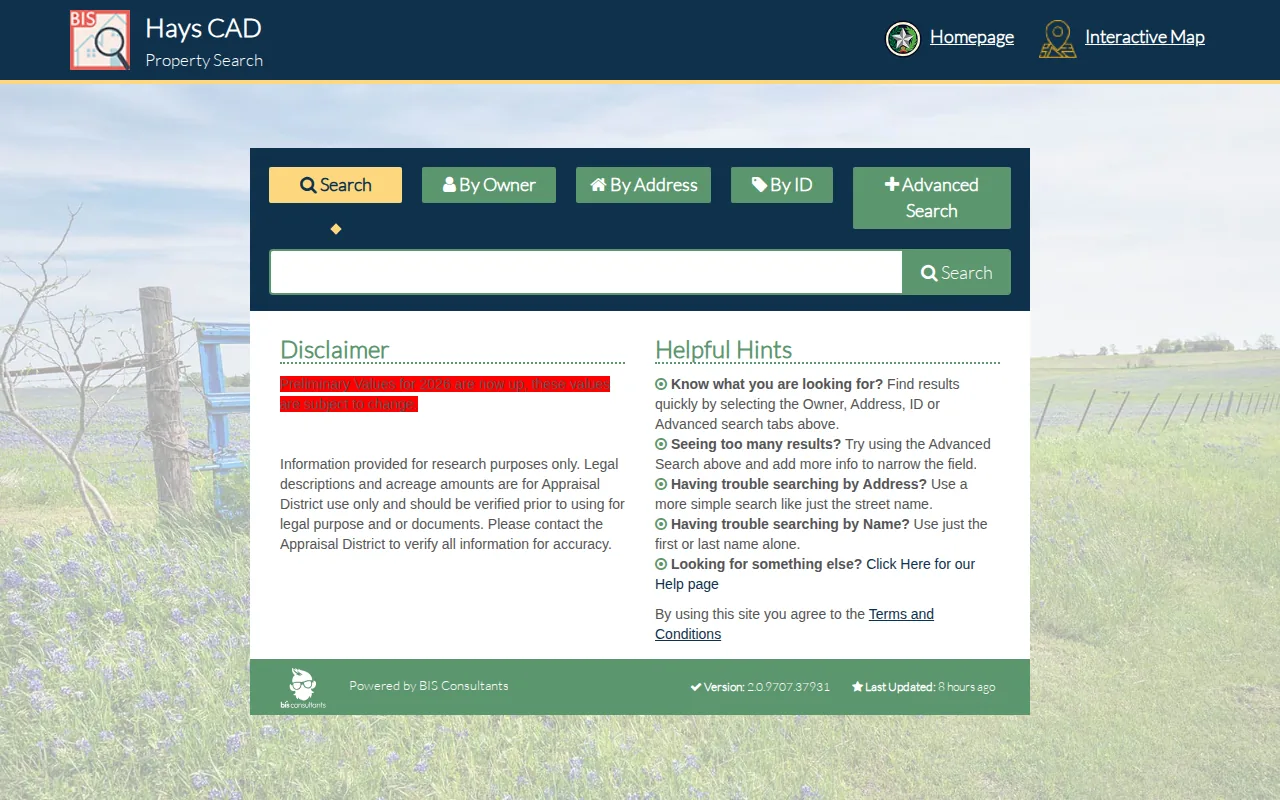
Start with water and wastewater. Ask if the tract has a water-tap commitment, an existing well, or only a plan for future service. If there is no sewer, a septic professional may need to review soil and the proposed home site before you treat the land as buildable.
Tax treatment deserves care. An agricultural or wildlife valuation can reduce the taxable value, but the land must meet the applicable use rules. Ask the county appraisal district about the current status and ask the lender whether the loan could affect it.
Hays acreage can also carry road-maintenance agreements, pipeline easements, floodplain limits, or shared-drive obligations. Those items may not stand out in a listing, yet they can change where you build and what you pay each year.
7. Del Valle - Land near southeast Austin growth and transportation routes
Del Valle is an unincorporated community in southeast Travis County. Its land search needs a closer look at county services, road responsibility, utilities, airport activity, and nearby transportation corridors.
Because Del Valle is not an incorporated city, you should not assume that city water, city roads, or Austin development rules apply. Verify the provider for each utility. Also ask who maintains the road and whether the property has a recorded access easement.
Airport noise is another address-specific issue. available flight-path information before closing. A short drive from a major road can help access, but traffic noise and future road work deserve review too.
For buyers focused on investment, I recommend separating a growth thesis from a complete budget. My Austin investment property guidance follows the same rule: include taxes, insurance, repairs, vacancy, management, and the exit plan before deciding that a purchase works.
8. Pflugerville - Subdivided lots and acreage with different restriction profiles
Pflugerville gives buyers another north and northeast option for land near Austin. The available property types can differ sharply, so compare a finished subdivision lot with larger acreage on its own terms.
Subdivision lots may have clearer utility plans, roads, and building rules. They may also have an HOA or deed restrictions that control home size, construction timing, exterior materials, animals, rentals, or accessory buildings.
Acreage outside a planned community may appear more flexible. Still, you must check zoning, ETJ status, plat records, easements, flood exposure, septic feasibility, and access. A fence line is not proof of a legal boundary, so an updated survey remains worthwhile.
Pflugerville is a useful comparison point when your main goal is a buildable site rather than a large rural holding. The right choice depends on whether you prefer clearer rules or more responsibility.
9. Unrestricted Acreage Near Austin - More flexibility, more responsibility
Unrestricted acreage near Austin can give you more room for a workshop, animals, recreation, or a future home. The word “unrestricted” usually means the listing has no known deed restrictions, not that every use is allowed.
Several rule sets may still apply. Review zoning, ETJ regulations, county subdivision rules, floodplain limits, septic requirements, utility easements, pipeline easements, and mineral reservations. A title commitment can reveal recorded documents, but it is not a complete property-use opinion.
Neighbors also matter. On unrestricted land, nearby owners may have fewer private limits on loud equipment, commercial activity, livestock, storage, or other uses. You cannot control a neighbor’s future plans, so inspect surrounding tracts before you commit.
Mineral rights need separate attention. Surface ownership does not always include oil, gas, or other mineral rights. A title professional or Texas real estate attorney should explain which rights convey and whether existing reservations affect the surface.
10. Restricted Subdivided Lots Around Austin - Clearer rules for planned construction
Restricted subdivided lots around Austin can work well when you want a defined building plan. The tradeoff is that the recorded rules may limit what you can build and when you must build it.
Ask for the declaration, amendments, bylaws, design rules, and any builder requirements before the option period ends. Look for minimum square footage, construction deadlines, short-term rental limits, animal rules, driveway standards, and limits on manufactured homes or barndominiums.
Also confirm the lot is legally platted. The local subdivision process distinguishes subdivision approval from zoning, a site plan, and a building permit. A tract that is not legally platted may face limits on utility connections and later construction approvals.
Restricted land is not automatically safer. It is simply governed by a clearer set of private rules. Read those rules before you decide that the lot fits your home, rental, or investment plan.
If you'd rather buy a property that already produces income instead of building on raw land, compare it against my guide to Austin duplexes for sale.
Frequently Asked Questions
Is buying land near Austin a good investment?
Buying land near Austin can be a good investment when the intended use, carrying cost, access, and exit plan all make sense. Public data for many areas does not show a complete price-per-acre or appreciation record. Compare verified sales with local guidance, then budget taxes, insurance, maintenance, utilities, and financing before relying on future growth.
What should I check before buying land in Austin TX?
Before buying land in Austin TX, check legal access, zoning, deed restrictions, plat status, utilities, septic feasibility, flood exposure, easements, mineral rights, taxes, and financing terms. Order an appropriate survey and review the title commitment. If the parcel has a special use in mind, confirm that use with the responsible city or county office.
What is the difference between restricted and unrestricted land?
Restricted land has recorded rules that may control construction, animals, rentals, or land use. Unrestricted land may lack deed restrictions, but zoning, ETJ rules, county requirements, easements, flood rules, and septic laws can still apply. Read the actual documents. A listing label alone cannot answer what you may build or operate.
Can I finance vacant land near Austin?
Yes, vacant land near Austin can be financed, but land loans often require more review than home mortgages. Ask local banks, credit unions, and agricultural lenders about land-only products. Construction loans may combine land and building costs. Seller financing and a 1031 exchange may apply in some cases, but qualified tax and lending advice is required.
Do mineral rights come with Texas land?
Mineral rights do not always come with Texas land. A prior owner may have sold or reserved oil, gas, or other subsurface rights while retaining surface ownership. Review the title records and exceptions, then ask a Texas attorney to explain the effect of any reservation, lease, or surface-use agreement before closing.
How can Robbie English, REALTOR help with a land purchase?
I can help you compare Austin-area land options, clarify the intended use, organize due diligence questions, and coordinate with lenders, surveyors, title professionals, and inspectors. You are free to select any provider. The goal is to help you understand the parcel before you make a binding decision.
My recommendation is to begin with the intended use, not the prettiest listing photo. Reach out to compare a short list of parcels, then use the due diligence period to verify title, restrictions, access, utilities, taxes, and buildability before you proceed.
Categories
- All Blogs (959)
- !!! (59)
- !x (621)
- Austin Real Estate (106)
- Bee Cave Real Estate (1)
- Building A Home (14)
- Buying A Home (143)
- Buying Land (1)
- Cedar Park Real Estate (57)
- Central Austin Real Estate (75)
- Down Payment Assistance Programs (1)
- Downsizing (3)
- Downtown Austin Real Estate (5)
- Dripping Springs Real Estate (62)
- East Austin Real Estate (3)
- Financing and Mortgage (23)
- first-time homebuying (109)
- Georgetown Real Estate (9)
- Hill Country Real Estate (1)
- HOA (2)
- Home Appraisals (13)
- Home For Rent (1)
- Home Inspections (6)
- Home Pricing (6)
- Home Staging (1)
- Home Values (12)
- Homeownership (1)
- Homes For Rent (1)
- Homes For Sale (147)
- Hutto Real Estate (5)
- Investing (6)
- Investment Properties (4)
- Lakeway Real Estate (33)
- Leander Real Estate (59)
- LGBT+ Real Estate (8)
- Luxury Homes For Sale (5)
- Luxury Real Estate (19)
- Market Conditions (16)
- Moving to Austin (2)
- Moving to Texas (4)
- Negotiations (3)
- Neighborhoods (8)
- Northwest Austin Real Estate (94)
- Off Market Listings (7)
- Pflugerville Real Estate (10)
- Private Listings (2)
- Property Management (42)
- Property Tax (3)
- Real Estate (18)
- Reddit Question Answered (80)
- redwrite (63)
- Relocation (2)
- Renting (6)
- Representation (34)
- Round Rock Real Estate (58)
- Selling Your Home (62)
- South Austin Real Estate (1)
- Westlake Real Estate (3)
Recent Posts