
How Long Does It Take a First-Time Buyer to Close?
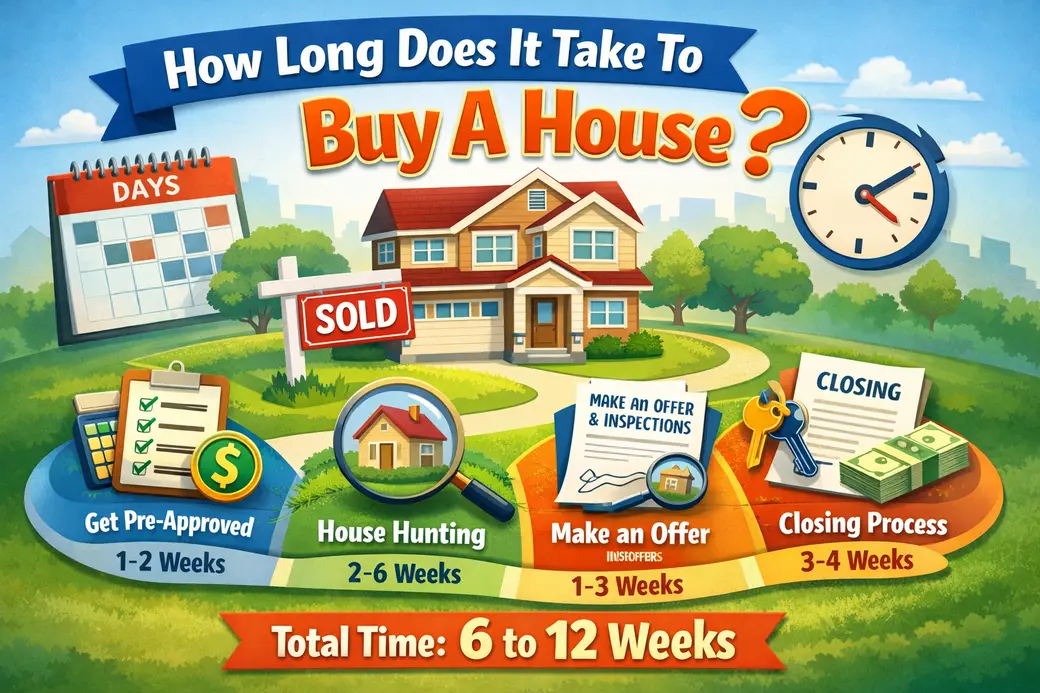
If you have never bought a home before, the honest answer to how long it takes is usually longer than it takes an experienced buyer, and that is not a bad thing. First-time buyers have real steps in the process that repeat buyers can skip, and rushing past them is how people end up with a loan that does not fit or a house that surprises them six months in.
Too Long; Didn't Read: The First-Time Buyer Timeline
- Financial groundwork: 2 to 8 weeks, often the longest stretch for first-time buyers because it includes credit review, budgeting, and learning what down payment assistance programs you may qualify for.
- Getting pre-approved: a few days once your documents are in order, but plan extra time if this is your first time gathering tax returns, pay stubs, and bank statements for a lender.
- Searching and touring: several weeks to a few months, since first-time buyers are also learning what they actually want, not just what they thought they wanted.
- Offer to contract: 1 to 3 days once you decide on a home.
- Contract to closing: 30 to 45 days for most financed purchases, including your first walkthrough of an inspection report.
I am Robbie English, Broker, REALTOR with Uncommon Realty, and I have spent more than 40 years helping people buy their first home. The single biggest difference I see between first-time buyers and repeat buyers is not the contract itself, it is everything that happens before you ever write an offer.
The Part of the Timeline Nobody Talks About: Getting Ready
Most timeline guides start the clock the day you contact an agent. For a first-time buyer, the real timeline starts earlier, with understanding your credit, your realistic budget, and what assistance programs might apply to you. Buyers who spend two months on this stage often end up in a far better position than if they had rushed straight to touring homes. That is time well spent, not time wasted.
Step by Step: What Actually Happens
1. Understand Your Credit and Budget First
Before you talk to a lender, get a real look at your credit report and figure out what monthly payment you are actually comfortable with, not just what a lender says you qualify for. These are often two different numbers, and knowing the difference protects you later.
2. Get Pre-Approved, Not Just Prequalified
Prequalification is a rough estimate. Pre-approval means a lender has verified your income, assets, and credit and is prepared to lend. First-time buyers sometimes skip straight to touring homes with only a prequalification, then lose time when an offer falls through because the real numbers did not match. Budget a few extra days here if it is your first time assembling tax returns, W-2s, and bank statements for a lender.
3. Learn What Programs You Might Qualify For
Many first-time buyers qualify for down payment assistance, reduced mortgage insurance, or first-time buyer loan programs they do not know exist. This research takes real time, but it can change what you can afford, so it belongs early in your timeline, not as an afterthought.
4. Search With Patience, Then Move Decisively
It is normal for a first-time buyer to tour more homes than an experienced buyer before making an offer, because you are also learning what matters to you in a home, not just checking boxes on a list. Once you find the right property, though, be ready to move quickly. Have your pre-approval letter ready and your priorities settled so you are not the buyer who needs an extra week to think it over while someone else writes an offer.
5. Take the Inspection Seriously, But Do Not Panic
Your first inspection report can be alarming if you have never seen one. Nearly every home, even a new one, has items listed. I always walk first-time buyers through what is a normal finding versus what is a genuine concern, so the option period does not turn into unnecessary stress.
6. Expect a Normal Contract-to-Closing Window
Once your offer is accepted, plan on roughly 30 to 45 days before closing for a typical financed purchase. This covers the appraisal, final underwriting, and title work, and it is largely the same regardless of whether it is your first home or your fifth.
Common Misconceptions First-Time Buyers Have
A lot of first-time buyers assume the process moves in one straight line from start to finish. In reality, the financial preparation stage and the search stage often overlap, and that is fine. What matters is that you are pre-approved before you get serious about a specific home, not after.
Another common misconception is that a longer timeline means something is wrong. Taking extra time to understand your options, especially assistance programs, is not a delay. It is often what makes the difference between a purchase that fits your life and one that strains it.
Practical Advice From My Experience
Over four decades of doing this, the first-time buyers who had the smoothest experience were rarely the fastest. They were the ones who did the financial groundwork honestly before they started touring, asked questions they were embarrassed to ask, and trusted their agent to walk them through unfamiliar parts of the process like the option period and the appraisal. Moving quickly matters once you find the right home. Rushing the preparation before that almost always costs more time later, not less.
Frequently Asked Questions
How long does it take a first-time buyer to get pre-approved?
Usually a few days once your documents are ready, but budget extra time if this is the first time you are gathering tax returns, pay stubs, and bank statements for a lender to review.
Should I wait until I have a large down payment saved before I start looking?
Not necessarily. Many first-time buyers qualify for programs that reduce the down payment needed. Talk to a lender early to understand your real options before assuming you need to wait.
What surprises first-time buyers most during the process?
The inspection report is usually the biggest surprise, simply because most first-time buyers have never seen one before and do not know which findings are normal versus which are worth negotiating over.
Is it normal to tour a lot of homes before making an offer?
Yes. First-time buyers are often learning what they actually want in a home while they search, which naturally takes longer than a repeat buyer who already knows their priorities.
I am Robbie English, Broker, REALTOR at Uncommon Realty. If this is your first home purchase, I would be glad to walk you through what your specific timeline is likely to look like, starting with the questions most guides skip.
Categories
- All Blogs (898)
- !!! (59)
- !x (594)
- Austin Real Estate (100)
- Bee Cave Real Estate (1)
- Building A Home (14)
- Buying A Home (137)
- Buying Land (1)
- Cedar Park Real Estate (54)
- Central Austin Real Estate (71)
- Down Payment Assistance Programs (1)
- Downsizing (3)
- Downtown Austin Real Estate (5)
- Dripping Springs Real Estate (60)
- East Austin Real Estate (3)
- Financing and Mortgage (23)
- first-time homebuying (107)
- Georgetown Real Estate (9)
- Hill Country Real Estate (1)
- HOA (2)
- Home Appraisals (12)
- Home For Rent (1)
- Home Inspections (6)
- Home Pricing (5)
- Home Staging (1)
- Home Values (12)
- Homeownership (1)
- Homes For Rent (1)
- Homes For Sale (115)
- Hutto Real Estate (5)
- Investing (6)
- Investment Properties (4)
- Lakeway Real Estate (31)
- Leander Real Estate (58)
- LGBT+ Real Estate (8)
- Luxury Homes For Sale (4)
- Luxury Real Estate (19)
- Market Conditions (15)
- Moving to Austin (2)
- Moving to Texas (4)
- Negotiations (3)
- Neighborhoods (8)
- Northwest Austin Real Estate (93)
- Off Market Listings (7)
- Pflugerville Real Estate (10)
- Private Listings (2)
- Property Management (42)
- Property Tax (3)
- Real Estate (18)
- Reddit Question Answered (79)
- redwrite (62)
- Relocation (2)
- Renting (6)
- Representation (30)
- Round Rock Real Estate (56)
- Selling Your Home (60)
- South Austin Real Estate (1)
- Westlake Real Estate (2)
Recent Posts