What Adds The Most Value To A Home In Austin TX

When homeowners ask what adds the most value to a home in Austin, they usually expect the answer to be a big, expensive remodel. The data says otherwise. The improvements that return the most at resale tend to be smaller, strategic, and often on the exterior, while big gut renovations frequently return the least. This guide walks through what genuinely moves the needle on value in the Austin market, backed by real return-on-investment figures, so you can spend where it counts.
I am Robbie English, Broker, REALTOR at Uncommon Realty. I help sellers decide where to invest before listing and where not to waste money, and my goal here is to give you an honest, prioritized picture rather than a generic list of upgrades.

How Home Value Actually Works
Two ideas guide everything that follows. First, buyers form their impression of a home before they walk through the door, so first impressions carry outsized weight. Second, return on investment matters as much as raw value added: an improvement that costs $30,000 and adds $32,000 is a better decision than one that costs $80,000 and adds $50,000. Smart sellers think in terms of ROI and buyer perception rather than assuming "nicer is always better."
It is also worth stating plainly that value is relative to the neighborhood and the current market. The same upgrade can pay off in one area and barely register in another, and in a buyer-leaning market like 2026, condition and presentation matter more than ever. With that framing, here is where the money actually works.
Curb Appeal And The Exterior: The Best Returns
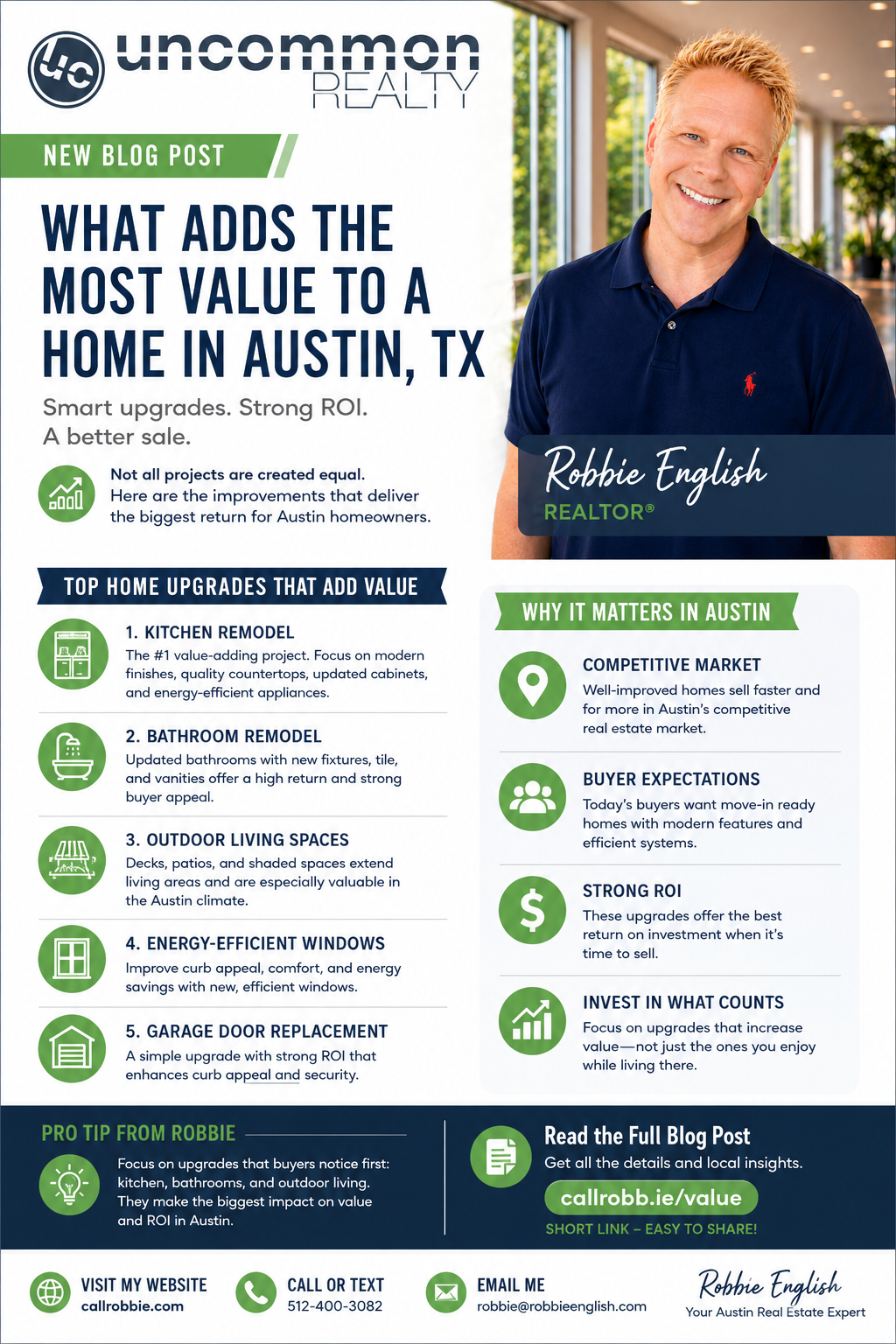
Year after year, the highest-ROI projects are exterior, curb-appeal improvements, and 2026 is no exception. A garage door replacement leads the pack, often returning well over 200 percent of its cost; a new steel entry door and manufactured stone veneer accents rank right behind it, both typically returning around 200 percent. These projects are inexpensive relative to a remodel, and they create the immediate visual impact that shapes a buyer's first impression.
Beyond those headline projects, the fundamentals of curb appeal deliver reliably: fresh exterior paint or a clean power-wash, tidy and well-maintained landscaping, a welcoming front entry, and clean, functional gutters and fixtures. None of this is glamorous, but it is the single most cost-effective category of improvement you can make before selling. If your budget is limited, start here.
To put concrete numbers on why the exterior wins, the national return figures are striking. A garage door replacement has recently returned on the order of 268 percent of its cost, a steel entry door around 216 percent, and manufactured stone veneer roughly 208 percent, all far above what interior remodels recover. Even accounting for regional variation, the pattern is unmistakable: these modest, high-visibility projects more than pay for themselves, while a six-figure kitchen overhaul typically recovers only a portion of its cost. Understanding that ranking is the difference between spending strategically and spending emotionally, and it is why I steer sellers toward the exterior and toward condition before anything else.
Kitchens And Bathrooms: Update, Do Not Gut
Kitchens and bathrooms still drive buyer decisions, but the winning move is a strategic update rather than a full teardown. A minor kitchen remodel, think refreshed cabinet fronts or paint, updated hardware, modern fixtures, and new countertops where needed, typically returns more than it costs, often over 110 percent. A midrange bathroom update is one of the stronger interior projects, usually recovering the large majority of its cost. By contrast, high-end gut renovations of either room tend to return a much smaller share of their far larger price tag.
The lesson is consistency and freshness over luxury. Buyers reward a clean, modern, functional kitchen and bath; they rarely pay a full premium for a designer-grade renovation done to someone else's taste. Spend enough to make these rooms feel current and cared for, and resist the urge to over-improve beyond what your neighborhood supports.
A practical way to approach these rooms is to fix what reads as dated or worn before adding anything luxurious. Worn or unusual countertops, dated hardware and fixtures, tired lighting, and scuffed cabinets are the things buyers notice and mentally deduct for. Addressing those cost-effectively, sometimes with paint, new hardware, and updated fixtures rather than full replacement, closes the gap between your home and the competition without overspending. Save the bigger investments for cases where a kitchen or bath is genuinely non-functional or so outdated that it would scare buyers off entirely, and even then, aim for broadly appealing, mid-range finishes.
Condition And The Big Systems
In a selective market, move-in-ready condition is itself a value driver, and the expensive systems underneath a home matter more than many sellers realize. A sound roof, a working and reasonably modern HVAC system, updated plumbing and electrical, and a stable foundation all remove objections that buyers otherwise use to negotiate down or walk away. In Central Texas specifically, foundations on expansive clay soil draw scrutiny, so a home with a documented, stable foundation reassures buyers in a way that directly protects your price.
These are not glamorous upgrades, and they rarely "wow" anyone, but deferred maintenance is one of the biggest hidden drags on value. Addressing a tired roof or an aging AC before listing, or pricing honestly for it, prevents the far larger discounts buyers demand when they discover these issues during the option period. For the buyer's-eye view of what gets scrutinized, my guide on what to look for when buying a home in Austin is a useful mirror.
A pre-listing inspection is one of the smartest moves here. It surfaces the condition issues a buyer's inspector would find, but on your timeline, so you can fix what is worth fixing, gather documentation for what is sound, and price appropriately for anything you leave as-is. Sellers who go in blind about their roof, HVAC, plumbing, or foundation almost always fare worse in negotiation than those who know exactly what they are working with. Spending a few hundred dollars to understand your home's condition up front routinely protects thousands at the closing table.
Timing Your Improvements Before You List
How you sequence improvements matters as much as which ones you choose. Ideally, the value-adding work is done before your listing photos are taken and before the home hits the market, since those first days on market draw peak attention and the photos are what most buyers judge first. A great improvement completed after a listing has already gone stale delivers far less benefit than the same work showcased from day one.
It also pays to prioritize based on your budget and timeline. If you can only tackle a few things, put your money toward curb appeal, deep cleaning and presentation, and any glaring condition issues, in that order, before considering discretionary interior upgrades. A focused plan that hits the highest-impact items beats a scattershot approach that spreads a limited budget too thin to make a real impression anywhere.
Energy Efficiency For The Texas Climate
Austin summers make energy efficiency a genuine value factor, not merely a nice-to-have. Buyers here pay attention to what a home will cost to cool, so improvements that lower utility bills carry real appeal: an efficient HVAC system, good attic insulation, modern windows, and radiant barriers or solar screens on west-facing exposures. These upgrades also make the home more comfortable to show and live in during the hot months.
Solar is a more complicated case; it can appeal to some buyers but does not always return its cost, especially if it is leased rather than owned, so weigh it carefully rather than assuming it adds value. In general, the efficiency improvements that pay off are the practical, broadly appealing ones that reduce a buyer's expected monthly costs.
Layout, Light, And Flow
Some of the most powerful value factors are not renovations at all but how a home feels. Open, functional flow between the kitchen and living areas, abundant natural light, and sensible use of space consistently influence how buyers perceive value. Where minor changes can improve flow, removing a non-structural obstruction, opening sightlines, or improving lighting, the payoff in perception can exceed the modest cost.
You cannot easily change a home's fundamental footprint, and you should be cautious about expensive structural reconfiguration before a sale, since it rarely returns its cost. But maximizing the light, flow, and function your home already has, through decluttering, paint, and thoughtful staging, is one of the highest-leverage things you can do.
Outdoor Living Spaces
Outdoor living has real appeal in Austin's climate, and thoughtful outdoor spaces can help a home stand out. A clean, functional patio, a covered outdoor area, and low-maintenance landscaping add genuine lifestyle value that resonates with local buyers. These improvements tend to be moderate in cost and help a home show well without the risk of major renovations. In a climate where residents genuinely use their outdoor space much of the year, a tidy, usable backyard that photographs well can be the feature that makes a buyer choose your home over a comparable one nearby.
Pools are the classic example of appeal that does not fully pay back: an in-ground pool can make a home more marketable to the right buyer, but it typically returns only a fraction of its build cost and is not for every buyer. If you already have one, present it well; if you are considering adding one purely to boost resale value, understand the limited return first. I break that down in detail in my guide to homes with pools for sale.
Presentation: The Cheapest Value You Can Add
Before spending on any renovation, capture the value that costs the least: presentation. Fresh neutral paint, clean or updated flooring, decluttering and depersonalizing, deep cleaning, and professional photography routinely deliver an outsized effect on how buyers perceive, and price, a home. Staging, whether full or light, helps buyers picture themselves living there and can shorten time on market.
None of this changes the house structurally, yet it often influences the sale price more than a moderate remodel would. In a market where buyers compare many homes online before touring, presentation is frequently the difference between a home that generates offers and one that sits.
The reason presentation punches so far above its cost is that it shapes the emotional first impression that drives offers. A decluttered, freshly painted, well-lit, professionally photographed home reads as cared-for and move-in-ready, which is exactly what selective 2026 buyers are willing to pay for. The same home, shown cluttered and dim with amateur photos, invites lowball offers and longer market time. Dollar for dollar, there is almost nothing you can do to your home before listing that returns more than getting the presentation right, which is why it belongs at the top of every seller's list alongside curb appeal and condition.
What Adds Less Value Than You Think
Just as important as knowing where to spend is knowing where not to. Highly personalized or trend-driven finishes, luxury upgrades that push a home well above its neighborhood's price ceiling, elaborate landscaping that reads as high-maintenance, and expensive gut renovations all tend to return a smaller share of their cost. Above-ground pools and very niche features can even deter some buyers.
The pattern is consistent: the biggest, most expensive, most personal projects usually deliver the weakest returns, while modest, broadly appealing, well-executed improvements deliver the best. Spending to remove objections and refresh a home almost always beats spending to make a statement.
A Note On Neighborhood And Honesty
One honest caveat worth emphasizing: I am a broker, not an appraiser, and what adds value is always specific to your home, your neighborhood, and the current market. The ROI figures above are national and regional averages; your particular block, price point, and buyer pool shape which improvements will actually pay off for you. A change that returns well in one Austin neighborhood may not in another.
That is exactly why a pre-listing conversation matters. Before you spend a dollar, it is worth having someone who knows your specific submarket walk the home with you and tell you honestly which improvements are worth doing and which are not. That advice often saves sellers far more than it costs.
Bringing It All Together
What adds the most value to a home in Austin is rarely the expensive remodel most sellers imagine. It is the strategic, high-ROI moves: exterior and curb-appeal projects, modest kitchen and bath updates, sound systems and condition, practical energy efficiency, good light and flow, and above all strong presentation. Spend where the return is real, avoid over-improving beyond your neighborhood, and prioritize move-in-ready condition in a market where buyers are selective.
If you are preparing to sell, I am glad to walk your home with you and give you an honest, prioritized plan for where to invest, tied to a realistic home valuation. For the full listing playbook, see my guide on how to sell your house in today's market, and if you are still deciding whether to sell at all, my take on whether to sell in 2026 can help. You can also start with my seller resources for the Austin area.
Written for buyers and sellers in the Greater Austin, Texas area by Robbie English, REALTOR, Broker at Uncommon Realty.
Categories
- All Blogs (918)
- !!! (59)
- !x (603)
- Austin Real Estate (102)
- Bee Cave Real Estate (1)
- Building A Home (14)
- Buying A Home (141)
- Buying Land (1)
- Cedar Park Real Estate (55)
- Central Austin Real Estate (73)
- Down Payment Assistance Programs (1)
- Downsizing (3)
- Downtown Austin Real Estate (5)
- Dripping Springs Real Estate (61)
- East Austin Real Estate (3)
- Financing and Mortgage (23)
- first-time homebuying (109)
- Georgetown Real Estate (9)
- Hill Country Real Estate (1)
- HOA (2)
- Home Appraisals (12)
- Home For Rent (1)
- Home Inspections (6)
- Home Pricing (5)
- Home Staging (1)
- Home Values (12)
- Homeownership (1)
- Homes For Rent (1)
- Homes For Sale (122)
- Hutto Real Estate (5)
- Investing (6)
- Investment Properties (4)
- Lakeway Real Estate (32)
- Leander Real Estate (58)
- LGBT+ Real Estate (8)
- Luxury Homes For Sale (4)
- Luxury Real Estate (19)
- Market Conditions (15)
- Moving to Austin (2)
- Moving to Texas (4)
- Negotiations (3)
- Neighborhoods (8)
- Northwest Austin Real Estate (93)
- Off Market Listings (7)
- Pflugerville Real Estate (10)
- Private Listings (2)
- Property Management (42)
- Property Tax (3)
- Real Estate (18)
- Reddit Question Answered (80)
- redwrite (63)
- Relocation (2)
- Renting (6)
- Representation (33)
- Round Rock Real Estate (57)
- Selling Your Home (61)
- South Austin Real Estate (1)
- Westlake Real Estate (3)
Recent Posts